Anatomy of Dicotyledonous Plants (Grade 10 NSC Matric Life Sciences): Revision Notes
📚Revision Notes
Anatomy of Dicotyledonous Plants
What are dicotyledonous plants?
Dicotyledonous plants (or dicots) are flowering plants that have two cotyledons (seed leaves) in their seeds. The cotyledon is the part of the seed that provides nutrients to the developing plant embryo during germination.
Note
Understanding the classification of flowering plants is fundamental to plant biology. The number of cotyledons in the seed is one of the most reliable ways to distinguish between the two major groups of flowering plants.
All flowering plants can be divided into two main groups based on the number of cotyledons in their seeds:
- Monocotyledons (monocots) - have one cotyledon
- Dicotyledons (dicots) - have two cotyledons
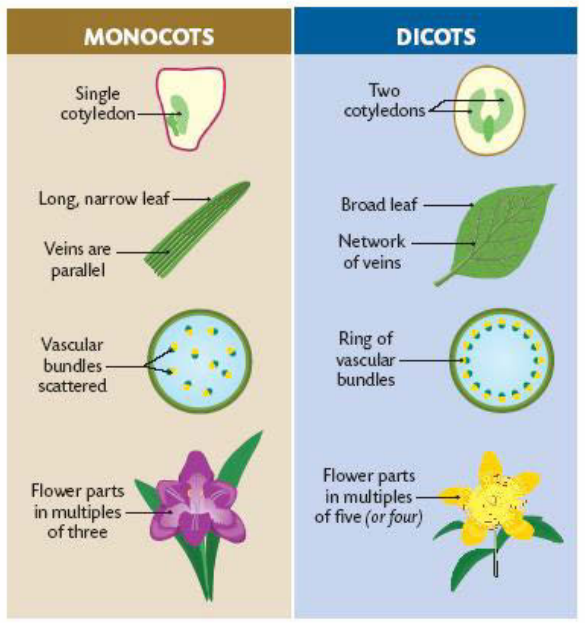
Dicots show several distinctive features that make them easy to identify. They typically have broad leaves with a network of branching veins, flower parts arranged in multiples of four or five, and their vascular bundles are arranged in a ring pattern within the stem.
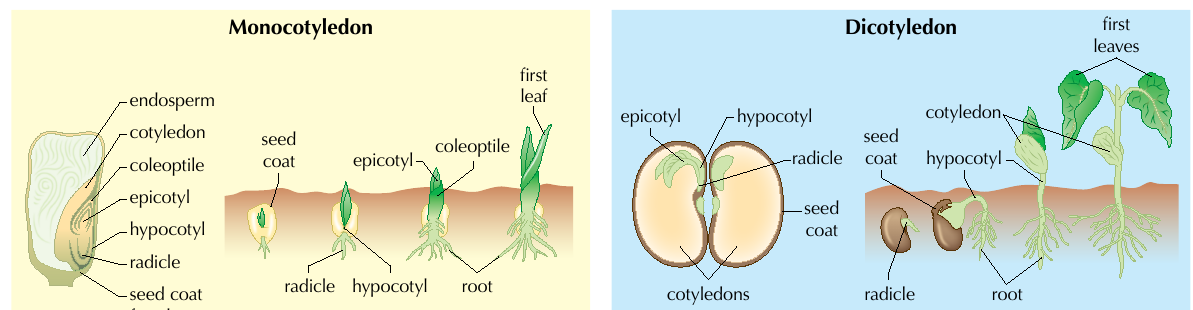
During seed germination, dicot seedlings emerge with two visible seed leaves that eventually fall off as the plant develops its true leaves.
Root anatomy
Functions of root systems
Root systems in dicotyledonous plants serve three essential functions:
- Absorption of water and organic compounds from the soil
- Anchoring the plant body securely to the ground
- Storage of food and nutrients for later use
Root development and structure
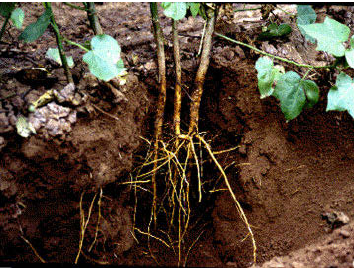
When a dicot seed germinates, the first structure to emerge is the radicle, which develops into the primary root. As the plant grows, other roots branch out from this primary root, creating secondary roots.
Important
The root tip contains some of the most active regions of the plant. Understanding these zones is crucial for comprehending how roots grow and function.
The growing root tip is protected by a root cap - a slimy structure that helps the root push through coarse soil. Just above the root cap lies the apical meristem, where cells divide continuously through mitosis to produce new root cells.
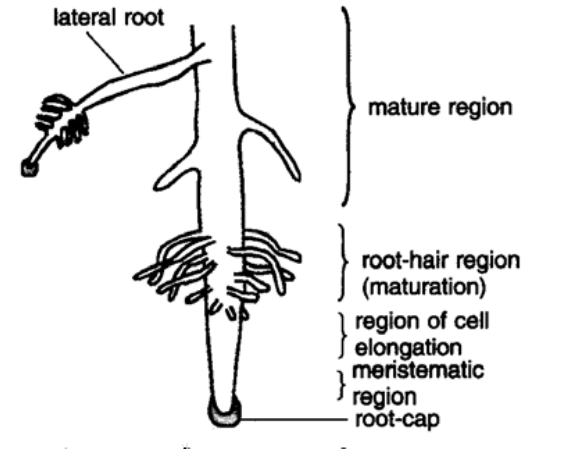
Above the region of cell division, newly formed cells undergo elongation, causing the root to lengthen. Further up the root, thousands of tiny root hairs develop in the root hair region. These microscopic projections greatly increase the surface area available for absorbing water and dissolved mineral salts from the soil.
Types of root systems
Dicotyledonous plants typically have a taproot system, which consists of:
- One large primary root growing straight down
- Many smaller secondary roots branching off from the primary root
- Examples include carrots and beetroots, where the taproot serves as a storage organ
Example
Examples of Taproot Systems:
Carrot (Daucus carota): The thick, orange taproot stores large amounts of sugars and carotenoids, making it an excellent food source.
Beetroot (Beta vulgaris): The swollen taproot stores sugars and gives the distinctive red colour from betalain pigments.
Radish (Raphanus sativus): The taproot can store water and nutrients, allowing the plant to survive in drier conditions.
This differs from the fibrous root system found in monocots, which has many roots of similar size with no dominant primary root.
Tissue organisation in roots
The internal structure of dicot roots shows a clear pattern of tissue organisation from the outside inward.
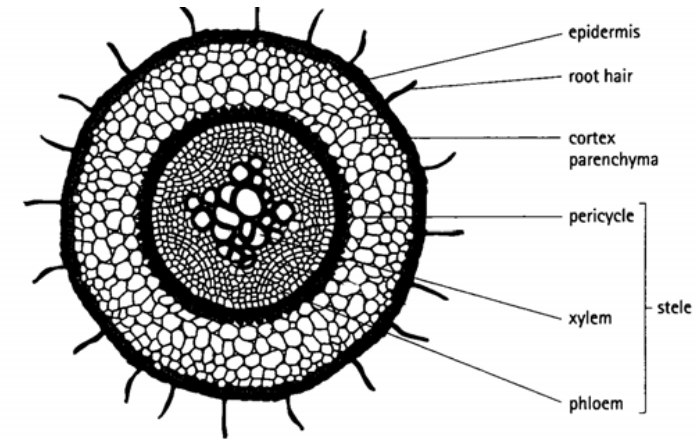
Epidermis: The outermost single layer of cells that protects the inner tissues. Unlike stems, the root epidermis has no waxy cuticle, allowing water to enter easily. Root hair cells have large central vacuoles and extensive surface area to maximise water absorption through osmosis.
Cortex: Located beneath the epidermis, this region consists mainly of parenchyma cells. These large, thin-walled cells store water and nutrients, and they help transport substances from the root hairs towards the centre of the root.
Note
The cortex makes up the largest portion of the root's volume and serves as the main storage area. The loose arrangement of parenchyma cells also allows for efficient gas exchange, which is essential for cellular respiration in root cells.
Endodermis: This forms the innermost layer of the cortex. It consists of tightly-packed, rectangular cells with thickened cell walls containing a waxy layer called the Casparian strip. This important structure controls the movement of water and dissolved substances from the cortex into the central vascular tissue.
Stele (vascular cylinder): The central region containing the transport tissues. It includes:
- Pericycle: The outermost layer of the stele, responsible for forming lateral roots and secondary growth tissue
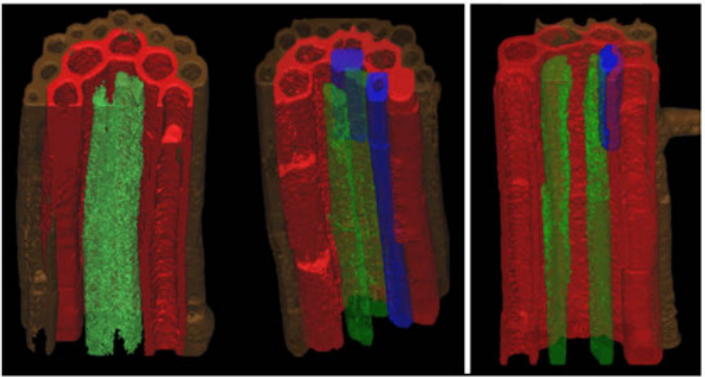
- Xylem: Transport tissue that carries water and minerals upward to the stems and leaves
- Phloem: Transport tissue that carries manufactured food (mainly sugars) from the leaves to other parts of the plant
- Cambium: Meristematic tissue located between xylem and phloem that enables secondary growth
Stem anatomy
Functions of stems
Dicot stems perform four main functions:
- Support for the plant by holding leaves, flowers and fruits upright above the ground
- Transport of fluids between roots and shoots through xylem and phloem tissues
- Storage of nutrients in parenchyma cells
- Production of new tissue through meristematic regions
Stem development
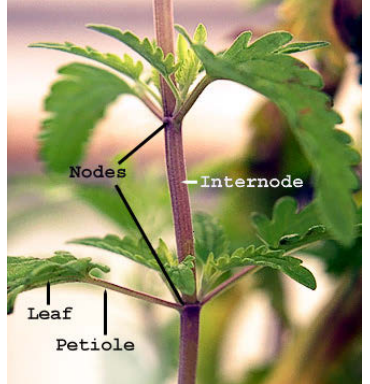
The main stem develops from the plumule of the embryo, while lateral branches grow from buds. Nodes are the regions where leaves and branches attach to the stem, while internodes are the sections of stem between nodes.
Stems can be classified as either herbaceous (soft, non-woody) or woody (hard, containing wood tissue). Woody stems are generally harder and provide greater structural support than herbaceous stems.
Internal structure of dicot stems
The cross-sectional view of a dicot stem reveals several distinct tissue layers arranged in a specific pattern.
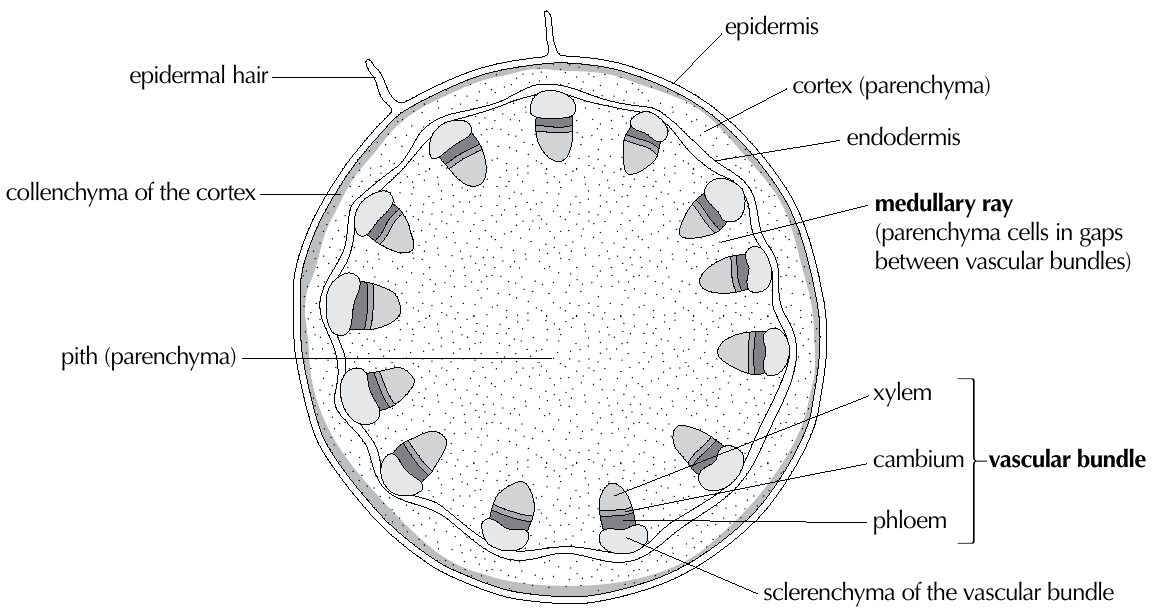
Epidermis: A single layer of cells covering the stem surface, protected by a waxy cuticle that prevents water loss. The epidermis may contain stomata (pores) for gas exchange during photosynthesis and respiration, along with protective structures called trichomes.
Cortex: The region between the epidermis and vascular bundles, containing three types of tissue:
- Collenchyma: A few layers of living cells with thickened walls that strengthen the stem while allowing flexibility
- Parenchyma: Thin-walled cells that store synthesised food (mainly starch) and fill most of the cortex
- Endodermis: A single layer of tightly-packed cells forming the boundary between cortex and vascular tissue
Note
The arrangement of tissues in stems differs significantly from roots. While roots have a central vascular cylinder, stems have vascular bundles arranged in a ring pattern, which provides both structural support and efficient transport.
Vascular cylinder (stele): Contains the transport tissues arranged in vascular bundles positioned in a ring pattern. Each bundle includes:
- Xylem: Water-conducting tissue with lignified cell walls for structural support
- Phloem: Food-conducting tissue located on the outer side of each bundle
- Cambium: Meristematic tissue between xylem and phloem responsible for secondary thickening
- Sclerenchyma: Fibrous tissue providing protection and additional support to vascular bundles
Pith (medulla): The central region consisting of thin-walled parenchyma cells with intercellular spaces. These cells store water and starch, and the spaces allow for gas exchange. Medullary rays extend between vascular bundles, connecting the pith with the cortex and facilitating transport of substances.
Secondary growth
Understanding meristematic tissue
Plant growth occurs through meristematic tissue - regions containing small, unspecialised cells that divide by mitosis to produce new cells. There are two main types:
Primary meristematic tissue: Found in root tips, stem tips and buds. When these cells divide, they cause the plant to grow in length, known as primary growth.
Secondary meristematic tissue: Develops from permanent tissue (usually parenchyma) and includes the cambium. When cambium cells divide, they cause the plant to become wider, resulting in secondary growth or secondary thickening.
The secondary thickening process
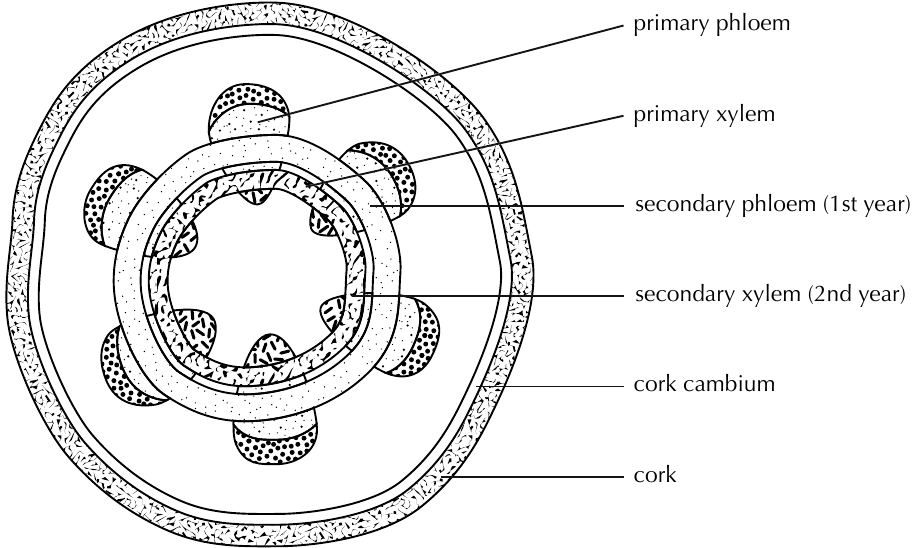
Secondary growth becomes clearly visible when examining tree stumps. Each growing season, the stem increases in width through cambium activity.
Important
Secondary growth is what allows trees and shrubs to increase in girth year after year. Without this process, woody plants could not develop the thick trunks and branches needed to support their massive size and weight.
The cambium forms a continuous ring of meristematic cells between the xylem and phloem in vascular bundles. During the growing season, cambium cells divide by mitosis to produce:
- Secondary phloem on the outside of the cambium ring
- Secondary xylem on the inside of the cambium ring
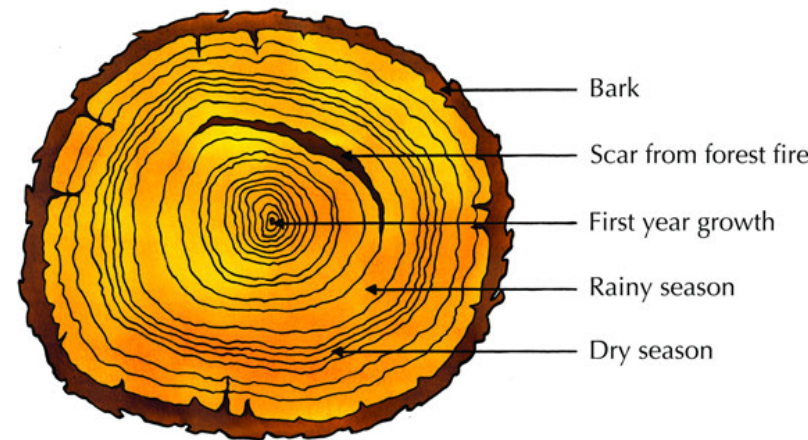
As new rings of secondary xylem form each year, they create the annual rings visible in tree cross-sections. These rings provide valuable information about the tree's age and the environmental conditions during each year of growth.
Annual rings and environmental indicators
The secondary xylem forms distinct annual rings that can be counted to determine a tree's age. Each ring represents one year of growth and contains two types of wood:
Spring wood (early wood): Light-coloured, less dense wood formed during spring and summer when growing conditions are favourable. The xylem vessels have thinner walls and larger openings for efficient water transport.
Autumn wood (late wood): Dark-coloured, denser wood formed during autumn and winter when growing conditions are less favourable. The xylem vessels have thicker walls and smaller openings.
Example
Tree Ring Analysis Example:
Scientists studying a 100-year-old oak tree might observe:
- Thick rings from 1950-1960: Indicating a decade of favourable rainfall and growing conditions
- Very thin rings from 1976-1977: Suggesting a severe drought period
- Wider rings from 1990-2000: Showing recovery and good growing conditions
This data helps researchers understand historical climate patterns and predict future environmental changes.
The width of annual rings varies depending on environmental conditions. Thick rings indicate favourable growing conditions with adequate rainfall and nutrients, while thin rings suggest harsh conditions such as drought or poor nutrition. Scientists use this information in dendrochronology - the study of past climate patterns and events using tree ring data.
Remember!
Summary
Key Points to Remember:
-
Dicotyledonous plants have two cotyledons in their seeds and show characteristic features like broad leaves with branching veins and flower parts in multiples of four or five.
-
Root anatomy follows a clear pattern from outside to inside: epidermis (with root hairs for absorption), cortex (for storage and transport), endodermis (regulating water flow), and stele (containing xylem and phloem for transport).
-
Stem structure supports multiple functions including structural support, fluid transport, nutrient storage, and new tissue production through meristematic regions.
-
Secondary growth occurs through cambium activity, producing annual rings of secondary xylem that can reveal both the age of woody plants and environmental conditions throughout their lifetime.
-
The relationship between structure and function is key - each tissue type has specific adaptations that enable it to perform its particular role in plant survival and growth.