Diseases (Grade 10 NSC Matric Life Sciences): Revision Notes
📚Revision Notes
Diseases
Understanding diseases that affect the support system is crucial for maintaining healthy bones and joints throughout life. When our bodies don't receive proper nutrition or experience wear and tear over time, various bone and joint problems can develop.
Note
The three most common diseases affecting the skeletal system are rickets, osteoporosis, and arthritis. Each affects different age groups and has distinct causes, making early recognition and prevention essential.
Rickets
Rickets is a serious disease that primarily affects children's developing bones. This condition occurs when the body doesn't get enough essential nutrients needed for healthy bone formation. The main cause is a lack of vitamin D, but rickets can also develop when there are deficiencies in phosphorous or calcium.
When children don't receive these vital nutrients, their bone tissue becomes soft and weak. This softening leads to painful fractures and noticeable bone deformities that can affect a child's ability to walk and move normally.
Important
Rickets remains a significant health problem in many developing countries where access to proper nutrition may be limited. However, this disease is entirely preventable with adequate nutrition and vitamin D supplementation.
The effects of rickets are clearly visible when comparing normal healthy bones to those affected by the disease. Healthy bones maintain their straight, strong structure, while bones affected by rickets show characteristic bowing and weakening.
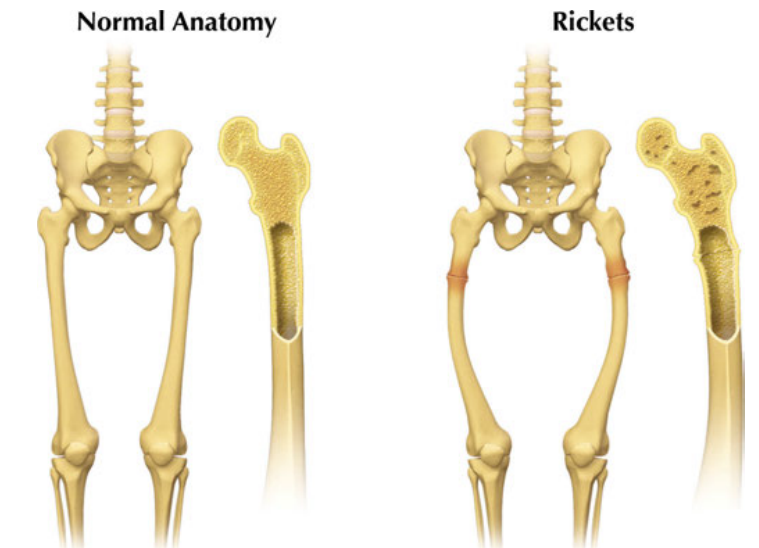
This comparison demonstrates how rickets causes the leg bones to bend and curve under the body's weight, creating the distinctive bow-legged appearance often seen in affected children.
Osteoporosis
Osteoporosis is a disease that makes bones become weak and brittle over time. The name comes from Greek words meaning "bone" (ostoun) and "pore" (poros), which perfectly describes how this condition creates tiny holes throughout the bone structure.
How osteoporosis develops
Your bones are constantly changing through a carefully balanced process. Osteoclasts are special cells that break down old bone tissue, while osteoblasts are cells that build up new bone tissue. In healthy bones, these two processes work together in harmony to maintain strong bone mass.
However, problems arise when there isn't enough calcium available in the body. When you're inactive (such as having a leg in plaster or being immobilised), or when calcium levels drop, your body withdraws calcium from bones to use elsewhere. This triggers the osteoclasts to break down more bone tissue than the osteoblasts can replace.
Example
Worked Example: The Bone Remodelling Process
Normal condition: Osteoclast breakdown = Osteoblast formation → Stable bone mass
Osteoporosis condition: Osteoclast breakdown > Osteoblast formation → Decreasing bone mass
Result: Excessive bone breakdown without sufficient new bone formation creates holes and pores throughout the bone structure.
Who is affected
Important
Osteoporosis is particularly common in older women. After menopause, oestrogen levels drop significantly. Since oestrogen normally helps suppress osteoclast activity (bone breakdown), this hormonal change means bone breakdown is no longer properly controlled, leading to rapid bone mass loss.
Physical effects
The most serious consequences of osteoporosis are fractures, which most commonly occur in the spine, wrist, and hip. These areas bear significant weight or are frequently used, making them vulnerable when bone density is low.
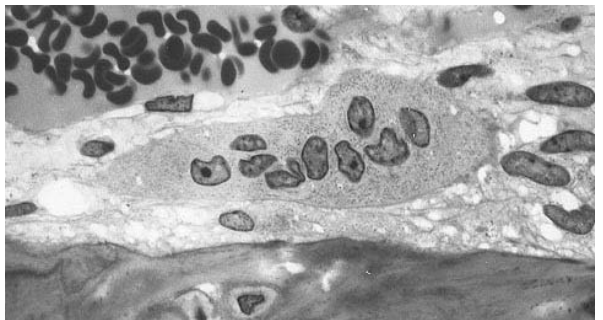
Under the microscope, bone tissue affected by osteoporosis shows characteristic changes, with larger cells containing multiple nuclei and a foamy appearance in the cytoplasm.
The physical changes from osteoporosis can be dramatic. As vertebrae in the spine weaken and potentially collapse, people develop a hunched posture and forwards head position.
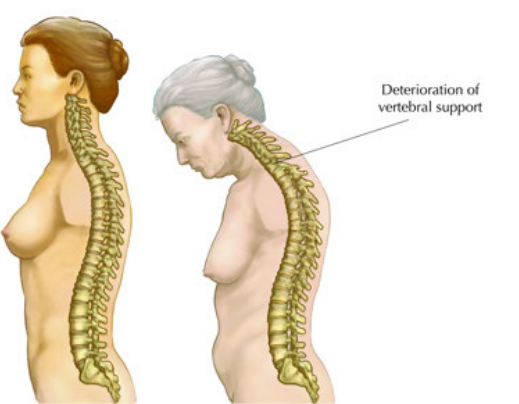
This illustration shows how spinal support deteriorates with age, leading to the characteristic curved spine and altered posture associated with osteoporosis.
Arthritis
Arthritis encompasses a group of diseases that cause disorders of the joints or inflammation within them. There are several different types of arthritis, each with unique causes and characteristics.
Rheumatoid arthritis
One particularly serious form is rheumatoid arthritis, which is classified as an auto-immune disorder. In this condition, a person's own immune system mistakenly attacks their body tissues, particularly targeting the cartilage found between joints. This self-attack causes ongoing inflammation and progressive damage to joint structures.
Note
An auto-immune disorder occurs when an individual's cells are attacked by their own immune system. In rheumatoid arthritis, this means the body's defence system mistakenly identifies joint cartilage as a threat and attacks it.
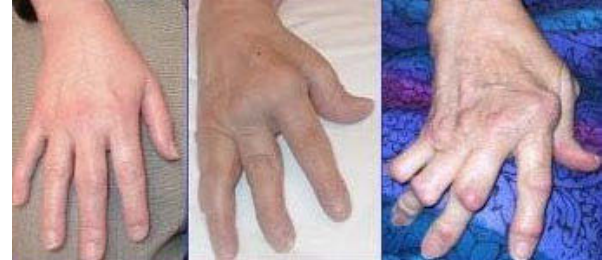
These images show hands affected by arthritis, displaying the swelling, deformity, and inflammation characteristic of the condition.
Wear-and-tear arthritis
Arthritis can also result from the daily wear and tear that joints experience over time. When bones constantly rub against each other during movement, the protective cartilage gradually wears away. This type of arthritis commonly affects frequently used joints such as those in the hands, knees, feet, hips, and back.
While arthritis typically affects older adults, it can also develop in younger people following joint injuries. Additionally, a sedentary lifestyle characterised by lack of exercise can contribute to arthritis development, as joints need regular movement to maintain their health.
Living with arthritis
Important
Unfortunately, arthritis cannot be cured. The progressive joint damage and inflammation make daily activities increasingly difficult and painful. However, in severe cases, joint replacement surgery may be available as a treatment option, though this is only possible in rare cases and for specific joints.
The impact of arthritis extends beyond physical discomfort, often affecting a person's ability to perform routine tasks and maintain their independence.
Summary
Key Points to Remember:
-
Rickets is caused by deficiencies in vitamin D, phosphorous, or calcium, leading to soft, deformed bones in children
-
Osteoporosis occurs when bone breakdown exceeds bone formation, creating weak, porous bones prone to fractures, especially in older women after menopause
-
Arthritis involves joint inflammation and can be either an auto-immune condition (rheumatoid) or result from wear-and-tear over time
-
All three diseases significantly impact quality of life, with rickets affecting development, osteoporosis causing fractures and posture changes, and arthritis limiting mobility
-
Prevention through proper nutrition, exercise, and lifestyle choices is crucial, as treatment options are often limited once these diseases develop