Skeletons (Grade 10 NSC Matric Life Sciences): Revision Notes
📚Revision Notes
Skeletons
Introduction to skeletons
A skeleton is the supporting framework of an organism that provides structure, protection, and enables movement. Animals have developed three main types of skeletal systems to meet their survival needs: hydrostatic skeletons, exoskeletons, and endoskeletons. Each type offers unique advantages and disadvantages depending on the animal's environment and lifestyle.
Note
The relationship between structure and function is fundamental to understanding how skeletons work. Different skeletal systems have evolved to solve specific challenges, such as providing support in water versus on land, enabling different types of movement, and offering protection from predators.
Types of skeletal systems
Hydrostatic skeleton
A hydrostatic skeleton uses fluid pressure to provide support and enable movement. This system consists of a fluid-filled cavity called a coelom, which is surrounded by muscles. In some animals, this cavity contains a blood-like substance called haemocoel instead of just fluid.
Note
How hydrostatic skeletons work: The fluid inside cannot be compressed, so when muscles contract against it, the pressure creates a firm structure. This allows the animal to maintain its shape and create movement by contracting different muscle groups in sequence.
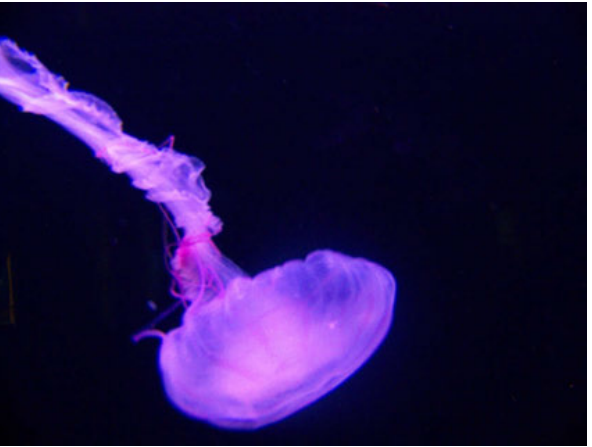
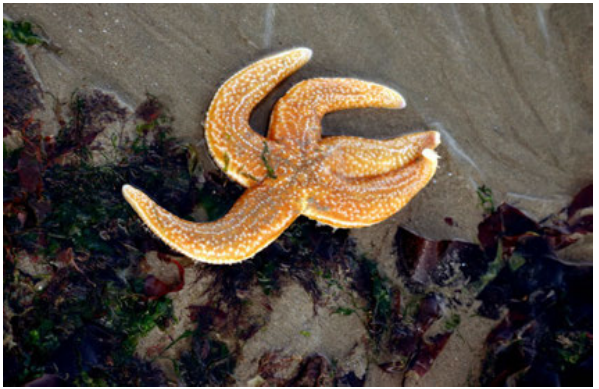
Hydrostatic skeletons are found in many soft-bodied animals including jellyfish, octopuses, sea anemones, flatworms, round worms, earthworms, and slugs. Starfish and other echinoderms also use a form of hydrostatic skeleton with their water vascular system and tube feet.
Advantages of hydrostatic skeletons:
- Flexibility: Allows animals to squeeze through narrow spaces and change shape easily
- Strength: Can create powerful movements for burrowing or swimming
- Healing: Repairs much faster than hard skeletons because the system is mostly water-based
- Lightweight: Requires very little muscle mass to operate effectively
- Circulation: The fluid cavity helps transport nutrients and remove waste
- Protection: Cushions internal organs from shock and impact
- Suited to environment: Perfect for moist or aquatic habitats
Disadvantages of hydrostatic skeletons:
- Limited attachment: No hard surfaces for muscle attachment, limiting movement complexity
- Little protection: Offers minimal defence against predators or physical damage
- Desiccation risk: Animals must stay in moist environments to prevent drying out
- Size limitation: Cannot support very large body sizes due to structural constraints
Exoskeleton
An exoskeleton is an external skeleton that covers and protects the animal's body from the outside. This non-living structure is made from a tough material called chitin, which is strengthened by substances like calcium carbonate in some species such as crabs and lobsters.
The exoskeleton acts as both armour and a framework for muscle attachment. It consists of plates or segments that are connected by flexible joints, allowing for movement while maintaining protection.
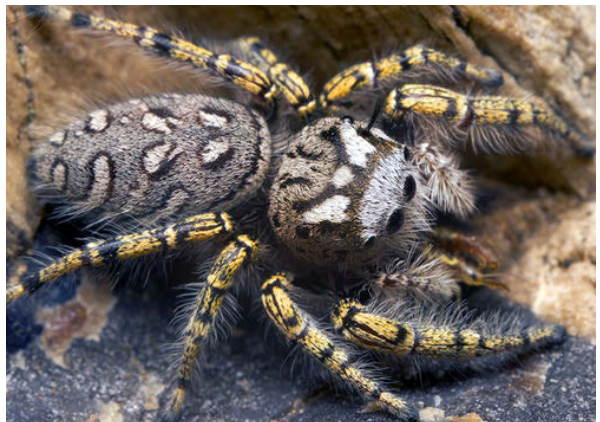
Exoskeletons are found in arthropods, which include insects, spiders, scorpions, and crustaceans like crabs and lobsters. This group represents the largest and most diverse collection of animals on Earth, showing just how successful this skeletal system can be.
Advantages of exoskeletons:
- Muscle attachment: Provides excellent leverage points for muscle action
- Protection: Offers superior defence against predators and environmental hazards
- Support: Gives structural shape and prevents collapse
- Prevents water loss: Helps prevent dehydration on land
- Lightweight: Especially in insects, allowing for flight
- Versatility: Can be modified for different functions like biting, grasping, or sensing
Disadvantages of exoskeletons:
- Size restriction: Becomes too heavy as animals grow larger, limiting maximum size
- Growth limitation: Must be shed and regrown periodically, requiring significant energy
- Vulnerability during moulting: Animals are defenceless when the old skeleton is shed and the new one hasn't hardened
- Joint weakness: Flexible joints are potential weak points in the structure
Important
Critical point about moulting: During the moulting process, animals with exoskeletons are extremely vulnerable to predation and environmental damage. This is why many arthropods hide in safe places during this period and why the timing of moulting is so important for survival.
Endoskeleton
An endoskeleton is an internal skeleton located inside the body. This living structure can be made of cartilage (like in sharks) or bone (like in most vertebrates), and some animals have both types of tissue in their skeletons.

The endoskeleton grows along with the animal and provides an internal framework that supports the body while allowing for flexible movement through jointed connections.
Advantages of endoskeletons:
- Living tissue: Can grow continuously with the animal, allowing for large body sizes
- Structural support: Provides excellent shape and support for the body
- Flexible: Jointed structure allows for complex and varied movements
- Muscle attachment: Offers secure points for muscle connection
- Protection: Protects vital organs like the heart and lungs
- Diverse locomotion: Enables different movement types including running, jumping, swimming, and flying
Disadvantages of endoskeletons:
- External vulnerability: Provides no protection from outside attacks or environmental conditions
- Disease susceptible: Being living tissue, it can be affected by infections and diseases
Evolutionary development of skeletons
The evolution of skeletal systems tells the story of life's transition from water to land. Early life forms developed in the oceans where water provided natural support through buoyancy - the upward force that helps objects float. This meant that the earliest organisms could grow quite large without needing complex support systems.
Important
Major evolutionary challenge: As some animals began moving to land, they faced a major challenge: gravity. Without water to support their body weight, they needed to develop new ways to maintain their structure and move effectively. This led to the evolution of more sophisticated skeletal systems.
Animals with hydrostatic skeletons were among the first to solve movement problems by changing fluid pressure in different body segments. Later, some developed hard external shells (exoskeletons) for better protection and muscle attachment. Finally, internal skeletons (endoskeletons) evolved, allowing for even greater size and movement complexity.
Summary
Key Points to Remember:
-
Three skeleton types: Hydrostatic (fluid-based), exoskeleton (external hard covering), and endoskeleton (internal framework) each solve different survival challenges
-
Environment shapes evolution: Skeletal systems evolved as life moved from water-supported aquatic environments to gravity-challenged terrestrial habitats
-
Structure equals function: Each skeletal type has specific advantages and disadvantages that match the lifestyle and habitat of the animals that possess them
-
Growth and flexibility: Endoskeletons allow continuous growth and complex movement, while exoskeletons require periodic replacement but offer superior protection