Banking Accounts and Documents (Grade 10 NSC Matric Mathematical Literacy): Revision Notes
📚Revision Notes
Banking Accounts and Documents
Banking plays a crucial role in managing our daily finances. Understanding different types of bank accounts, required documentation, and how to read bank statements are essential life skills that will help you make informed financial decisions.
Types of bank accounts
When opening your first bank account, you need to understand the different options available. Each type of account serves specific financial needs and comes with different features.
Note
Bank account: A financial service provided by banks and other financial institutions that allows you to deposit, store, and withdraw money safely.
Savings account
A savings account is designed to help you save money while earning interest on your balance. This account type encourages saving by:
- Paying interest on the money you deposit
- Not offering overdraft facilities (you cannot spend more than you have)
- Being ideal for short-term savings goals
- Offering lower interest rates than fixed deposit accounts
Note
Savings accounts are perfect for building an emergency fund while your money grows through interest payments.
Cheque or current account
A cheque account (also called a current account) is designed for people who need regular access to their money. Key features include:
- Allows deposits and withdrawals through bank branches, ATMs, and internet banking
- Permits writing cheques for payments
- Usually available to people with regular income
- Offers overdraft facilities (you can spend more than your balance, but interest is charged)
- Best suited for managing monthly expenses and salary deposits
Fixed deposit account
A fixed deposit account is perfect for long-term savings. This account type:
- Requires you to deposit money for a specific period (e.g., 6 months, 1 year, 5 years)
- Pays higher interest rates than savings accounts
- Does not allow withdrawals before the agreed date
- Returns your money plus accumulated interest at maturity
- Suits people wanting to save for medium to long-term goals
Note
Fixed deposits offer the best interest rates but require you to commit your money for the full term to avoid penalties.
Credit account (with credit card)
A credit account allows you to purchase items immediately and pay for them later. Important features include:
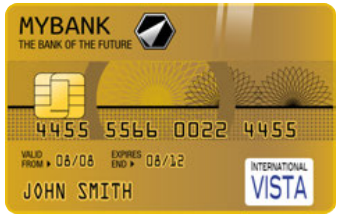
- Enables you to buy now and pay later
- Offers two payment options: full payment or budget plan
- Charges different interest rates for different payment methods
- Requires responsible use to avoid high debt
- Useful for emergencies or large purchases
Important
Credit accounts can lead to serious debt problems if not managed carefully. Always pay more than the minimum amount due to avoid high interest charges.
Debit account (with debit card)
A debit account works with a debit card for convenient payments. This system:
- Deducts money directly from your account when making purchases
- Provides easier expense management than credit cards
- Usually connects to your main current account
- Offers less credit than dedicated credit accounts
- Helps avoid overspending since you can only use available funds

Banking documents required
According to FICA (Financial Intelligence Centre Act), you must provide specific documents when opening any bank account. This requirement helps banks verify your identity and prevent financial crime.
Important
FICA Requirements are Mandatory
All South African banks must comply with FICA regulations. You cannot open any bank account without providing the required documentation. This is not optional - it's a legal requirement.
Essential documents needed
Identity document: You must bring your South African ID document or valid passport to prove your identity.
Proof of residence: You need a recent document showing your residential address, such as:
- Electricity bill
- Water bill
- Municipal account
- Rental agreement
Proof of income: Banks require information about your income source, including:
- Salary slips from your employer
- Bank statements showing regular deposits
- Business registration documents
- Information about expected transaction types
Bank statements
Banks send account holders monthly statements showing all account activity. Understanding these documents helps you track your spending and manage your finances effectively.
Note
Bank statement: A monthly document that shows all transactions in your account, including deposits, withdrawals, and fees.
Key terms for bank statements
Account holder: The person whose name appears on the account and who legally owns the account.
Opening and closing balance: The amount of money in your account at the start and end of the statement period.
Transaction: Any activity that moves money into or out of your account.
Debit transaction: Money leaving your account (payments, withdrawals, fees).
Credit transaction: Money entering your account (deposits, salary, transfers received).
Reading bank statements
Bank statements typically show:
- Date of each transaction
- Description of what happened
- Amount of money involved
- Whether it was a debit (-) or credit (+)
- Running balance after each transaction
Note
Always check your bank statements carefully each month to spot any unauthorized transactions or errors.
Worked example 1: Understanding a bank statement
Example
Worked Example: Analyzing Xola's Bank Statement
Let's examine Xola's bank statement from January to February 2013:
| Date | Description | Amount | Balance |
|---|---|---|---|
| 25/01/2013 | Salary | 8000,00 | 8050,50 |
| 27/01/2013 | Car insurance | -100,00 | 7950,50 |
| 01/02/2013 | Electronic transfer Mr Serei (RENT) | -3000,00 | 4950,50 |
| 01/02/2013 | Debit order Healthsaver medical aid | -500,00 | 4450,50 |
| 02/02/2013 | Debit order Mobi contract | -250,00 | 4200,50 |
| 03/02/2013 | Debit order Supa Fashion Store | -300,00 | 3900,50 |
| 05/02/2013 | Purchase at Shop 'n Save | -2000,00 | 1900,50 |
| 14/02/2013 | PAYMENT Mrs S Khumalo | 500,00 | 2400,50 |
| 20/02/2013 | Automechanix | -1000,00 | 1400,50 |
Analysis:
- Credits (money in): Salary (R8000) and payment from Mrs S Khumalo (R500)
- Debits (money out): All expenses including rent, insurance, medical aid, groceries, and car repairs
- Opening balance calculation: R8050,50 - R8000 = R50,50 (balance before salary)
- Money saved: If Xola saves 15% of her remaining R1400,50:
Banking fees
Banks charge fees for their services to cover operational costs. Understanding these charges helps you choose the most cost-effective banking options for your needs.
Note
Transaction fees: Charges applied by banks for various banking services like withdrawals, deposits, and balance enquiries.
Common banking fees
Banks typically charge for:
- Monthly account maintenance
- ATM withdrawals (especially at other banks)
- Over-the-counter transactions
- Balance enquiries
- Electronic transfers
- Debit orders
Fee structure example
Here's a typical banking fee structure:
| Service | Fee |
|---|---|
| Monthly maintenance | R5,00 |
| Own bank ATM withdrawal | R1,00 |
| Other bank ATM withdrawal | R7,00 |
| Balance enquiry (counter) | First free, then R10,00 |
| Electronic transfer | Free |
Important
Avoid Unnecessary Fees
Banking fees can quickly add up and significantly reduce your account balance. Always check fee structures before choosing banking services.
Worked example 2: Calculating banking fees
Example
Worked Example: Arthur's Monthly Banking Fees
Arthur performs these transactions in one month:
- Deposits R335 at own bank ATM (R5,00 fee)
- Withdraws R500 at another bank's ATM (R7,00 fee)
- Withdraws R100 over the counter (R10,00 fee)
- Makes 2 balance enquiries over counter (First free, second R10,00)
- Makes 3 electronic payments (Free)
- Pays monthly maintenance fee (R5,00)
Step 1: Calculate total fees
Step 2: Calculate fee ratio
If Arthur's closing balance is R650:
\text{Fee ratio} = \frac{R37}{R650} = 0,057 = \textbf{5,7%}
This means 5,7% of his balance goes to banking fees!
Worked example 3: Fee calculation with tariff structure
Example
Worked Example: Lulama's Withdrawal Fee Calculation
Lulama wants to withdraw R650. The fee structure is:
- R2,25 for first R100
- R1,20 for each additional R100 (or part thereof)
Step 1: Break down the withdrawal amount
R650 breakdown:
- First R100: R2,25
- Remaining amount: R650 - R100 = R550
Step 2: Calculate additional portions
R550 ÷ R100 = 5.5, which rounds up to 6 portions
Additional fee:
Step 3: Calculate total fee
Tips for reducing banking fees
- Choose accounts that match your banking habits
- Use your own bank's ATMs when possible
- Limit balance enquiries over the counter
- Use electronic banking for free services
- Consider accounts with free monthly transactions
- Consolidate multiple small transactions
Summary
Key Points to Remember:
-
Different account types serve different purposes - choose savings for earning interest, current accounts for regular transactions, and fixed deposits for long-term goals
-
Always bring required documents when opening an account: ID, proof of residence, and proof of income (FICA requirements)
-
Bank statements track all money movements - credits add money to your account, debits remove money from your account
-
Banking fees can add up quickly - choose your banking methods wisely to minimise unnecessary charges
-
Understanding fee structures helps you budget better and make informed decisions about which banking services to use