Conversions and Time (Grade 10 NSC Matric Mathematical Literacy): Revision Notes
📚Revision Notes
Reading and Calculating Time
Time is all around us and affects every aspect of our daily lives. Learning to read different time formats, convert between time units, and calculate how much time has passed are essential life skills. These abilities help us manage our schedules, plan activities, and organise our days effectively.
Different time formats
Time can be displayed in two main formats. Understanding both formats and knowing how to convert between them is crucial for mathematical literacy.
12-hour clock format (analogue)
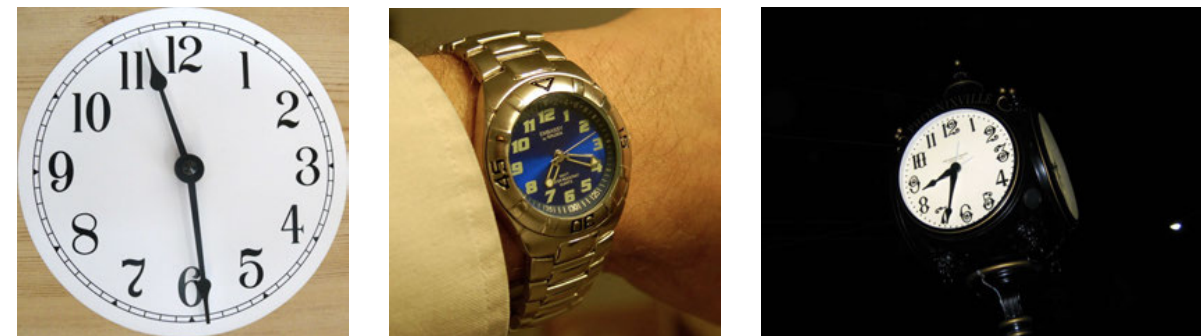
The 12-hour format uses the letters "a.m." and "p.m." to show whether the time is before or after midday. This format appears on analogue clocks and traditional watches.
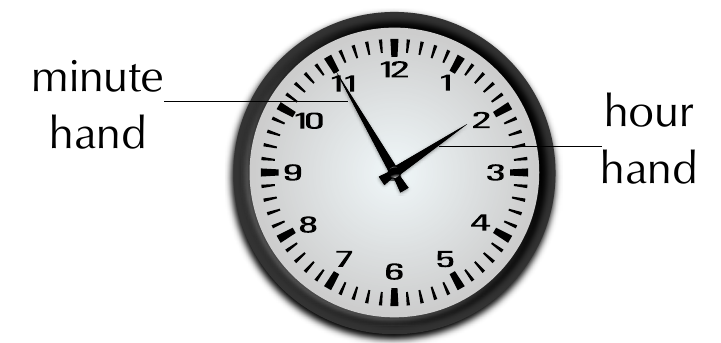
On analogue clocks, the short hand points to the hour while the long hand points to the minutes. Some clocks also have a third hand for seconds.
Note
Understanding a.m. and p.m.:
- a.m. stands for "ante meridiem" (before noon in Latin)
- p.m. stands for "post meridiem" (after noon in Latin)
For example, school might start at 7:30 a.m. (morning) and finish at 2:00 p.m. (afternoon).
24-hour clock format (digital)
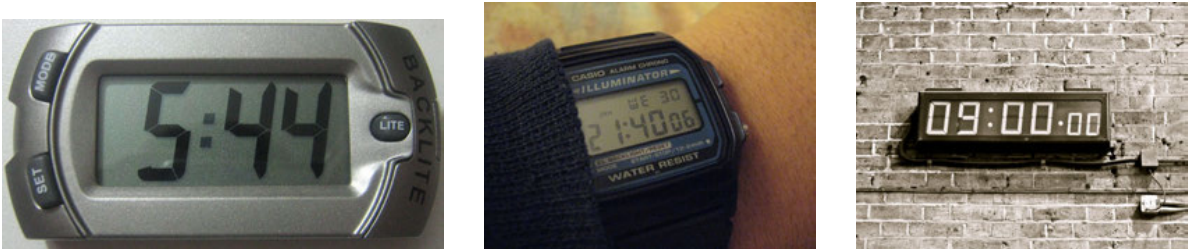
The 24-hour format uses numbers from 00:00 to 23:59 without needing a.m. or p.m. This format appears on digital clocks, watches, and electronic devices.
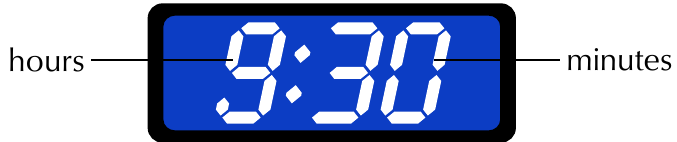
On digital displays, the number on the left shows hours and the number on the right shows minutes. Some displays also show seconds.
Converting between time formats
Converting between 12-hour and 24-hour formats follows simple rules.
Important
Key Conversion Rules:
Converting from 12-hour to 24-hour format:
- Morning times (a.m.): Write the same time but remove "a.m."
- Afternoon/evening times (p.m.): Add 12 hours to the time and remove "p.m."
- Special cases: 12:00 a.m. becomes 00:00, and 12:00 p.m. stays 12:00
Converting from 24-hour to 12-hour format:
- Times from 00:00 to 11:59: Add "a.m." (but 00:00 becomes 12:00 a.m.)
- Times from 12:00 to 23:59: Subtract 12 hours and add "p.m." (except 12:00 stays 12:00 p.m.)
Example
Worked Example: Time Format Conversions
Question: Convert these times to 24-hour format:
- a) Jane goes to bed at 9:56 p.m.
- b) The local shop opens at 8:30 a.m.
- c) Archie's cricket practice ends at 4:05 p.m.
Solution:
- a) 9:56 p.m. + 12 hours = 21:56
- b) 8:30 a.m. (before midday, so stays the same) = 08:30
- c) 4:05 p.m. + 12 hours = 16:05
Converting units of time
Different activities require different time measurements. A sprinter's race is measured in seconds, while a school term is measured in weeks. Choosing the right time unit makes calculations easier and more meaningful.
Time unit conversion
The relationships between time units are:
- 60 seconds = 1 minute
- 60 minutes = 1 hour
- 24 hours = 1 day
- 7 days = 1 week
- 365 days ≈ 52 weeks ≈ 12 months = 1 year
Important
Critical Note About Time Conversions
Unlike other measurements, time doesn't work in tens or hundreds. Always use the exact conversion factors above. This is a common source of errors in time calculations.
Choosing appropriate time units
Different situations require different time units:
- Seconds: Very quick events (running 100 metres, boiling water)
- Minutes: Short activities (taxi rides, cooking pasta)
- Hours: Daily activities (school day, sleeping)
- Days: Short events (test matches, weekend trips)
- Weeks: Medium-term events (school holidays, illness recovery)
- Months: Longer processes (growing crops, pregnancy)
- Years: Life events (age, education, career)
Example
Worked Example: Simple Unit Conversions
Question: Convert these time measurements:
- How long does it take a teacher to walk to the classroom in seconds, if it takes 5 minutes?
- If learners spend 4 hours in class before second break, how many minutes and seconds is this?
Solution:
-
1 minute = 60 seconds Therefore: 5 minutes = 5 × 60 seconds = 300 seconds
-
a) 1 hour = 60 minutes Therefore: 4 hours = 4 × 60 minutes = 240 minutes
b) 1 minute = 60 seconds Therefore: 240 minutes = 240 × 60 seconds = 14,400 seconds
Complex time conversions
When converting between units that aren't directly related, break the problem into smaller steps.
Example
Worked Example: Complex Conversions
Question: Convert 140 seconds into minutes and seconds.
Solution:
Step 1: Divide by 60 to find whole minutes
140 ÷ 60 = 2.33 minutes
This means 2 whole minutes plus a remainder.
Step 2: Calculate the remainder in seconds
2 minutes = 120 seconds
140 seconds - 120 seconds = 20 seconds
Answer: 140 seconds = 2 minutes and 20 seconds
Calculating elapsed time
Elapsed time is the amount of time that passes between a start time and an end time. This skill helps with planning daily activities and managing schedules.
Method for calculating elapsed time
Note
Step-by-Step Method for Elapsed Time:
- Add hours first: Calculate the total hours from start to end
- Add minutes next: Calculate the total minutes separately
- Convert if necessary: If minutes exceed 60, convert to hours and minutes
- Combine the results: Add hours and minutes together
Example
Worked Example: Elapsed Time Calculation
Question: School starts at 07:45. You are in class for 2 hours 30 minutes. What time will the bell ring for first break?
Solution: Step 1: Add the hours
07:00 + 2 hours = 09:00
Step 2: Add the minutes
45 minutes + 30 minutes = 75 minutes
Step 3: Convert excess minutes to hours
75 minutes = 60 minutes + 15 minutes = 1 hour and 15 minutes
Step 4: Calculate total elapsed time
09:00 + 1 hour 15 minutes = 10:15
Answer: The bell will ring at 10:15.
Using calendars and timetables
Calendars and timetables are practical tools that help us organise time over longer periods. They're essential for planning events, tracking deadlines, and managing schedules.
Working with calendars
Calendars show days, weeks, and months in an organised format. They help us:
- Track important dates and events
- Calculate time periods between events
- Plan ahead for deadlines and activities
- Convert between days, weeks, and months
Note
Important Calendar Facts:
- Most months have 30 or 31 days (February has 28 or 29)
- 4 weeks = 28 days (not exactly 1 month)
- Always count the actual days in each month for accurate calculations
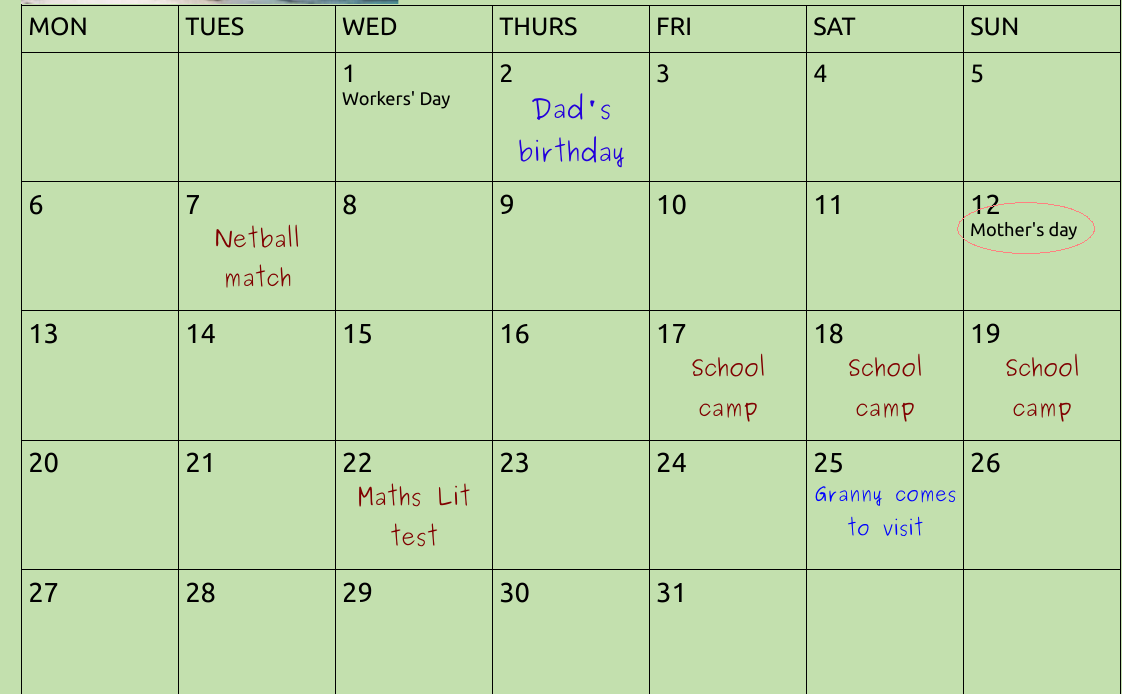
Example
Worked Example: Calendar Calculations
Using the May 2013 calendar above, answer this question:
Question: If it is Monday 6 May, how many days until Mother's Day?
Solution: Count from Monday 6 May to Sunday 12 May:
Tuesday 7, Wednesday 8, Thursday 9, Friday 10, Saturday 11, Sunday 12
Answer: 6 days
Reading timetables
Timetables organise activities by specific times and are commonly used for:
- School class schedules
- Television programmes
- Transport schedules
- Work shifts
Important
When Reading Timetables, Always Check:
- The time format being used (12-hour or 24-hour)
- Start and end times for each activity
- Duration of activities
- Gaps between activities
Summary
Key Points to Remember:
- Time formats: 12-hour format uses a.m./p.m., while 24-hour format uses 00:00-23:59
- Converting formats: Add 12 hours to p.m. times for 24-hour format; subtract 12 hours from times after 12:00 for 12-hour format
- Time conversions: Always use exact factors (60 seconds = 1 minute, 60 minutes = 1 hour, 24 hours = 1 day)
- Elapsed time: Add hours and minutes separately, then convert excess minutes to hours if needed
- Choose appropriate units: Use seconds for quick events, minutes for short activities, hours for daily tasks, and days/weeks/months for longer periods