Estimating and Measuring Length and Distance (Grade 10 NSC Matric Mathematical Literacy): Revision Notes
📚Revision Notes
Estimating and Measuring Length and Distance
Why do we need to measure length and distance?
Measuring length and distance is an essential skill used in many real-life situations. You might need to know how far you have travelled in a car, how much material to buy for a project, or the dimensions of objects around your home. Accurate measurements help us plan activities, calculate costs, and avoid waste.
There are two main approaches to finding length and distance:
- Estimation - making approximate measurements using familiar references
- Accurate measurement - using proper measuring instruments
Estimation methods for length and distance
Estimation means making a reasonable guess about a measurement without using precise tools. This is useful for quick approximations.
Body-based estimation techniques
Your body provides convenient reference points for estimating measurements:
Note
Useful Body References for Estimation:
- One metre is approximately the distance from your shoulder to your fingertips when your arm is outstretched
- One metre is also roughly the distance of one large step or jump
These methods give you a starting point, but remember that body measurements vary between people, so your estimates might differ from others.
Measuring instruments for accurate measurements
When you need precise measurements, use proper measuring instruments. Each tool is designed for specific purposes and measurement ranges.
Ruler
A ruler is a straight measuring tool with marked units.
Note
Key Features of a Ruler:
- Usually has centimetre and millimetre units marked on it
- Most commonly available in 15 cm or 30 cm lengths
- Best used for measuring small objects like the length of a piece of paper or small items
Measuring tape
A measuring tape is a flexible measuring tool that can bend around objects.
Note
Key Features of a Measuring Tape:
- Has centimetre and metre units marked on it
- Useful for measuring lengths of fabric, furniture, and room dimensions
- Can measure both straight lines and curves
Trundle wheel
A trundle wheel is a wheel attached to a handle that you roll along the ground.
Note
Key Features of a Trundle Wheel:
- The circumference (distance around the wheel) is exactly 1 metre
- Makes a clicking sound for every full rotation, which equals 1 metre measured
- Ideal for measuring large distances like classrooms, corridors, or sports fields
- Each "click" represents 1 metre of distance covered
Odometer
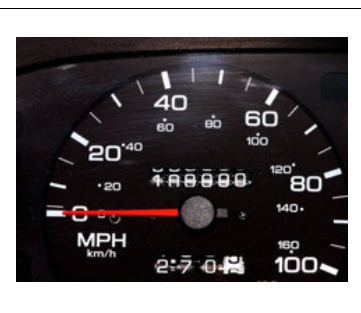
An odometer is a measuring instrument found in motor vehicles.
Note
Key Features of an Odometer:
- Measures the total distance travelled by a vehicle
- The displayed number increases by 1 unit for every kilometre the car travels
- Shows cumulative distance - the total distance the car has travelled since it was made
- Essential for vehicle maintenance and calculating travel costs
Worked examples
Example
Worked Example 1: Estimating and measuring window width
Problem: Carl needs to measure a window's width to determine how much curtain material to buy. The material costs R 55 per metre.

Step 1: Using estimation Carl estimates the window width using his arm span: 1,9 metres
Based on his estimate:
- Material needed: 2 metres (rounded up)
- Cost:
Step 2: Using accurate measurement
Carl uses a measuring tape and finds the actual width: 2,2 metres
Based on accurate measurement:
- Material needed: 3 metres (material only sold in whole metre units)
- Cost:
Key learning point: This example shows why accurate measurement is important. Carl's estimate was 0,3 metres too small, which would have resulted in insufficient material.
Important
Always measure accurately when purchasing materials to avoid costly mistakes.
Example
Worked Example 2: Calculating material costs for multiple items
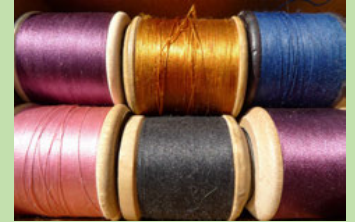
Problem: Liz sews dresses and needs to calculate material requirements and costs.
Given information:
- Dress material costs R 89,50 per metre
- Material needed: 2,5 m (7-year-old), 2 m (4-year-old), 3 m (10-year-old)
- Embroidery cotton costs R 12,55 per roll of 3 metres
- Uses 2 rolls of cotton per dress
Step 1: Calculate total material needed
For the four dresses: 1 dress (7-year-old) + 2 dresses (4-year-old) + 1 dress (10-year-old)
Total material = metres
Step 2: Calculate material cost
Material cost = Length × Price per metre
Material cost =
Step 3: Calculate cotton requirements per dress
Cotton per dress = metres = 600 cm
Step 4: Calculate total cotton cost
Total cotton needed = rolls
Cotton cost =
Step 5: Calculate total cost for 10-year-old dress
10-year-old dress cost = Material cost + Cotton cost
=
=
Exam tips for length and distance problems
Common problem-solving steps
Follow these steps to solve measurement problems effectively:
- Read carefully - identify what you need to find and what information is given
- Choose the right approach - estimation for approximations, instruments for accuracy
- Show your calculations - write out each step clearly
- Check units - ensure your answer uses the correct units (mm, cm, m, km)
- Round appropriately - consider practical constraints (like materials sold in whole units)
Important
Typical exam traps to avoid:
- Forgetting to round up when materials are only sold in whole units
- Mixing units - convert everything to the same unit before calculating
- Using estimation when accuracy is required for purchasing decisions
- Forgetting additional costs like cotton, thread, or other materials in multi-part problems
Formula to remember
Total Cost = Quantity × Price per unit
Always identify the quantity needed first, then multiply by the unit price.
Summary
Key Points to Remember:
- Estimation gives approximate measurements using body references like arm span (≈ 1m) or large steps (≈ 1m)
- Measuring instruments provide accurate measurements: rulers for small objects, measuring tapes for fabric/furniture, trundle wheels for large distances, odometers for vehicle travel
- Always measure accurately when purchasing materials to avoid waste and additional costs
- Show your working clearly in exam problems and check that units are consistent
- Consider practical constraints like materials sold only in whole metre units when calculating quantities needed