Measuring and Monitoring Temperature (Grade 10 NSC Matric Mathematical Literacy): Revision Notes
📚Revision Notes
Measuring and Monitoring Temperature
Temperature plays a crucial role in our daily lives. We need to understand temperature when monitoring our health, checking the weather to decide what clothes to wear, and setting the correct heat levels for cooking food.
Understanding temperature
Temperature tells us how hot or cold something is. Temperature can be either positive or negative numbers. The higher the positive temperature, the hotter it becomes. The lower the negative temperature, the colder it becomes.
Temperature is measured in degrees Celsius (°C). This scale helps us understand temperature by using important reference points that we can easily remember.
Important
Key Reference Points to Remember:
- Water freezes and becomes ice at 0°C
- Water boils at 100°C (at sea level)
- Normal healthy human body temperature ranges between 36°C and 37°C
When your body temperature rises above 37°C, this indicates you may have a fever and should consider seeing a doctor.
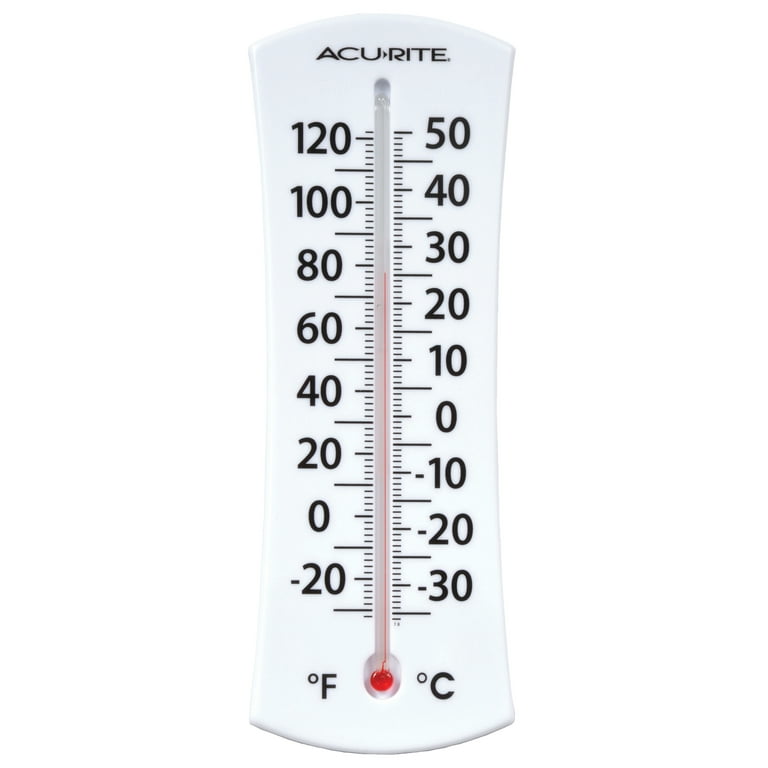
Types of temperature measuring instruments
Different situations require different tools to measure temperature accurately. Understanding which instrument to use helps ensure we get reliable temperature readings.
Analogue thermometers
An analogue thermometer contains no electronic parts. These traditional thermometers are commonly used to measure human body temperature when someone feels unwell. They typically measure temperatures ranging from 32°C to 42°C. Any reading outside this range indicates an extremely serious medical condition.
Digital thermometers also exist for measuring human body temperature and often provide quicker, more accurate readings.
Maximum-minimum outdoor thermometers
An outdoor thermometer measures external air temperature. Many outdoor thermometers are maximum-minimum thermometers that record both the highest and lowest temperatures reached since the last reset.
Note
These thermometers work using mercury that expands when temperature increases and contracts when temperature decreases. The thermometer shows:
- Minimum temperature on the left side
- Maximum temperature on the right side
- Current temperature indicated by the mercury level
A small button allows you to reset the thermometer to begin recording new maximum and minimum values.
Cooking temperature controls
Kitchen appliances use different types of temperature controls:
Stove dial controls show relative temperature settings rather than exact temperatures. These typically display numbers from 1 to 6, representing different heat levels from coolest to hottest. The exact temperature depends on your specific stove model.
Oven temperature dials display actual temperatures in degrees Celsius. The numbers around the dial indicate the precise temperature setting you have selected for cooking.
Weather reports
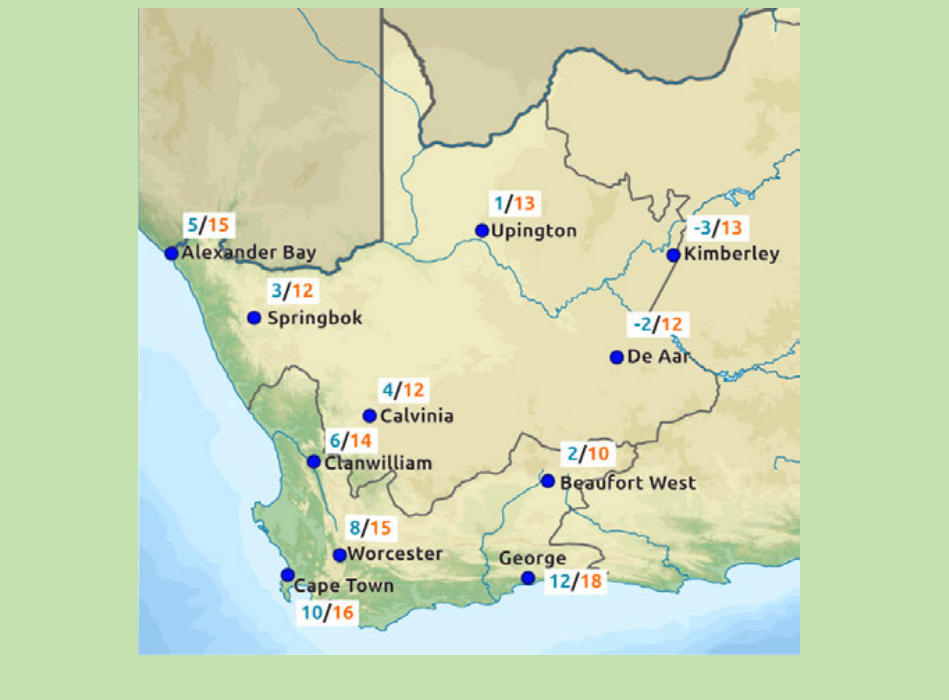
A weather report presents temperature information through maps, tables, or lists. These reports show minimum and maximum temperatures for different regions or the entire country. Weather reports also typically include additional information about rainfall forecasts and cloud coverage.
Reading and interpreting temperature data
Temperature data appears in various formats. Learning to read these different presentations helps you understand and use temperature information effectively.
Temperature tables
When recording temperature measurements over time, tables organize the data clearly. Each column represents a different time period (day, hour, etc.), while rows show the corresponding temperature readings.

Temperature graphs
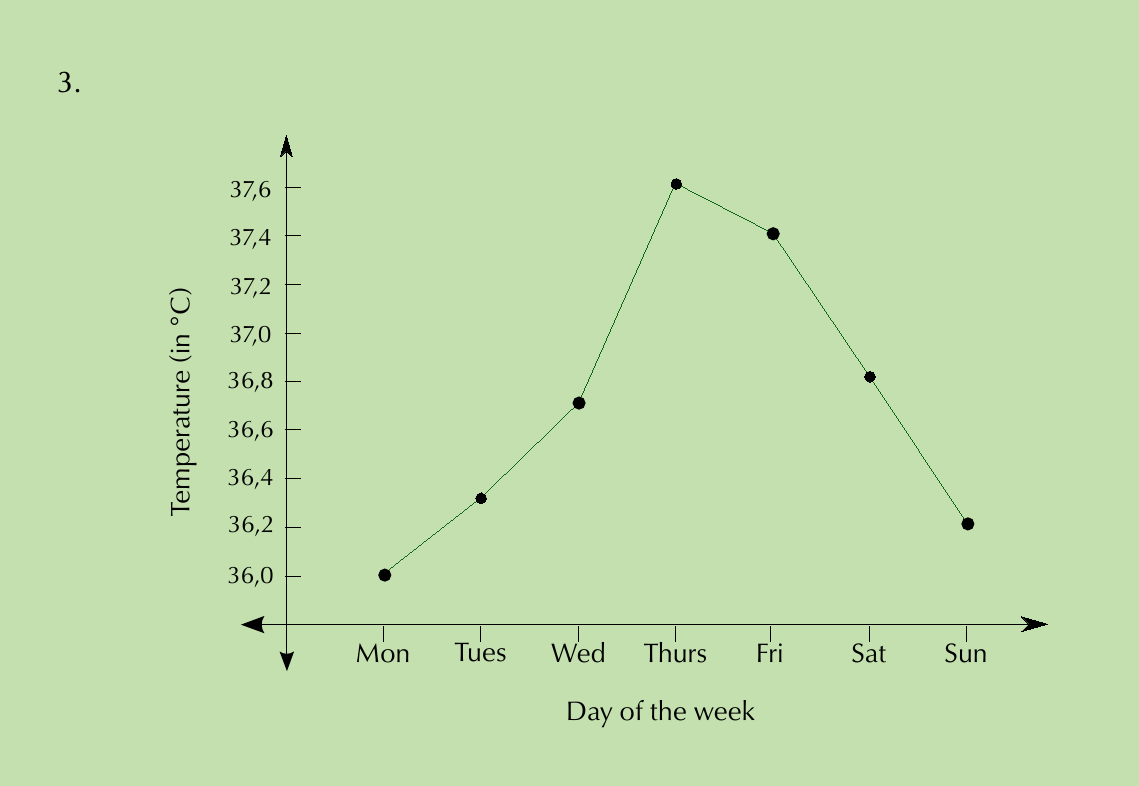
Line graphs effectively display temperature changes over time. The horizontal axis shows time periods, while the vertical axis shows temperature values. Points on the graph represent individual temperature readings, connected by lines to show trends.
Weather maps
Weather maps display temperature information for multiple locations simultaneously. Each location shows two numbers:
- First number: minimum expected temperature
- Second number: maximum expected temperature
Example
Worked Example: Personal Temperature Monitoring
Question: Natalia monitors her body temperature daily for one week because she feels unwell. She knows that temperatures above 37.5°C indicate she needs medical attention. Here are her daily readings:
| Day | Mon | Tues | Wed | Thurs | Fri | Sat | Sun |
|---|---|---|---|---|---|---|---|
| Temperature (°C) | 36.0 | 36.3 | 36.7 | 37.6 | 37.4 | 36.8 | 36.2 |
Find:
- a) The lowest temperature recorded
- b) The highest temperature recorded\
- c) The difference between these temperatures
- d) Whether Natalia should see a doctor
Solution:
a) Lowest temperature: 36.0°C (Monday)
b) Highest temperature: 37.6°C (Thursday)
c) Temperature difference:
d) Medical consultation needed: Yes, because her temperature on Thursday (37.6°C) exceeded 37.5°C, indicating a fever requiring medical attention.
Example
Worked Example: Weather Report Interpretation
Question: A weather report shows expected temperatures for various Western Cape towns:
- Alexander Bay: -5°C/15°C
- Cape Town: 8°C/16°C
- Kimberley: -3°C/13°C
- De Aar: -2°C/12°C
Answer these questions:
- a) Which town will be coldest?
- b) Which town will be warmest?
- c) What is the temperature difference for Alexander Bay?
- d) What is the temperature difference for De Aar?
Solution:
a) Coldest town: Alexander Bay (minimum temperature -5°C)
b) Warmest town: Cape Town (maximum temperature 16°C)
c) Alexander Bay temperature difference:
d) De Aar temperature difference:
Example
Worked Example: Temperature Calculations
Question: Katie needs to cook fish at 200°C and potatoes at 120°C. What is the temperature difference between these cooking temperatures?
Solution:
Temperature difference = Higher temperature - Lower temperature
The difference between the cooking temperatures is 80°C.
Summary
Exam Tips
- Always include the °C symbol in your temperature answers
- When calculating temperature differences, subtract the smaller value from the larger value
- Remember that negative temperatures represent very cold conditions
- Weather reports show minimum temperature first, then maximum temperature
- Body temperatures above 37.5°C indicate potential medical concerns
Summary
Key Points to Remember:
- Temperature is measured in degrees Celsius (°C)
- Water freezes at 0°C and boils at 100°C
- Normal body temperature ranges from 36°C to 37°C
- Different thermometers serve different purposes - choose the right tool for each situation
- Temperature difference = Higher temperature - Lower temperature