Triangles (Grade 10 NSC Matric Mathematics): Revision Notes
📚Revision Notes
Triangles
What is a triangle?
A triangle is a three-sided polygon that forms one of the most fundamental shapes in geometry. When we refer to a triangle with vertices (corners) at points A, B, and C, we use the notation △ABC. This notation helps us identify specific triangles and discuss their properties systematically.
Triangles are incredibly useful in mathematics because they can be classified in different ways based on their side lengths and angle measurements. Understanding these classifications helps us solve geometric problems and prove mathematical relationships.
Note
Triangle notation uses the triangle symbol (△) followed by the vertices listed in order. This standardised notation allows mathematicians to communicate clearly about specific triangles and their properties.
Classification by side lengths
Triangles can be grouped into three main categories based on how their side lengths compare to each other.
Scalene triangles
A scalene triangle has all three sides of different lengths. This means that no two sides are equal, and consequently, all three interior angles are also different. Scalene triangles are the most general type of triangle since they have no special symmetry properties.
Isosceles triangles
An isosceles triangle has exactly two sides that are equal in length. The angles opposite these equal sides are also equal to each other. This creates a line of symmetry through the triangle, making isosceles triangles particularly useful in geometric proofs and constructions.
Equilateral triangles
An equilateral triangle has all three sides equal in length. Because of this perfect symmetry, all three interior angles are also equal, each measuring exactly 60°. Equilateral triangles have three lines of symmetry and represent the most symmetric type of triangle.
Classification by angle measures
Triangles can also be classified based on the sizes of their interior angles. This classification system helps us understand the shape and properties of different triangles.
Acute triangles
An acute triangle has all three interior angles measuring less than 90°. These triangles appear "sharp" because none of their angles are particularly large. All equilateral triangles are also acute triangles.
Obtuse triangles
An obtuse triangle has one interior angle that measures greater than 90°. The other two angles must be acute to ensure the total sum equals 180°. Obtuse triangles have a "wide" appearance due to their large angle.
Right-angled triangles
A right-angled triangle has exactly one interior angle measuring 90°. The side opposite the right angle is called the hypotenuse and is always the longest side. The other two sides are called the legs of the triangle.
Note
In right-angled triangles, the hypotenuse is always the longest side because it's opposite the largest angle (90°). This property is fundamental to understanding the Pythagorean theorem.
Combined classifications
Triangles can have properties from both classification systems. For example, you can have an obtuse isosceles triangle or a right-angled isosceles triangle.
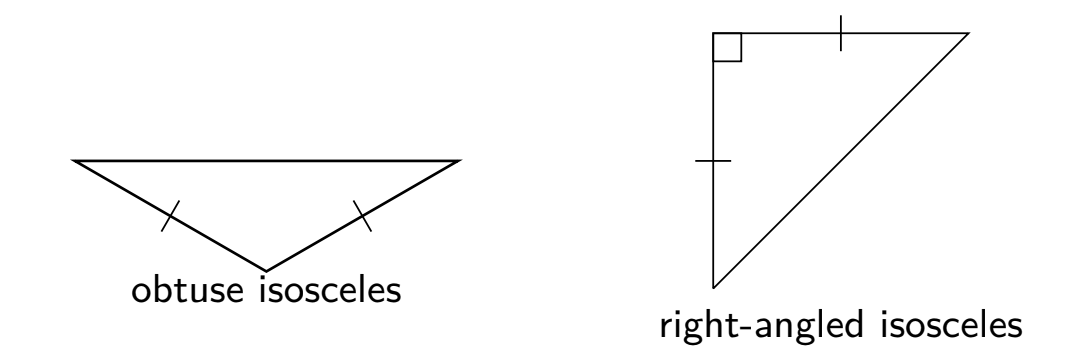
These combinations create triangles with specific properties that are useful in different geometric situations. Understanding these combinations helps in identifying triangle types quickly during problem-solving.
Interior angles of triangles
One of the most important properties of triangles concerns the sum of their interior angles.
Angle sum theorem
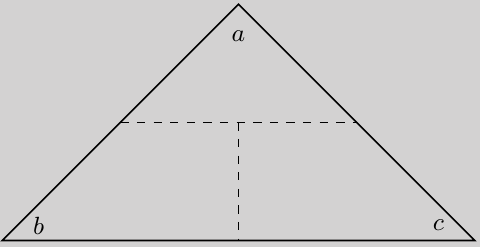
The interior angles of any triangle always add up to exactly 180°. This fundamental theorem applies to all triangles, regardless of their size, shape, or classification.
Mathematically, if a triangle has interior angles measuring , , and , then:
Important
This relationship is crucial for solving problems involving unknown angles in triangles. If you know two angles, you can always calculate the third angle by subtracting the sum of the known angles from 180°.
Practical applications
The angle sum theorem allows you to:
- Find missing angles in triangles
- Verify whether three given angles can form a triangle
- Prove relationships between different triangles
- Solve complex geometric problems
Congruency
Congruent triangles are triangles that are exactly the same size and shape. When triangles are congruent, all corresponding sides are equal in length, and all corresponding angles are equal in measure.
We use the symbol ≡ to indicate congruency. For example, if triangle ABC is congruent to triangle DEF, we write: .
Note
Understanding Corresponding Parts
When stating congruency, the order of letters is crucial. Writing tells us that:
- Angle A corresponds to angle D
- Angle B corresponds to angle E
- Angle C corresponds to angle F
- Side AB corresponds to side DE
- Side BC corresponds to side EF
- Side AC corresponds to side DF
Congruency rules
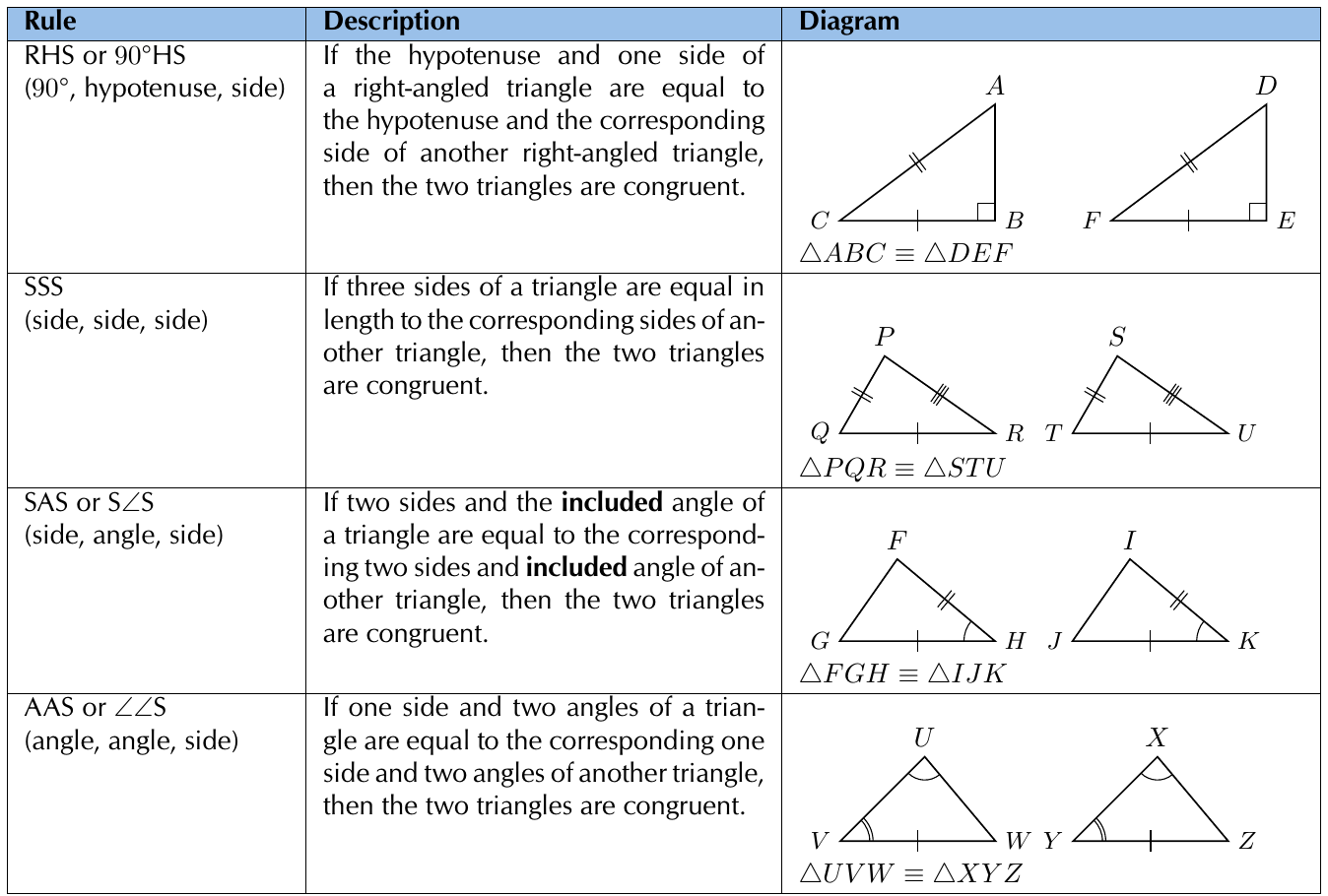
There are four main rules that can be used to prove triangles are congruent:
RHS (Right-angle Hypotenuse Side)
If two right-angled triangles have their hypotenuses equal and one corresponding side equal, then the triangles are congruent. This rule only applies to right-angled triangles.
SSS (Side-Side-Side)
If all three corresponding sides of two triangles are equal in length, then the triangles are congruent. This is often the easiest rule to apply when you have information about all side lengths.
SAS (Side-Angle-Side)
If two corresponding sides and the included angle (the angle between those sides) of two triangles are equal, then the triangles are congruent.
AAS (Angle-Angle-Side)
If two corresponding angles and any corresponding side of two triangles are equal, then the triangles are congruent.
Example
Memory Aid: "All Students Sometimes Sleep"
- AAS (Angle-Angle-Side)
- SSS (Side-Side-Side)
- SAS (Side-Angle-Side)
- Sleep = Remember RHS for right-angled triangles only!
This mnemonic helps you remember the four main congruency rules during exams.
Similarity
Similar triangles have the same shape but may have different sizes. This means their corresponding angles are equal, but their corresponding sides are proportional (in the same ratio).
We use the symbol ||| to indicate similarity. For example: .
Similarity rules
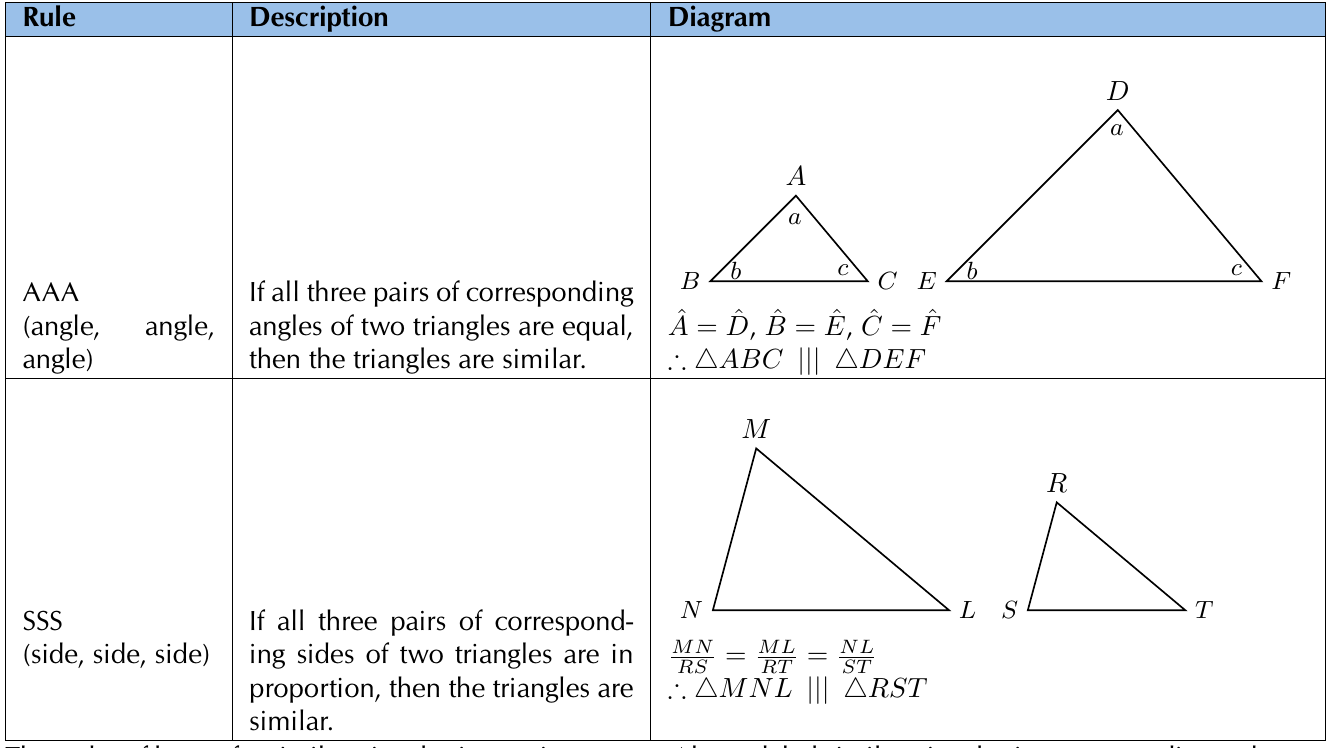
There are two main rules for proving triangles are similar:
AAA (Angle-Angle-Angle)
If all three corresponding angles of two triangles are equal, then the triangles are similar. In practice, you only need to show two angles are equal, since the third angle will automatically be equal (as angles sum to 180°).
SSS (Side-Side-Side) for similarity
If all three pairs of corresponding sides are in the same proportion, then the triangles are similar. This means the ratios of corresponding sides are all equal.
Important
Key Differences: Congruency vs Similarity
- Congruent triangles: Same size AND same shape
- Similar triangles: Same shape but may be different sizes
- All congruent triangles are similar, but not all similar triangles are congruent
The theorem of Pythagoras
The Pythagorean theorem is one of the most famous mathematical relationships and applies specifically to right-angled triangles.
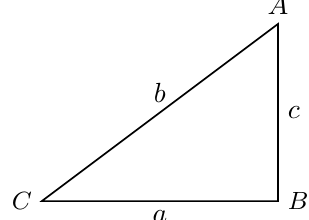
The theorem statement
In a right-angled triangle, the square of the hypotenuse equals the sum of the squares of the other two sides.
If triangle ABC is right-angled at B, then:
Where:
- is the hypotenuse (the side opposite the right angle)
- and are the other two sides (called legs)
Important
Converse of the Pythagorean Theorem
If in a triangle, then the triangle is right-angled with the right angle opposite the longest side.
This converse is useful for determining whether a triangle is right-angled when you know all three side lengths.
Worked example
Let's examine a step-by-step approach to solving triangle problems using congruency.
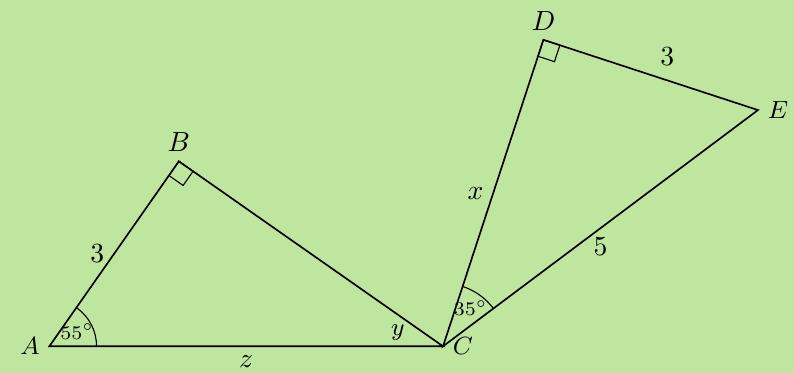
Example
Worked Example: Problem-Solving Strategy
When working with triangles, follow this systematic approach:
Step 1: Examine the given information - identify known angles, sides, and any special markings
Step 2: Determine the relationship - decide if triangles are congruent, similar, or neither
Step 3: Apply appropriate rules - use congruency or similarity rules to find unknown values
Step 4: Use angle and side relationships - apply the angle sum theorem and Pythagorean theorem as needed
Step 5: Check your answers - verify that your solutions make geometric sense
Step-by-step method for congruency
When proving triangles are congruent:
- List all given information for both triangles
- Calculate any missing angles using the angle sum theorem
- Compare corresponding angles and sides
- State which congruency rule applies (RHS, SSS, SAS, or AAS)
- Use the congruent relationship to find unknown measurements
Exam tips
Here are essential strategies for success in triangle problems:
Note
Essential Exam Strategies
- Always check angle sums: Interior angles should total 180°
- Label corresponding parts carefully: Use consistent notation when stating congruency or similarity
- Show your working: In congruency and similarity problems, clearly state which rule you're using
- Look for right angles: The Pythagorean theorem is often key to solving problems
- Use given information fully: Don't assume measurements - work with what's provided
Remember!
Summary
Key Points to Remember:
- All triangles have interior angles that sum to 180°
- Congruent triangles (≡) are identical in size and shape
- Similar triangles (|||) have the same shape but may differ in size
- The four congruency rules are RHS, SSS, SAS, and AAS
- The two similarity rules are AAA and SSS (proportional)
- Pythagoras' theorem: In right-angled triangles,
- Letter order matters when stating congruency and similarity relationships