Right Prisms and Cylinders (Grade 10 NSC Matric Mathematics): Revision Notes
📚Revision Notes
Right Prisms and Cylinders
What is a right prism?
A right prism is a three-dimensional geometric solid that has a polygon as its base and vertical faces that are perpendicular to the base. The base and top surface are identical in shape and size. It is called a "right" prism because the angles between the base and the side faces are all right angles (90°).
Note
The key feature that makes a prism "right" is that all the angles between the base and the side faces are exactly 90 degrees. This creates perfectly vertical side faces that are perpendicular to both the top and bottom surfaces.
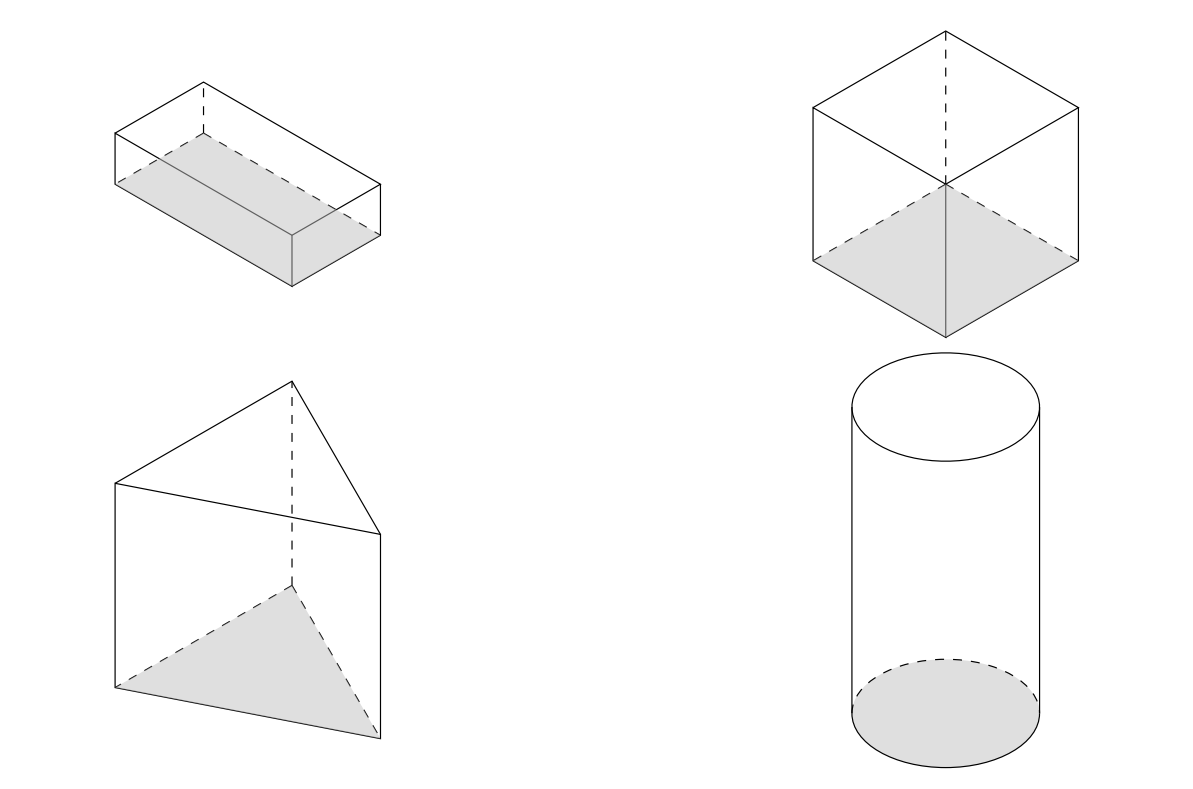
Types of right prisms
Different types of right prisms are named according to the shape of their base:
- Triangular prism: has a triangle as its base
- Rectangular prism: has a rectangle as its base
- Cube: a special rectangular prism where all sides are equal length
- Cylinder: has a circle as its base (technically not a prism but follows the same principles)
Note
While a cylinder is technically not a prism because it has a curved surface rather than flat polygonal faces, it follows the same mathematical principles for calculating surface area and volume as right prisms.
Surface area of prisms and cylinders
Surface area is the total area of all the exposed or outer surfaces of a three-dimensional shape. To find the surface area, we need to calculate the area of each face and add them all together.
Understanding nets
The easiest way to understand surface area is to imagine unfolding the prism into a flat pattern called a net. When a prism is unfolded, you can clearly see each face and calculate the area of each one separately.
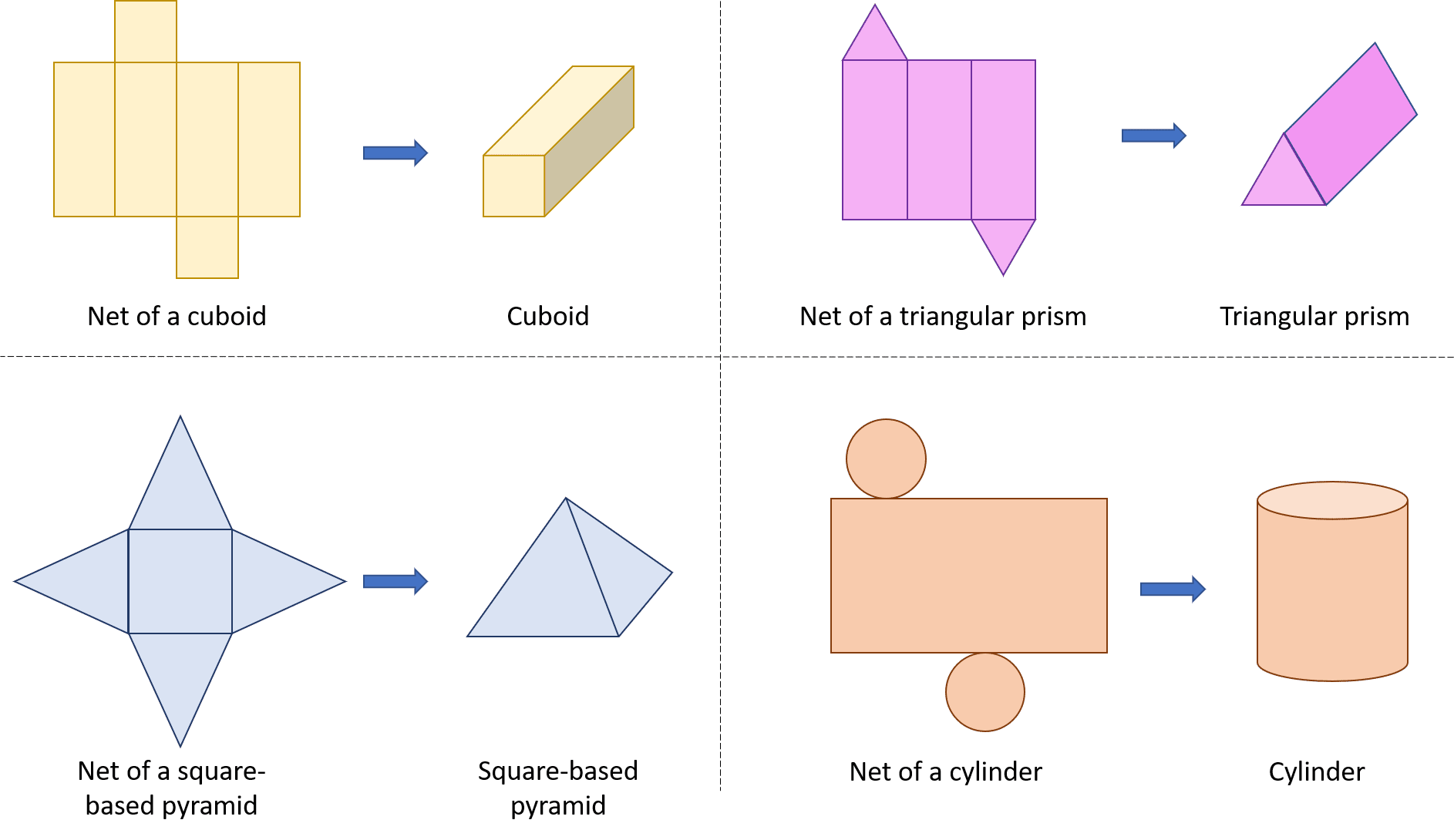
Net patterns for different shapes:
Note
Common Net Patterns:
- Rectangular prism net: Made up of six rectangles
- Cube net: Made up of six identical squares
- Triangular prism net: Made up of two triangles and three rectangles
- Cylinder net: Made up of two identical circles and one rectangle
Calculating surface area
Important
Standard Process for Finding Surface Area:
- Sketch and label the net of the prism
- Find the area of each different shape in the net
- Add up all the areas
This three-step process works for all types of prisms and cylinders.
Worked example 1: Surface area of a rectangular prism
Example
Worked Example: Surface Area of a Rectangular Prism
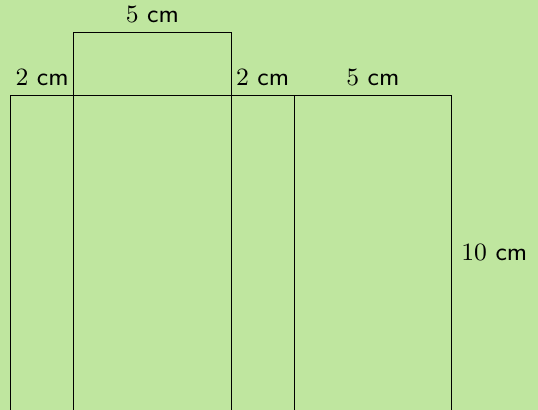
Question: Find the surface area of a rectangular prism with dimensions 5 cm × 2 cm × 10 cm.
Solution:
Step 1: Sketch the net of the prism The net shows one large rectangle and two small rectangles.
Step 2: Calculate the areas
- Large rectangle = perimeter of small rectangle × length
- Large rectangle = (2 + 5 + 2 + 5) × 10 = 14 × 10 = 140 cm²
- Small rectangles = 2 × (5 × 2) = 2 × 10 = 20 cm²
Step 3: Add the areas together Surface area = 140 + 20 = 160 cm²
Worked example 2: Surface area of a triangular prism
Example
Worked Example: Surface Area of a Triangular Prism
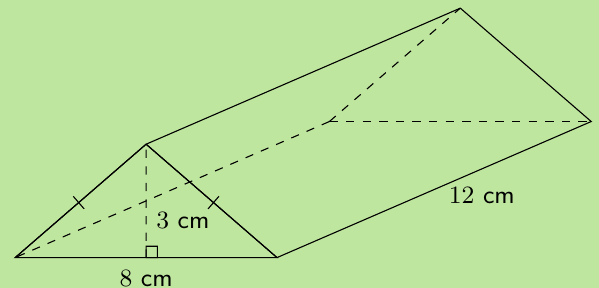
Question: Find the surface area of a triangular prism with base 8 cm, height 3 cm, and length 12 cm.
Solution:
Step 1: Sketch the net The net consists of a large rectangle and two triangular ends.
Step 2: Find missing measurements using Pythagoras' theorem For the triangle with base 8 cm and height 3 cm:
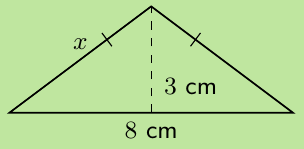
Therefore cm
Perimeter of triangle = 5 + 5 + 8 = 18 cm
Step 3: Calculate areas
- Large rectangle = perimeter of triangle × length = 18 × 12 = 216 cm²
- Triangle area = cm²
- Two triangles = 2 × 12 = 24 cm²
Step 4: Total surface area Surface area = 216 + 24 = 240 cm²
Worked example 3: Surface area of a cylinder
Example
Worked Example: Surface Area of a Cylinder
Question: Find the surface area of a cylinder with radius 10 cm and height 30 cm.
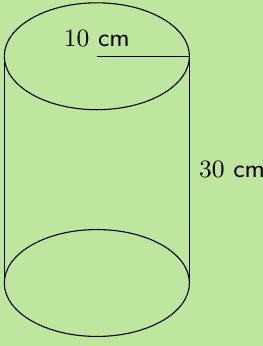
Solution:
Step 1: Sketch the net
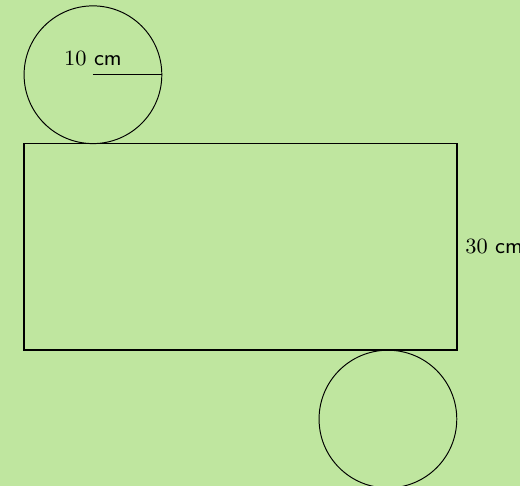
The net consists of two circles and one rectangle.
Step 2: Calculate the areas
- Rectangle area = circumference of circle × height = cm²
- Circle area = cm²
- Two circles = cm²
Step 3: Total surface area Surface area = 1884.96 + 628.32 = 2513.3 cm²
Volume of prisms and cylinders
Volume is the three-dimensional space occupied by an object or the contents of an object. Volume is always measured in cubic units (cm³, m³, etc.).
Universal volume formula
Important
Universal Volume Formula for All Right Prisms and Cylinders:
This fundamental formula applies to every type of right prism and cylinder, regardless of the shape of the base.
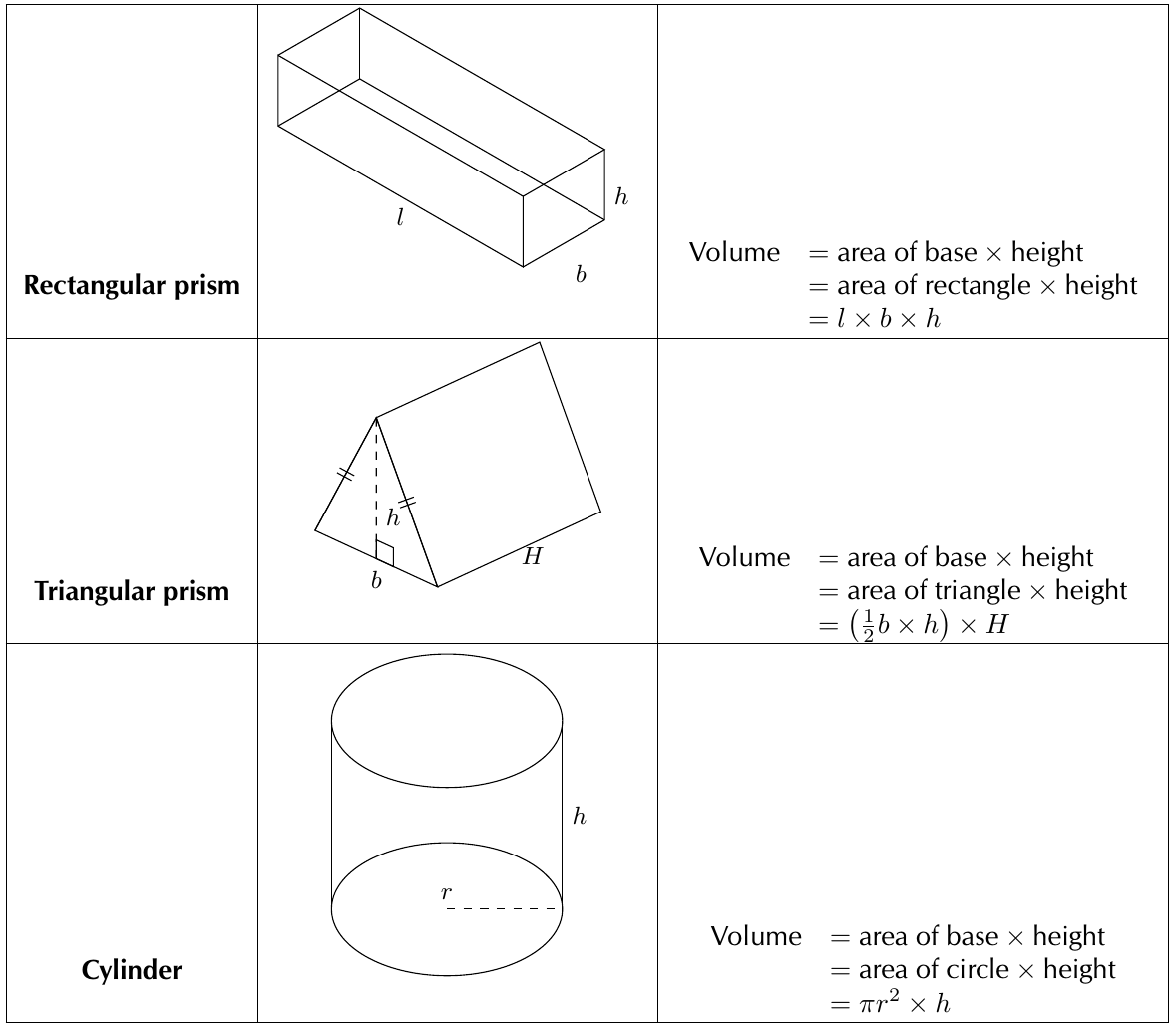
Volume formulas for specific shapes
| Shape | Base | Volume Formula |
|---|---|---|
| Rectangular prism | Rectangle | |
| Triangular prism | Triangle | |
| Cylinder | Circle |
Worked example 4: Volume of a cube
Example
Worked Example: Volume of a Cube
Question: Find the volume of a cube with side length 3 cm.
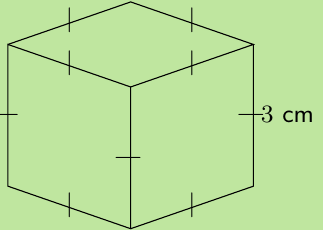
Solution:
Step 1: Find the area of the base Base area = cm²
Step 2: Apply the volume formula Volume = base area × height = 27 cm³
Worked example 5: Volume of a triangular prism
Example
Worked Example: Volume of a Triangular Prism
Question: Find the volume of a triangular prism with base 8 cm, height 10 cm, and length 20 cm.
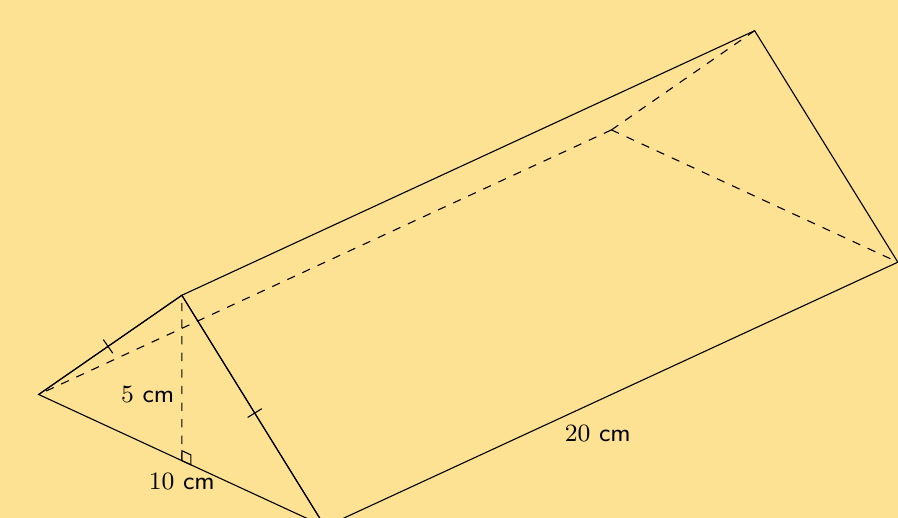
Solution:
Step 1: Find the area of the triangular base Base area = cm²
Step 2: Apply the volume formula Volume = base area × length = 800 cm³
Worked example 6: Volume of a cylinder
Example
Worked Example: Volume of a Cylinder
Question: Find the volume of a cylinder with radius 4 cm and height 15 cm.
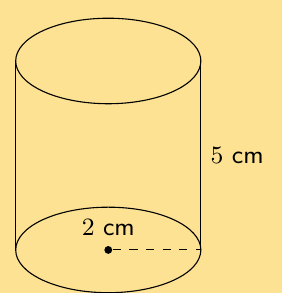
Solution:
Step 1: Find the area of the circular base Base area = cm²
Step 2: Apply the volume formula Volume = base area × height = 754.0 cm³
Key formulas to remember
Summary
Essential Formulas and Methods:
Surface area:
- Find the net of the shape
- Calculate area of each face
- Add all areas together
Volume:
- Universal formula: Volume = Area of base × Height
- Rectangular prism:
- Triangular prism:
- Cylinder:
Exam tips
Important
Critical Exam Strategies:
- Always draw and label the net when calculating surface area
- For triangular prisms, you may need to use Pythagoras' theorem to find missing side lengths
- Remember that cylinders follow the same volume principle as prisms
- Check your units - surface area uses square units (cm²) and volume uses cubic units (cm³)
- Show all working clearly, step by step
Remember!
Summary
Key Points to Remember:
- Right prisms have perpendicular faces and identical top and bottom surfaces
- Surface area is found by unfolding into nets and adding all face areas
- Volume always equals base area multiplied by height for right prisms and cylinders
- Nets help visualise the individual faces of complex 3D shapes
- Always check units - surface area in square units, volume in cubic units