Laboratory Skills and Safety (Grade 10 NSC Matric Physical Sciences): Revision Notes
📚Revision Notes
Laboratory Skills and Safety

The scientific method
When conducting experiments in the laboratory, scientists follow a structured approach called the scientific method. This systematic process helps ensure reliable and valid results.
The scientific method involves these key steps:
- Observe an event and identify a specific question about what you observed
- Form a hypothesis (testable explanation) that could explain the event
- Design an experiment to test your hypothesis, including:
- Fixed factors - variables that remain constant throughout the experiment
- Independent variable - the factor you deliberately change
- Dependent variable - the factor you measure or observe
- Collect data accurately during the experiment
- Draw conclusions based on your experimental results
- Evaluate your hypothesis - decide whether your results support or reject it
- Verify results by repeating the experiment or having others repeat it
Note
For your practical work, you must present your findings using this standard format:
- Aim: Brief statement describing the experiment's purpose
- Apparatus: List of equipment needed, often including a labelled sketch
- Method: Step-by-step procedure you followed
- Results: Data presented in tables, graphs, or written observations
- Discussion: Analysis of what your results mean
- Conclusion: Brief statement about whether your aim was achieved
Understanding how to interpret data is crucial. You should be able to distinguish between qualitative analysis (descriptive observations) and quantitative analysis (numerical measurements). Choose appropriate methods to present your data, whether through tables, graphs, or equations.
Laboratory equipment
Proper identification and use of laboratory apparatus is essential for safe and effective experiments. You must be able to name common equipment and sketch it accurately.
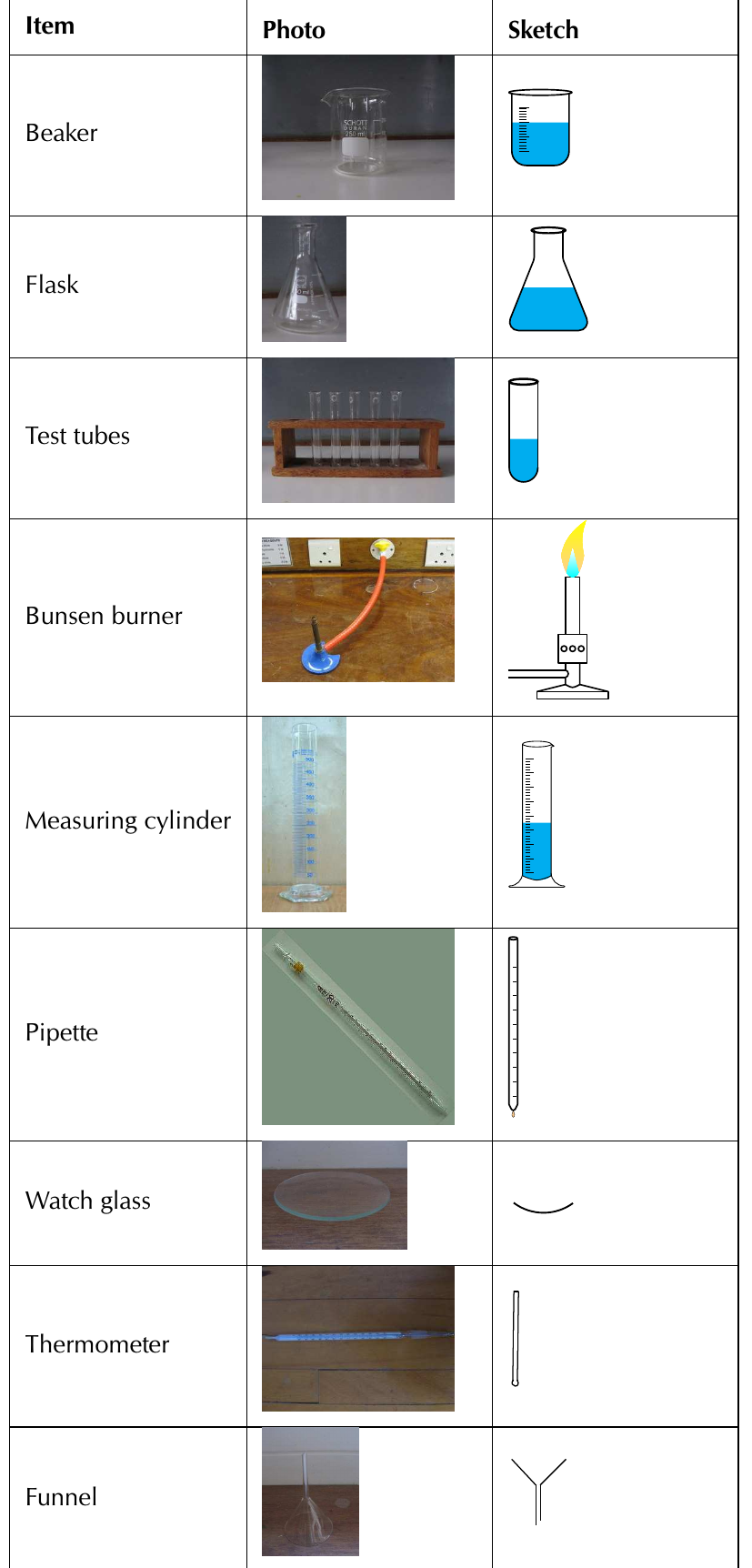
Each piece of equipment serves specific purposes:
- Beakers - for mixing solutions and general heating
- Flasks - conical shape prevents splashing during reactions
- Test tubes - for small-scale reactions and observations
- Bunsen burner - provides controlled heating with adjustable flame
- Measuring cylinder - accurate measurement of liquid volumes
- Pipette - precise transfer of small liquid volumes
- Watch glass - covers beakers or holds small amounts of chemicals
- Thermometer - measures temperature changes during reactions
- Funnel - guides liquids into narrow-necked containers
Note
When using measuring instruments like cylinders or pipettes, always ensure the instrument is level and read at eye level with the top of the liquid surface (the meniscus).
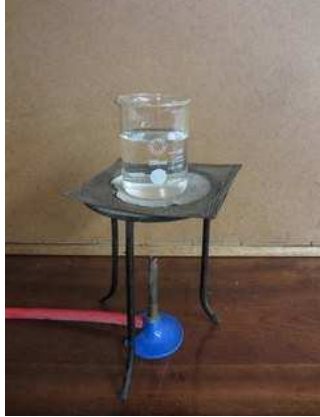
This image demonstrates the correct setup for heating liquids safely using a Bunsen burner, tripod stand, and beaker.
Laboratory safety rules
Your safety and the safety of others depends on following established protocols. Laboratory accidents are preventable when proper procedures are followed consistently.
Personal responsibility
You are responsible for your own safety and that of your classmates. Never work alone in the laboratory, and always behave responsibly without running or playing practical jokes.
Chemical handling procedures
Important
Critical Chemical Safety Rules:
- Never eat, drink, smell, taste, or touch chemicals unless specifically instructed
- Always add acid to water, never water to acid
- Never pour chemicals down the sink without proper authorization
- Do not take chemicals from the laboratory
- Check safety data for any chemicals before use
- Dispose of chemicals according to your teacher's instructions
- When smelling chemicals, gently waft vapours toward you rather than inhaling directly
Equipment safety protocols
- Wear appropriate safety equipment as instructed
- Never heat thick glassware like measuring cylinders as they will crack
- Turn off all Bunsen burners and seal chemical containers at the end of practicals
- Never leave Bunsen burners or flames unattended
- Work in well-ventilated areas and open windows during experiments
- When heating chemicals, point test tube mouths away from people
Emergency procedures
Important
In Case of Emergency:
- Call your teacher immediately for any accidents or chemical spills
- Know the location of safety equipment like eyewash stations and fire blankets
- Follow evacuation procedures if required
Chemical hazard symbols
Chemical containers display international warning symbols to communicate potential dangers. Understanding these symbols helps you handle materials safely and take appropriate precautions.
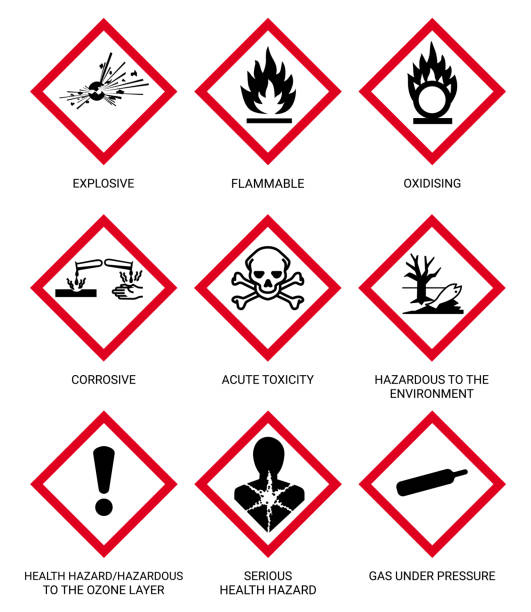
The main hazard categories include:
- Corrosive (C) - chemicals that can burn skin, eyes, and clothing. Example: hydrochloric acid
- Environmentally harmful (N) - substances that damage ecosystems. Example: CFCs
- Explosive (E) - chemicals that can explode easily. Example: lead azide
- Flammable (F) - substances that catch fire easily. Example: methanol
- Harmful (Xn) - chemicals generally damaging to humans
- Irritant (Xi) - substances causing irritation to eyes and skin. Example: hydrogen peroxide
- Oxidising (O) - chemicals containing oxygen that help combustion. Example: potassium dichromate
- Toxic (T) - highly dangerous chemicals. Example: mercury
Before working with any new chemical, consult safety data sheets available online. These contain detailed information about proper handling procedures, potential hazards, and correct disposal methods.
Important
Remember that many chemicals cannot simply be washed down the sink and require special disposal procedures.
Summary
Key Points to Remember:
- The scientific method provides a systematic approach to investigation: observe, hypothesise, experiment, analyse, conclude, and verify
- Always identify laboratory equipment correctly and use proper techniques when measuring or heating substances
- Laboratory safety is everyone's responsibility - follow all protocols to protect yourself and others
- Chemical hazard symbols communicate important safety information - learn to recognise and respond to different warning signs
- Consult safety data sheets before working with unfamiliar chemicals and always dispose of materials according to proper procedures