KwaZulu-Natal and Limpopo (Grade 10 NSC Matric Tourism): Revision Notes
📚Revision Notes
KwaZulu-Natal and Limpopo
Introduction to KwaZulu-Natal
KwaZulu-Natal, often called KZN, is the favourite holiday destination for South African tourists.
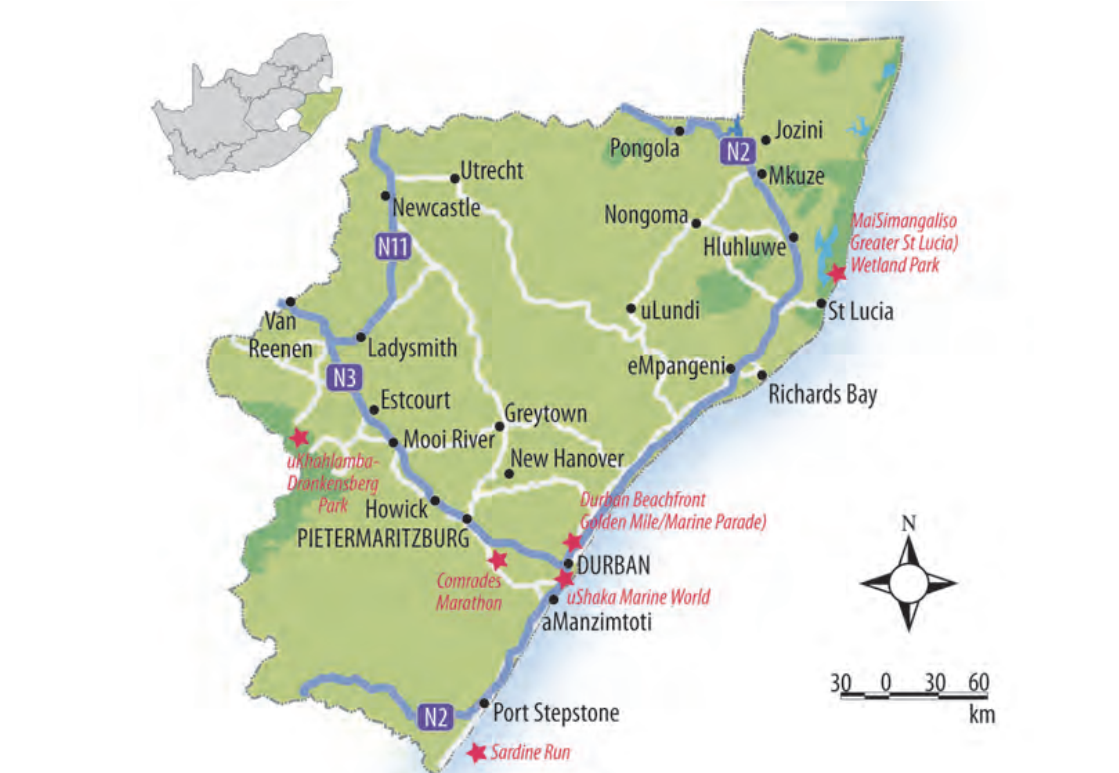
This province offers a winning combination of attractions that appeal to different types of travellers. The main features that make KZN so popular include:
- The warm Indian Ocean – perfect for swimming and water sports year-round
- Zulu Kingdom cultural heritage activities – opportunities to learn about and experience traditional Zulu culture
- Wildlife reserves – chances to see African animals in their natural habitats
- Battlefields – important historical sites from South Africa's past
- Mountain ranges – stunning landscapes for outdoor adventures
Note
The province's location along the eastern coast gives it a sub-tropical climate, which means warm, humid weather that attracts beach-lovers throughout the year. This climate makes KZN a year-round destination, unlike regions with more extreme seasonal variations.
Major attractions in KwaZulu-Natal
iSimangaliso Wetland Park
iSimangaliso, which means "miracle" or "wonder" in Zulu, is one of South Africa's most important conservation areas. The park holds the distinction of being South Africa's first internationally recognised UNESCO World Heritage Site. This means it has been identified as having outstanding universal value that needs to be protected for future generations.
What makes iSimangaliso special:
The park contains the biggest estuarine system on the African continent. An estuary is a special environment where fresh water from rivers meets and mixes with salt water from the ocean. This creates unique conditions that support a remarkable variety of life.
Within the park, you'll find an incredible diversity of ecosystems, including:
- Sub-tropical forests with dense vegetation
- Coral reefs teeming with colourful marine life
- Coastal dunes shaped by wind and waves
- Long, sandy beaches stretching for kilometres
- Swamps with specially adapted plants
- Papyrus and reed wetlands that provide habitat for birds
- Lakes that attract wildlife
Activities at iSimangaliso:
The park offers something for every type of visitor. Water enthusiasts can enjoy fishing, snorkelling, diving, and swimming in the warm waters. For those who prefer to stay dry, there's hiking, bird watching, game viewing, and horse riding. The diversity of activities matches the diversity of the environment.
uKhahlamba/Drakensberg Park
The Drakensberg Mountains, known as uKhahlamba in Zulu (which means "barrier of spears"), form South Africa's highest mountain range. This dramatic landscape has been recognised as a World Heritage Site for both its natural beauty and cultural significance.
Important
The area contains numerous caves and rock shelters that provided homes for San people thousands of years ago. These caves hold the largest collection of rock paintings in Africa, offering a window into ancient life and beliefs. This makes the Drakensberg not just a natural wonder, but also a crucial cultural heritage site.
Key features:
The mountains showcase stunning scenic landscapes with towering peaks, deep valleys, and crystal-clear streams. The area contains numerous caves and rock shelters that provided homes for San people thousands of years ago. These caves hold the largest collection of rock paintings in Africa, offering a window into ancient life and beliefs.
Activities in the park:
Adventure seekers can try rock climbing on the steep cliffs, or explore the network of hiking trails that range from easy walks to challenging multi-day hikes. The park also offers 4x4 trails for vehicle enthusiasts, horse trails for riders, and guided safaris for game viewing. Anglers can try trout and fly fishing in the mountain streams, while thrill-seekers can experience white water rafting on rushing rivers. Viewing the ancient rock paintings provides a fascinating cultural experience that connects visitors to South Africa's earliest inhabitants.
Golden Mile and Marine Parade
The Golden Mile is Durban's famous beachfront area that stretches along the coast for about a mile. This area combines natural beach attractions with modern entertainment facilities, making it a major draw for both local and international tourists.
Main attractions along the Golden Mile:
uShaka Marine World is the centrepiece of the beachfront entertainment complex. This large facility consists of three main sections:
- Sea World – an aquarium where visitors can see marine life up close
- Wet 'n Wild – an adventure water park with slides and rides
- Village Walk – a shopping mall with restaurants and shops
Note
The Marine Parade area also includes amusement parks, the Sun Coast Casino, and the Entertainment World complex, providing diverse entertainment options for visitors of all ages and interests.
Activities along the parade:
Visitors can spend time shopping for souvenirs and local goods, swimming in the designated beach areas with lifeguards, surfing the waves, or simply walking along the promenade enjoying the ocean views and fresh sea breeze.
Comrades Marathon
The Comrades Marathon holds the title of the world's largest and oldest ultra-marathon. An ultra-marathon is any race longer than the standard marathon distance of 42 kilometres. The Comrades covers an impressive 90 kilometres.
What makes it special:
The race runs between two major cities: Pietermaritzburg and Durban. Interestingly, the direction of the race alternates each year – one year it runs "up" from Durban to Pietermaritzburg, and the next year it runs "down" in the opposite direction. This tradition adds variety and keeps the event fresh for regular participants.
Note
The marathon attracts both local South African runners and international sport tourists who come specifically to compete in or watch this famous event. The race has become an important fixture in South Africa's sports calendar and brings significant economic benefits to the KwaZulu-Natal tourism industry.
The Sardine Run
The Sardine Run is one of nature's most spectacular events and occurs annually during May, June, and July along the KwaZulu-Natal coast. During these winter months, millions upon millions of sardines migrate northward along the coast, swimming through the cooler waters in search of warmer conditions.
Why it's significant:
This massive migration doesn't just involve sardines. The huge shoals of fish attract a variety of other marine species, creating an amazing feeding frenzy. Cape Gannets (seabirds) dive into the water from great heights, whales surface to feed, sharks patrol the edges of the sardine shoals, and dolphins herd the fish into tight balls.
Important
The Sardine Run has become a major attraction for Special Interest Tourists (SIT) who come specifically to witness and photograph this natural phenomenon. Education tourists, including school groups and researchers, also visit to learn about marine biology and animal behaviour. The event demonstrates the interconnected nature of marine ecosystems and the importance of seasonal migrations in ocean food chains.
Introduction to Limpopo
Limpopo Province has established itself as a popular ecotourism destination. Ecotourism refers to responsible travel to natural areas that conserves the environment and improves the welfare of local people. The province's focus on sustainable tourism helps protect its natural and cultural resources while providing benefits to local communities.
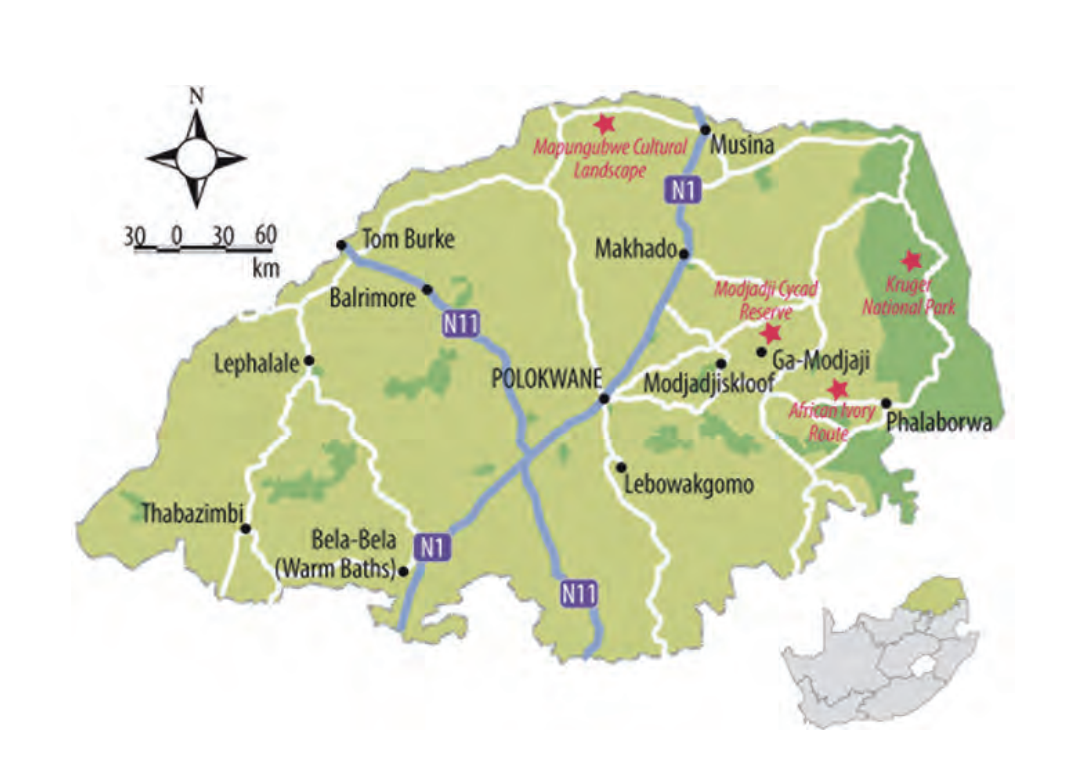
Cultural and historical significance:
Limpopo possesses a rich historical and cultural heritage, with numerous archaeological treasures that tell the story of early human settlement in southern Africa. These ancient sites provide evidence of how people lived thousands of years ago.
Note
The province of myths and legends:
Limpopo is famously known as the "province of myths and legends". One of the most famous legends involves Queen Modjadji, the Rain Queen, who is believed to have had the power to make rain fall. She lived in the Lobedu District. According to tradition, there is currently no Rain Queen because a successor has not yet been formally named following the death of the previous queen.
Major attractions in Limpopo
Stone Age and Iron Age relics of Makapansgat Valley
The Makapansgat Valley contains important archaeological sites with relics from both the Stone Age (when tools were made from stone) and the Iron Age (when people learned to smelt and work with iron). These sites help scientists understand how early humans and their ancestors lived and developed new technologies over thousands of years.
Mapungubwe Cultural Landscape
Mapungubwe represents one of South Africa's most significant archaeological and historical sites. This ancient kingdom operated as a major gold and ivory trading centre until approximately AD 1300. At its height, Mapungubwe conducted trade with distant lands including China, India, and Egypt, demonstrating sophisticated commercial networks.
Important
Historical importance:
Mapungubwe was the largest kingdom in South Africa until the 14th century, when it was mysteriously abandoned. The site provides evidence of an advanced Iron Age civilisation with complex social structures, including distinct class divisions and specialised craft workers.
Because of its outstanding cultural and historical value, Mapungubwe has been designated a World Heritage Site. Visitors today can explore the remains of this once-great kingdom and imagine the bustling trade that once took place here.
Activities at Mapungubwe:
Tourists can participate in guided game viewing activities to see wildlife that has returned to the area, and viewing the scenery from various lookout points provides a sense of the landscape that supported this ancient civilisation.
Modjadji Cycad Reserve
Located in Lebowa, the Modjadji Cycad Reserve protects the oldest and largest cycad specimens on Earth. Cycads are ancient plants that have survived largely unchanged since the time of the dinosaurs, making them living fossils. The reserve provides a rare opportunity to see these prehistoric plants in their natural habitat.
Activities at the reserve:
Visitors can go hiking through the cycad forest, bird watching to spot forest species, and game viewing to see animals that share this unique habitat.
Kruger National Park
Kruger National Park stands as the largest game reserve in South Africa and one of the most famous wildlife areas in the world. The park's size and biodiversity make it a premier destination for wildlife enthusiasts.
Note
Why Kruger is special:
The park contains more species of mammals than any other reserve in Africa, giving visitors the chance to see an incredible variety of animals. Bird watchers can spot over 500 different bird species. The park also includes several privately owned game reserves and lodges that offer more exclusive safari experiences.
Activities in Kruger:
The primary activity is game viewing, which can be done through guided wildlife safari trips in open vehicles with experienced rangers. Visitors can also go bird watching (with the possibility of seeing hundreds of different species), hiking on designated trails, and camping in rest camps within the park.
African Ivory Route
The African Ivory Route is an extensive ecotourism circuit covering an impressive 3.6 million hectares of protected areas. This includes national parks, nature reserves, and game farms. The route stretches for approximately 2000 kilometres, making it one of the longest tourism routes in southern Africa.
Cultural experiences:
What makes the Ivory Route unique is its inclusion of five cultural camps located in traditional villages. These camps allow tourists to experience authentic rural life and learn about local traditions firsthand.
Activities along the route:
Wildlife enthusiasts can enjoy Big Five game viewing (seeing lions, elephants, buffalos, leopards, and rhinos), and outdoor adventurers can tackle 4x4 trails. Nature lovers can go birding, abseiling (rappelling down cliffs), and exploring horse and hiking trails. Cultural tourists can experience traditional dance performances, traditional music, storytelling from village elders, and traditional food prepared using traditional methods in the cultural villages.
Summary
Remember!
Key points about KwaZulu-Natal:
- KZN is South Africa's most popular domestic tourist destination, combining beaches, culture, wildlife, history, and mountains.
- iSimangaliso Wetland Park (South Africa's first World Heritage Site) contains Africa's largest estuarine system with diverse ecosystems.
- The Drakensberg Mountains (uKhahlamba) are South Africa's highest range and contain Africa's largest collection of rock paintings.
- The Sardine Run (May-July) is a spectacular annual migration that attracts other marine life and many tourists.
- The Comrades Marathon is the world's largest and oldest ultra-marathon, covering 90 km between Durban and Pietermaritzburg.
Key points about Limpopo:
- Limpopo is known as South Africa's ecotourism province and the "province of myths and legends" (home of the Rain Queen).
- Mapungubwe Cultural Landscape was South Africa's largest kingdom until the 14th century and a major gold and ivory trading centre (World Heritage Site).
- Kruger National Park is South Africa's largest game reserve with more mammal species than any other African reserve and over 500 bird species.
- The African Ivory Route covers 3.6 million hectares and 2000 km, combining wildlife viewing with cultural experiences in traditional villages.
- Both provinces contain World Heritage Sites recognised for their outstanding natural beauty and cultural significance.