Western Cape (Grade 10 NSC Matric Tourism): Revision Notes
📚Revision Notes
Western Cape
Introduction to the Western Cape
The Western Cape ranks as the second most visited province in South Africa. This region has become famous among tourists for its incredible biodiversity and excellent ecotourism opportunities. One of its most special features is the Cape Floral Region, which is recognised as a World Heritage Site and contains one of the richest collections of plant species anywhere on Earth.
Note
Key terms you need to know:
- Biodiversity: The variety of plant and animal life in a particular habitat
- Ecotourism: Responsible travel to natural areas that conserves the environment and supports local communities
- World Heritage Site: A landmark recognised by UNESCO for its outstanding cultural or natural importance
Major tourist attractions
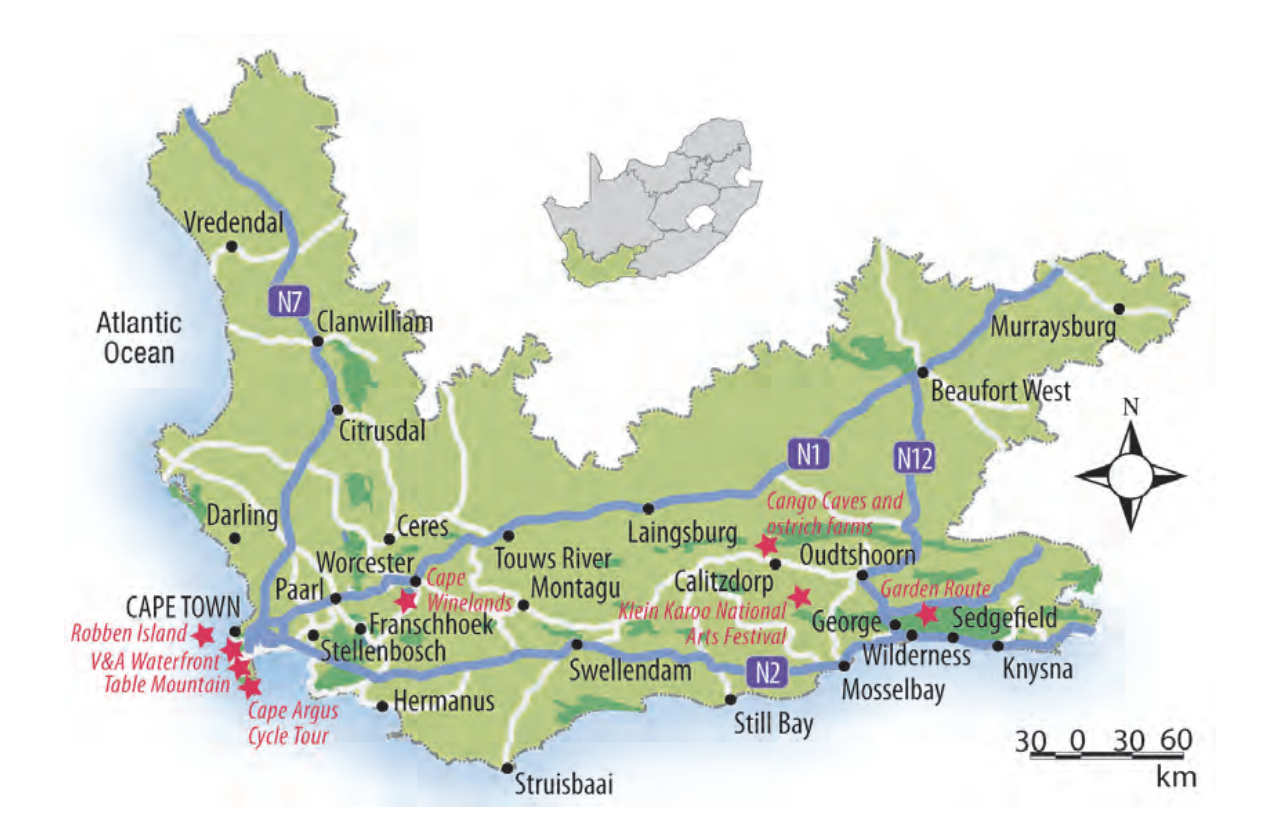
Table Mountain
Table Mountain stands as an internationally recognised landmark that draws visitors from around the world. This natural wonder hosts remarkable biodiversity, with approximately 200 plant species that exist nowhere else on the planet. The mountain is also home to unique wildlife, including the ghost frog and an abundance of fauna.
Activities available:
- Aerial cableway rides (the cable cars feature windows providing 360-degree views of the surroundings)
- Hiking trails for different fitness levels
- Abseiling for adventure seekers
- Bird watching opportunities
Important
Table Mountain is not just a pretty view – it's significant for its unique plant and animal species found only in this location. This makes it an important site for biodiversity conservation and scientific research.
Victoria and Alfred (V&A) Waterfront
The V&A Waterfront surrounds a working commercial harbour and has developed into one of Cape Town's premier tourist destinations. This area successfully combines historic port operations with modern tourism facilities.
Note
The V&A Waterfront demonstrates how historic industrial sites can be transformed into thriving tourism hubs while maintaining their original functions. The working harbour continues to operate alongside the tourism facilities, creating a unique and authentic atmosphere.
Key features:
- World-class hotels offering luxury accommodation
- Two Oceans Aquarium showcasing marine life from both the Atlantic and Indian Oceans
- Wide range of shopping outlets
- Diverse restaurant options
- Helicopter rides providing aerial views
- Boat trips around the harbour
- Museums and art galleries
- Cinemas for entertainment
- Free live performances at an amphitheatre
Robben Island
Robben Island holds deep historical significance as the site where political prisoners, most notably Nelson Mandela, were imprisoned during apartheid. Today, it serves as both a World Heritage Site and an important educational destination.
What makes it special:
- Historic prison where Nelson Mandela spent 18 years
- Variety of plant and animal life
- Several historic sites including the Kramat Shrine (an important pilgrimage site for Muslims)
- Lepers' graveyard
- Robert Sobukwe House
Important
This island tells an important story about South Africa's struggle for freedom and democracy. Understanding its historical significance helps explain the country's transition from apartheid to democracy and the role of political resistance in achieving change.
Garden Route
The Garden Route offers one of the most beautiful coastal drives in the world, stretching from Mossel Bay to Storms River. This scenic journey passes through charming seaside towns and includes the famous Tsitsikamma Forest, which holds both historic and cultural significance.
Activities to enjoy:
- Whale and dolphin watching (seasonal)
- Hiking trails through diverse landscapes
- Wildlife safaris
Note
Did you know?
The Garden Route gets its name from the incredible diversity of vegetation and the lush, garden-like scenery along the coast. The region's unique climate and geography create perfect conditions for this remarkable biodiversity.
Cape wine routes
Wine tourism has become one of the fastest-growing industries in the Western Cape. The region boasts some of the most scenic wine routes in the world, set against stunning mountain backdrops.
Four main wine regions:
- Breede River valley
- Little Karoo
- Western coastal area
- Olifants River
Activities available:
- Wine tasting sessions at various estates
- Cycling or walking through vineyards
- Fine dining at estate restaurants
- Farm accommodation for an authentic experience
Note
Wine tourism isn't just about drinking wine – it's about experiencing the culture, landscape, and hospitality of the winelands. Visitors engage with the history of wine-making in the region, learn about the production process, and enjoy the stunning scenery that makes these areas so special.
Cango Caves and ostrich farms
Located near Oudtshoorn, the Cango Caves feature impressive dripstone formations that have developed over thousands of years. The area is also famous for its ostrich farming industry.
What you can do:
- Guided tours through the caves
- Ostrich riding experiences
- Watching ostrich races
- Learning about ostrich farming
Cape Argus Cycle Tour
This annual cycling event takes place in Cape Town each March and covers 109 kilometres. The Cape Argus has grown to become the most scenic cycling route and the largest timed cycling event in the world.
Important facts:
- It's a non-profit event
- All money raised goes to charities
- Attracts cyclists from around the world
- Showcases Cape Town's stunning scenery
Klein Karoo National Arts Festival
This festival began as an Afrikaans cultural festival in Oudtshoorn, created to promote and preserve Afrikaans culture and language. Over time, it has evolved into one of the best-attended cultural events in South Africa.
What happens at the festival:
- Music productions and live performances
- Lectures and talks
- Art exhibitions
- Sales of handcrafted goods
Note
The festival demonstrates how cultural events can grow and evolve while maintaining their roots and contributing to cultural preservation. It shows the importance of cultural tourism in keeping traditions alive while attracting diverse audiences.
Exam preparation tips
Important
How to prepare for exam questions on the Western Cape:
- Learn the locations: Make sure you can identify where each attraction is located on a map of the Western Cape
- Know the activities: For each attraction, remember at least 2-3 activities tourists can do there
- Understand significance: Be able to explain why each attraction is important (historical, natural, cultural reasons)
- Link to tourism types: Consider which type of tourism each attraction supports (ecotourism, cultural tourism, adventure tourism, etc.)
Summary
Key Points to Remember:
- The Western Cape is South Africa's second most popular tourist destination, famous for its biodiversity and ecotourism attractions
- The Cape Floral Region is a World Heritage Site with unique plant species found nowhere else on Earth
- Table Mountain is an iconic landmark with 200 unique plant species and offers various adventure activities
- Robben Island serves as both a historical site (Nelson Mandela's prison) and a World Heritage Site
- The Garden Route provides one of the world's most scenic coastal drives, stretching from Mossel Bay to Storms River
- Wine tourism is rapidly growing, with four main wine regions offering beautiful landscapes and diverse experiences
- Major events like the Cape Argus Cycle Tour and Klein Karoo National Arts Festival attract thousands of visitors and contribute to the province's cultural and economic life