Explaining the Concept of Development (Grade 11 NSC Matric Geography): Revision Notes
📚Revision Notes
Explaining the Concept of Development
Introduction to development
Development is a process that happens over time, where we can measure improvements through changes to the economy, people's welfare, and the environment. The way we think about what "development" means has changed over the years, leading to different types of development indicators.
People first began studying development by looking at how rich or poor countries were. However, they soon realised that development is much more complex than just looking at money. True development needs to consider how people's lives are actually improving and whether these improvements can continue into the future.
Important
Development is not just about wealth - it requires a balanced approach that considers economic, social, and environmental factors together.
Types of development
There are three main ways to understand and measure development: economic, social, and sustainable development. Each type looks at different aspects of how a country or community is progressing.
Economic development
Note
Economic growth refers to the increase in wealth of a nation.
When people first started investigating development, they focused mainly on economic factors. They asked questions such as:
- Which countries are richest?
- What is the GDP (Gross Domestic Product) for the country?
- Does the country earn more from goods it sells to other countries (exports) than it spends on goods it buys from other countries (imports)?
- Is the economy based on agriculture or industry?
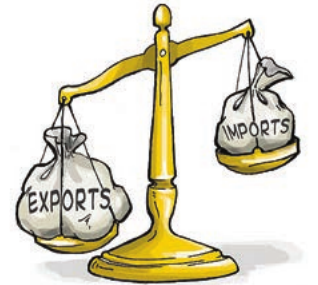
This approach to measuring development is relatively straightforward, but it has limitations. It gives us a general picture of a country's economic situation but doesn't tell us how this wealth affects ordinary people's daily lives.
Social development
Note
Social factors provide information that tells us about a country's people and their welfare.
Economic information is valuable when studying development, but it only shows part of the picture. It doesn't tell us if citizens are actually benefiting from economic improvements.
A more people-centred approach looks at social factors such as:
- Is wealth shared evenly amongst the population?
- Does everyone have equal access to services such as electricity and running water?
- Do all children attend school?
- How many people are unemployed?
- Does everyone have access to adequate healthcare?
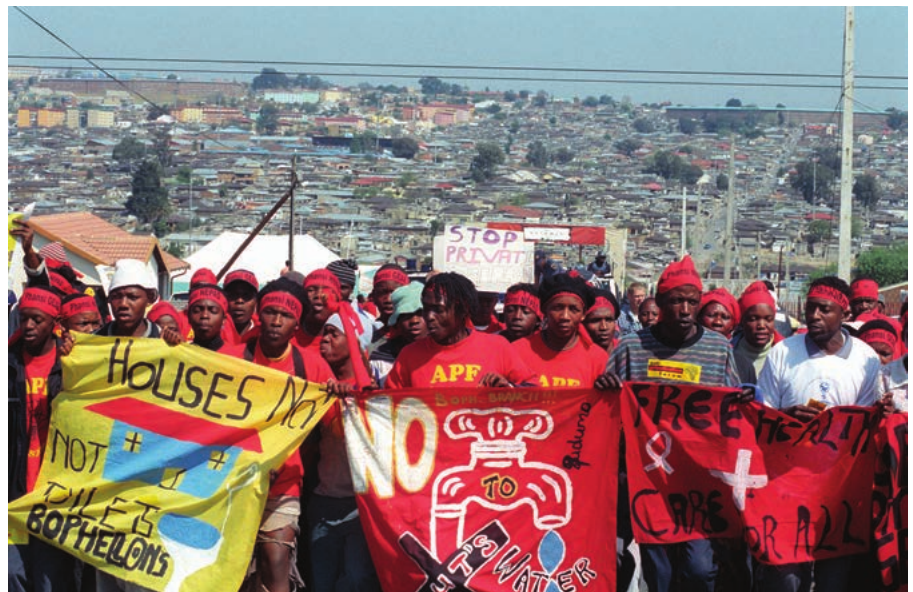
When people don't receive the social services their government promised to deliver, they may protest to demand better access to basic needs like housing and water.
Sustainable development
Note
Sustainable development means development that uses resources in such a way that the needs of the present population are met without affecting the ability of future generations to meet their own needs.
As people's standard of living improves, their basic needs expand to include luxury goods. They want bigger houses with more furniture, more technological gadgets, and they use more fuel, electricity, and water.
These improvements have a significant impact on the environment. Scientists began questioning whether natural resources would be available for future generations. To determine the effect of development on the environment, we now collect and study information on:
- Deforestation
- Desertification
- CO₂ emissions
- Overfishing
- Mineral reserves
Important
Sustainable development is crucial because it ensures that our current progress doesn't prevent future generations from meeting their own needs.
Scales of development
Development can be viewed from different scales or perspectives, ranging from global to continental, national, regional, and local levels. Understanding the scale helps us see both the big picture and local details.
Macro-scale development
Note
Macro-scale refers to large scale development at a global or continental level.
When we study South Africa's development compared to the rest of the world or Africa, we are working at a macro-scale.
Macro-scale development doesn't always focus on competition or ranking. Many organisations work to eliminate inequality and improve quality of life for all human beings. The United Nations is well known for coordinating these efforts. United Nations projects operate at government level, and results are recorded as global statistics.
Example
Example: South Africa Development Scorecard 2010/11
The following shows examples of macro-scale comparisons:
- OR Tambo airport ranked as the best airport in Africa
- South Africa ranked in the top twenty countries for agricultural output
- South Africa ranked 12th out of 134 economies in gender equality
- South Africa sold $1.8 billion worth of cars to the USA in 2010
- South Africa ranked 34th out of 192 countries for infrastructure
- South Africa ranked as the 40th least corrupt nation out of 150 countries surveyed
Micro-scale development
Note
Micro-scale (small scale) development focuses on changes that affect individuals or small groups of people at a local level.
The people who benefit from improvements are usually directly involved in the project.
This type of development may be a joint effort between government agencies and non-governmental organisations (NGOs) or non-profit organisations (NPOs). Sometimes individuals like you can initiate these projects.
Note
NGO means non-governmental organisation. NGOs operate independently from the government and are non-profit, voluntary citizens' groups organised at local, national, or international levels.
NPO means non-profit organisation. NPOs don't issue stock shares or distribute surplus funds to owners or shareholders. Instead, excess funds help achieve the goal of improving conditions within society.
Example
Example: Abalimi Bezekhaya Project
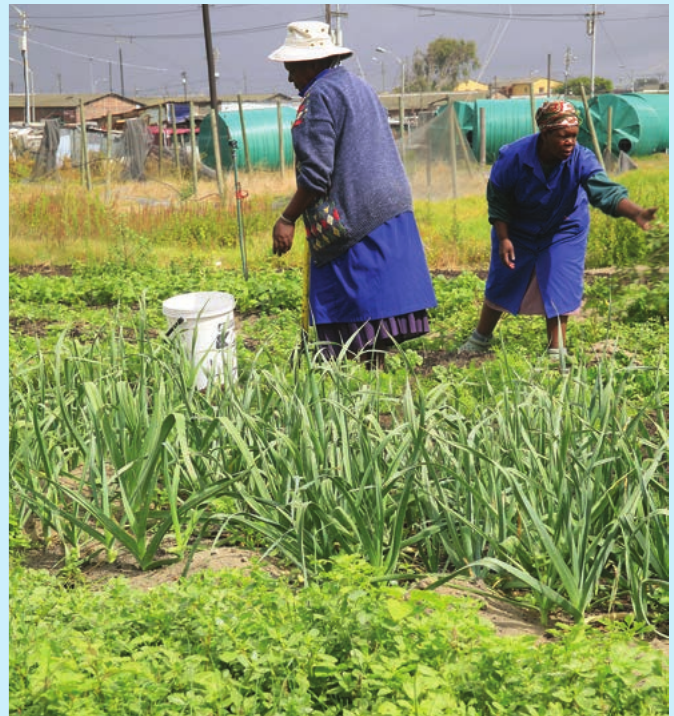
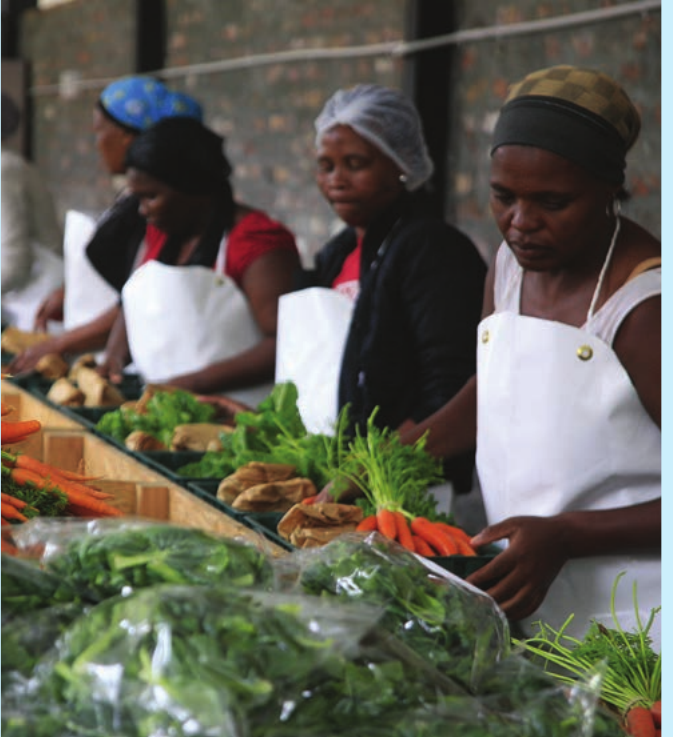
The Abalimi Bezekhaya project is an excellent example of micro-scale development. This urban farming programme was started in the informal settlements of the Western Cape to address poverty and hunger. The farmers are mainly women who can now:
- Feed their families
- Earn a steady living by selling their surplus produce at local markets
The spatial aspect of development
Note
Spatial means existing in, occurring in, caused by, or involved by space.
Development occurs over time, but it also occurs in space. When geographers study where development occurs, they work with the spatial aspect of development.
Macro-scale information is easy to see and demonstrate on maps. However, micro-scale differences are often hidden in such maps. For example, the literacy rate for South Africa might be shown as a value between 80% and 90% on a world map, but the literacy rate in 2009 for the Eastern Cape Province was 76.47% and only 42.2% in the OR Tambo district municipality within that province.
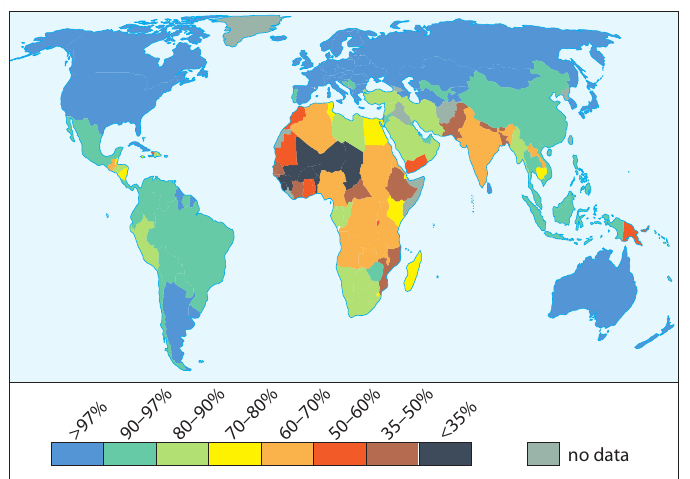
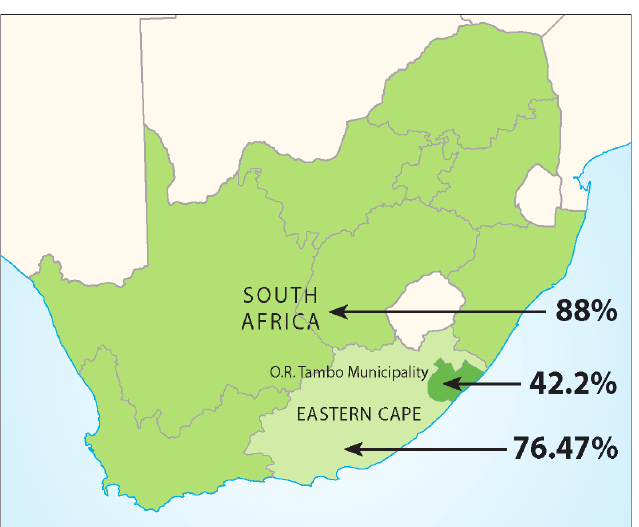
These maps show how development indicators can vary dramatically within countries and regions. Graphic representations of statistics are valuable tools for comparing development levels, but we should always consider exactly what these representations reflect.
Important
Be careful when interpreting development maps. Countries classified as "developing" on one source may show up as "developed" on another. For example, both Zimbabwe and Argentina might fall into the "developing" category in some classifications, but they have very different literacy rates, which could lead to different conclusions about their development status.
Case studies
South Africa's development scorecard 2010/11
Example
Case Study: South Africa's Development Scorecard 2010/11
This case study highlights macro-scale development factors for South Africa:
Positive achievements:
- OR Tambo airport ranked as best airport in Africa according to World Airport Awards 2010/11
- South Africa ranked in top twenty countries for agricultural output
- Ranked 12th out of 134 economies in the World Economic Forum's Global Gender Gap Report 2010
- Sold $1.8 billion worth of cars to USA in 2010, ranking ahead of Sweden and Italy
- Ranked 34th out of 192 countries for infrastructure and 12th for rail network
Areas for improvement:
- Ranked as 40th least corrupt nation out of 150 nations surveyed
Abalimi Bezekhaya project
Example
Case Study: Abalimi Bezekhaya Project
This micro-scale development project demonstrates how local initiatives can make a real difference:
Abalimi Bezekhaya (meaning "Farmers of the home") is an urban farming programme initiated in informal settlements of the Western Cape. The project addresses poverty and hunger by teaching people to grow their own food.
The participants are mainly women who have learned to feed their families and earn steady income by selling surplus produce. The project shows how micro-scale development can:
- Provide food security
- Create employment opportunities
- Empower women
- Build community skills
- Generate income at household level
Summary
Summary
Key Points to Remember:
-
Development has three main types: Economic development focuses on wealth and GDP; social development examines people's welfare and access to services; sustainable development balances current needs with future resource availability.
-
Scale matters in development: Macro-scale looks at large-scale patterns (global/national), while micro-scale focuses on local communities and individuals.
-
Development varies by location: The spatial aspect shows that development indicators can differ dramatically between regions, provinces, and local areas within the same country.
-
Multiple indicators give a complete picture: Using only economic measures doesn't show the full story - social and environmental factors are equally important for understanding true development.
-
Local projects can create real change: Micro-scale initiatives like urban farming projects can significantly improve people's lives and provide sustainable solutions to local problems.