Energy Production in South Africa (Grade 11 NSC Matric Geography): Revision Notes
📚Revision Notes
Energy Production in South Africa
Understanding conventional energy sources
Energy is what makes everything around us work, from the lights in your home to the factories that produce goods. In South Africa, people rely on several traditional energy sources to meet their needs. These include wood, coal, oil, and the power of flowing water, which we call hydro energy. We refer to these as conventional energy sources because they represent the most common and widely-used methods of generating power in the country.
Note
The term "conventional" energy sources refers to traditional methods of power generation that have been established and widely used for many decades, as opposed to newer renewable technologies like solar and wind power.
The main purpose of these conventional energy sources is to produce electricity, which is an extremely practical form of energy. Think about how many devices and systems in your daily life depend on electricity to function properly.
South Africa's energy mix
South Africa's approach to energy production is heavily dominated by one particular source. When we look at how the country generates its electricity, we can see a clear pattern that reflects both the available natural resources and historical energy decisions.
Important
Coal dominance: Coal serves as the backbone of South Africa's energy system, providing an overwhelming majority of the country's electrical power. This dominance stems from the country's abundant coal reserves and the established infrastructure built around coal-based power generation.
The energy mix also includes nuclear power, which contributes a smaller but significant portion of the total electricity supply. Additionally, there are hydroelectric facilities that use pumped storage systems, though these represent only a tiny fraction of the overall energy production.
A small amount of energy is also imported from neighboring countries to help meet the nation's electricity demands.
Geographic distribution of power generation
The location of South Africa's power stations follows a logical pattern that reflects economic and practical considerations. Most thermal power stations that burn coal are strategically positioned near the coalfields themselves. This geographical arrangement makes perfect sense from a cost perspective, as it dramatically reduces the expenses associated with transporting heavy coal over long distances.
The country's coal reserves are substantial enough to last for approximately another two centuries, making coal a reliable long-term energy source.
Example
Practical Example: Duva Power Station
The Duva station in Mpumalanga demonstrates the scale of coal consumption in South Africa's power generation:
- Location: Positioned near Mpumalanga coalfields
- Annual coal consumption: Approximately 10 million tonnes per year
- Strategic advantage: Minimized transportation costs due to proximity to coal source
Historical trends in energy production
South Africa's energy landscape has evolved significantly over the years. Between 1990 and 2008, the country experienced substantial growth in its electricity generation capacity. This expansion reflects the growing energy demands of a developing economy and an increasing population.
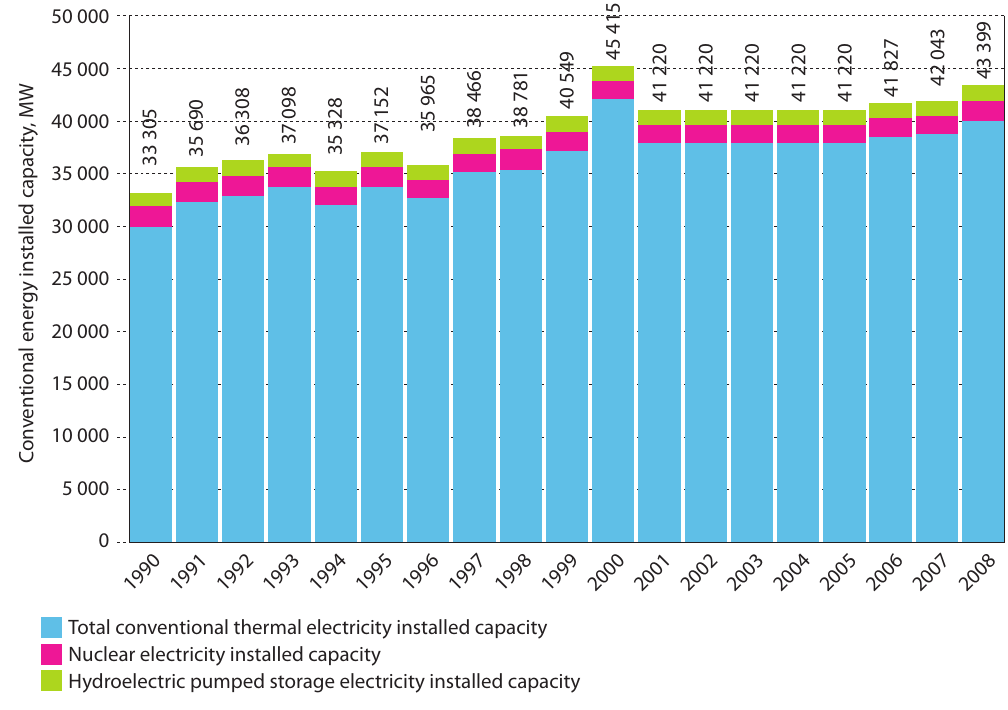
During this period, the total installed capacity grew from approximately 33,000 megawatts to over 43,000 megawatts. The most dramatic increase occurred around 1999-2000, when there was a notable jump in capacity. Throughout this entire period, conventional thermal electricity remained the dominant component, maintaining its position as the primary source of electrical power.
Note
The growth pattern shows how South Africa has consistently relied on its conventional energy infrastructure to meet increasing demand. Nuclear and hydroelectric pumped storage capacity remained relatively small components of the total energy mix throughout this timeframe.
Key energy concepts to understand
When studying South Africa's energy production, it's important to understand several fundamental concepts:
Hydro energy refers to electricity generated using the force of moving water, typically by directing water through openings in dam walls to turn turbines.
Thermal energy involves generating electricity by using heat, usually from burning coal, to create steam that drives electrical generators.
MWe stands for megawatts of electrical capacity, representing one million watts of power generation capability.
Note
Understanding these concepts helps explain how different types of power stations work and why certain locations are chosen for energy infrastructure development.
Remember!
Summary
Key Points to Remember:
- Coal dominates South Africa's energy production, accounting for the vast majority of electricity generation
- Power stations are strategically located near coalfields to minimize transportation costs and maximize efficiency
- South Africa's energy capacity has grown significantly over the past decades, reflecting increasing demand and economic development
- The country's coal reserves are expected to last approximately 200 more years, ensuring long-term energy security
- Conventional energy sources remain the foundation of South Africa's electrical system, with alternatives playing only minor roles in the overall energy mix