Thermal Electricity Generation Using Coal (Grade 11 NSC Matric Geography): Revision Notes
📚Revision Notes
Thermal Electricity Generation Using Coal
Introduction
Coal-powered thermal electricity generation is a major source of energy production, particularly in South Africa where coal is abundant and relatively inexpensive. This process involves converting the chemical energy stored in coal into electrical energy through a series of energy transformations.
Note
Understanding coal-fired power generation is essential for comprehending South Africa's energy landscape, as coal accounts for a significant portion of the country's electricity production.
Key concepts and terminology
Understanding the basic terminology is essential for grasping how thermal electricity generation works:
Turbines are wheel-like machines equipped with specially designed vanes or blades. When steam or water flows against these vanes, the turbine rotates, converting the energy of the moving fluid into rotational motion.
Generators are machines that transform kinetic energy (energy from movement) into electrical energy. In power plants, generators are directly connected to turbines so that when the turbines spin, the generators produce electricity.
Kinetic energy refers to energy that results from movement. In thermal power plants, this is the energy of spinning turbines that gets converted into electrical energy.
Important
The success of thermal electricity generation depends on the efficient coupling of these three key components: turbines convert fluid energy to rotational energy, generators convert rotational energy to electrical energy, and kinetic energy serves as the bridge between thermal and electrical energy forms.
The thermal electricity generation process
The process of generating electricity from coal involves several connected stages that work together as an integrated system.
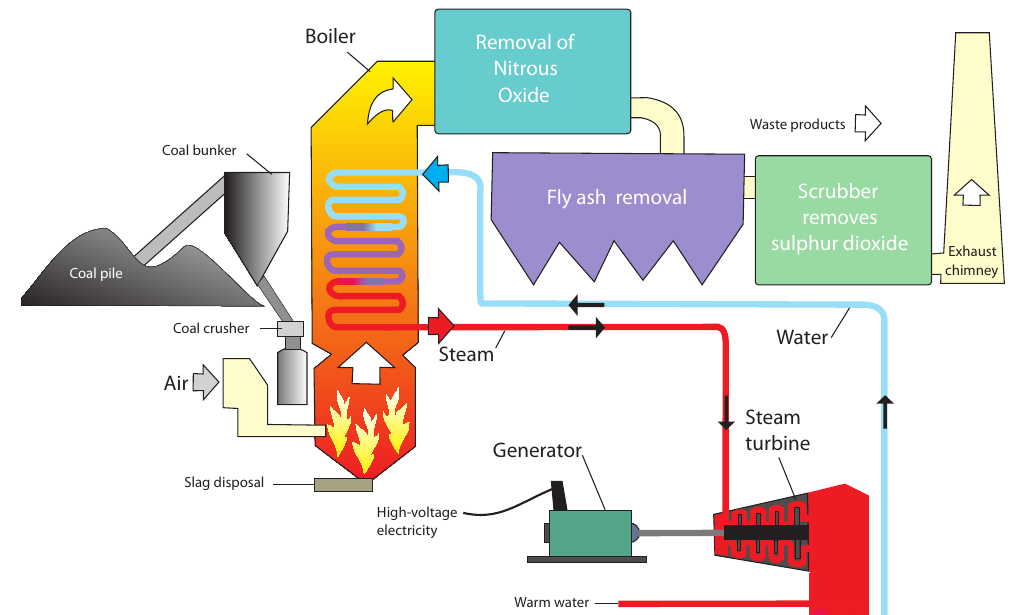
Stage 1: Coal preparation and combustion
The process begins with coal preparation. Raw coal is transported to the power plant where it passes through a coal crusher. Crushing the coal into smaller pieces allows it to burn more efficiently than large chunks would. The crushed coal is then stored in bunkers before being fed into the combustion chamber of the boiler.
Inside the boiler's combustion chamber, the coal burns at extremely high temperatures. This burning process releases the chemical energy stored in the coal as heat energy.
Note
Coal crushing increases the surface area exposed to oxygen, which dramatically improves combustion efficiency and ensures more complete burning of the fuel.
Stage 2: Steam generation
The intense heat from burning coal is used to convert water into steam. Water circulates through pipes that run through or near the combustion chamber. As the water absorbs heat from the burning coal, it transforms into high-pressure steam.
This steam carries significant thermal energy and pressure, making it capable of doing mechanical work when properly directed.
Stage 3: Turbine operation
The high-pressure steam is directed through pipes to steam turbines. As the steam strikes the turbine blades, it causes the turbine to rotate rapidly. This rotation represents the conversion of thermal energy (from the steam) into kinetic energy (the spinning motion).
Example
Energy Conversion in Action:
When high-pressure steam at approximately 500°C strikes the turbine blades:
- Steam pressure forces the blades to rotate
- Thermal energy → Kinetic energy conversion occurs
- Turbine rotates at speeds up to 3,000 rpm
- This rotational motion directly drives the electrical generator
Stage 4: Electricity generation
Steam turbines are connected to electrical generators. As the turbines spin, they turn the generators, which convert the kinetic energy of rotation into electrical energy. The electricity produced is then transmitted through power lines as high-voltage electricity for distribution.
Stage 5: Steam condensation and recycling
After passing through the turbines, the steam needs to be condensed back into water so it can be reused in the system. The condenser uses cooling water to remove heat from the used steam, causing it to condense back into liquid water. This water is then returned to the boiler to begin the cycle again.
Note
The condensation and recycling process is crucial for plant efficiency, as it allows the same water to be used repeatedly, reducing both water consumption and operational costs.
Process summary
The entire process can be understood through the inputs, processes, and outputs involved:
Inputs include coal as the primary fuel source and the infrastructure needed to operate the power plant.
Processes involve burning the coal to release energy, using this energy to convert water into steam, and using the steam to drive turbines that generate electricity.
Outputs include electricity as the desired product, along with waste gases and other byproducts that must be managed.
Environmental considerations
Thermal electricity generation using coal produces several types of waste that impact the environment. The combustion process creates waste gases including sulfur dioxide and nitrous oxide, which contribute to air pollution and can cause acid rain.
Fine ash particles are also produced during combustion, which can contribute to air pollution and potentially cause respiratory problems if released into the atmosphere. Additionally, solid waste in the form of slag and ash must be disposed of properly.
Important
Environmental impact is a critical consideration in coal-fired power generation. The main pollutants include:
- Sulfur dioxide (SO₂) - contributes to acid rain
- Nitrous oxide (NOₓ) - contributes to smog formation
- Particulate matter - causes respiratory health issues
- Carbon dioxide (CO₂) - major greenhouse gas
Modern coal power plants incorporate pollution control systems to minimize environmental impact. These include fly ash removal systems, scrubbers for removing sulfur dioxide, and systems for reducing nitrous oxide emissions. However, not all waste products can be completely eliminated.
Energy transformations
The thermal electricity generation process involves a series of energy transformations:
- Chemical to thermal: Coal's chemical energy becomes heat energy through combustion
- Thermal to kinetic: Heat energy converts water to steam, which creates kinetic energy in the turbines
- Kinetic to electrical: The spinning turbines drive generators that produce electrical energy
Example
Complete Energy Transformation Chain:
Starting with 1000 MJ of chemical energy in coal:
- Combustion: 1000 MJ chemical → 800 MJ thermal (80% efficiency)
- Steam Generation: 800 MJ thermal → 320 MJ kinetic (40% efficiency)
- Electricity Generation: 320 MJ kinetic → 288 MJ electrical (90% efficiency)
- Overall Efficiency: ~29% (typical for coal plants)
Summary
Key Points to Remember:
- Coal-fired power plants convert chemical energy in coal to electrical energy through multiple stages
- The key components work together: boiler, turbines, generator, and condenser
- Steam is the crucial link that transfers energy from burning coal to spinning turbines
- Modern plants include pollution control systems to reduce environmental impact
- The process involves energy transformations: chemical → thermal → kinetic → electrical
- Overall efficiency is typically around 25-35% due to energy losses at each transformation stage