South Africa's Changing Energy Needs (Grade 11 NSC Matric Geography): Revision Notes
📚Revision Notes
South Africa's Changing Energy Needs
Factors driving energy demand
South Africa's need for energy depends on several key factors that work together to shape the country's electricity requirements. The size of the population plays a major role - with around 50 million people, there's a huge demand for power. Economic activity levels also matter greatly, as businesses and industries need reliable electricity to operate effectively. Additionally, government policies around energy access have significantly influenced how energy demand has grown over time.
The government recognizes that providing electricity access is crucial for the country's development. Since the 1990s, there has been a major push to connect more South Africans to the electrical grid through what's known as an electrification program.
Note
The electrification program represents one of the most ambitious infrastructure development initiatives in South Africa's post-apartheid history, fundamentally transforming how communities access power and participate in the modern economy.
Understanding key concepts
Two important terms help us understand South Africa's energy situation:
Note
Electrification refers to the process of extending electricity connections across the country. This involves building power infrastructure and connecting homes, schools, clinics and businesses to the national electricity grid.
Note
Potentially economically active population describes people in society who are able to work and could contribute to the economy. This typically includes people aged between 18 and 65 years old, as they represent the main workforce of the country.
Progress in electricity access
South Africa has made remarkable progress in expanding electricity access over the past few decades. The transformation has been dramatic - before 1990, only about 30% of the population had access to electricity. However, through sustained government efforts, this proportion doubled by 2000, and by 2011, approximately 80% of South Africa's population had access to electricity.
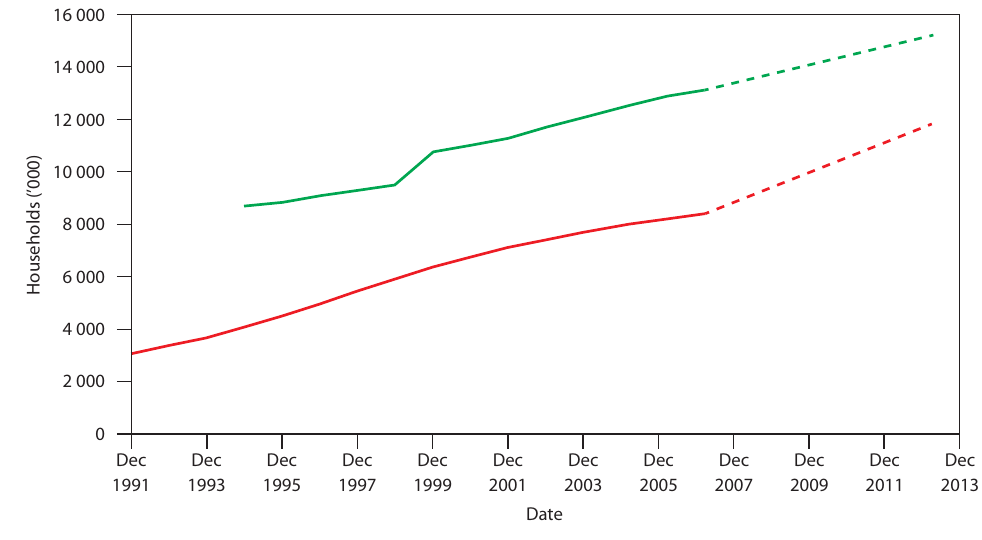
This graph shows how both the total number of households and electrified households grew significantly between 1991 and 2013, with projections showing continued growth toward universal access.
Important
The electrification rate improvement from 30% to 80% in just over two decades represents one of the most successful infrastructure development programs globally, demonstrating what focused government policy can achieve.
Changing population structure
South Africa's population structure is undergoing significant changes that will impact energy needs in the coming decades. Population models predict an increase in the potentially economically active population, which has important implications for energy planning.
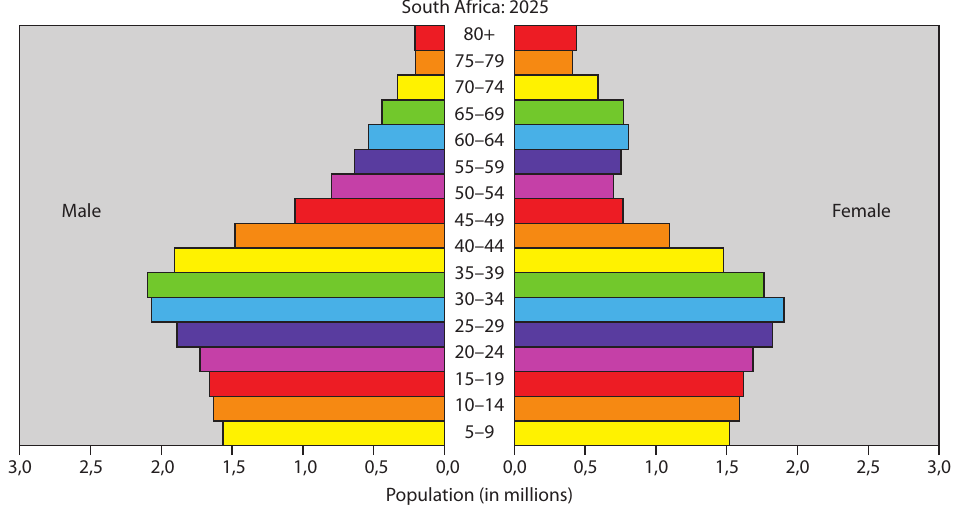
The population pyramid for 2025 shows a relatively young population structure, with broad age groups in the working-age categories.
By 2050, the population structure is expected to change, with different proportions across age groups. These demographic shifts matter because working-age people typically have higher energy consumption needs due to economic activities and improved living standards.
As more people enter the economically active age range, they will need jobs. Since many jobs depend on reliable energy supply, the country's energy capacity becomes crucial for economic development and employment creation.
Note
Why Demographics Matter for Energy Planning:
Understanding population changes helps energy planners prepare for future demand. A growing working-age population means more people will need electricity for employment, housing, and higher living standards - all of which requires strategic energy infrastructure investment.
Energy sources and job creation
The choice of energy sources has significant implications for job creation in South Africa. Research shows that different types of energy generation create vastly different numbers of employment opportunities.
Conventional energy sources like coal, nuclear power, and gas create relatively few jobs per unit of electricity generated. For example, coal creates only 0.7 jobs per gigawatt-hour (GWh) of electricity, while nuclear creates just 0.1 jobs per GWh.
In contrast, renewable energy sources generate far more employment opportunities. Solar panels create 62 jobs per GWh, wind power generates 12.6 jobs per GWh, and solar thermal creates 10.4 jobs per GWh. This means that investing in renewable energy can create many more jobs than investing in conventional energy sources.
Example
Worked Example: Job Creation Comparison
If South Africa generates 1,000 GWh of electricity:
- Coal power: 1,000 × 0.7 = 700 jobs created
- Solar panels: 1,000 × 62 = 62,000 jobs created
- Wind power: 1,000 × 12.6 = 12,600 jobs created
This shows that solar power creates nearly 90 times more jobs than coal power for the same amount of electricity generated.
This job creation potential is particularly important for South Africa, given the need to provide employment for the growing economically active population. Economists argue that beyond being part of social development, providing electricity to communities stimulates the creation and growth of local businesses, creating a positive cycle of economic development.
Important
The Economic Development Cycle:
Electricity access → Local business growth → Job creation → Increased energy demand → Further economic development
This positive cycle shows why energy investment is crucial for breaking poverty cycles and promoting sustainable development.
Summary
Key Points to Remember:
-
Energy demand growth: South Africa's energy needs depend on population size, economic activity levels, and government policies - all of which continue to grow
-
Electrification success: The country has made impressive progress, expanding electricity access from 30% in 1990 to 80% by 2011 through sustained government programs
-
Demographic changes: The potentially economically active population (ages 18-65) is expected to increase, creating greater energy demand and need for job creation
-
Renewable energy advantage: Renewable energy sources create 10-60+ times more jobs per unit of electricity than conventional sources like coal and nuclear power
-
Economic development cycle: Providing electricity access stimulates local business growth, which creates jobs and further increases energy demand in a positive development cycle