Solar Energy (Grade 11 NSC Matric Geography): Revision Notes
📚Revision Notes
Solar Energy
Introduction
Solar energy represents one of the most promising renewable energy sources for South Africa's future. In 2011, the South African government established an ambitious renewable energy policy with a clear target: to generate 9% of the country's electricity from renewable sources by 2030. The majority of this renewable energy will come from solar and wind power, highlighting the critical importance of understanding how solar energy works and its potential applications.
Note
South Africa's renewable energy policy represents a significant shift toward sustainable energy sources, with solar power expected to play a central role in meeting these ambitious targets.
Three main ways to harness solar energy
People can capture and use energy from the sun through three distinct methods, each serving different purposes and operating on different principles:
Direct solar heating is the most straightforward approach, where sunlight is used directly as a heat source. This method powers solar water heaters and solar cookers, providing an immediate and practical way to harness the sun's thermal energy.
Solar thermal electricity generation involves using concentrated solar heat to produce steam, which then drives turbines to generate electricity. This process mirrors how conventional power stations work, but uses the sun instead of burning fossil fuels.
Photovoltaic electricity generation converts sunlight directly into electrical energy using specialized solar cells. This technology stores electricity in batteries and can power everything from small devices to entire homes.
Direct solar heating
Direct solar heating takes advantage of the sun's thermal energy in its most basic form. This approach concentrates the sun's rays to create intense heat that can cook food or warm water for household use.
Solar cookers demonstrate this principle effectively. These devices use highly reflective metal surfaces to concentrate sunlight into a focused area, generating enough heat to cook a pot of food.
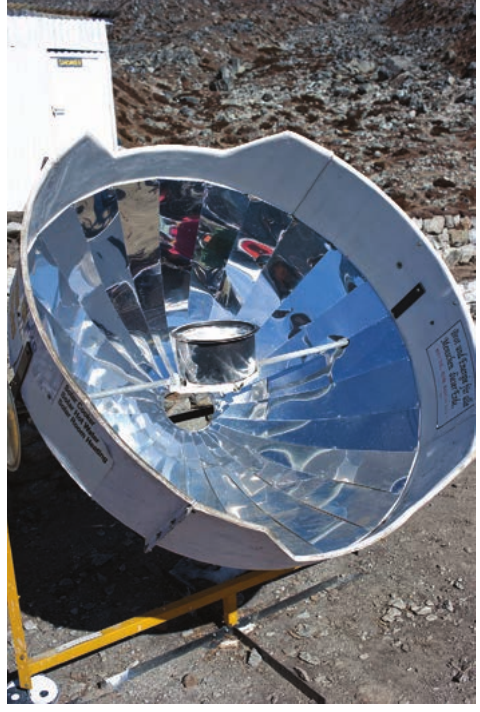
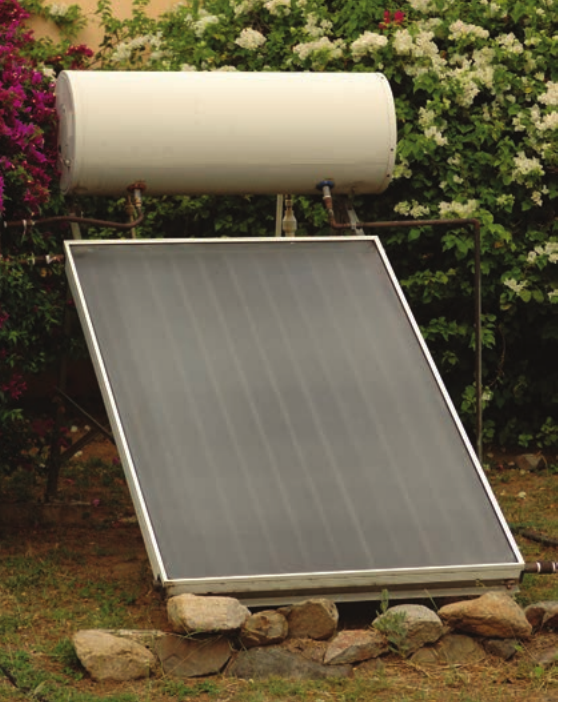
Solar water heating systems represent another practical application of direct solar heating. These systems typically consist of a solar collector panel that absorbs heat from sunlight and transfers this thermal energy to water stored in an insulated tank.
Example
How Solar Water Heating Works:
Step 1: Solar collector panels absorb heat from sunlight
Step 2: Heat transfer fluid circulates through the collector
Step 3: Heated fluid transfers thermal energy to water in storage tank
Step 4: Insulated tank maintains water temperature for household use
The South African government actively encourages the adoption of solar water heating technology. Eskom provides cash subsidies to customers who replace their conventional electric water heaters with solar alternatives. This initiative serves a dual purpose: reducing immediate electricity demand while helping South Africa transition toward greater renewable energy use.
Solar thermal electricity generation
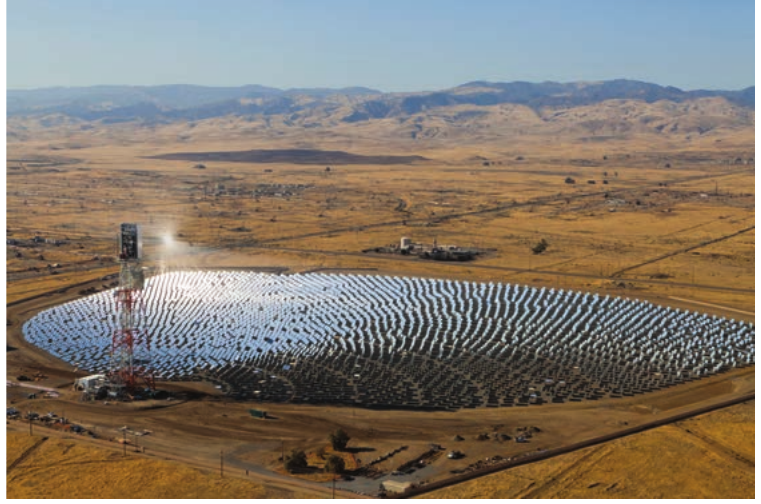
Solar thermal power stations use concentrated sunlight to generate electricity through a process similar to conventional power plants. Instead of burning coal or uranium to create steam, these facilities focus the sun's energy to heat water and drive steam turbines.
Heliostat power plants represent one type of solar thermal installation. These facilities feature thousands of computer-controlled mirrors called heliostats that track the sun throughout the day and reflect concentrated sunlight onto a central receiver tower.
Important
Solar thermal power stations require significantly less land than conventional coal-fired plants - approximately one-third of the area needed for equivalent electricity generation capacity. This space efficiency, combined with zero fuel costs and minimal environmental impact, makes solar thermal technology increasingly attractive for large-scale electricity production.
Photovoltaic electricity generation
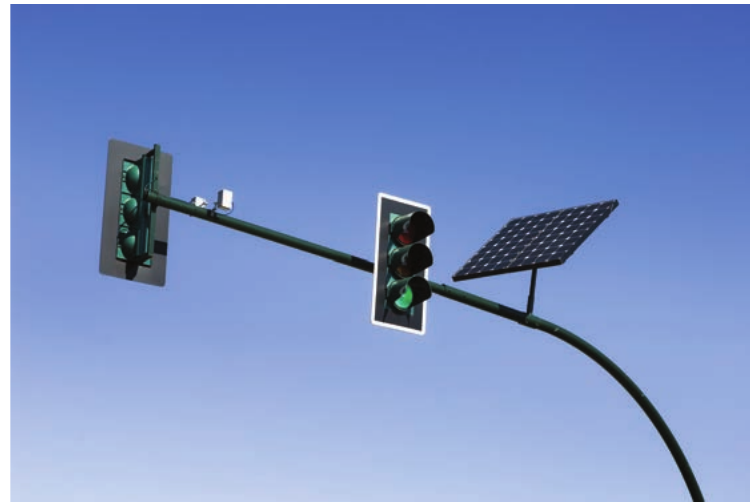
Photovoltaic technology converts sunlight directly into electricity using solar panels composed of multiple photovoltaic cells. These cells typically contain silicon-based materials that produce direct current electricity when exposed to sunlight.
While individual solar panels generate relatively modest amounts of electricity, they excel at powering small devices and charging battery systems over time. This makes photovoltaic technology ideal for applications like solar-powered traffic lights and providing electricity to rural homes without grid connections.
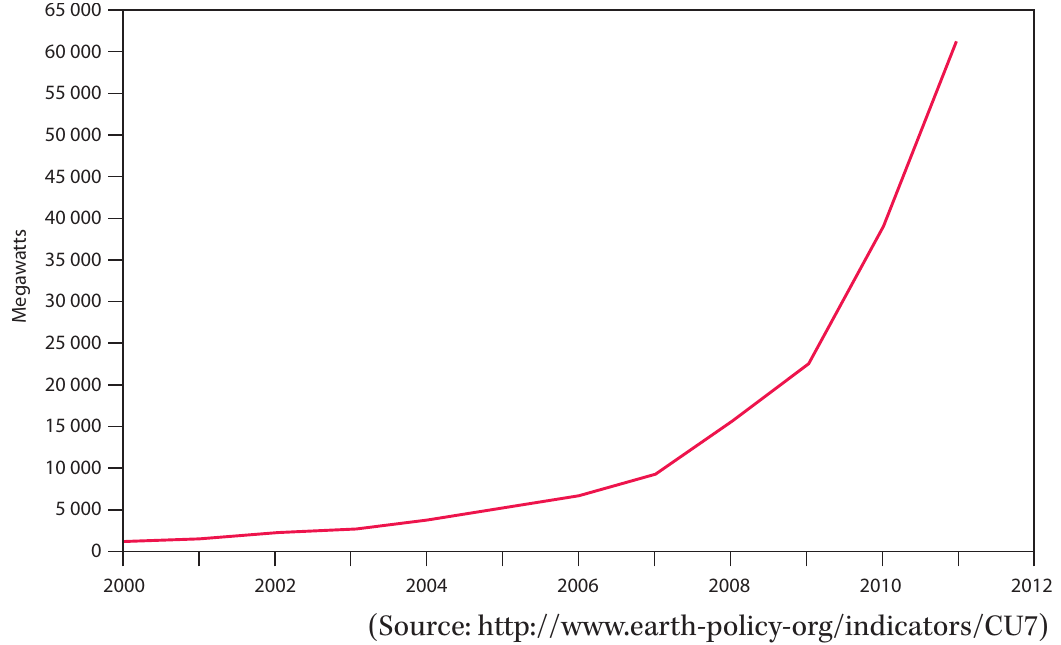
The global adoption of photovoltaic technology has experienced remarkable growth over the past decade. From minimal installations in 2000, worldwide photovoltaic capacity expanded dramatically, reaching approximately 62,000 megawatts by 2012.
Note
Germany leads the world in photovoltaic installations, with 18,000 megawatts of installed capacity - more than 40% of global photovoltaic generating capacity. This achievement is particularly impressive considering Germany's relatively limited solar radiation compared to sunnier regions like South Africa.
South Africa's exceptional solar energy potential
South Africa possesses some of the highest solar radiation levels anywhere in the world, making it ideally positioned to become a leading solar energy producer. The country receives abundant sunshine throughout the year, with some regions experiencing solar radiation levels that exceed those found in most other countries.
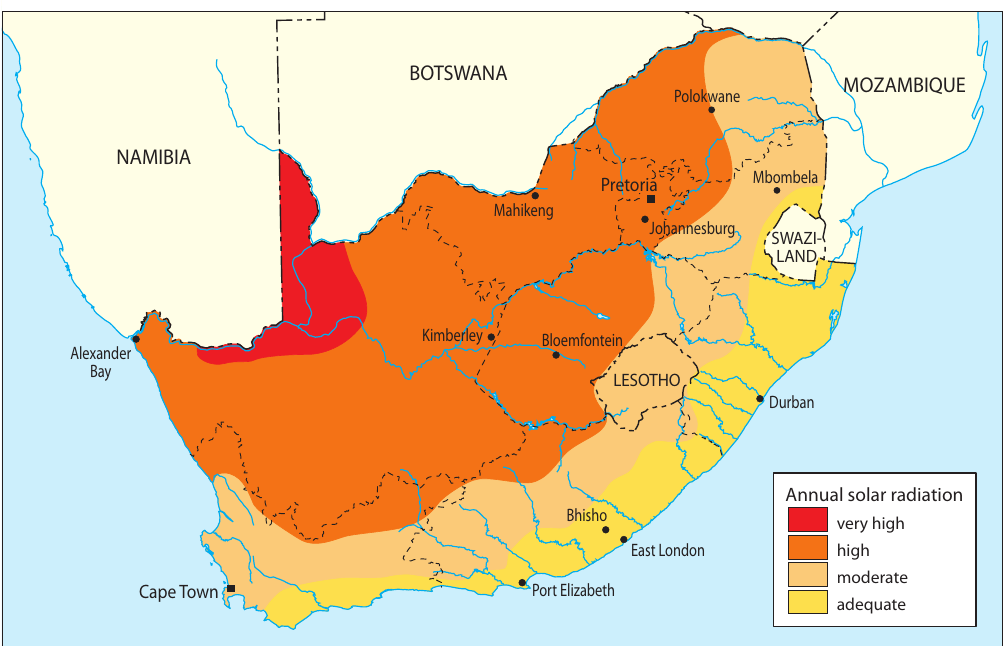
The northwestern regions of South Africa experience the most intense solar radiation, classified as "very high" on solar energy maps. The majority of the country's interior receives "high" solar radiation levels, while eastern regions typically experience "moderate" levels. Even the southeastern coastal areas, which receive the lowest solar radiation in the country, still maintain "adequate" levels for solar energy generation.
Important
This exceptional solar resource gives South Africa a significant advantage compared to countries like Germany, which despite less favorable solar conditions, has still managed to develop 40% of the world's photovoltaic electricity generating capacity. South Africa's superior solar radiation levels suggest the country has tremendous potential to develop its solar energy sector and achieve its renewable energy targets.
The geographic distribution of solar radiation across South Africa means that different regions may be better suited for different types of solar energy applications. Areas with very high radiation levels are ideal for large-scale solar thermal power stations, while regions with adequate radiation can still effectively support distributed photovoltaic installations for residential and commercial use.
Summary
Key Points to Remember:
-
Three solar applications: Direct heating (cookers, water heaters), thermal electricity (heliostat power plants), and photovoltaic electricity (solar panels) each serve different energy needs
-
South Africa's solar advantage: The country has some of the world's highest solar radiation levels, especially in northwestern regions, giving it excellent potential for solar energy development
-
Global growth trend: Photovoltaic installations worldwide grew exponentially from 2000 to 2012, demonstrating the technology's increasing adoption and economic viability
-
Government support: Eskom provides subsidies for solar water heater installations to reduce electricity demand and promote renewable energy adoption
-
Efficiency benefits: Solar thermal power stations require only one-third the land area of equivalent coal-fired plants while producing zero emissions and requiring no fuel costs