Causes of Soil Erosion (Grade 11 NSC Matric Geography): Revision Notes
📚Revision Notes
Causes of Soil Erosion
What is soil erosion?
Note
Definition of Soil Erosion
Soil erosion happens when soil gets removed faster than it can naturally form. This process is mainly caused by wind and water, but it can be greatly sped up by human activities.
Without human interference, soil erosion occurs slowly and goes largely unnoticed. However, once people get involved, erosion can happen so quickly that entire regions can lose most of their topsoil within just a few years.
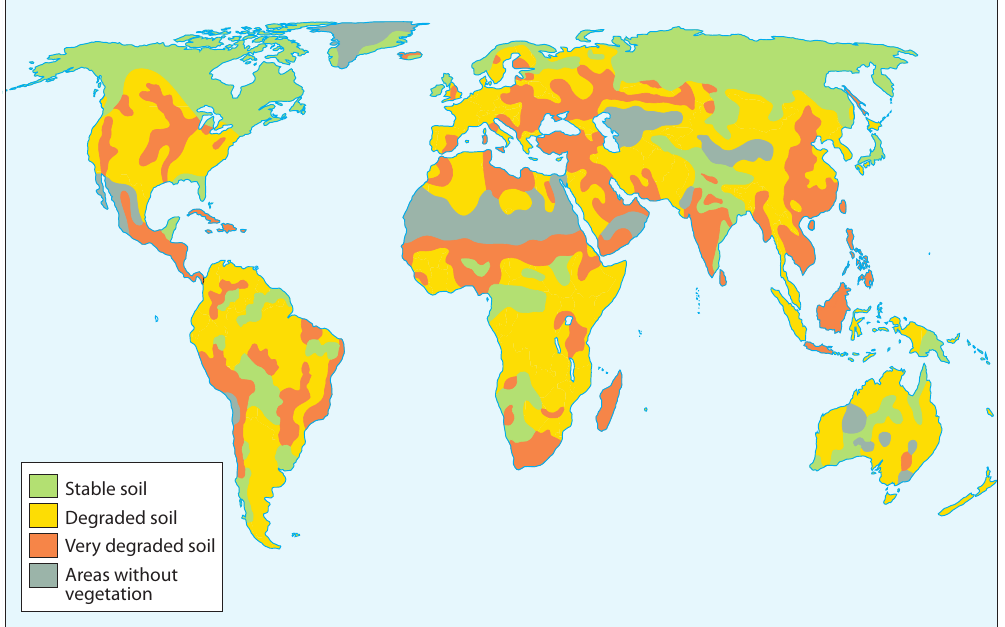
The world map above shows how widespread soil degradation has become globally. You can see that many regions show degraded or very degraded soil conditions, particularly in parts of Africa, Asia, and the Americas.
Human causes of soil erosion
Human activities can dramatically increase the rate of soil erosion. The main human causes include industrialization, poor agricultural practices, overgrazing, cutting down forests for fuel, and removing forest cover completely. These activities can have devastating effects on farming and food production.
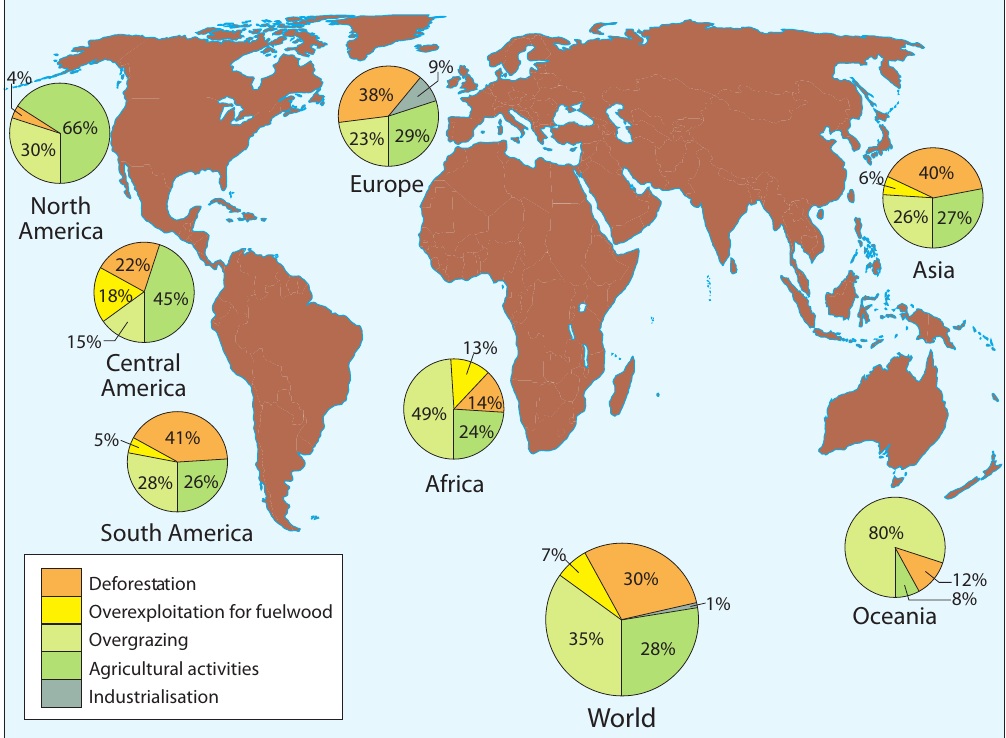
This diagram shows how different human activities contribute to soil erosion across different world regions. Notice how the causes vary - some regions are more affected by agricultural activities, while others suffer mainly from overgrazing or deforestation.
Agricultural practices that cause soil erosion
Modern commercial farming often uses techniques designed to get the highest crop yield from the smallest area. While these methods can be successful in the short term, they often reduce soil quality and lead to serious erosion problems.
Important
Critical Agricultural Practices That Cause Soil Erosion
The following farming practices significantly accelerate soil loss and should be carefully managed or avoided:
Monoculture farming involves growing only one type of crop. This practice removes the same nutrients from the soil repeatedly, which weakens the soil and reduces its quality. Farmers then need large amounts of expensive fertilizers each season just to maintain soil quality.
Farming marginal land means using land that has naturally weak and infertile soils. When farmers plough this already poor land, they make it even weaker and more likely to erode.
Poor crop rotation practices happen when farmers plant the same types of crops repeatedly instead of rotating different crops. Some crops actually put nutrients back into the soil, so when farmers don't rotate their crops, they miss opportunities to improve soil fertility and make the soil more vulnerable to erosion.
Planting crops down slopes instead of along the contour of the land causes soil to wash down hillsides during rainfall.
Overstocking and overgrazing occur when farmers keep too many animals on their land. When there are too many animals in one area, they eat plants faster than the plants can grow back. Animals like goats are particularly destructive because they eat not just the leaves of plants, but also their roots. When plants get removed, there are fewer roots to hold the soil together, making it much easier for wind or water to wash or blow the soil away.
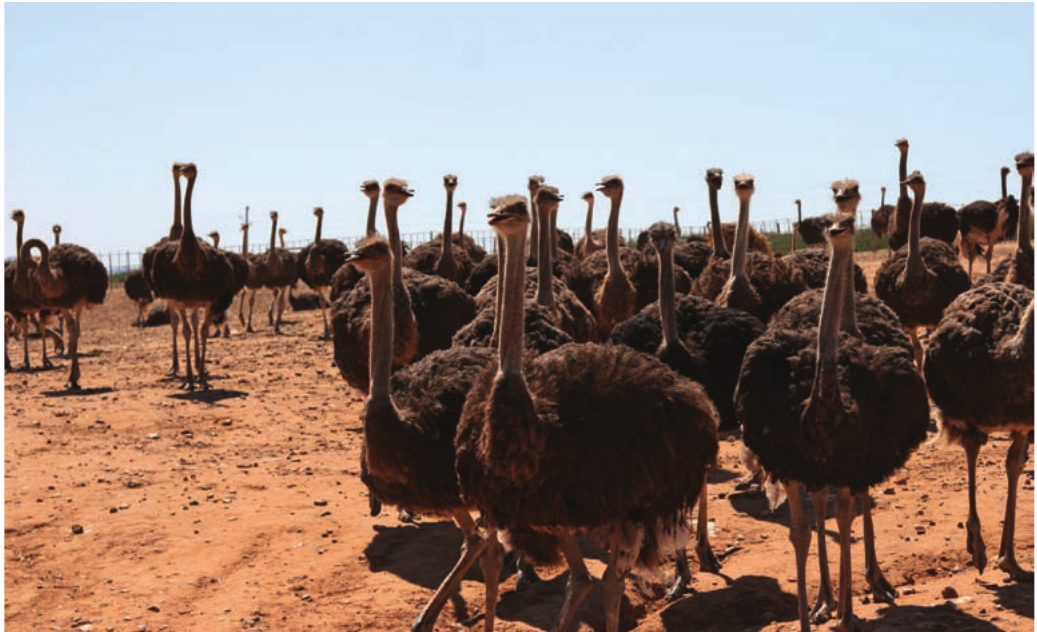
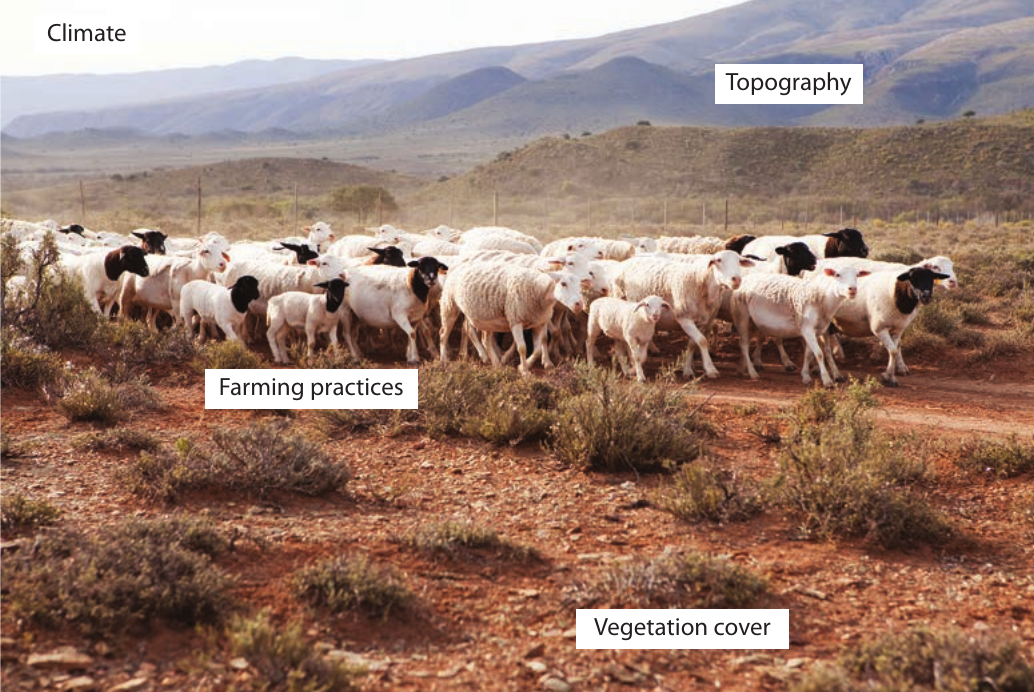
These images show examples of intensive livestock farming that can lead to overgrazing when not properly managed.
Case study: South African soil erosion facts
Important
Staggering South African Soil Loss Statistics
South Africa faces severe soil erosion challenges with devastating economic and environmental impacts:
- The country loses an estimated million tonnes of soil every year
- This works out to nearly tonnes of soil lost for every hectare of land
- Most lost soil comes from land used for growing crops (about of South Africa's total land area)
- In some areas, as much as tonnes of soil per hectare gets lost annually
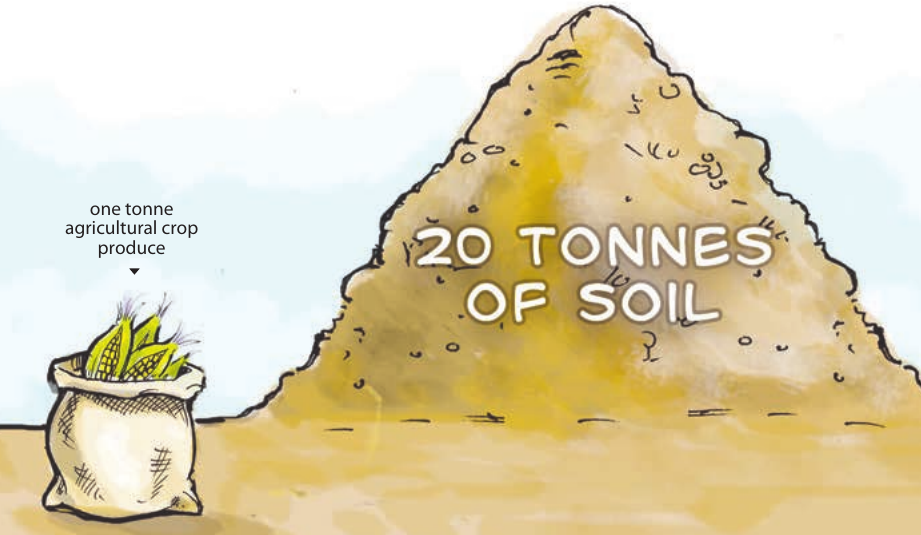
- It takes approximately tonnes of soil to produce just tonne of agricultural crops
The relationship between soil and food production is staggering. This ratio shows just how precious soil is for maintaining our food supply.
If South African farmers had to replace all the nutrients lost through soil erosion using artificial fertilizers, it would cost them more than R billion per year.
Physical causes of soil erosion
Natural physical processes involving wind and water cause soil erosion, even without human activities. However, human actions often make these natural processes much more destructive.
Water erosion
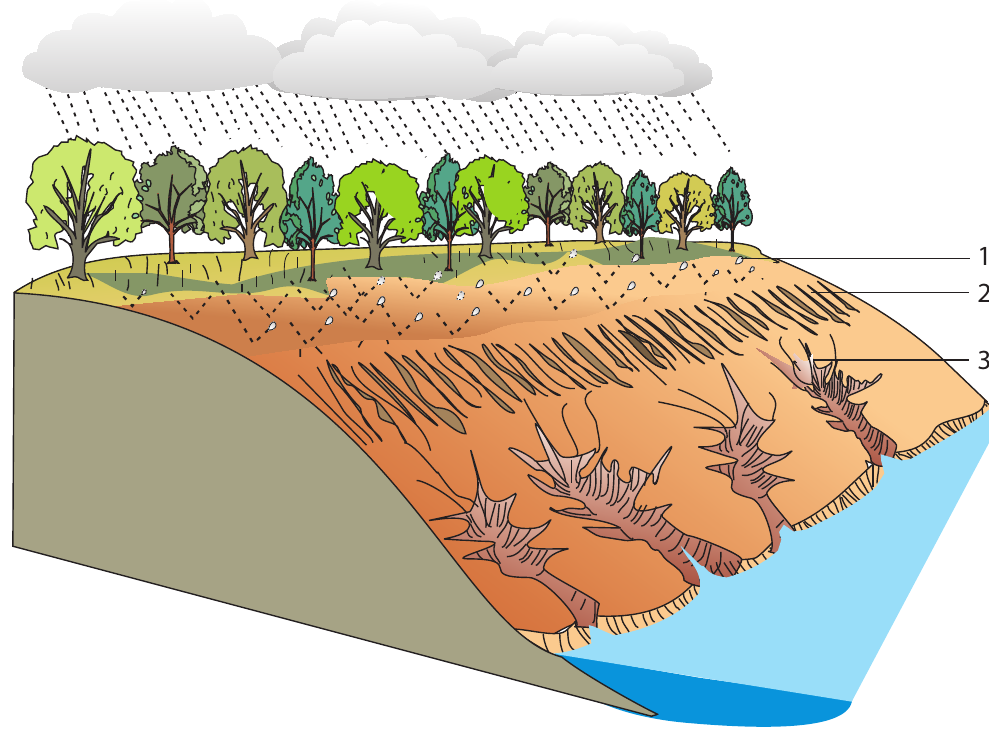
Scientists estimate that about 25% of South Africa's topsoil disappeared during the twentieth century due to water erosion. Water can cause soil erosion in several different ways, each becoming progressively more severe.
Example
Water Erosion Progression: From Mild to Severe
Water erosion occurs in three increasingly destructive stages:
Stage 1 - Sheet erosion: Raindrops hit bare ground and loosen soil particles. These loose particles get easily washed away by water flowing across the surface. Sheet erosion removes soil gradually in a fairly uniform way and might go unnoticed until most productive topsoil has disappeared.
Stage 2 - Rill erosion: Water collects into small channels that flow like tiny rivers. These channels carry soil particles down slopes and can grow deeper over time.
Stage 3 - Gully erosion: The most severe form - deep trenches with steep sides form when water flow becomes concentrated. In South Africa, these are called dongas. These deep scars can completely destroy the usefulness of farmland.
Wind erosion
Some parts of South Africa experience very strong winds. When farming practices weaken the land, the soil becomes much more vulnerable to wind erosion. This is especially true when soils in dry areas lose their moisture and vegetation cover, making it easy for wind to blow them away.
Several factors affect how severely wind erosion impacts an area, including climate conditions, the shape of the land (topography), farming practices, and the amount of vegetation cover protecting the soil.
Example
Wind Transport Mechanisms by Particle Size
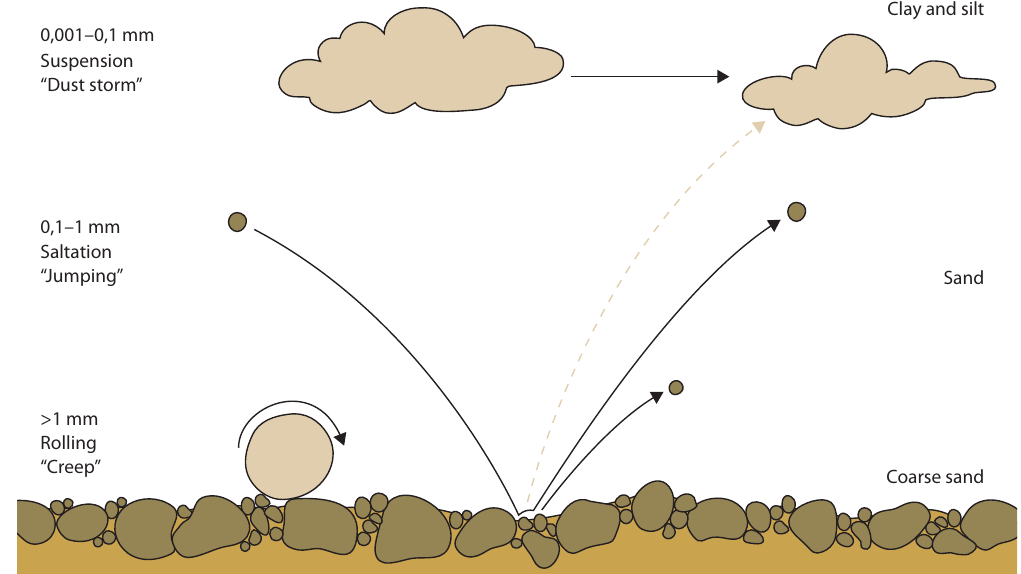
Wind erodes soil through three main mechanisms, depending on particle size:
Suspension: The finest particles (clay and silt) get lifted high into the air, creating dust storms that can travel great distances.
Saltation: Medium-sized particles (sand) move by bouncing and jumping along in a hopping motion across the ground surface.
Creep: The largest particles move by rolling or sliding along the ground surface, staying close to the earth.
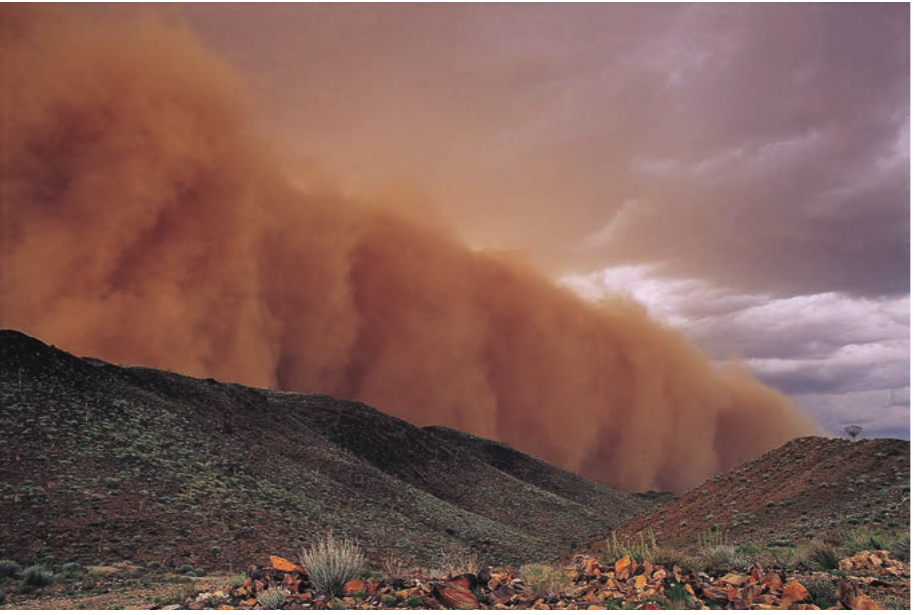
About 25% of South Africa has soils that are highly susceptible to wind erosion. In the maize-producing regions of North West Province and Free State, wind erosion removes about tonnes of soil per hectare in a single season.
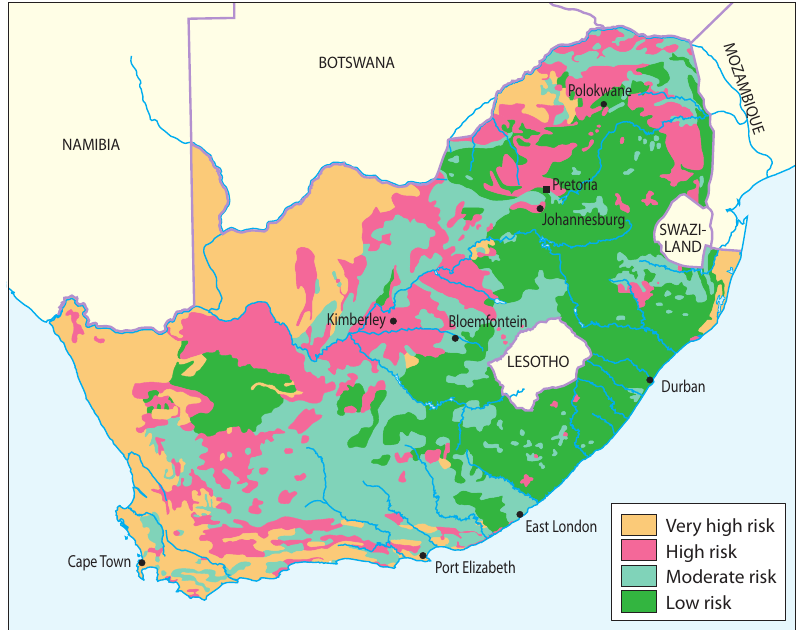
This map shows which areas of South Africa face the highest risk of wind erosion, with the western regions generally showing higher risk levels than the eastern areas.
Historical influences on soil erosion in South Africa
Note
Historical Context: How Apartheid Laws Contributed to Soil Erosion
South Africa's history of racial segregation created conditions that directly contributed to soil erosion problems through forced overcrowding and unequal land distribution.
South Africa's history of racial segregation, which began with the Land Act of 1913, created conditions that directly contributed to soil erosion problems. Initially, less than 10% of South Africa's total land area was allocated to black people, while the rest was reserved for white people. This forced millions of black subsistence farmers to try making a living on very small farms.
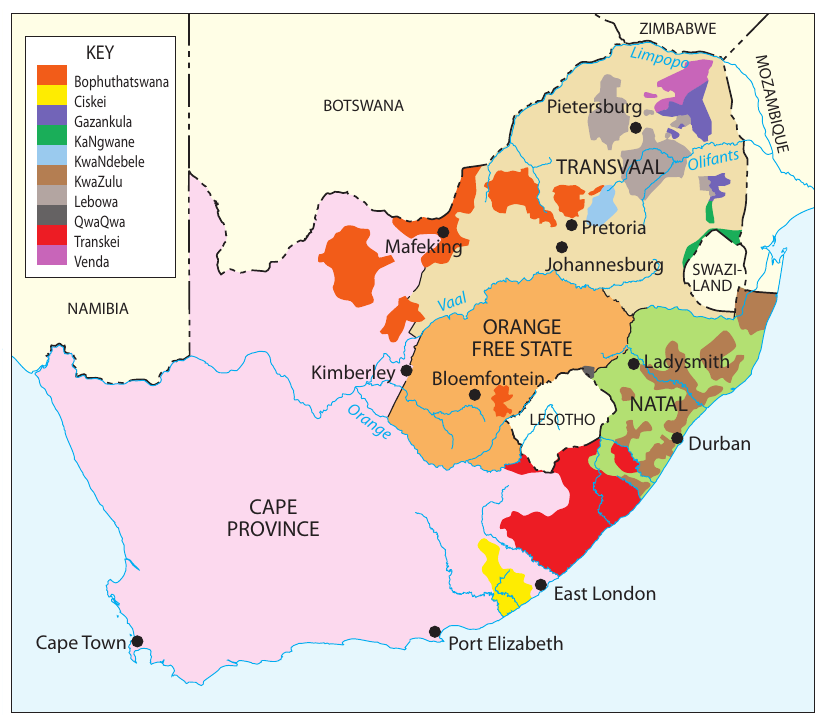
The apartheid laws of the 1950s and 1960s maintained this unequal land division by creating separate "homelands" for black people. By the 1960s, 42% of South Africa's population lived on only 13% of the land. Most of these people were subsistence farmers who had no choice but to overuse their limited land to survive.
The overcrowded and overpopulated homelands suffered severe soil erosion because too many people and animals were forced to live on too little land. The migrant-labor system made agricultural problems worse in the homelands because many working-age people were absent, working in urban areas or commercial farms and mines. This meant that African farms were mainly run by older people and women with children, and they received no government support, training programs, subsidies, or special loans that were available to white farmers.
Remember!
Summary
Key Points to Remember About Soil Erosion Causes:
- Soil erosion occurs when soil gets removed faster than it can form, mainly through wind and water action
- Human activities like monoculture farming, overstocking, and poor agricultural practices can dramatically speed up soil erosion
- It takes tonnes of soil to produce just tonne of crops, showing how precious soil is for food production
- Water erosion progresses from sheet erosion → rill erosion → gully erosion, with each stage becoming more destructive
- Wind erosion affects different sized particles differently: suspension for fine particles, saltation for medium particles, and creep for large particles
- South Africa's apartheid history created overcrowded homelands that suffered severe soil erosion due to overuse of limited land