Resources and Economic Development (Grade 11 NSC Matric Geography): Revision Notes
📚Revision Notes
Resources and Economic Development
What are resources and why do they matter?
Resources are the things that people use to help them meet their basic needs and improve their lives. When we talk about economic development, we're referring to how societies grow and become more prosperous over time. Natural resources play a crucial role in this process because they provide the raw materials that countries can use to build their economies.
The most important natural resources include minerals like gold and copper, energy sources such as oil and coal, fertile soils for agriculture, and fresh water supplies. These resources help countries develop their economies by providing materials for industries, energy for production, and the foundation for trade with other nations.
Note
Natural resources serve as the foundation for economic development by providing the raw materials needed for industrial production, energy generation, and international trade. However, the mere presence of resources doesn't guarantee economic success - how these resources are managed and utilized makes all the difference.
How natural resources are distributed around the world
Natural resources are not spread evenly across our planet. Some countries are blessed with abundant mineral wealth, while others may have very few natural resources to work with. This uneven distribution has a major impact on how different countries develop economically.
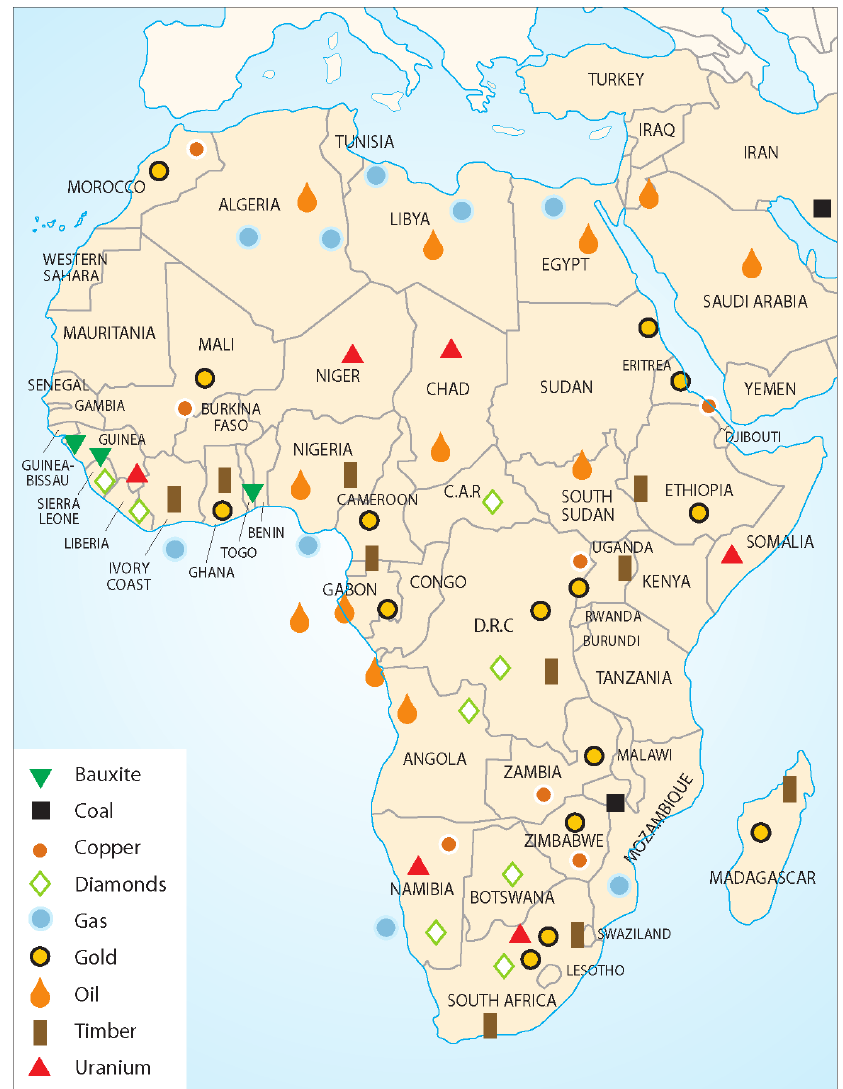
Africa provides an excellent example of how resources are distributed unevenly. The continent is rich in many different types of natural resources, but these are concentrated in specific regions and countries.
Example
Resource Distribution Example: Africa's Mineral Wealth
Looking at Africa's resource map, we can see that different countries specialize in different types of resources:
- North and West Africa: significant oil deposits
- Southern African nations: known for gold and diamond mines
- Democratic Republic of Congo: vast mineral wealth including gold, diamonds, iron, and copper
- Saudi Arabia: enormous crude oil reserves
Important
Having abundant natural resources doesn't automatically guarantee economic success. Many resource-rich countries still struggle with development challenges due to factors like political instability, poor infrastructure, and unfair trading relationships.
Global trade patterns and resource specialization
Different regions of the world have developed distinct patterns when it comes to what they export to the global market. Understanding these patterns helps us see how resources relate to economic development levels.
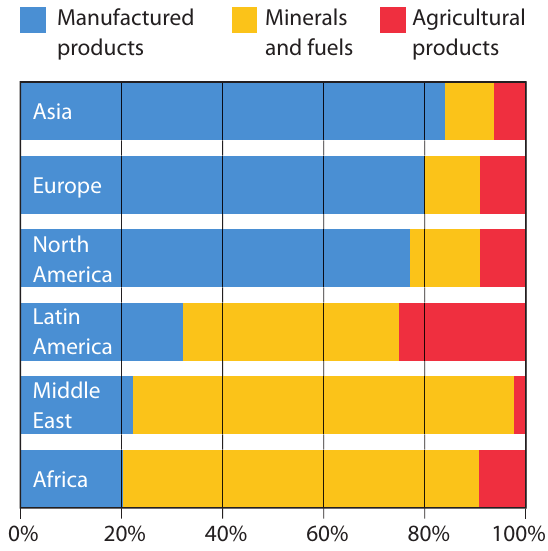
The export composition chart reveals some striking differences between world regions. Developed regions like Asia, Europe, and North America primarily export manufactured goods - products that have been processed and transformed from raw materials into finished items. These manufactured products include things like cars, electronics, machinery, and textiles.
In contrast, regions like Africa and the Middle East depend heavily on exporting raw materials and primary products. Africa's exports are dominated by minerals, fuels, and agricultural products that haven't been processed or manufactured into finished goods. The Middle East similarly relies on oil and gas exports.
Note
This pattern is significant because manufactured products typically sell for much higher prices on the world market compared to raw materials. Countries that can process their resources into finished goods generally achieve higher levels of economic development.
Africa's resource challenge
Many African countries face a particular challenge in their economic development journey. Despite having abundant natural resources, most African nations export their wealth in raw, unprocessed forms. For instance, they might export coffee beans rather than packaged coffee, iron ore instead of steel products, or uncut diamonds rather than finished jewelry.
Important
The Raw Materials Problem
This creates several problems for economic development:
- Raw materials sell for much lower prices than manufactured goods, meaning countries earn less money from their exports
- The jobs created by simply extracting and exporting raw materials are often fewer and less skilled than those created by manufacturing industries
More economically developed countries (MEDCs) have built strong manufacturing sectors that can take Africa's raw materials and transform them into valuable finished products. There is high demand for Africa's resources in these developed countries, but the real economic benefit comes from the processing and manufacturing stages that happen elsewhere.
This situation helps explain why some resource-rich African countries still struggle with poverty and underdevelopment, while countries with fewer natural resources but strong manufacturing capabilities have achieved higher living standards.
Breaking the resource dependency cycle
For countries to move beyond simple resource extraction, they need to develop their own manufacturing industries and processing capabilities. This requires investment in education, technology, infrastructure, and stable political systems. Some African countries are beginning to make progress in this direction by adding value to their resources before export and developing local industries.
Note
The relationship between resources and economic development is complex, but understanding these patterns helps explain many of the economic differences we see between countries and regions today.
Summary
Key Points to Remember:
- Resources are essential for economic development, but having them doesn't guarantee success
- Natural resources are distributed unevenly around the world, creating different opportunities for different countries
- Manufactured products are generally more valuable than raw materials in international trade
- Many African countries export raw materials rather than processed goods, limiting their economic development potential
- Breaking free from resource dependency requires investment in manufacturing, education, and infrastructure