Sustainability and Sustainable Use of Resources (Grade 11 NSC Matric Geography): Revision Notes
📚Revision Notes
Sustainability and Sustainable Use of Resources
Understanding sustainability
Important
Definition of Sustainability
Sustainability means meeting the needs of people today without harming the ability of future generations to meet their own needs. This concept is crucial as our world faces growing population and increasing demand for resources.
It's important to understand that renewable resources and sustainable resources are different concepts. A renewable resource can be naturally replenished, like solar energy or wind power. However, a sustainable resource is one that we can use at a rate that doesn't threaten its future availability.
Note
Understanding the Difference
For instance, even though oil is non-renewable, it could be considered sustainable if we used it slowly enough that supplies lasted far into the future. This shows that sustainability is more about the rate of use than whether a resource can be naturally replenished.
Growing population and resource demands
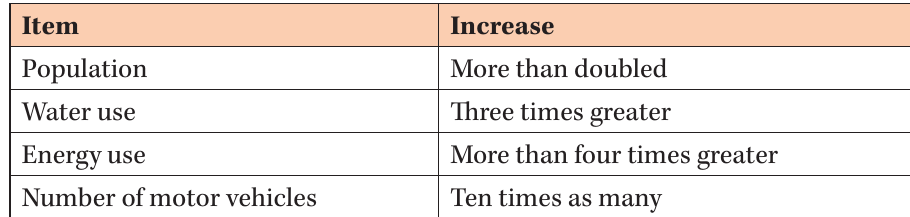
The world's population has grown dramatically over recent decades. In 1960, approximately 3 billion people lived on Earth. Today, that number has more than doubled to over 7 billion people. By 2050, scientists predict the population will reach 9 billion. This means that during your lifetime, there will be three times as many people as there were during your grandparents' generation.
This population growth has led to massive increases in resource consumption. Between 1960 and 2010, several key resources showed dramatic increases in use:
Note
Exponential Resource Growth
These statistics show that our resource consumption has grown even faster than our population, creating significant challenges for sustainable development. This phenomenon is known as the consumption multiplier effect.
The three pillars of sustainability
To address these challenges, experts have developed a framework that considers three essential elements of sustainability: environment, society, and economy. These three pillars work together to create truly sustainable solutions.

The environmental pillar focuses on protecting natural resources and ecosystems. This includes reducing pollution, maintaining healthy water systems, and avoiding activities that damage the natural world.
The social pillar emphasizes meeting human needs and ensuring fairness. This involves providing clean water, adequate food, and equal access to resources for all people in society.
The economic pillar deals with creating wealth and prosperity while using resources efficiently. This includes using modern technology effectively and keeping essential resources affordable for everyone.
Important
The Integration Principle
True sustainability happens when all three pillars work together harmoniously. Societies that can benefit from nature's resources while protecting the environment and maintaining economic stability are achieving sustainable development.
Real-world application: Water sustainability in California
Example
Case Study: Water Sustainability in Southern California
A practical example of sustainability in action comes from southern California, where researchers have developed a comprehensive approach to managing water resources for 38 million people. They recognized that water sustainability requires balancing environmental, social, and economic goals.
Environmental Goals:
- Reducing water pollution
- Keeping water ecosystems healthy
- Avoiding damage to natural areas
- Managing water sources responsibly
Economic Goals:
- Using water efficiently to generate electricity through dams
- Keeping water affordable for residents
- Implementing modern technology to improve efficiency
Social Goals:
- Providing clean and abundant water for everyone
- Creating recreational opportunities around water sources
- Ensuring fair access to water resources across different communities
This example shows how sustainability principles can be applied to real-world challenges. By considering all three pillars simultaneously, communities can develop solutions that protect resources for future generations while meeting current needs.
Note
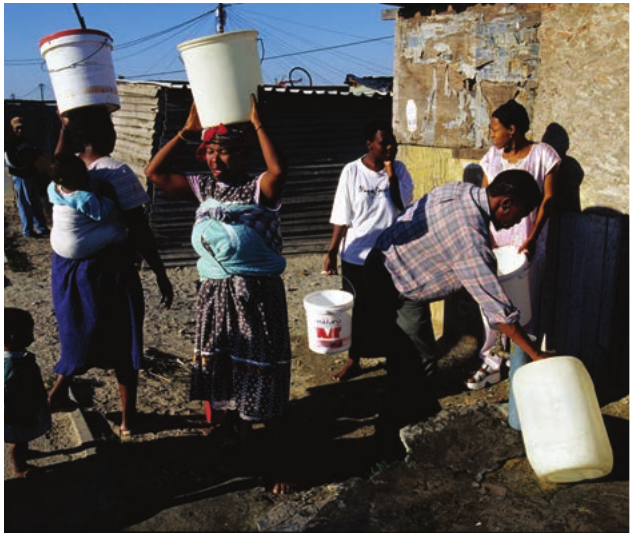
The image of people collecting water in a township reminds us that access to clean water remains a significant challenge in many parts of the world, making sustainable water management even more critical.
Key takeaways
Summary
Key Points to Remember:
- Sustainability means meeting today's needs without compromising future generations' ability to meet theirs
- Renewable and sustainable resources are different concepts - sustainability is about the rate of use
- World population has grown from 3 billion (1960) to over 7 billion today, with 9 billion expected by 2050
- Resource consumption has increased even faster than population growth
- The three pillars of sustainability are environment, society, and economy - all must work together for true sustainability
- Real-world applications like California's water management show how these principles can be implemented successfully