Issues and Events Leading to the 1917 Revolutions (Grade 11 NSC Matric History): Revision Notes
📚Revision Notes
Issues and Events Leading to the 1917 Revolutions
Understanding the Russian Revolutions of 1917 requires examining the ideas, problems, and earlier events that created the conditions for revolution. This journey begins with understanding communist theory and traces through Russia's social problems to the crucial "dress rehearsal" of 1905.
Understanding communism and socialism
The ideas behind the Russian Revolution emerged from 19th-century European thinking about equality and social justice. As industrialisation transformed societies, thinkers developed new theories about how economies and governments should work.
Note
The development of socialist and communist theory was directly linked to the social changes brought about by the Industrial Revolution, as traditional agricultural societies transformed into industrial ones with new class divisions.
Socialism developed as an economic and political system focused on the common good. Key principles include:
- Property and capital should serve everyone, not just the wealthy
- Society's wealth should be shared fairly among all people
- Collective interests matter more than individual interests
- The term "socialism" was first used in Britain in the 1820s
Communism emerged as a more radical form of socialism with these characteristics:
- No social classes or separate states should exist
- All tools, factories, and farms should be owned collectively by the people
- Private property should be abolished completely
- Workers should control and manage the economy democratically
- The term gained its modern meaning only in 1918 when Lenin named his party "Communist"
The influence of Karl Marx
Karl Marx, born in Germany in 1818, provided the theoretical foundation for revolutionary communism. His ideas became the blueprint for the Russian revolutionaries.

Marx's key works
The Communist Manifesto (1848) outlined Marx's revolutionary programme:
- Workers would gradually rise up against the capitalist system
- This process would follow what Marx called the "law of history"
- Revolution was inevitable as capitalism contained the seeds of its own destruction
Das Kapital (1867) provided a detailed analysis of capitalism:
- Society was divided between the wealthy minority and the poor majority
- The bourgeoisie (middle class) owned the "means of production" - the land and factories
- The proletariat (working class) could only sell their labour to survive
- The bourgeoisie exploited workers by underpaying them, increasing their own wealth
Important
Marx's division of society into the bourgeoisie (owners of capital) and the proletariat (workers who sell their labour) became the fundamental framework for understanding class struggle in revolutionary theory.
Marx's theory of revolution
Marx believed societies would inevitably progress through specific stages:
- Class struggle begins: Workers rise up against capitalists and the bourgeoisie
- Revolution succeeds: The working class triumphs and class divisions disappear
- Equal society emerges: Everyone would be treated equally in the new communist society
However, some socialists grew impatient with waiting for this gradual process. Lenin became one of the most important advocates for violent revolution led by trained revolutionaries. His ideas would prove crucial when Russia became the first country to establish a state based on Marxist principles in October 1917.
Background to the 1905 Revolution
19th-century Russia remained a vast, autocratic empire that was struggling to modernise while maintaining traditional power structures.
Russia's social and political structure
Russia in 1900 was dramatically different from Western Europe:
- Multi-national empire led by an autocratic ruler called the Tsar
- Ethnic Russians made up only about 45% of the population
- Remained largely agricultural while Europe industrialised
- Most people were peasants and serfs living in poverty in the countryside
Note
Russia's ethnic diversity created additional tensions, as minority nationalities like Poles and Ukrainians often desired greater autonomy or independence from Russian rule.
Serfdom created particularly harsh conditions:
- Until 1861, serfs had no freedom of movement
- They were forced to work on great landowners' estates
- They had the legal status of peasants with very few rights
The emancipation of the serfs (1861)
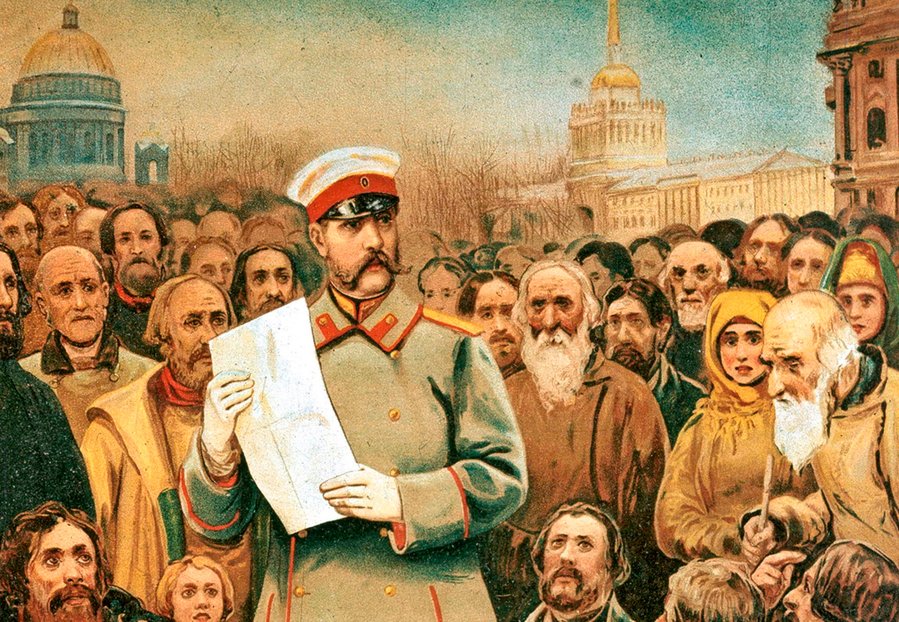
Tsar Alexander II freed the serfs in 1861, granting them full citizenship rights. This major reform had mixed results:
- Landowners had to give their former serfs pieces of land
- Serfs could now travel to towns and cities to work in growing industries
- However, political representation remained extremely limited
Local government (Zemstvo) provided only minimal democracy:
- Elected by townspeople, peasant villagers, and noble landowners
- Dealt only with local problems
- Dominated by traditional bureaucracy and local nobility
- Ordinary people had very little real power
Important
The emancipation of the serfs was a crucial reform, but it failed to solve the underlying problems of Russian society. Many former serfs remained poor, and political power stayed concentrated in the hands of the traditional elite.
Industrial growth and political tensions
After 1860, Russia experienced rapid industrialisation, which created new social problems:
- By 1900, Russia had Europe's highest industrial growth rate
- Two million industrial workers lived and worked in very poor conditions
- Factory workers felt economically exploited and began forming unions
- The growing working class population, especially in Moscow and St Petersburg, became receptive to Marxist ideas
Political activity increased as people demanded constitutional government and a parliament. In 1861, the Russian Social-Democratic Party formed (later called the Communists), advocating for democratic reforms.
The Russo-Japanese War triggers crisis
Russia's imperial ambitions created a crisis that would spark revolution:
- By 1903, Russia established influence in Chinese Manchuria
- Japan opposed Russian expansion in Korea
- Japan launched a surprise attack in February 1904
- Russia suffered a humiliating military defeat
- This military failure led to political unrest throughout Russia
Different groups demanded change:
- Business and professional classes wanted liberal democratic reforms
- Factory workers felt exploited and organised unions
- Peasants still lived in poverty despite emancipation
- Intellectuals among minority nationalities (especially Poles and Ukrainians) demanded self-rule
The 1905 Revolution
By 1905, multiple crises combined to create revolutionary conditions across Russia.
Political divisions emerge
Lenin's faction splits (1903):
- Lenin demanded a small, disciplined, elite party
- His supporters became known as Bolsheviks (meaning minority, though they were actually fewer in number)
- Opponents became Mensheviks (meaning majority)
- Social Democrats began organising unions, strikes, and demanding democratic reforms
The revolution unfolds
October 1905: Strikes and uprisings spread nationwide
- Peasant revolts erupted among minority nationalities
- Military mutinies occurred within the army
- Discontent had spread throughout the country
Summer 1905: A general strike paralysed Russia, forcing the government to respond to popular demands.
Bloody Sunday - the spark
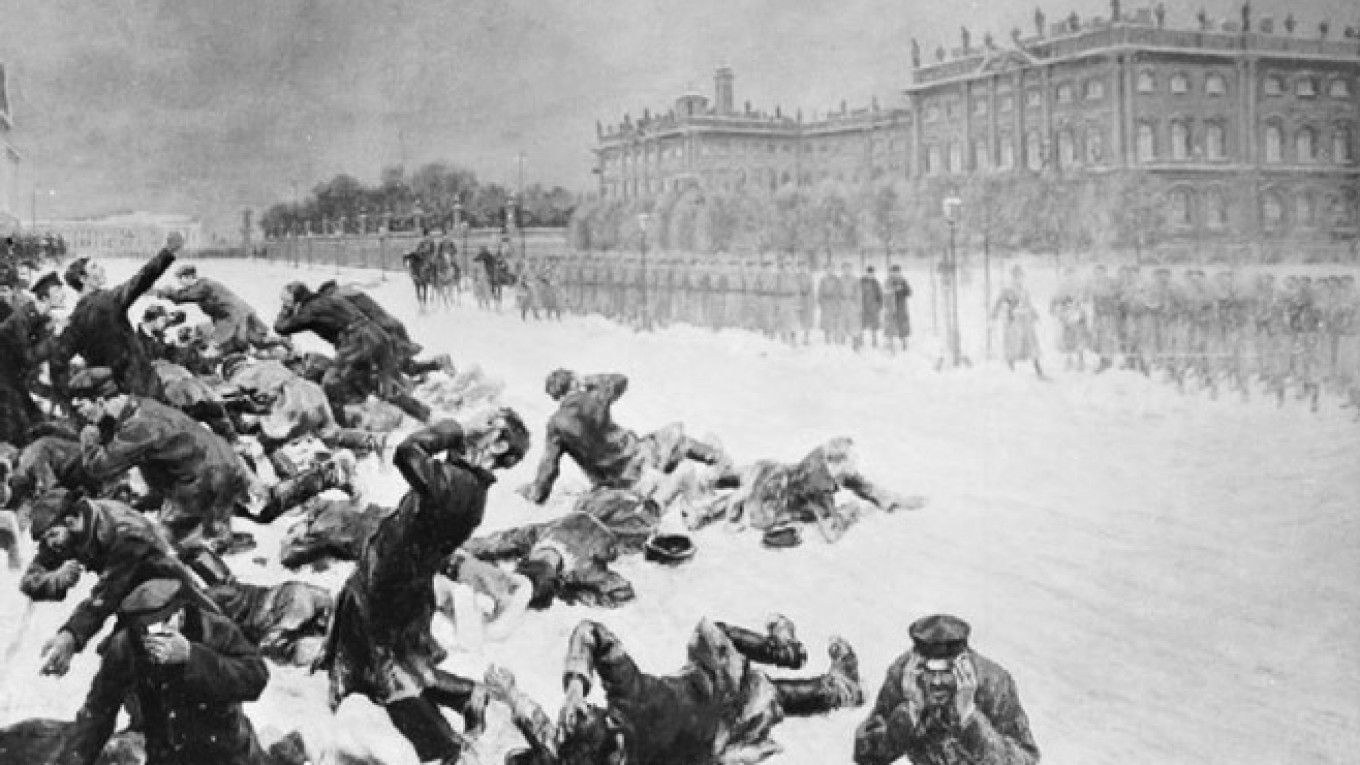
The revolution began in February 1905 when workers, led by Father Georgii Gapon (actually a secret police agent), marched peacefully to the Winter Palace in St Petersburg to present a petition to Tsar Nicholas II. Instead of receiving their petition, troops opened fire, killing and wounding hundreds of workers.
Important
Bloody Sunday was the crucial turning point that transformed worker loyalty into revolutionary anger. The image of the Tsar ordering troops to fire on peaceful petitioners destroyed the traditional bond between ruler and people.
This massacre became known as Bloody Sunday and had enormous consequences:
- Workers turned against the Tsar, with anger spreading throughout Russia
- Russian Marxists formed the Social-Democratic Labour Party
- The Tsar issued the October Manifesto, promising civil rights and an elected parliament (Duma)
The October Manifesto and the Duma
The Tsar's October Manifesto promised significant reforms:
- Civil rights for all citizens
- An elected parliament (Duma) with real power to pass laws
- Constitutional monarchy replacing absolute rule
However, the reality proved disappointing:
- Liberals (Octoberists) accepted the Manifesto
- Social Democrats rejected it, wanting socialist revolution instead
- The Duma, which first met in May 1906, had limited real power
- The Tsar retained most authority and appointed government ministers
- The Tsar maintained an absolute veto over all laws passed by the Duma
Example
The Tsar's manipulation of democracy: Twice the Tsar dismissed the Duma when radical representatives were elected. He then rewrote electoral laws to ensure the propertied classes dominated future elections, guaranteeing greater support for the Tsar and his ministers.
In December 1905, Social Democrats led a workers' uprising in Moscow, but the middle class supported the government in suppressing this revolt.
Connecting 1905 to 1917
The 1905 Revolution served as crucial preparation for the successful revolutions of 1917.
Key lessons for revolutionaries
The 1905 Revolution helped Marxist revolutionaries develop their political theory and improve their organising skills.
Lenin, who was in exile in 1905, carefully watched events and adapted his revolutionary strategy accordingly.

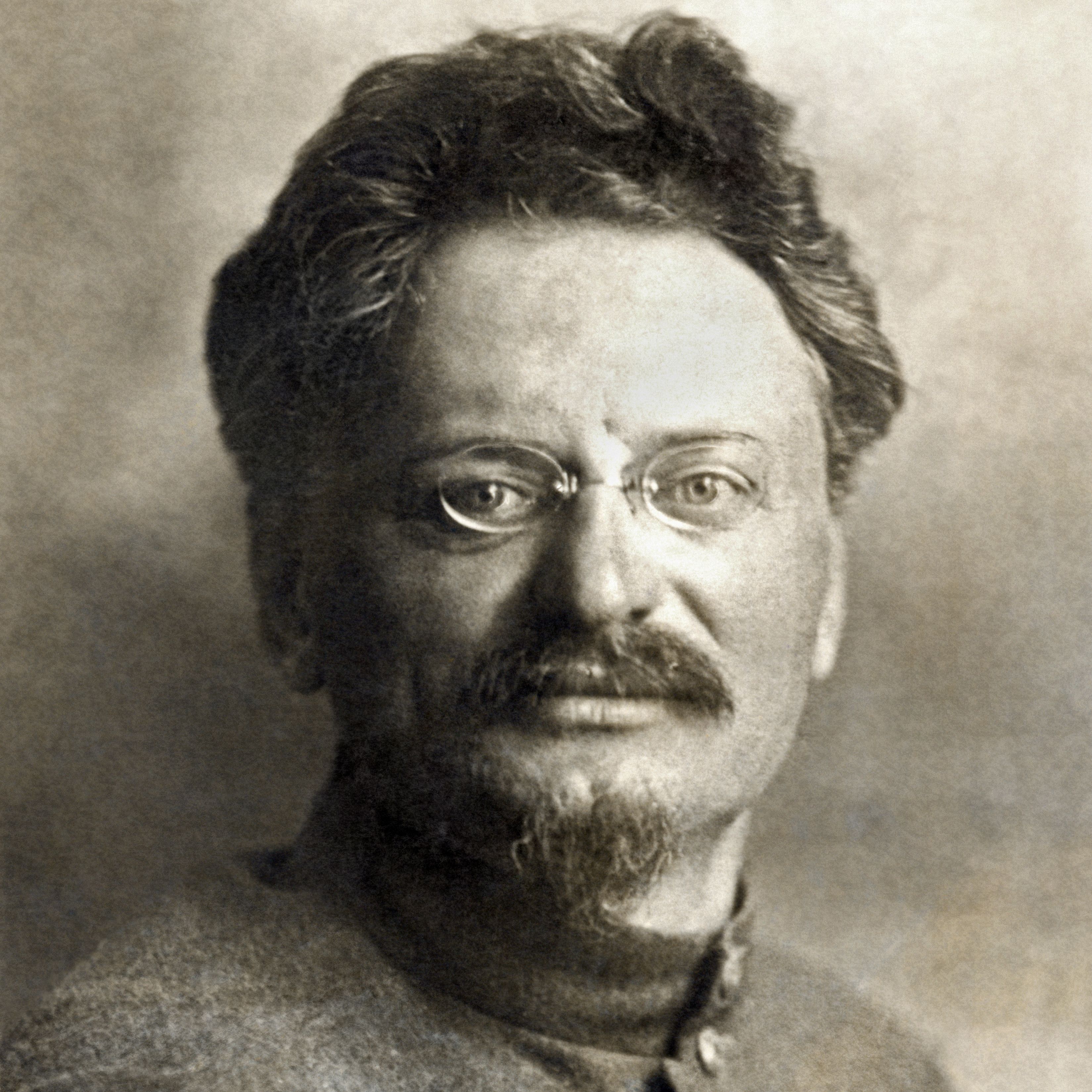
Leon Trotsky emerged as a key leader during 1905:
-
Helped establish the Soviet of Workers' Deputies in St Petersburg
-
Was elected to its executive council and later became chairperson
-
After the uprising, was arrested and sentenced to internal exile
-
Eventually escaped to Vienna, Austria
The Soviet system emerges
Soviets of Workers' Deputies represented a new form of revolutionary organisation:
- Made day-to-day decisions for workers
- By late October 1905, the St Petersburg Soviet had taken over many local government functions
- Soviets were established in cities across Russia
- This system would prove crucial in 1917
Note
The word "Soviet" simply means "council" in Russian, but these workers' councils became a uniquely Russian form of revolutionary government that would later give its name to the Soviet Union.
Although the St Petersburg Soviet played an important role in 1905, the uprising was eventually suppressed in December 1905. Trotsky and other Soviet leaders were arrested and tried in September 1906.
Revolutionary theory evolves
What Social Democrats learned from 1905:
- Mass strikes and workers' councils (Soviets) were more effective than traditional political parties for representing workers
- Revolutionary theory needed revision: A socialist revolution was possible even in a backward country like Russia without a large urban working class
- Trotsky developed the theory of Permanent Revolution: Revolutions could succeed even without waiting for full capitalist development
Before 1905: Most Marxist revolutionaries believed they were fighting for democratic government under capitalism first, then socialism later.
After 1905: Revolutionaries recognised they could go straight to a workers' revolution. Once in power, workers would implement democratic measures to help peasants, then introduce socialist, anti-capitalist measures to meet workers' needs.
Summary
Key Points to Remember:
- Communist theory provided the ideological foundation - Marx's ideas about class struggle and inevitable revolution inspired Russian revolutionaries
- Russia's social problems created revolutionary conditions - Autocratic rule, serfdom, rapid industrialisation, and military defeats caused widespread discontent
- The 1905 Revolution was a "dress rehearsal" - Bloody Sunday, mass strikes, and the formation of Soviets tested revolutionary tactics and taught important lessons
- Key revolutionary leaders emerged from 1905 - Lenin and Trotsky developed their theories and gained practical experience that would prove crucial in 1917
- The Tsar's limited reforms failed to satisfy demands - The Duma and October Manifesto provided too little change too late, leaving revolutionary potential intact for 1917