Democratic Structures (Grade 11 NSC Matric Life Orientation): Revision Notes
📚Revision Notes
Democratic Structures
Democratic structures in South Africa operate at various levels, from national parliament down to local community organisations. These structures provide different ways for citizens to participate in governing the country and making decisions that affect their lives.
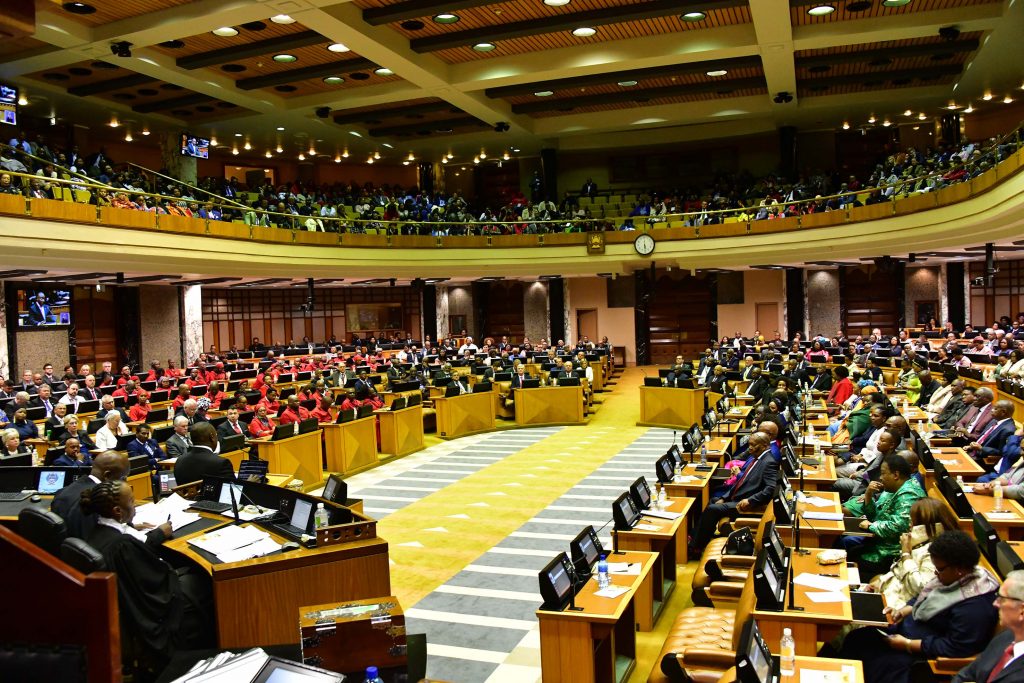
Political structures
Political structures are the official bodies that run the country and make important decisions. The people in charge of these structures are politicians who have been elected by voters.
National government
The national government operates through several key bodies:
- Parliament: This includes the President, Deputy President and various Ministers who make and carry out laws for the whole country
- National Assembly: The main law-making body where MPs debate and vote on legislation
- National Council of Provinces: Represents the interests of each province at national level
Note
Citizens have multiple ways to engage with national government structures, from voting in elections to directly participating in the law-making process through public submissions.
How you can participate:
- Comment on the law-making process through public submissions
- Submit petitions to Parliament
- Vote in national elections every five years
- Stand for election as an MP
- Lobby government about specific issues through letters, meetings or phone calls
Provincial government
Each of South Africa's nine provinces has its own government structure:
- Legislature: Led by the Speaker, this body makes laws that affect the province only
- Provincial Government: Led by the Premier and Members of the Executive Council (MECs)
These bodies focus on making and carrying out laws and policies that affect their specific province rather than the whole country.
Local government
Local government is the level closest to ordinary citizens and includes:
- Metropolitan Councils: Found in major cities like Johannesburg, Cape Town, Durban, Nelson Mandela Bay, eThekwini, Buffalo City and Mangaung
- District Councils: Made up of several Local Municipalities, divided into wards with ward committees
- Local Councils/Municipalities: Focus on service delivery in smaller areas
Key functions of local government:
- Make and carry out by-laws for local communities
- Provide democratic and accountable government
- Ensure sustainable services like water, electricity, sanitation and refuse removal
- Promote social and economic development
- Create a safe and healthy environment
- Encourage community participation in local governance
- Plan and manage local budgets
How you can participate:
- Attend Council meetings when budgets are debated and voted on
- Serve on a ward committee
- Attend public meetings and hearings
- Get appointed to community representative committees
- Be informed of municipal council decisions
- Attend izimbizo (large-scale community meetings)
- Work as a volunteer at service delivery organisations
Traditional authorities
Traditional leaders and councils play an important role, especially in rural areas:
Functions:
- Help involve traditional communities in local government development planning
- Support municipalities in identifying community needs
- Make recommendations about service delivery
- Participate in development programmes at municipal, provincial and national levels
- Promote indigenous knowledge systems
- Administer traditional community affairs according to custom and tradition
- Assist and guide traditional leaders in their functions
- Participate in developing local policy and legislation
- Warn municipalities about dangers threatening people in traditional council areas
- Perform duties according to customary law that aligns with the Constitution
How you can participate:
- Attend traditional council meetings
- Ensure councils follow the law and don't discriminate
Political parties
Political parties represent different viewpoints and interests in society. Examples include the African National Congress, Democratic Alliance, Congress of the People, Inkatha Freedom Party, and Independent Democrats.
Functions:
- Represent voters' interests
- Represent particular viewpoints on issues
- Educate and inform the public on important matters
How you can participate:
- Vote for your preferred party
- Join a political organisation
- Stand as a candidate in elections
- Take part in party activities at local level
Local community structures
Local community structures are public organisations that are not run by politicians but by groups of ordinary citizens. These structures focus on local issues affecting their specific area or community.
Civil society organisations (CSOs)
These include:
- Interest groups: Focus on specific issues or causes
- NGOs (Non-governmental organisations): Organisations not part of government, like Child Welfare
- Community-based organisations: Serve local community needs
- Faith-based organisations: Non-profit groups formed by people sharing the same religion
Note
Key Definitions:
- Legislature: a group of people with the power to make or change laws
- Civil society: ordinary citizens
- Non-governmental organisations (NGOs): organisations that are not part of government, e.g. Child Welfare
- Faith-based organisations: non-profit organisations that are formed by people of the same religion
Functions:
- Monitor government performance
- Advocate for citizens' rights and needs
- Assist with service delivery in communities
- Represent groups of people with common interests and concerns
How you can participate:
- Get involved in existing organisations
- Participate in youth and women's groups, neighbourhood watches, school governing bodies, environmental and human rights advocacy groups
- Start your own civil society organisation or advocacy project
Representative council of learners
The South African Schools Act requires every public school enrolling Grade 8 or higher learners to establish a representative council of learners (RCL). This is the only legally recognised learner representative body at schools.
Functions:
- Build unity among learners
- Address the needs of all learners
- Keep learners informed about school and community events
- Encourage good relationships between learners and educators, and between learners and other staff members
- Encourage positive relationships between educators and parents
- Establish links with RCLs in other schools and youth organisations
How you can participate:
- Stand for election to your school's RCL
- Hold meetings to discuss learner concerns
- Participate actively in RCL activities and decision-making
Principles and functions of structures and how structures change
Constitutions
A constitution is a legal 'founding document' that serves as the foundation on which an organisation is built. Many democratic structures have constitutions, including government bodies, NGOs, community-based organisations, residents' associations and youth groups.
A constitution typically states:
- The purpose of the organisation (why it exists)
- Aims and objectives (what the organisation intends to achieve)
- Type of organisation (for example, a not-for-profit voluntary association)
- Membership rules (who can join, duties and rights of members)
- Structures and procedures for decision-making (meetings, elections, appointments, getting work done)
- Roles, rights and responsibilities of people in specific positions
- How money and assets are controlled
- How to close the organisation if necessary
Elections and representation of constituencies
Different democratic structures hold elections in various ways:
National and provincial elections happen every five years. You vote for political parties rather than individual candidates. The party receives seats in Parliament based on the number of votes it gets. Each party then selects members to fill the seats it has won. This system is called proportional representation (PR).
Metropolitan municipal elections occur every five years. You vote for a political party and for a ward candidate of your choice to represent you.
Local municipal elections take place every five years. You have three votes: one for your individual representative on the local council ward, and two votes for a political party (one for local council and one for district council).
Municipal by-elections happen when a ward councillor dies, is expelled, or resigns and their seat becomes vacant.
Community organisations also hold elections to choose chairpersons and other office bearers like secretaries and treasurers. These elections usually happen annually at the annual general meeting (AGM).
Important
The Independent Electoral Commission (IEC) manages national, provincial and municipal elections to ensure they are free and fair.
Mandates
A mandate is the power to act that voters give to their elected leaders. Acts of law also give mandates to institutions. For example, the South African Revenue Service Act gives SARS the mandate to collect taxes. The Broadcasting Act gives the SABC a mandate to be a public broadcaster. If laws change, mandates may also change.
Lobbying
Lobbying means trying to influence government officials or people in positions of power to make decisions for or against something.
Examples of lobbying:
- Individuals or organisations lobbying government to change tax laws
- Parents lobbying school governing bodies to provide lunches at school
- HIV and AIDS activists lobbying the President to provide affordable treatment for people who are HIV-positive
- Residents' associations lobbying municipalities to create parks
Ways people lobby include:
- Writing letters and emails to people in power
- Holding informal discussions with committee members and decision-makers
- Attending meetings (like parliamentary hearings)
- Organising petitions
- Using social media platforms like Facebook and Twitter to gain support
Advocacy
Advocacy is the act or process of supporting a cause or proposal. Citizens or groups start campaigns to influence decisions about particular issues. They raise awareness about the issue and lobby government about it.
Advocacy campaigns can raise awareness by:
- Organising public meetings to inform people about issues
- Distributing information leaflets
- Using media (radio, television, internet) to gather public support
- Organising petitions
- Writing to MPs and local councillors
- Organising marches and demonstrations
- Creating songs and artistic expressions
Example
Worked Example: Advocacy Campaigns in Action
UN Millennium Development Goals campaign: Used the song "8 Goals for Africa" to raise awareness about ending poverty by 2015, featuring South African artists like Hugh Masekela
Soul City's road safety campaign: Advocated for legislation requiring reflector material in school uniforms and learner patrols in primary schools
Red Cross and Red Crescent campaign: "Our Children - Our Future" focused on orphans and children made vulnerable by HIV and AIDS
DPSA HEART campaign: Disabled People South Africa's advocacy to raise awareness and lobby for changes to improve disabled people's livelihoods
How and why structures change
Democratic structures can change for several reasons:
- The people in leadership positions change
- Their constitutions are amended
- Their mandates are altered by new laws
- They are influenced through advocacy and lobbying campaigns
These changes help structures adapt to new circumstances and respond to citizens' evolving needs.
Running meetings
If you want to influence structures and organisations, you can organise or attend different types of meetings:
Types of meetings:
- Public meetings: Local council meetings, parliamentary debates
- Private meetings: Appointments with local councillors, mayors or provincial ministers
- Izimbizo: Large community meetings where Local Councils provide feedback and listen to community concerns
- Committee or AGMs: Of community organisations or NGOs
By attending meetings, you can learn what's happening and often have opportunities to share your ideas and concerns.
Note
Meeting procedures help ensure fair participation. Meetings should have agendas outlining what will be discussed. A chairperson runs the meeting, ensures only one person speaks at a time, and keeps discussions focused on agenda items.
Processes for participating in structures and governance
Ways to participate
Civil society and ordinary citizens strengthen democracy by participating in its structures. Participation means people work together cooperatively to develop the country.
People can participate through:
- Local and community structures
- School governing bodies
- Community policing forums
- NGOs and community organisations
Citizens can even participate in making laws that affect everyone. Government departments follow specific steps when creating new laws, and some steps allow public comment and submissions.
The law-making process
The formal law-making process consists of 12 basic steps:
Example
Worked Example: The 12-Step Law-Making Process
Step 1: Draught bill is drawn up by government departments
Step 2: Draught bill is introduced to the National Assembly
Step 3: Public comment period - citizens can comment on the draught bill
Step 4: Changes are made to the draught bill after public input
Step 5: Minister presents the bill in Parliament
Step 6: Bill is given a number for official tracking
Step 7: Parliament studies the bill in detail
Step 8: Special parliamentary committee debates the bill and may ask for more public comment
Step 9: Committee sends bill back to Parliament with any changes
Step 10: Parliament votes on the bill - at least half the MPs must vote in favour for it to be approved
Step 11: National Council of Provinces (NCOP) considers the bill and can approve, suggest changes, or reject it
Step 12: If NCOP approves, the bill goes back to the National Assembly to be passed into law when the President signs it
Important
This process ensures that ordinary citizens have opportunities to influence law-making through public comment periods and submissions to parliamentary committees.
Summary
Key Points to Remember:
-
Democratic structures operate at national, provincial and local levels, each with specific functions and ways for citizens to participate
-
Political structures (government bodies) and local community structures (civil society organisations) both play important roles in South African democracy
-
Citizens can participate through voting, joining organisations, attending meetings, lobbying, advocacy campaigns, and commenting on proposed laws
-
All democratic structures are governed by constitutions and can change through elections, new mandates, or citizen influence
-
The 12-step law-making process includes opportunities for public participation, showing how ordinary citizens can help shape the laws that govern the country