Protista and Fungi (Grade 11 NSC Matric Life Sciences): Revision Notes
📚Revision Notes
Protista and Fungi
Introduction to Kingdom Protista
The Kingdom Protista is a fascinating group of eukaryotic organisms that don't quite fit into the plant, animal, or fungi kingdoms. These organisms are incredibly diverse and play crucial roles in aquatic ecosystems around the world.
Note
The diversity of protists is truly remarkable - they can range from microscopic single-celled organisms to massive seaweeds that can grow several metres in length, yet they all share the common feature of being eukaryotic organisms that don't fit neatly into other kingdoms.
Key terminology
| Term | Definition |
|---|---|
| Aquatic | Living in or around water |
| Phytoplankton | Very small plants (algae) that float on or near the surface of water |
| Zooplankton | Small animals and immature stages of larger animals which float on or near the surface of water |
| Sessile | Organisms that are permanently attached to something and cannot move on their own but can move through outside sources (such as water currents) |
Characteristics of Protista
Important
Understanding these key characteristics is essential for identifying and classifying protists correctly. These features distinguish them from all other kingdoms of life.
Protists share several important features that make them unique:
- Simple structure: They can be either single-celled (unicellular) or multi-celled (multicellular) eukaryotic organisms
- No tissue specialisation: Unlike plants and animals, protists don't have specialised tissues
- Aquatic lifestyle: They are found mainly in water environments
- Flexible nutrition: They can be either autotrophic (make their own food) or heterotrophic (consume other organisms)
- Size variation: Usually microscopic, but some like seaweeds can grow several metres in length
- Movement diversity: Some are sessile (attached), others float freely, and some move using flagella or false feet called pseudopodia
- Reproduction flexibility: They can reproduce both sexually and asexually
Three groups of Protista
Scientists recognise three main groups of protists based on their characteristics and lifestyle.
Plant-like Protista (Phytoplankton)
These protists are essentially the "grass of the sea" - tiny floating plants that form the foundation of aquatic food webs.
Note
Plant-like Protista Key Features:
- Mainly unicellular organisms found in aquatic environments
- Most are autotrophic (they photosynthesise like plants)
- Free-floating aquatic plant-like protists are called phytoplankton

Phytoplankton are incredibly diverse in shape and size. They include diatoms, dinoflagellates, and various algae species that produce oxygen and serve as food for countless marine organisms.
Animal-like Protista (Zooplankton)
These protists behave more like tiny animals, hunting and consuming other organisms for food.
Note
Animal-like Protista Key Features:
- Mainly heterotrophic free-living unicellular animals living in aquatic environments
- Examples include Amoeba, which moves using pseudopodia
- Some are parasitic and cause diseases such as malaria
- Free-floating aquatic animal-like protists are called zooplankton
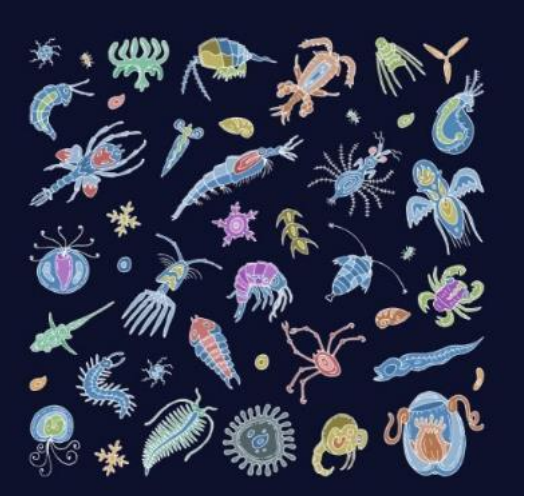
Algae (Seaweeds)
These are the larger, more complex protists that many people are familiar with from visits to the seaside.
Note
Algae Key Features:
- Multicellular, macroscopic organisms commonly called seaweeds
- Contain various photosynthetic pigments giving them green, red, or brown colours
- May be free-floating or sessile (attached to a surface)
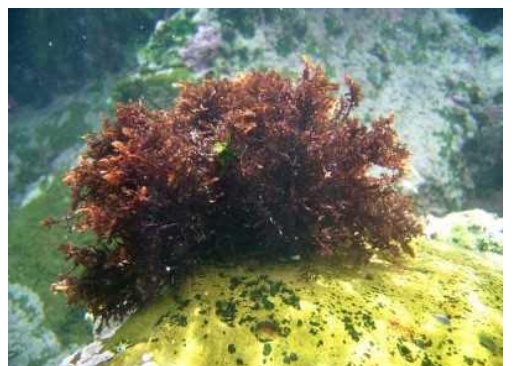
Kingdom Fungi
The Kingdom Fungi includes familiar organisms like moulds, yeasts, mildews, rusts, toadstools, and mushrooms. These organisms are essential decomposers in virtually every ecosystem on Earth.
Key fungal terminology
| Term | Definition |
|---|---|
| Chitin | A tough, fibrous substance made of polysaccharides that forms the cell walls of fungi (similar to cellulose in plants) |
| Hyphae | Thread-like filaments that make up the body of multicellular fungi |
| Mycelium | The network of fungal hyphae found in soil and organic matter |
| Multinucleate | Cells containing multiple nuclei sharing the same cytoplasm |
| Rhizoids | Thread-like structures that anchor fungi to surfaces |
| Budding | A form of asexual reproduction where offspring pinch off from parent cells |
Examples of fungi
Fungi come in many different forms and play various roles in ecosystems:
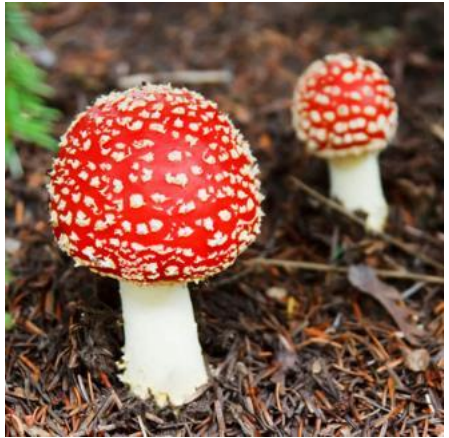
The classic red and white spotted toadstools (fly agaric mushrooms) are highly recognisable but poisonous.
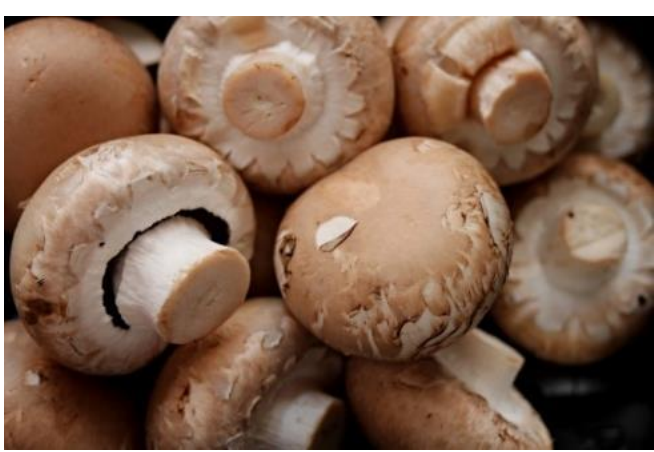
Edible mushrooms like these brown cremini mushrooms are important food sources for humans.
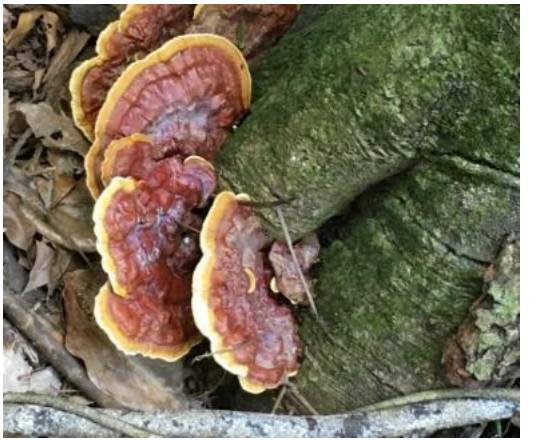
Bracket fungi grow on dead wood and are crucial decomposers in forest ecosystems.
Characteristics of fungi
Important
All fungi share these fundamental characteristics that distinguish them from other kingdoms. Understanding these features is essential for proper classification and ecological understanding.
All fungi share several important characteristics that distinguish them from other kingdoms:
Cellular organisation:
- Some are unicellular (like yeasts) while others are multicellular (like mushrooms)
- All are eukaryotic (have a nuclear membrane)
Nutrition:
- All fungi are heterotrophic since they lack chlorophyll
- Saprophytic fungi live off dead organic matter and act as decomposers
- Parasitic fungi live off living organisms and can cause diseases
Structure:
- Cell walls contain chitin (unlike plants which have cellulose)
- Multicellular fungi have bodies made of thread-like hyphae
- All hyphae together form a network called mycelium
- Many hyphae are multinucleate (contain many nuclei)
Reproduction:
- Fungi can reproduce both sexually and asexually
- Unicellular fungi like yeasts reproduce asexually by budding
- Multicellular fungi reproduce asexually using spores
Investigating fungal growth
Scientists often study how environmental factors affect fungal growth. A common investigation involves growing bread mould under different temperature conditions.
Example
Investigation Example: Bread Mould Growth
Step 1: Set up bread samples at different temperatures (5°C, 15°C, 25°C, 35°C)
Step 2: Observe and measure mould growth daily over one week
Step 3: Record the rate of spread and density of growth
Step 4: Analyse which temperature conditions produce optimal fungal growth

This sequence shows how bread mould spreads over time, from a few small spots to complete coverage of the bread surface.
The role of micro-organisms in maintaining environmental balance
Micro-organisms, including protists and fungi, play essential roles in recycling nutrients and maintaining ecological balance.
Key ecological terms
| Term | Definition |
|---|---|
| Decomposers | Organisms that break down dead plant and animal material (bacteria and fungi are key examples) |
| Saprophytes | Organisms that specifically live off dead organic matter |
Note
How decomposition works:
- When plants and animals die, their bodies contain valuable nutrients
- Decomposer organisms like fungi and bacteria break down these dead materials
- This releases nutrients back into the soil and water
- These recycled nutrients can then be used by new plants and other organisms
- Without decomposers, dead material would accumulate and nutrients would become locked up
Environmental importance:
- Decomposers prevent the accumulation of dead organic matter
- They recycle essential nutrients like carbon, nitrogen, and phosphorus
- They help maintain soil fertility for plant growth
- They contribute to the carbon cycle and other biogeochemical cycles
Summary
Key Points to Remember:
- Protista are eukaryotic organisms found mainly in water that don't fit into plant, animal, or fungi kingdoms
- Three groups of protists: plant-like (phytoplankton), animal-like (zooplankton), and algae (seaweeds)
- Fungi are heterotrophic eukaryotes with cell walls containing chitin instead of cellulose
- Fungal body structure consists of thread-like hyphae that together form a mycelium network
- Decomposition role: Both fungi and some protists are crucial decomposers that recycle nutrients in ecosystems