Pollination (Grade 11 NSC Matric Life Sciences): Revision Notes
📚Revision Notes
Pollination
Pollination is a crucial process in plant reproduction that ensures the continuation of plant species. Understanding how different flowers have adapted to attract specific pollinators helps us appreciate the incredible diversity in the plant kingdom.
What is pollination?
Important
Definition: Pollination is the process of transferring pollen grains from the male part of a flower (the anther) to the female part (the stigma). This can happen within the same flower, between flowers on the same plant, or between flowers on different plants of the same species.
The male reproductive parts of flowers are called stamens. Each stamen has a thin stalk called a filament that supports an anther. The anther contains four pollen sacs that produce pollen grains through meiosis. These pollen grains are the male reproductive cells.
The female parts consist of carpels that fuse together to form pistils. Each pistil has three main parts: the stigma (which receives pollen), the style (a tube connecting the stigma to the ovary), and the ovary (which contains ovules). When pollen lands on the stigma, it grows down through the style to fertilise the ovules in the ovary, eventually forming seeds.
Types of pollination
There are two main types of pollination, and understanding the difference is important for appreciating genetic diversity in plants.
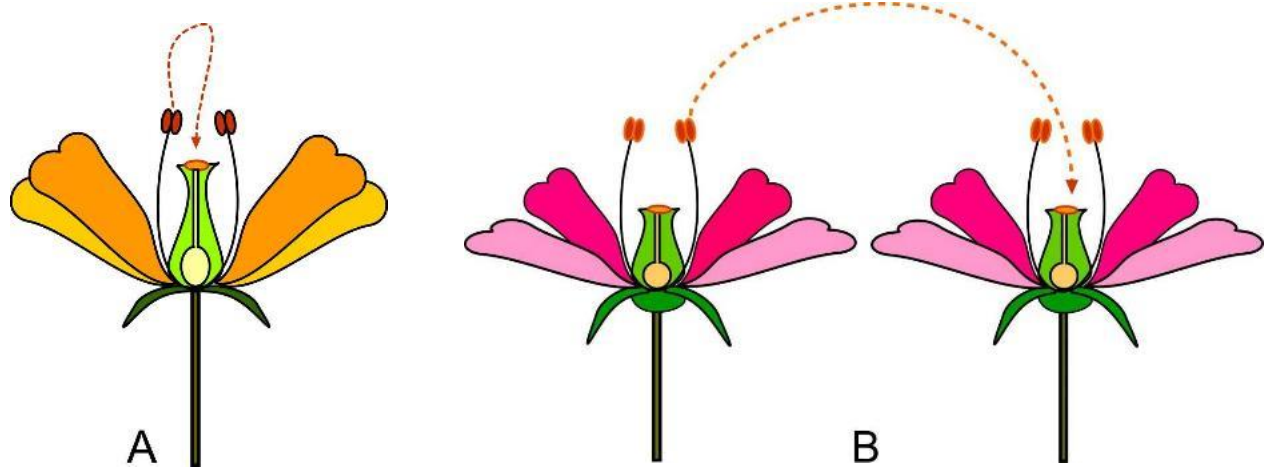
Self-pollination happens when pollen moves from the anther to the stigma within the same flower, or between different flowers on the same plant. Many plants have adaptations to prevent this from happening. For example, the pollen might be released before the stigma is ready to receive it, or the stigma might mature before the anthers release their pollen.
Cross-pollination occurs when pollen travels from a flower on one plant to a flower on a different plant of the same species.
Important
Why Cross-Pollination Matters
Cross-pollination is incredibly important because it creates genetic diversity. When offspring have genetic material from two different parent plants, they are more likely to survive challenging environmental conditions and adapt to changes.
Cross-pollination is essential for producing many of our food crops, including apples, pears, maize, legumes, and wheat. Without effective pollination, these crops would not develop into the fruits and seeds we depend on.
How flowers attract pollinators
Plants rely on different agents to carry their pollen from one flower to another. The main pollinators are insects, birds, and wind. Each type of pollination has resulted in flowers developing specific adaptations to ensure successful pollen transfer.
Note
What is Nectar?
Nectar is a sugar-rich liquid produced in special glands called nectaries and serves as an energy source for visiting animals. This reward system is crucial for attracting and maintaining relationships with pollinators.
Adaptations for insect pollination
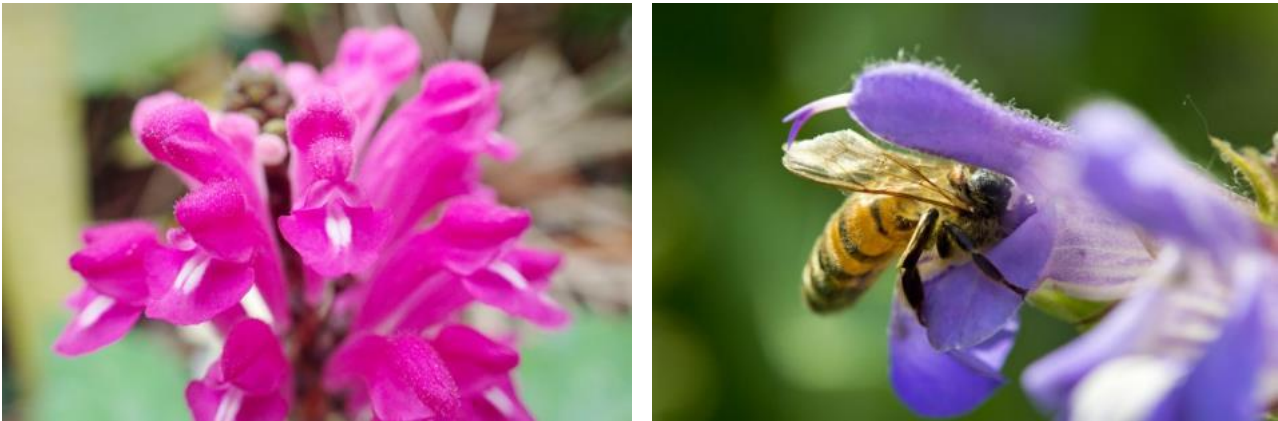
In South Africa, many indigenous plants like the Salvia species have evolved specifically to attract insect pollinators. These flowers provide excellent landing platforms for bees and other insects.
Example
South African Example: Salvia Species
Salvia flowers demonstrate classic insect pollination adaptations:
- Bright purple or blue colours that attract bees
- Perfect landing platforms for visiting insects
- Nectar rewards positioned so insects must contact reproductive parts
- Strong, sweet fragrance to attract pollinators from a distance
Flowers that depend on insects for pollination typically have several distinctive characteristics:
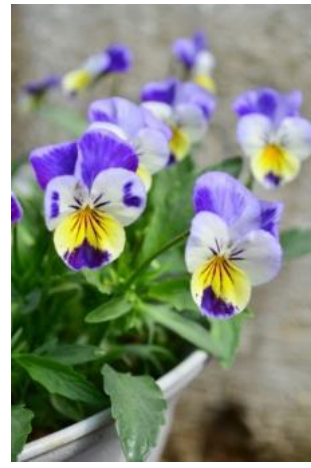
Visual attractions: These flowers usually have large, conspicuous petals in bright colours such as yellow, blue, purple, pink, or white. Interestingly, many insects cannot distinguish between red and black, so red flowers are often pollinated by other animals like birds. Some flowers even have ultraviolet markings that are invisible to humans but clearly visible to insects, acting like runway lights to guide pollinators to the nectar.
Rewards and timing: Insect-pollinated flowers produce nectar and sometimes offer pollen as food rewards. They also time their opening carefully - flowers visited by day-active insects like bees open during daylight hours, while those attracting night-active moths open in the evening and often have strong, sweet fragrances.
Pollen transfer mechanisms: The design of these flowers ensures that visiting insects must brush past the anthers and stigma to reach the nectar. The pollen grains are often sticky or spiky, helping them attach to the insect's body. Because some pollen gets eaten by insects, these flowers produce large quantities to ensure enough survives for pollination.
Adaptations for bird pollination
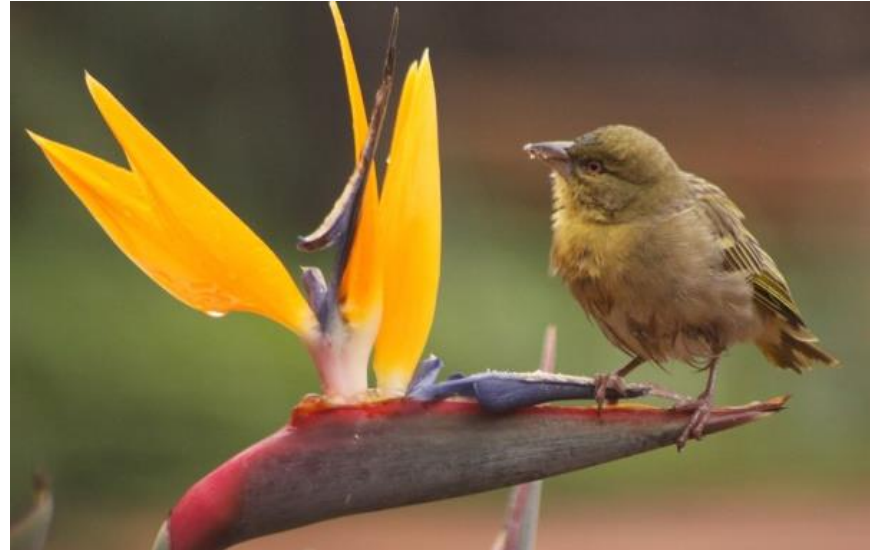
South Africa is home to many bird-pollinated plants, including our national flower, Strelitzia regina (Bird of Paradise). These plants show remarkable adaptations for attracting feathered visitors.
Example
South African Example: Strelitzia regina (Bird of Paradise)
Our national flower demonstrates perfect bird pollination adaptations:
- Large, robust orange and blue flowers that support bird weight
- Stamens and stigmas extend beyond petals for contact with birds
- Produces large quantities of dilute nectar for high-energy birds
- Positioned above leaves for easy hovering access
- Bright colours easily visible to birds with excellent colour vision
Bird-pollinated flowers have evolved several specific characteristics:
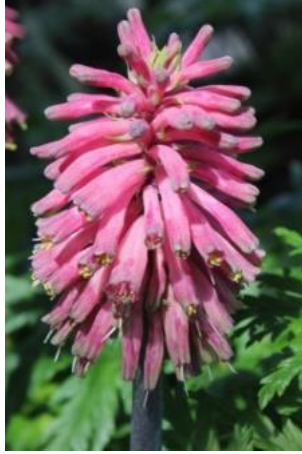
Size and structure: These flowers are generally larger and more robust than insect-pollinated flowers, able to support the weight of visiting birds. The stamens and stigmas often extend beyond the petals, ensuring that birds make contact with these reproductive parts while feeding.
Colour and timing: Many bird-pollinated flowers are red or orange because birds have excellent colour vision and can easily see red, unlike many insects. These flowers open during daylight hours when birds are most active.
Nectar production: Bird flowers produce large quantities of dilute nectar to meet the energy needs of their larger pollinators. The nectar is often less concentrated than that produced for insects.
Practical adaptations: These flowers are usually positioned above the leaves so hovering birds can easily access them. The ovules are often protected from the birds' probing beaks. Pollen grains stick together in clumps, meaning that one bird visit can pick up enough pollen to fertilise many ovules efficiently.
Reduced scent: Unlike insect-pollinated flowers, bird-pollinated flowers typically have little or no scent because birds generally have a poor sense of smell and rely primarily on vision to locate food sources.
Adaptations for wind pollination
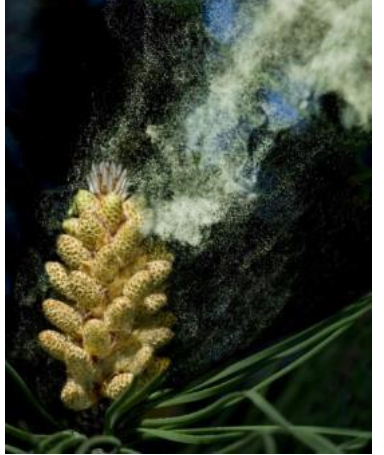
Wind pollination is not a very efficient method because vast quantities of pollen must be produced for some to randomly land on the right stigma. However, many plants, including grasses, trees, and indigenous South African restios, have evolved this strategy.
Example
South African Examples: Wind-Pollinated Plants
Restios: Indigenous South African plants that demonstrate classic wind pollination:
- Small, inconspicuous brown flowers
- Feathery stigmas to catch airborne pollen
- Flexible stems that move in wind to release pollen clouds
Agricultural crops: Most of our important food crops use wind pollination:
- Maize: produces massive pollen clouds from tassels
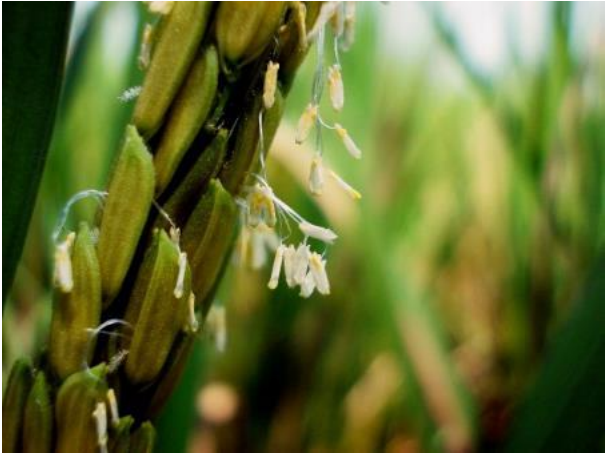
- Oats and rice: small flowers with protruding anthers
- All produce enormous amounts of lightweight pollen
Most of our important agricultural crops, including maize, oats, and rice, are wind-pollinated. These plants show several adaptations that help them make the most of wind dispersal:
Flower structure: Wind-pollinated flowers are typically small and inconspicuous, often green or brown in colour. Since they don't need to attract animal pollinators, they don't invest energy in producing bright petals, nectar, or fragrance.
Pollen production: These plants produce enormous amounts of very light pollen that can easily be carried by air currents. The male flowers often have large anthers that release clouds of pollen when shaken by the wind.
Pollen reception: The stigmas of wind-pollinated flowers are long and feathery, creating a large surface area to catch airborne pollen grains. They often extend beyond the flower to intercept pollen more effectively.
Flower positioning: The flowers are usually borne on flexible stalks that move easily in the wind, helping to release and distribute pollen. They often lack a calyx and corolla, reducing structures that might interfere with pollen dispersal.
Size considerations: Wind-pollinated flowers are typically very small since they don't need to provide landing platforms or visual signals for animal pollinators.
Comparing pollination methods
Understanding the differences between animal-pollinated and wind-pollinated flowers helps us identify pollination strategies in nature:
| Feature | Animal pollination | Wind pollination |
|---|---|---|
| Flower size | Large and conspicuous | Small and inconspicuous |
| Stigma | Inside flower, compact | Long and feathery |
| Stamens | Inside flower, moderate size | Large, protruding anthers |
| Pollen | Sticky, moderate amounts | Smooth, enormous amounts |
| Scent | Often present and sweet | No scent |
| Energy spent | High (nectar, colours, scent) | Low (no attractants needed) |
Note
Key Terminology
- Pollination: The transfer of pollen from an anther to the stigma of the same or different flower of the same species
- Self-pollination: Pollen transfer within the same flower or between flowers on the same plant
- Cross-pollination: Pollen transfer between flowers on different plants of the same species
- Nectar: A sugar-rich liquid produced by plants to attract pollinators
- Genetic diversity: The variety of genetic material within a species that helps populations survive environmental changes
Summary
Key Points to Remember:
- Pollination is essential for plant reproduction and involves transferring pollen from anthers to stigmas
- Cross-pollination creates genetic diversity, giving species better survival chances than self-pollination
- Insect-pollinated flowers use bright colours, sweet scents, and nectar rewards to attract their pollinators
- Bird-pollinated flowers are often red, larger, and produce dilute nectar for their high-energy visitors
- Wind-pollinated flowers are small, produce massive amounts of light pollen, and have feathery stigmas to catch airborne pollen