Interactions in the Environment (Grade 11 NSC Matric Life Sciences): Revision Notes
📚Revision Notes
Interactions in the Environment
Living organisms in ecosystems don't exist in isolation - they constantly interact with each other in fascinating and complex ways. Understanding these interactions helps us appreciate how nature maintains balance and how species survive and thrive together. There are three main types of interactions that shape life in any environment: predation, competition, and symbiotic relationships. Additionally, many species have developed social organisation strategies to increase their chances of survival.
Note
These interactions are fundamental to understanding ecology and help explain why certain species can coexist while others cannot. Each type of interaction has evolved over millions of years and continues to shape the natural world around us.
Predation
Predation is one of the most dramatic interactions in nature, where one organism actively hunts, kills, and consumes another to meet its energy needs. This relationship involves a predator (the hunter) and prey (the hunted).
The predator is always a heterotrophic organism, meaning it cannot make its own food and must obtain energy by consuming other living things. Predators have evolved special adaptations like sharp teeth, claws, excellent eyesight, or speed to help them catch their prey successfully.
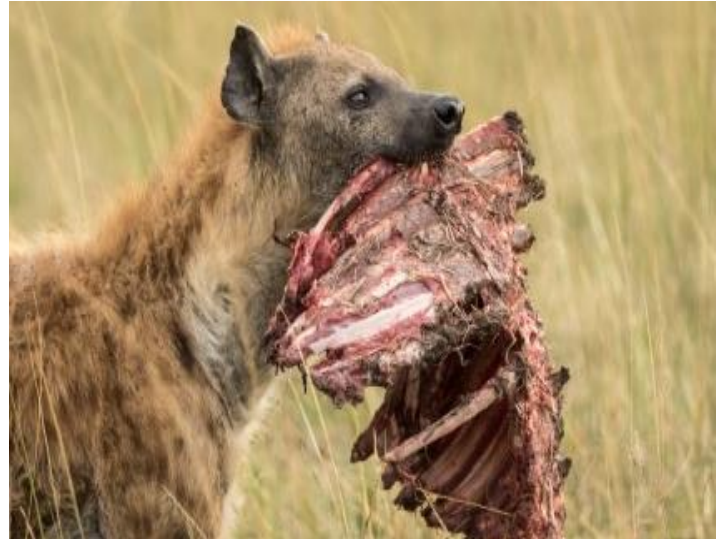
Understanding predator-prey dynamics
The relationship between predators and their prey creates fascinating population patterns that scientists can track over time. These patterns follow predictable cycles that repeat regularly.
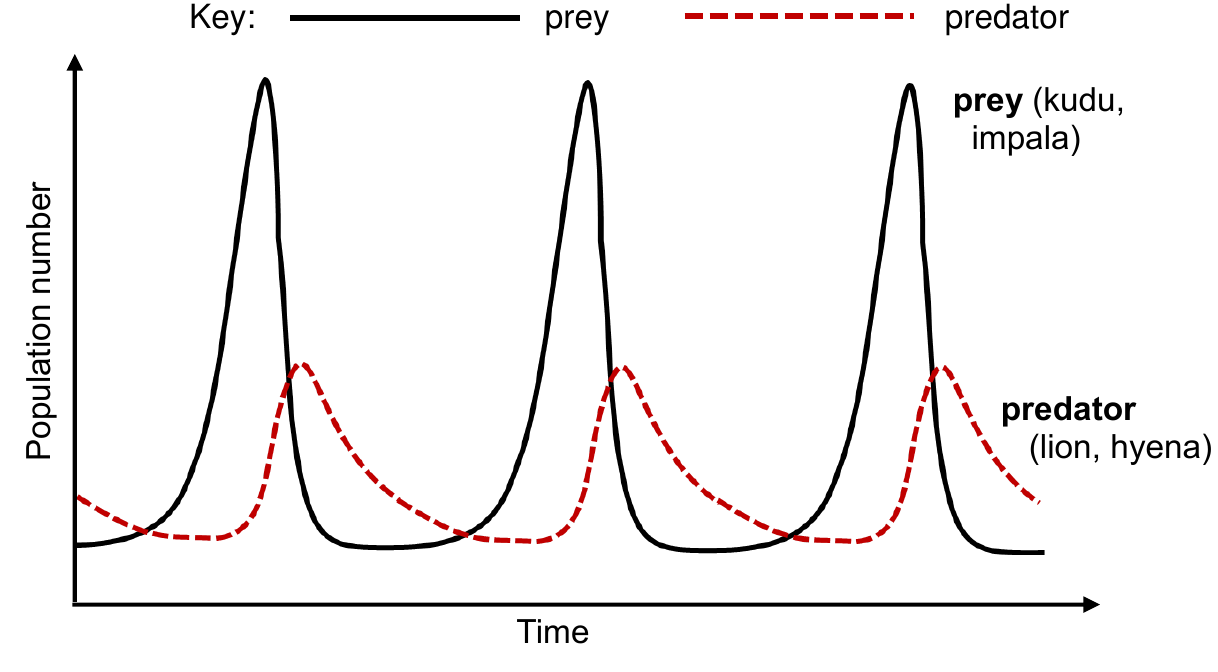
Interpreting predator-prey cycles
The predator-prey graph shows us several important patterns:
Note
Understanding Population Cycles
The cyclical nature of predator-prey relationships demonstrates how populations in nature are interconnected and constantly responding to each other's changes. This creates a natural balance that prevents any single species from completely dominating an ecosystem.
Prey populations increase first: When there are plenty of resources (food, space, water) and few predators around, prey animals can reproduce rapidly. Their population grows exponentially because there's little to stop them.
Predators respond with a delay: Even when prey numbers are increasing, predator populations don't immediately increase. This happens because:
- Adult predators need time to find mates and reproduce
- Young predators take time to grow and become sexually mature
- Gestation periods can be quite long
- If predators are new to an area, they need time to establish themselves
- There may still be competition between predators for the available prey
Prey numbers start declining: As predator numbers finally increase, they put more pressure on the prey population. The prey experience higher environmental resistance due to increased hunting pressure, plus they still face competition for food, water, and shelter.
Predator numbers eventually decline: When prey becomes scarce, predators struggle to find enough food. This leads to increased competition between predators, higher mortality rates, and some predators may migrate to areas where food is more abundant.
This creates a continuous cycle where neither population remains stable for long - they're always fluctuating in response to each other.
Competition
Competition occurs when organisms fight for the same limited resources. These resources might include food, water, shelter, mates, or territory. Competition is a powerful force that shapes how species evolve and where they can live.
Types of competition
Competition can happen in two different ways:
Intraspecific competition occurs when members of the same species compete with each other. For example, male lions fighting over territory or access to females, or seedlings of the same tree species competing for sunlight.
Interspecific competition happens when different species compete for the same resources. A classic example is when elephants and other large herbivores compete for water at a waterhole during dry seasons.

Competitive exclusion principle
When two species compete for exactly the same resources in the same environment, one species will usually outcompete the other. This is called the competitive exclusion principle, and it explains why similar species often cannot coexist in the same ecological niche.
Important
The Competitive Exclusion Principle
This principle states that two species cannot occupy exactly the same ecological niche indefinitely. One species will always have a slight advantage that allows it to outcompete the other, leading to the extinction or displacement of the weaker competitor.
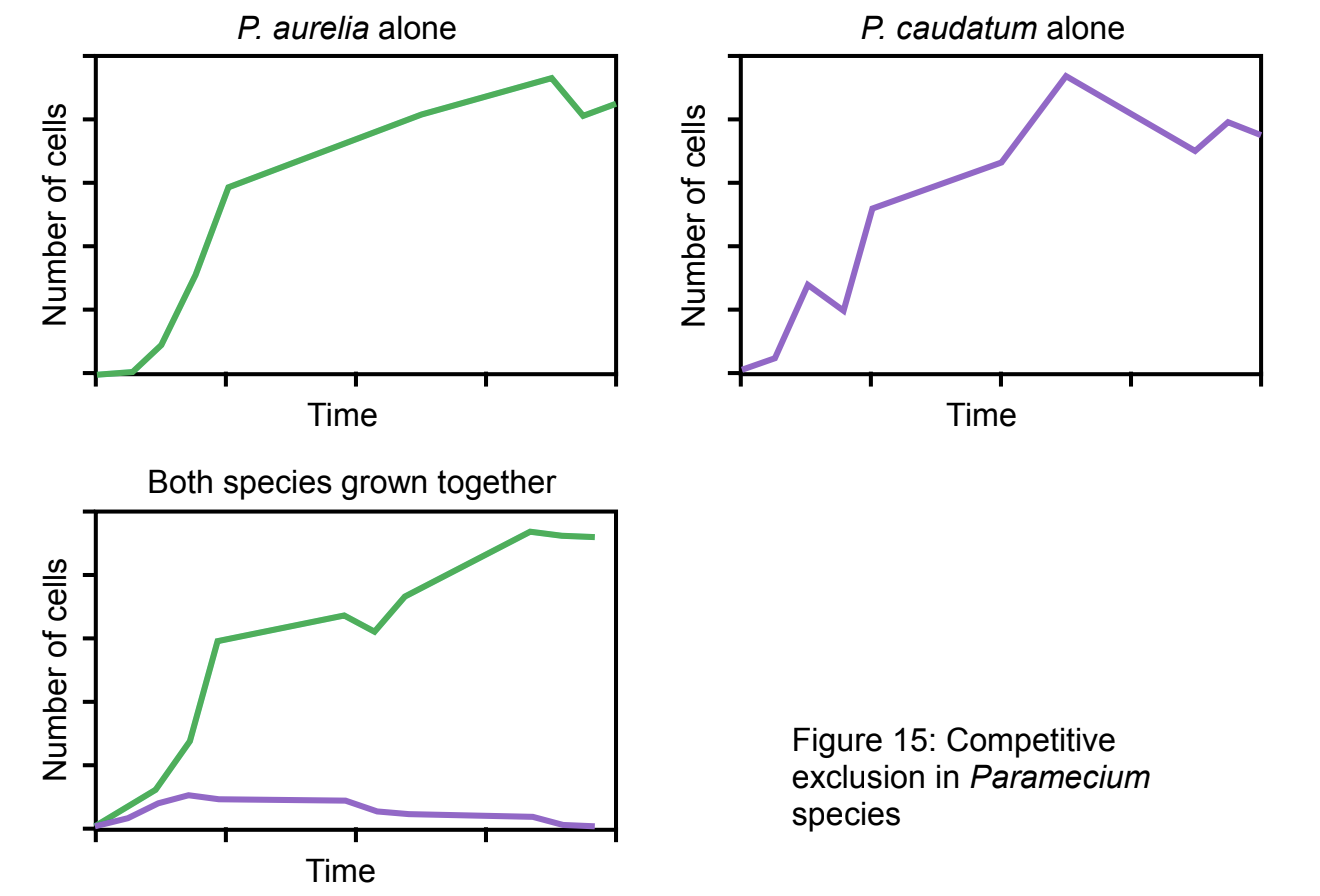
Example
Laboratory Demonstration: Paramecium Competition
The experiment with Paramecium species demonstrates competitive exclusion perfectly:
Step 1: When grown separately, both P. aurelia and P. caudatum thrive and their populations grow well in laboratory cultures.
Step 2: When placed together in the same container with identical resources, direct competition begins.
Result: P. caudatum outcompetes P. aurelia, causing P. aurelia's population to decline dramatically while P. caudatum flourishes and dominates the environment.
This shows how even slight competitive advantages can determine which species survives when resources are limited.
Resource partitioning
Fortunately, nature has found ways around competitive exclusion through resource partitioning. This is a clever evolutionary strategy where similar species avoid direct competition by specialising in using different resources or the same resources in different ways.
Examples of resource partitioning
Note
Spatial Resource Partitioning in African Savannas
Different herbivores have evolved to feed at different heights, creating a natural "feeding hierarchy" that allows multiple species to coexist without direct competition for the same food sources.
Herbivores sharing feeding space: In African savannas, different herbivores feed at different heights, allowing multiple species to coexist without direct competition.
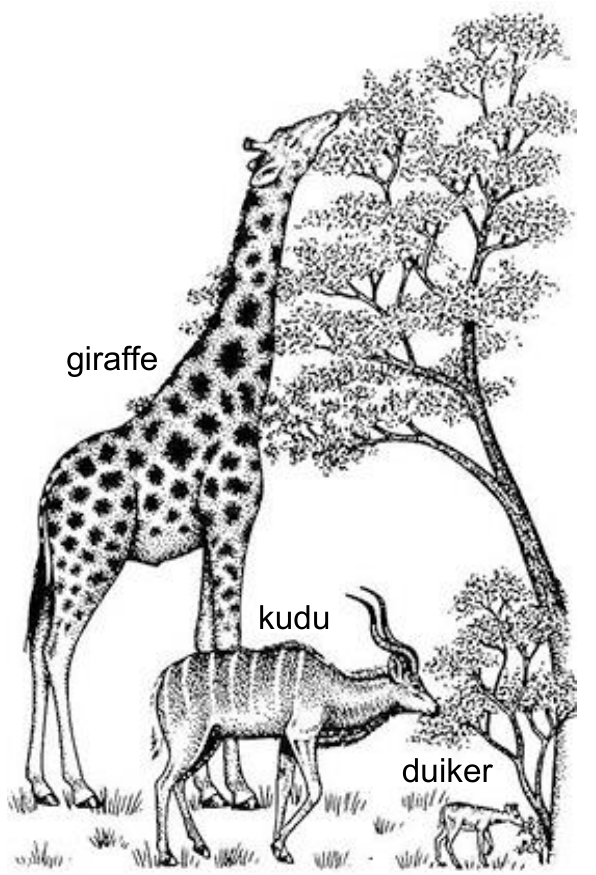
- Giraffes use their incredible height to browse leaves from the tops of acacia trees
- Kudus feed from middle-height branches with their flexible necks
- Duikers graze on low shrubs and fallen leaves near the ground
Forest layer specialisation: Plants in forests have evolved to use different amounts of light by growing to different heights.
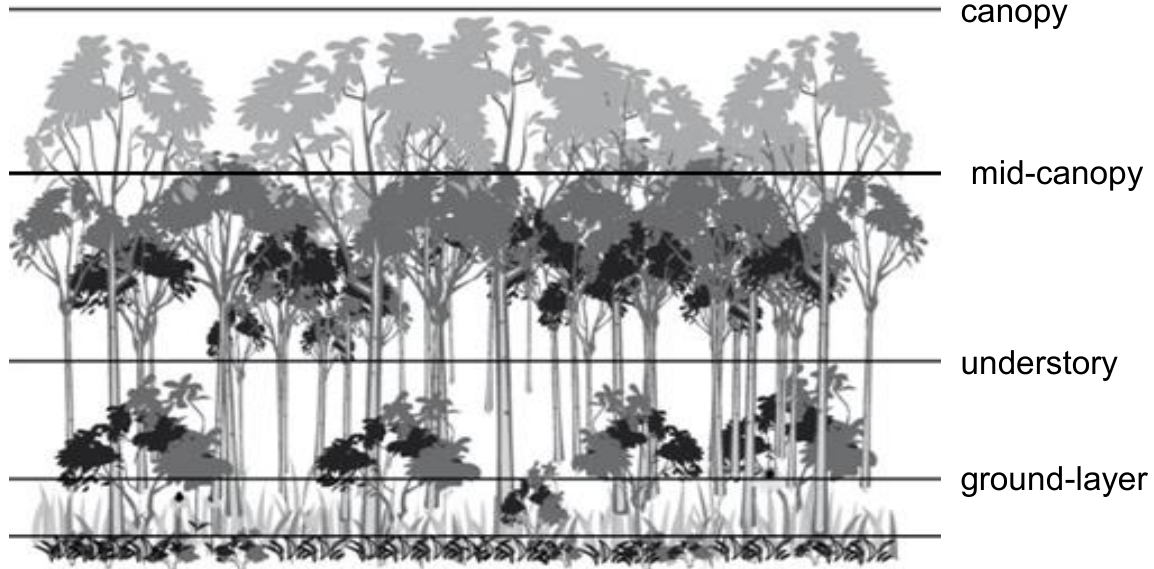
- Canopy trees capture the most sunlight at the forest top
- Mid-canopy species thrive in moderate light conditions
- Understory plants are adapted to lower light levels
- Ground-layer vegetation can photosynthesize efficiently in deep shade
This vertical partitioning allows many different plant species to coexist in the same forest area.
Symbiotic relationships
Symbiosis refers to close, long-term relationships between individuals of different species. These relationships can benefit both species, harm one species, or have no effect on one of the partners. There are three main types of symbiotic relationships.
Mutualism
In mutualistic relationships, both species benefit from their interaction. These partnerships often become so important that the species depend on each other for survival.
Example
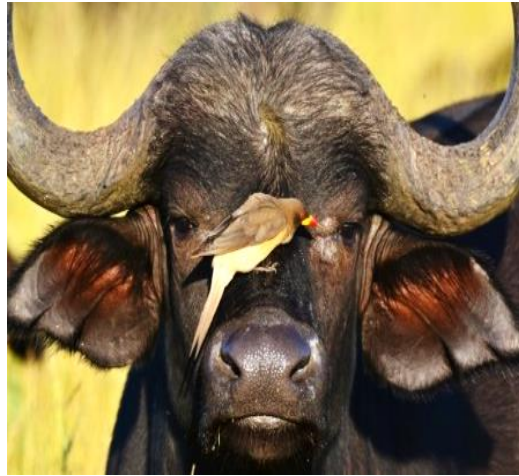
South African Mutualism: Buffalo and Oxpeckers
This partnership demonstrates perfect mutualism in action:
The relationship: Oxpeckers (small birds) form partnerships with large herbivores like buffalo and rhinos.
Benefits for oxpeckers: They get an abundant, easily accessible food source by feeding on ticks and other parasites living on the buffalo's skin.
Benefits for buffalo: They receive relief from annoying and potentially harmful parasites, plus the birds serve as an early warning system for approaching predators.
Outcome: Both species benefit significantly, creating a sustainable long-term relationship.
Sunbirds and indigenous flowers: Sunbirds have co-evolved with South African flowering plants like ericas. The bird gets energy-rich nectar from the flowers, while pollen sticks to the bird's feathers and gets transferred to other flowers, enabling cross-pollination and plant reproduction.
Commensalism
In commensalistic relationships, one species benefits while the other is neither helped nor harmed. The relationship is completely one-sided in terms of benefits.
Example
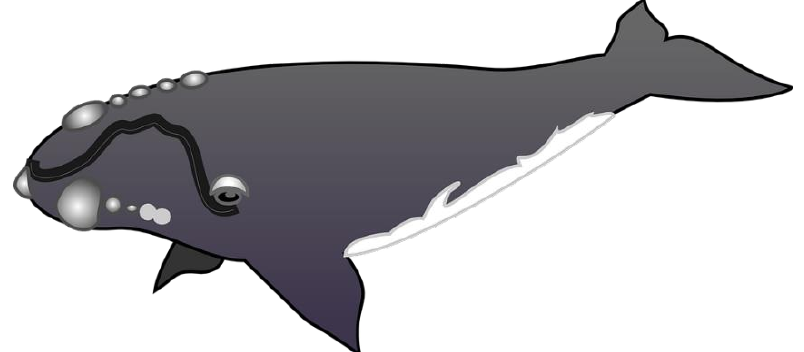
Classic Commensalism: Whales and Barnacles
The relationship: Barnacles attach themselves permanently to whale skin using special cement-like substances.
Benefits for barnacles: They get free transportation through nutrient-rich ocean waters, allowing them to filter-feed more effectively as the whale moves through different feeding areas.
Effect on whales: Completely unaffected by carrying these small passengers - the barnacles are too small to cause drag or discomfort.
Key point: This demonstrates true commensalism where one partner benefits significantly while the other experiences no positive or negative effects.
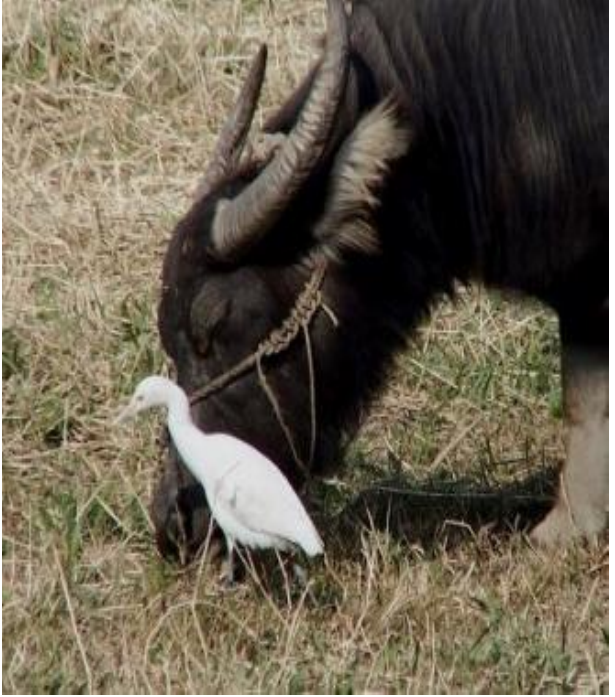
Cattle egrets and large herbivores: These white birds follow grazing animals like cattle, horses, or donkeys. As the large animals walk through grass, they disturb insects, making them easier for the egrets to catch and eat. The grazing animals receive no benefit or harm from this relationship.
Parasitism
Parasitic relationships involve one organism (the parasite) benefiting at the expense of another (the host). The parasite gains nutrition, shelter, or other benefits while harming its host.
Types of parasites:
Note
Parasite Classification by Location
Parasites are classified based on where they live in relation to their host. This classification helps scientists understand their life cycles, transmission methods, and potential treatments.
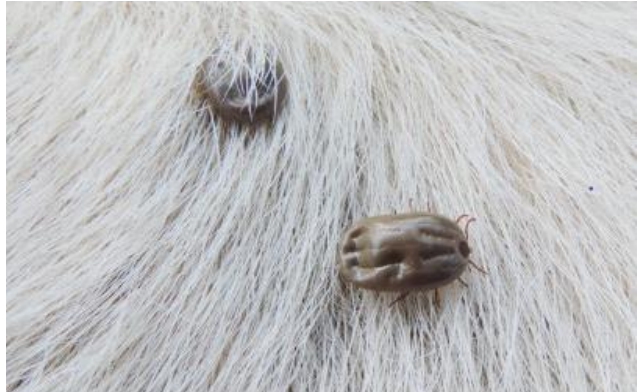
Ectoparasites live on the outside of their host's body. Ticks are excellent examples - they attach to mammal skin and feed on blood, potentially transmitting diseases to their hosts.
Endoparasites live inside their host's body. Tapeworms, for example, live in the intestines of mammals and absorb nutrients that should go to the host.
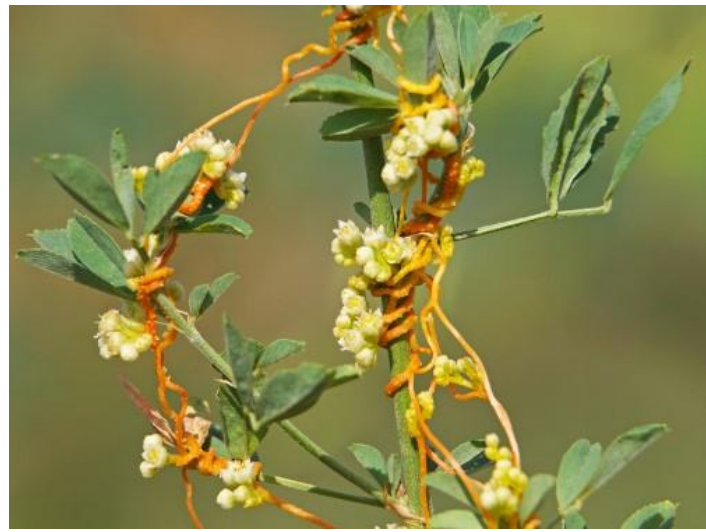
Plant parasites: The dodder plant is a fascinating example of plant parasitism. This orange, thread-like vine cannot photosynthesize effectively, so it wraps around other plants and inserts special structures called haustoria into the host plant's stem to steal water and nutrients.
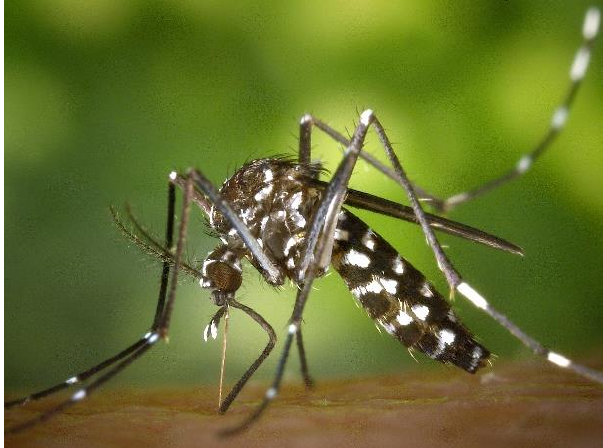
Disease vectors: Mosquitoes act as parasites when they pierce animal skin to feed on blood. Some mosquito species also act as disease vectors, transmitting malaria, dengue fever, or other illnesses between hosts.
Important
Obligatory Parasitism
Some parasites become completely dependent on their hosts and cannot complete their life cycle without them. This is called obligatory parasitism and represents the extreme end of parasitic relationships where the parasite has lost the ability to survive independently.
Summary
Key Points to Remember:
-
Predation creates cyclical population patterns where prey numbers rise first, followed by predator increases, then both populations decline and the cycle repeats
-
Competition occurs both within species (intraspecific) and between different species (interspecific), with competitive exclusion preventing identical species from occupying the same niche
-
Resource partitioning allows similar species to coexist by specialising in different resources or using the same resources in different ways, such as feeding at different heights
-
Symbiotic relationships come in three forms: mutualism (both benefit), commensalism (one benefits, other unaffected), and parasitism (one benefits, other harmed)