Teeth (Grade 11 NSC Matric Life Sciences): Revision Notes
📚Revision Notes
Teeth
Introduction
Animals have evolved different types of teeth that are perfectly adapted to their feeding habits. The shape, size, and arrangement of an animal's teeth provide important clues about what type of food that animal eats. Understanding these dental adaptations helps us classify animals into different feeding groups and explains how structure relates to function in biology.
Animal diet classifications
Animals can be classified into three main groups based on their feeding habits:
Herbivores are animals that feed exclusively on plant material. These animals have teeth adapted for cutting, grinding, and crushing tough plant fibres and cellulose.
Carnivores are animals that hunt and feed on other animals. Their teeth are designed for catching prey, tearing flesh, and cutting through meat and bones.
Omnivores are animals that eat both plant and animal material. Their teeth combine features found in both herbivores and carnivores, making them versatile feeders.
Note
The classification of animals by diet is fundamental to understanding their ecological roles. Herbivores are primary consumers, carnivores are secondary or tertiary consumers, and omnivores can function at multiple trophic levels in food chains.
Types of teeth and their functions
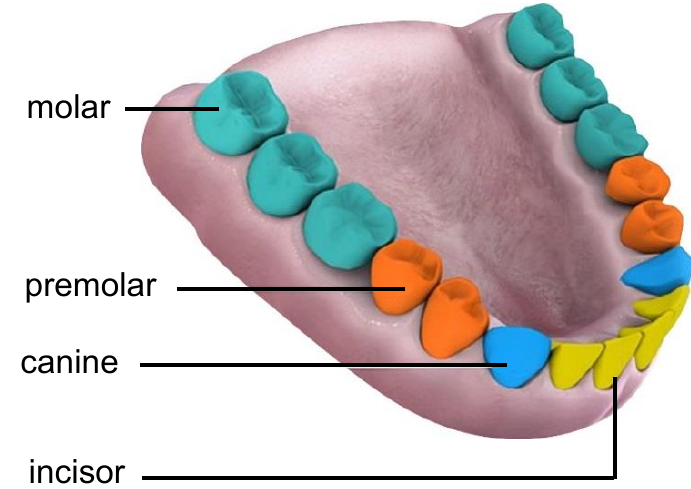
Mammals have four main types of teeth, each with a specific shape and function that helps with food processing:
Incisors
These are chisel-shaped teeth located at the front of the mouth. Incisors are sharp and flat, making them perfect for biting and cutting food. Think of them as nature's scissors - they slice through food items cleanly.
Canines
Canines are pointed, cone-shaped teeth that are particularly well-developed in carnivorous animals. These teeth are designed for piercing, gripping, and tearing. In predators, canines help catch and hold struggling prey.
Premolars
These teeth have flat, uneven surfaces with multiple cusps (points). Premolars are positioned between the canines and molars and serve as grinding surfaces for crushing and breaking down food.
Molars
Molars are the largest teeth, located at the back of the mouth. Like premolars, they have flat, uneven surfaces perfect for grinding and crushing food. The multiple cusps and ridges on molars help break food into smaller pieces for easier digestion.
Carnassial teeth
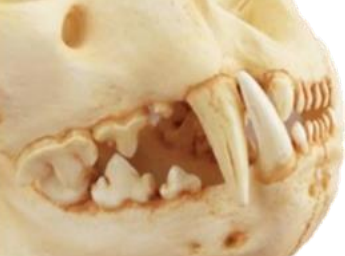
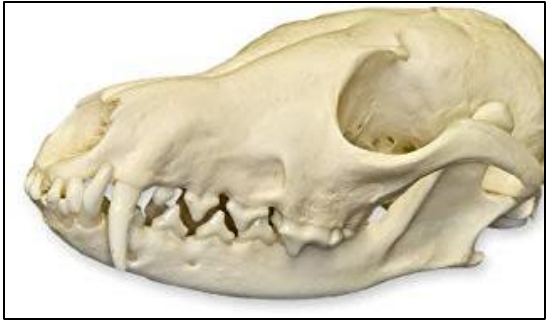
These are highly specialised teeth found only in carnivorous mammals. Carnassial teeth are modified molars and premolars that work like scissors, with jagged, triangular edges that slice through meat and crack bones.
Important
Remember: Carnassial teeth are a key identifying feature of carnivorous mammals and are never found in herbivores. If you see these scissor-like teeth in a skull, you know the animal was a meat-eater.
Dental adaptations for different feeding strategies
Different feeding habits require different dental specialisations. The relationship between tooth structure and dietary function is one of the best examples of adaptation in the animal kingdom.
Herbivore adaptations
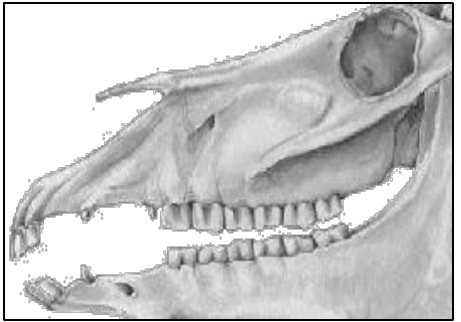
Plant-eating animals face the challenge of breaking down tough, fibrous plant material. Their dental adaptations include:
- Sharp incisors for cutting and cropping plant material close to the ground
- Reduced or absent canines since they don't need to catch or kill prey
- Large, flat molars and premolars with complex ridges for grinding tough plant fibres
- Continuous tooth growth in some species to compensate for wear from grinding abrasive plant material
Example
Adaptation Example: Sheep and Cattle
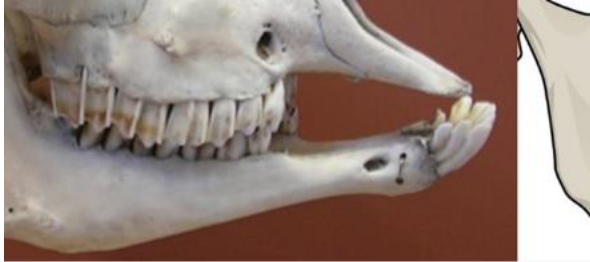
Grazing animals like sheep and cattle have continuously growing teeth to replace wear from constant grinding of grass. Their lower incisors work against a hard pad (not teeth) on the upper jaw to crop grass efficiently. The large, ridged molars can move in a circular grinding motion to break down cellulose fibres.
Carnivore adaptations
Meat-eating animals need teeth designed for capturing prey and processing flesh:
- Sharp incisors for slicing and shredding meat from bones
- Large, well-developed canines that act like daggers for catching, holding, and killing prey
- Modified molars and premolars forming carnassial teeth that work like scissors to cut through meat and crack bones
- Powerful jaw muscles to deliver strong bites
Example
Adaptation Example: Big Cats
Lions and tigers have extremely large canine teeth (up to 7cm long) that can deliver a killing bite to prey. Their carnassial teeth work like bolt cutters, allowing them to slice through tough hide and meat with minimal chewing. The reduced number of teeth compared to herbivores reflects their specialisation for cutting rather than grinding.
Omnivore adaptations
Animals that eat both plants and meat have dental features that combine aspects of both herbivore and carnivore teeth:
- Moderate-sized incisors suitable for both cutting plants and meat
- Present but not overly large canines for some tearing ability
- Molars and premolars with features for both grinding plants and processing meat
- Versatile jaw movement allowing both side-to-side grinding and up-and-down cutting motions
Note
Omnivore teeth represent a compromise between the extreme specialisations seen in strict herbivores and carnivores. This flexibility allows omnivores to exploit a wider range of food sources but makes them less efficient at processing any single type of food compared to specialists.
Exam tips
When studying dental adaptations, focus on the structure-function relationship. Always ask yourself: "How does this tooth shape help the animal process its specific type of food?"
Important
Common Exam Mistakes to Avoid:
- Don't confuse carnassial teeth with regular molars - carnassials are only found in carnivores and have sharp, cutting edges
- Remember that herbivores often have reduced or absent canines, not enlarged ones
- Don't forget that tooth wear patterns can provide evidence of diet even in fossil specimens
- Always relate tooth structure back to the animal's feeding behaviour and diet type
Summary
Key Points to Remember:
-
Animal diets are classified into three main types: herbivores (plant-eaters), carnivores (meat-eaters), and omnivores (plant and meat-eaters)
-
There are four main types of teeth: incisors for cutting, canines for tearing, premolars and molars for grinding, plus specialised carnassial teeth in carnivores
-
Dental adaptations match feeding habits: herbivores have grinding teeth, carnivores have sharp cutting and tearing teeth, omnivores have a combination of both
-
Tooth structure reveals diet: you can determine what an animal eats by examining the shape and arrangement of its teeth
-
Carnassial teeth are unique to carnivores: these specialised scissor-like teeth are essential for cutting meat and are a key identifying feature of meat-eating mammals