The Sine Function (Grade 11 NSC Matric Mathematics): Revision Notes
📚Revision Notes
The Sine Function
Introduction to the sine function
The sine function is one of the fundamental trigonometric functions that produces a smooth, wave-like curve. Understanding this function is essential for success in NSC Mathematics Paper 1.
Basic form: where is measured in degrees.
Note
The sine function appears frequently in NSC examinations, particularly in questions involving sketching graphs, finding periods, and analyzing transformations. Mastering this function will give you a strong foundation for trigonometry.
Properties of the basic sine function
The standard sine function has several key characteristics that you must memorise:
Period
The period is the length of one complete wave cycle. For the basic sine function, the period is 360°.
Amplitude
The amplitude is the maximum height of the wave above and below the x-axis. For , the amplitude is 1.
Domain and range
- Domain: (all real numbers)
- Range: (all values between -1 and 1, inclusive)
Intercepts and turning points
- y-intercept:
- x-intercepts: , , , and so on
- Maximum turning point:
- Minimum turning point:
Important
Critical Properties to Memorize:
- Period = 360°
- Amplitude = 1
- Range = [-1; 1]
- Key points: (0°; 0), (90°; 1), (180°; 0), (270°; -1), (360°; 0)
These form the foundation for understanding all sine function transformations.

Transformations of the sine function
Vertical transformations:
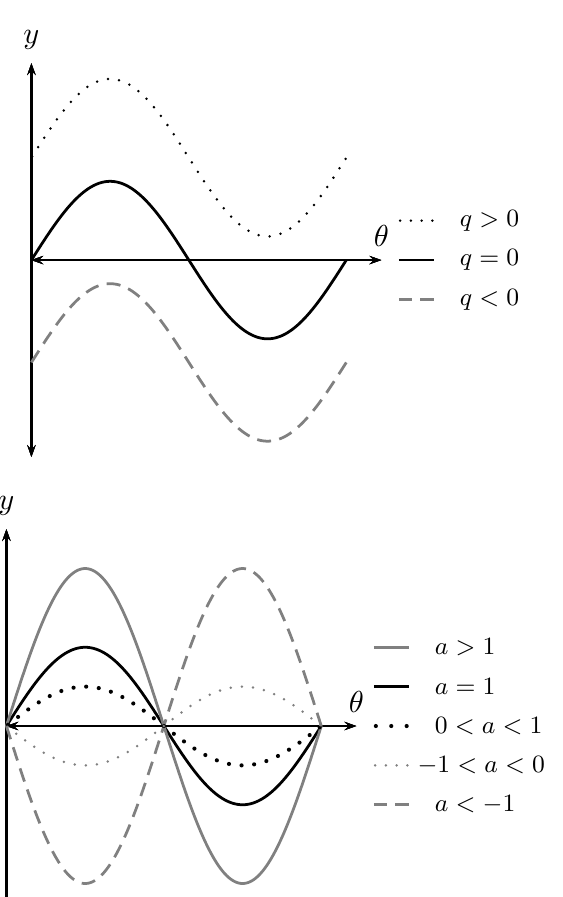
The parameters and affect the sine function in specific ways:
Effect of parameter (amplitude changes)
- When : amplitude increases (wave gets taller)
- When : amplitude decreases (wave gets shorter)
- When : graph reflects about the x-axis
- When : graph reflects and amplitude decreases
- When : graph reflects and amplitude increases
Effect of parameter (vertical shift)
- When : graph shifts upward by units
- When : graph shifts downward by units
Note
Understanding Parameters:
- Parameter controls the height of the wave (amplitude and reflection)
- Parameter controls the vertical position of the entire wave
- These transformations work independently of each other
Period changes:
The parameter affects the period of the sine function:
Formula for period
Effects of different values of :
- When : period decreases (more cycles in 360°)
- When : period increases (fewer cycles in 360°)
- When : graph reflects about the y-axis
Important
Period Formula Rule: Always use the absolute value of when calculating the period. This is a common source of errors in examinations.
Phase shifts:
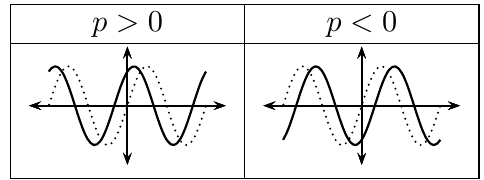
The parameter causes a horizontal shift or phase shift:
- When : graph shifts left by degrees
- When : graph shifts right by degrees
Note
Phase Shift Memory Tip: Think of phase shifts as the opposite of what you might expect:
- Positive → moves LEFT
- Negative → moves RIGHT
This is because we're adding/subtracting inside the function.

Worked example 1: Comparing sine functions
Example
Worked Example: Comparing Sine Functions
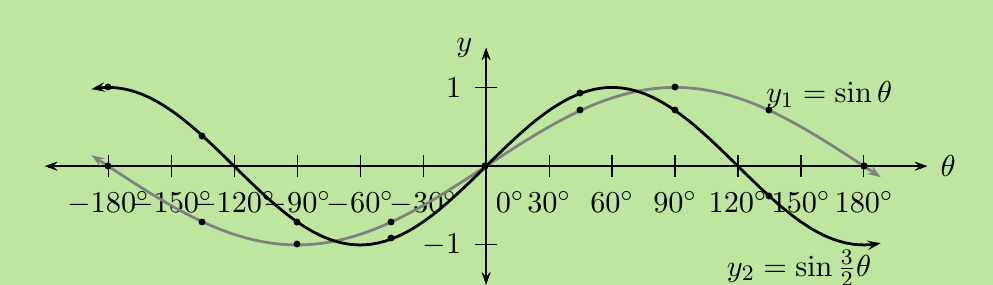
Question: Sketch and for .
Solution:
Step 1: Identify the transformations
- is the standard sine function
- has , so the period changes
Step 2: Calculate the new period
Step 3: Create a table of values
Worked example 2: Phase shift
Example
Worked Example: Phase Shift Analysis
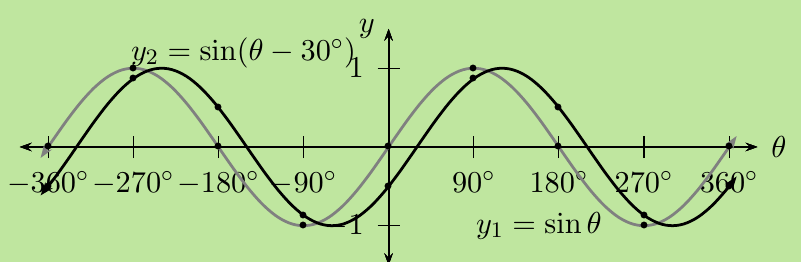
Question: Sketch and for .
Solution:
Step 1: Identify the transformation
- has
- This means the graph shifts right by 30°
Step 2: Create a table of values
Worked example 3: Complex transformation
Example
Worked Example: Complex Transformation
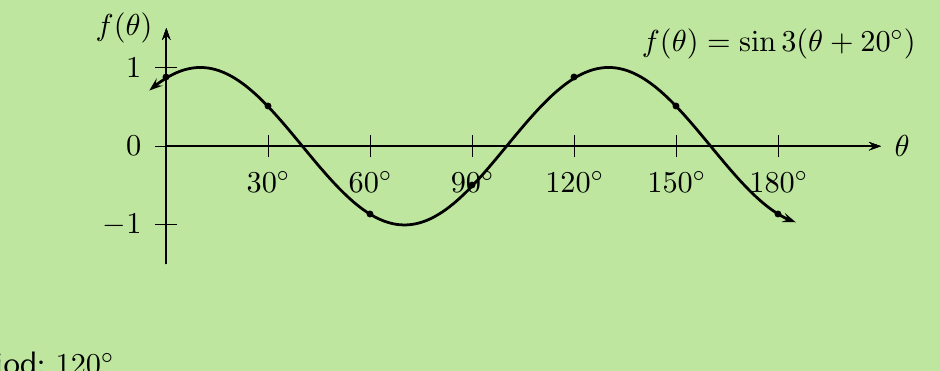
Question: Sketch for .
Solution:
Step 1: Rewrite in standard form
Step 2: Identify transformations
- , so period =
- Phase shift left by 20°
Step 3: Calculate key values and sketch
The function completes 3 cycles in 360°, with each cycle taking 120°.
Sketching technique summary
When sketching sine functions, follow these systematic steps:
Summary
Step-by-Step Sketching Method:
- Identify the form:
- Calculate the period:
- Determine transformations:
- Amplitude:
- Vertical shift:
- Phase shift:
- Create a table of values for key angles
- Plot points and join with a smooth curve
Key formulas to remember
Important
Essential Formulas:
- Period formula:
- Basic sine values: , , ,
- Negative angles:
- Domain: All real numbers
- Range: for
Common exam traps
Important
Common Mistakes to Avoid:
- Don't confuse period changes: Remember to use in the period formula
- Phase shift direction: Positive moves the graph left, negative moves it right
- Amplitude vs vertical shift: changes the height of the wave, moves the entire wave up or down
- Always check your domain: Make sure your sketch covers the required interval
Remember!
Summary
Key Points to Remember:
- The period of is degrees
- Amplitude is always positive and equals for
- Phase shifts: moves the graph left when , right when
- Vertical shifts: moves the graph up when , down when
- Always create a table of values for key angles when sketching sine functions