Airports and Airlines in South Africa (Grade 11 NSC Matric Tourism): Revision Notes
📚Revision Notes
Airports and Airlines in South Africa
Introduction to transport services in South Africa
Transport plays a vital role in connecting tourists from their starting point to their final destination. In South Africa, the transport industry provides various travel options, including road, air, rail, and water transport. This revision note focuses specifically on air transport, covering the different types of flights, airports, and airlines that operate within and from South Africa.
Note
Understanding the air transport sector is essential for anyone working in or studying tourism, as it forms a crucial part of the overall tourism experience for both domestic and international visitors.
Types of flights
When travelling by air, passengers can choose from several different types of flights depending on their destination and journey requirements. Each type of flight serves a specific purpose in the tourism industry.
Inbound flights
Inbound flights are those that come into South Africa from another country. For example, when a tourist flies from Namibia and lands in South Africa, this is considered an inbound flight. These flights bring international visitors into the country and are important for incoming tourism.
Outbound flights
Outbound flights work in the opposite direction - they depart from South Africa and travel to another country. For instance, if you were flying from South Africa to Namibia, you would be taking an outbound flight. These flights take South African residents and tourists out of the country.
Domestic flights
Domestic flights operate entirely within South Africa's borders, flying between different airports in the same country. A good example would be a flight from Cape Town International Airport to Kimberley Airport. These flights are popular with local tourists and business travellers who need to move quickly between South African cities.
Regional flights
Regional flights connect South Africa with its neighbouring countries in the same geographic region. For example, a flight from OR Tambo International Airport in South Africa to Harare International Airport in Zimbabwe is a regional flight. These flights typically cover shorter distances than intercontinental flights.
Intercontinental flights
Intercontinental flights are long-distance journeys that cross between two different continents. An example would be flying from Cape Town (in Africa) to Perth (in Australia). These flights connect South Africa with destinations on other continents around the world.
Transcontinental flights
Transcontinental flights travel across a single continent. For instance, a flight from Cape Town in South Africa to Cairo in Egypt crosses the African continent. While the journey stays within Africa, it covers a significant distance across the landmass.
Connecting flights
Connecting flights involve stopping at an intermediate airport between your departure point and final destination. When the aeroplane lands at this connecting point, passengers may need to change to a different plane or airline, and the flight number changes for the next leg of the journey.
Example
Worked Example: Understanding Connecting Flights
If you fly from Johannesburg to Melbourne in Australia via Perth in Western Australia, Perth serves as your connecting point. You would need to board a different flight in Perth to complete your journey to Melbourne.
- First leg: Johannesburg → Perth (Flight Number: SA123)
- Connecting airport: Perth International Airport
- Second leg: Perth → Melbourne (Flight Number: QF456)
Long-haul flights
Long-haul flights cover extensive distances and typically take more than 6½ hours to complete. These are usually intercontinental flights. A flight from Johannesburg to London that takes 11 hours is a perfect example of a long-haul flight. Passengers on these flights should prepare for extended periods in the air.
Medium-haul flights
Medium-haul flights fall between short and long-haul flights, taking between 3 and 6 hours to complete. A flight from Johannesburg to Mauritius, which takes approximately 4 hours, is an example of a medium-haul flight. These flights often require some in-flight services but are not as demanding as long-haul journeys.
Short-haul flights
Short-haul flights are brief journeys lasting less than 3 hours. For example, a flight from Cape Town to George takes about 50 minutes. These quick flights are convenient for business travellers and tourists who want to save time compared to road travel.
Chartered flights
Chartered flights are special flights arranged on request to meet specific client needs. Unlike scheduled commercial flights, these operate according to the customer's requirements.
Example
Worked Example: Charter Flight Scenario
A tourist who wants to avoid airport queues, lengthy waiting times, and the risk of losing luggage might charter a private flight from Johannesburg directly to a private lodge in the Sabi Sands Private Game Reserve.
Advantages: Convenience, flexibility, direct routing, privacy Disadvantage: Higher cost compared to scheduled flights
Types of airports
South Africa has various types of airports, each serving different functions within the air transport network. Understanding these categories helps explain how the aviation system operates.
International airports
International airports serve as major gateways through which tourists enter and exit South Africa. These airports handle both international flights (from other countries) and domestic flights (within South Africa).
International airports are typically large facilities with long runways and air traffic control towers to manage the high volume of aircraft movements. Examples include OR Tambo in Johannesburg, which serves as South Africa's busiest international airport.
Note
International airports offer comprehensive facilities including customs and immigration services, currency exchange, duty-free shopping, and various passenger amenities. These facilities are essential for processing international travellers and ensuring smooth border control operations.
Important
Students should note the location of major international airports on a map for examination purposes. Being able to identify airport locations and their IATA codes is a common requirement in tourism examinations.
National airports
National airports, also referred to as domestic airports, handle only flights within South Africa's borders. These airports do not process international arrivals or departures. East London Airport is an example of a national airport.
While smaller than international airports, national airports still provide essential services for domestic travellers. They connect smaller cities and towns to major urban centres, supporting both tourism and business travel within the country.
Privately owned airports
Some airports in South Africa are privately owned rather than operated by Airports Company South Africa (ACSA), the country's main airport management organisation. Private airports operate independently and may serve specific purposes such as supporting nearby tourist attractions or private aviation needs.
Private landing strips
Private landing strips are not open to the general public and often serve exclusive purposes. These may consist of a tarred landing strip or simply a strip of levelled land. Private landing strips are commonly found at game reserves, private estates, and remote tourism destinations where chartered or private aircraft need to land.
Airports in South Africa
South Africa operates numerous airports across the country, each identified by a unique three-letter IATA code assigned by the International Air Transport Association. These codes appear on baggage tags, tickets, and airport signage.
Important
Students should familiarise themselves with the main airports and their locations. Airport identification codes and geographic locations are frequently tested in examinations.
International airports in South Africa
The following international airports serve as major entry and exit points:
- OR Tambo International Airport (JNB) - Located in Kempton Park, Gauteng
- Cape Town International Airport (CPT) - Western Cape
- King Shaka International Airport (DUR) - North of Durban, KwaZulu-Natal
- Mpumalanga International Airport (MQP) - Near Nelspruit (Mbombela), Mpumalanga
- Lanseria International Airport (HLA) - Near Krugersdorp, Gauteng
- Pilanesberg International Airport (NTY) - North of Rustenburg, North West Province
- Polokwane International Airport (PTG) - Limpopo
- Bloemfontein International Airport (BFN) - Free State
- Port Elizabeth International Airport (PLZ) - Eastern Cape
- Upington International Airport (UTN) - Upington, Northern Cape
Note
Exam tip: Make sure you can locate these airports on a map and remember their three-letter IATA codes, as these frequently appear in examinations. Create flashcards or practice quizzes to help memorise this information.
National airports in South Africa
The following airports handle domestic flights only:
- Kimberley Airport (KIM) - Northern Cape
- George Airport (GRJ) - Western Cape
- Pietermaritzburg Airport (PZB) - KwaZulu-Natal
- East London Airport (ELS) - Eastern Cape
These airports connect smaller cities to the major centres and support domestic tourism and business travel.
ACSA-operated airports
Airports Company South Africa (ACSA) is the government organisation responsible for managing and operating most of South Africa's major airports. ACSA ensures these airports meet international standards and provide quality facilities and services.
National/domestic airports operated by ACSA
ACSA operates the following domestic airports:
- East London (ELS)
- George (GRJ)
- Kimberley (KIM)
These airports primarily serve domestic routes, connecting smaller cities to larger urban centres.
International airports operated by ACSA
ACSA manages seven international airports:
- OR Tambo International Airport (JNB) in Kempton Park, Gauteng
- Cape Town International Airport (CPT)
- King Shaka International Airport (DUR) north of Durban, KwaZulu-Natal
- Bloemfontein International Airport (BFN)
- Port Elizabeth International Airport (PLZ) in the Eastern Cape
- Upington International Airport (UTN) in Upington, Northern Cape
- Pilanesberg International Airport (NTY) north of Rustenburg, North West Province
Note
These airports handle both international and domestic flights, serving as critical infrastructure for South Africa's tourism and business sectors. Together with the three national airports, ACSA operates a total of 10 airports nationwide.
Privately owned airports
Not all airports in South Africa are managed by ACSA. Several airports operate under private ownership, serving specific regions or purposes.
Privately owned national airports
- Pietermaritzburg Airport (PZB) in KwaZulu-Natal
This airport handles domestic flights but is not part of the ACSA network.
Privately owned international airports
The following international airports operate independently of ACSA:
- Lanseria International Airport (HLA) near Krugersdorp, Gauteng
- Kruger Mpumalanga International Airport (MQP) near Nelspruit (Mbombela), Mpumalanga
- Polokwane International Airport (PTG) in Limpopo
Note
These private airports often serve specific regional needs and may offer alternative options to the larger ACSA-operated airports. They play an important role in South Africa's aviation network by providing additional capacity and serving areas that might otherwise have limited air access.
Airlines operating in South Africa
South Africa's aviation sector includes various types of airlines, from the national carrier to budget operators and international airlines. Understanding the differences between these airline categories helps explain the range of options available to tourists.
South Africa's national carrier
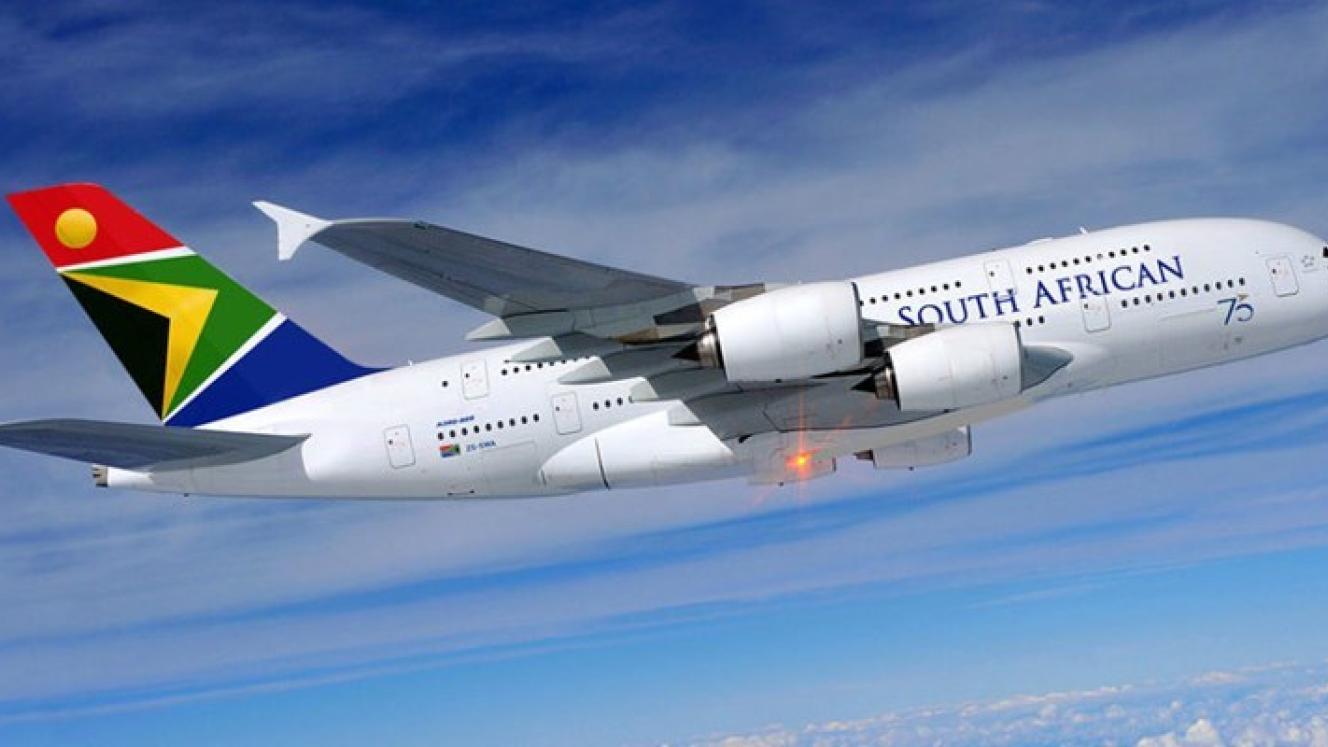
South African Airways (SAA) is South Africa's official national carrier. The airline's main hub (central operating base) is located at OR Tambo International Airport in Johannesburg.
SAA operates a comprehensive network including:
- Domestic flights within South Africa
- Regional flights to neighbouring African countries
- International flights to destinations worldwide
As a full-service airline, SAA includes various in-flight services in the ticket price. Passengers receive meals and beverages during their flight, and the airline offers both economy and business class seating options. This comprehensive service model makes SAA a full-service airline, providing a complete travel experience.
Other domestic full-service airlines
Besides SAA, two other airlines provide full-service domestic flights within South Africa:
- South African Express Airways - Operates primarily on domestic and regional routes
- Airlink - Serves domestic and regional destinations
These airlines follow a similar model to SAA, including services in the ticket price and offering a more comprehensive travel experience than budget carriers.
Budget airlines
Budget airlines offer a different business model compared to full-service carriers. These airlines keep their ticket prices lower by not including extra services in the base fare. Passengers pay only for the flight itself and must purchase additional services separately if needed.
Two budget airlines currently operate in South Africa:
- kulula.com
- Mango Airlines
What makes budget airlines popular with tourists?
Budget airlines attract tourists for several reasons:
- Affordability - Tickets are usually much cheaper than full-service alternatives
- Online check-in - Passengers can check in from home, saving time at the airport
- Boarding pass printing facilities - Options to print boarding passes conveniently
- Regular specials - Frequent promotional offers and discounted fares
- Partnership with affordable services - Links with budget car rental companies and accommodation establishments
Important
Budget airlines work well for price-conscious travellers who don't mind purchasing meals, seat selection, and checked baggage separately. This flexibility allows passengers to pay only for the services they actually need, but travellers should carefully calculate the total cost including add-ons before booking.
International carriers operating in South Africa
Many international airlines maintain offices in South Africa and operate regular flights to and from the country. These airlines connect South Africa to destinations around the world, supporting both inbound and outbound tourism.
International carriers provide essential links between South Africa and global destinations, offering tourists and business travellers numerous options for intercontinental travel.
Note
Interesting fact: British Airways is an example of an international carrier that also offers domestic flights within South Africa, in addition to its international routes. This dual operation allows passengers to book seamless journeys combining international and domestic sectors.
Airline schedules and timetables
Every airline publishes its own timetable or schedule showing when and where its flights operate. These schedules are essential tools for travel planning and booking.
Where to find airline schedules:
- Online - Airline websites and booking platforms
- GSA magazine - Used by travel agents for comprehensive scheduling information
- In-flight magazines - Available on board aircraft
- Travel agencies - Professional agents have access to detailed scheduling systems
What information do schedules include?
Airline schedules typically show:
- Airports used - Departure and arrival airports with IATA codes
- Arrival and departure times - Exact times for each flight leg
- Flight numbers - Unique identifiers for each flight
- Frequency - How often flights operate (daily, weekly, seasonal)
- Aircraft type - The type of plane used for each route
Note
Understanding how to read airline schedules is an important skill for tourism professionals, as it helps them assist clients with travel planning and booking the most suitable flights. Practice reading different airline timetables to become proficient in interpreting schedule information.
Important
Exam tip: Familiarise yourself with reading airline timetables, as you may be asked to interpret schedule information in examinations. Pay particular attention to time zones, connecting flight times, and understanding frequency codes.
Remember!
Summary
Key Points to Remember:
-
Flight types are categorised by destination (inbound, outbound, domestic, regional, intercontinental, transcontinental), by distance and duration (short-haul, medium-haul, long-haul), and by arrangement (scheduled or chartered).
-
South Africa has 10 international airports and 4 national airports, each with a three-letter IATA code. OR Tambo (JNB) is the country's busiest international airport and serves as the hub for South African Airways.
-
ACSA (Airports Company South Africa) operates most major airports in the country, but several important airports are privately owned, including Lanseria, Kruger Mpumalanga, and Polokwane International Airports.
-
South African Airways (SAA) is the national carrier operating from its hub at OR Tambo International Airport. It's a full-service airline, meaning meals, beverages, and other services are included in the ticket price.
-
Budget airlines like kulula.com and Mango Airlines offer cheaper fares by not including extra services in the base ticket price, making them popular with cost-conscious travellers who value affordability over included amenities.