Impact of Technology (Grade 12 NSC Matric Computer Application Technology): Revision Notes
📚Revision Notes
Impact of Technology
Technology has completely transformed how we live our daily lives. From the smartphone that wakes us up in the morning to the computer systems that help us navigate through traffic, technology surrounds us everywhere. Understanding both the positive and negative impacts of technology on society is crucial for making informed decisions about how we use these powerful tools.

Positive effects of technology
Technology has revolutionised almost every aspect of our lives, bringing numerous benefits to individuals, businesses, and society as a whole.
Telecommuting and flexible work
Telecommuting, also known as e-commuting or teleworking, allows employees to work from home or locations away from the traditional office. This arrangement uses computers, telephones, and internet connections to maintain productivity. The benefits include:
- Reduced office space costs for employers
- Lower travel expenses for workers
- Improved work-life balance and employee morale
- More flexible working schedules
- Reduced traffic congestion and environmental impact
Note
The COVID-19 pandemic significantly accelerated the adoption of telecommuting worldwide, with many companies discovering that remote work can maintain or even increase productivity levels.
Healthcare improvements
Technology has revolutionised healthcare systems worldwide through several key developments:
- New medicines and treatments: Advanced research tools help scientists develop better drugs and therapies
- Improved detection techniques: Modern scanning equipment can identify diseases much earlier
- Digital health records: Patient information is now stored electronically, making it easier for doctors to access and share crucial medical data
- Telemedicine: Patients can consult with healthcare professionals remotely, especially important in rural areas
Note
Telemedicine has become particularly valuable for providing healthcare access to remote and underserved communities, breaking down geographical barriers to medical care.
Enhanced crime fighting capabilities
Technology serves as both a prevention tool and an investigation aid in law enforcement:
- Surveillance systems: CCTV cameras and monitoring systems help deter criminal activity
- Digital forensics: Investigators can analyse electronic evidence from computers and mobile devices
- Facial recognition software: Helps identify suspects and locate missing persons
- Online databases: Allow law enforcement agencies to share information quickly across different regions
Increased productivity
Computers and digital tools have dramatically improved our ability to complete tasks efficiently:
- Research capabilities: Information that once took hours to find in libraries can now be accessed in minutes online
- Communication speed: Email, instant messaging, and video calls connect people instantly across the globe
- Task automation: Repetitive tasks can be automated, freeing humans to focus on more creative and strategic work
- Data processing: Computers can analyse vast amounts of information much faster than humans
Making the impossible possible
Technology enables us to achieve things that were once unimaginable:
- Complex calculations: Modern computers can perform mathematical operations that would take humans years to complete
- Space exploration: Advanced robotics and computer systems allow us to explore distant planets
- Medical procedures: Robotic surgery systems enable incredibly precise operations
- Global connectivity: We can communicate with people anywhere in the world instantly
Artificial intelligence and machine learning
Artificial Intelligence (AI) makes our lives easier through various applications:
- Weak AI: Systems like GPS navigation, Siri, Alexa, and Cortana help with everyday tasks
- Strong AI: Advanced systems used in space exploration and complex medical procedures
- Machine learning: Computers can analyse large datasets, learn patterns, and improve their performance over time
Important
AI technology is used in climate change research, autonomous vehicles, medical diagnosis, and risk assessment. Understanding AI's capabilities and limitations is crucial as it becomes more integrated into our daily lives.
Blockchain technology
Blockchain serves as the backbone technology behind digital currencies like Bitcoin. Its key features include:
- Decentralised networks: No single point of failure
- Security: Resistant to malicious attacks
- Transparency: All transactions are recorded and can be verified
- 24/7 availability: Systems operate continuously without downtime
Negative effects of technology
While technology brings many benefits, it's important to recognise the potential drawbacks and challenges it creates for society.
Changes in working environment
The shift towards digital workplaces has created both opportunities and challenges:
- Reduced face-to-face interaction: Video conferences and emails have replaced many in-person meetings
- Flexible work locations: People now work from cafés, homes, and various remote locations
- Blurred work-life boundaries: The ability to work anywhere means some people struggle to disconnect from work
- Traditional office spaces: Many companies are moving away from conventional office setups
Environmental problems
The race for technological advancement has unfortunately contributed to environmental issues:
- Electronic waste (e-waste): Discarded computers, phones, and other devices create pollution
- Resource depletion: Manufacturing technology requires mining of rare earth elements
- Increased pollution: Tech production and data centres consume enormous amounts of energy
- Planned obsolescence: Devices are often designed to become outdated quickly, leading to more waste
Important
Electronic waste is one of the fastest-growing waste streams globally. Proper disposal and recycling of electronic devices is crucial for environmental protection, yet many devices end up in landfills where they can leak harmful chemicals.
Social effects and isolation
Technology has paradoxically both connected and isolated us:
- Reduced personal interaction: People communicate more through screens than face-to-face
- Social withdrawal: Some individuals, particularly in Japan (known as Hikikomori), become reclusive and rely entirely on computers and internet for social contact
- Digital dependency: Many people feel anxious when separated from their devices
- Weakened community bonds: Traditional social gatherings and community activities have declined in some areas
Important
Digital isolation can lead to mental health issues, particularly among young people. Maintaining a balance between digital and face-to-face interactions is essential for psychological well-being.
Crime and abuse in the digital age
The internet has unfortunately enabled new forms of criminal activity:
- Cyberbullying: Online harassment and intimidation, particularly affecting young people
- Online stalking: Following and monitoring people's activities across social media platforms
- Computer fraud: Identity theft, phishing scams, and financial fraud conducted electronically
- Privacy violations: Unauthorised access to personal information and data breaches
Important
Cybercrime costs the global economy billions of dollars annually and affects millions of individuals. Understanding digital security practices and being aware of online threats is essential for everyone who uses technology.
Lack of upskilling and job displacement
As businesses adopt new technologies rapidly, workforce challenges emerge:
- Skills gap: Many employees find their current skills becoming outdated
- Job insecurity: Workers worry that automation and AI will replace their positions
- Need for continuous learning: The pace of technological change requires constant skill development
- Digital divide: Some workers struggle to adapt to new technologies, creating employment inequality
Important
The rapid pace of technological change means that lifelong learning has become essential. Workers must continuously update their skills to remain relevant in the job market, but not everyone has equal access to training opportunities.
Information overload
Have you ever felt overwhelmed by the sheer amount of information available online? This phenomenon is called information overload - a situation where there's simply too much information available for our brains to process effectively.
Information overload occurs because of two main factors:
- Our brains have limited capacity for processing information
- The massive amount of data we encounter daily through various digital channels
This can lead to difficulty making decisions, increased stress, and reduced productivity. It's like trying to save more data to a computer's hard drive when it's already completely full.
Note
Managing Information Overload:
To manage information overload effectively:
- Philtre information sources to focus on what's most relevant
- Set specific times for checking emails and social media
- Use tools and apps that help organise and prioritise information
- Take regular breaks from digital devices
Virtual and augmented reality
Virtual reality (VR)
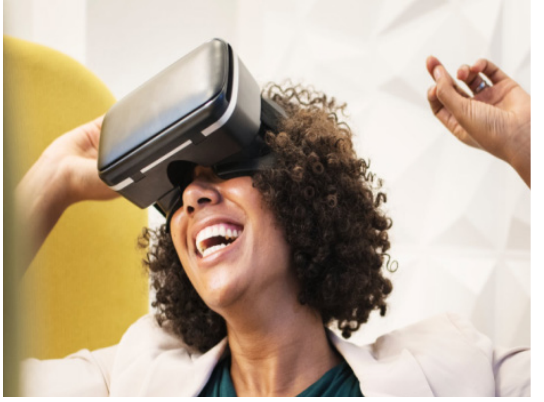
Virtual Reality is a technology that uses specially designed headsets to completely immerse users in a high-quality 3D virtual world. Unlike regular 3D viewing devices, VR systems respond to your head movements and adjust the visual experience accordingly, creating a truly immersive environment.
Potential negative effects of VR
Despite its exciting possibilities, VR technology comes with several concerns:
- Addiction: The immersive nature of VR can cause some users to prefer the virtual world over reality
- Cybersickness: A form of motion sickness caused by the disconnect between visual input and physical movement
- Physical injuries: Extended use can lead to eye strain, muscle fatigue, and other physical problems
- Social isolation: Spending too much time in virtual environments may reduce real-world social interactions
Important
Extended VR use can lead to serious health issues including eye strain, headaches, and balance problems. Users should take regular breaks and limit session duration to avoid these negative effects.
Augmented reality (AR)
Unlike VR, Augmented Reality doesn't completely replace your view of the real world. Instead, it adds digital elements and information to what you see in reality. Users typically interact with AR through cameras or smartphones.
A popular example is Pokémon GO, where players use their smartphone cameras to see virtual Pokémon characters positioned in real-world locations. The game uses GPS to track player movement and overlays digital creatures onto the real environment shown through the phone's camera.
Summary
Key Points to Remember:
- Technology brings both benefits and challenges - While it improves productivity, healthcare, and communication, it also creates environmental problems and social issues
- Information overload is a real concern - The vast amount of available information can overwhelm our brain's processing capacity, making decision-making difficult
- Virtual Reality creates immersive experiences but can lead to addiction, cybersickness, and physical health problems with extended use
- Augmented Reality enhances the real world by adding digital elements, rather than replacing reality entirely like VR does
- Staying informed about technology's impact helps us make better decisions about how we use these powerful tools in our daily lives