Plot Summary (Grade 12 NSC Matric English HL): Revision Notes
📚Revision Notes
Plot Summary
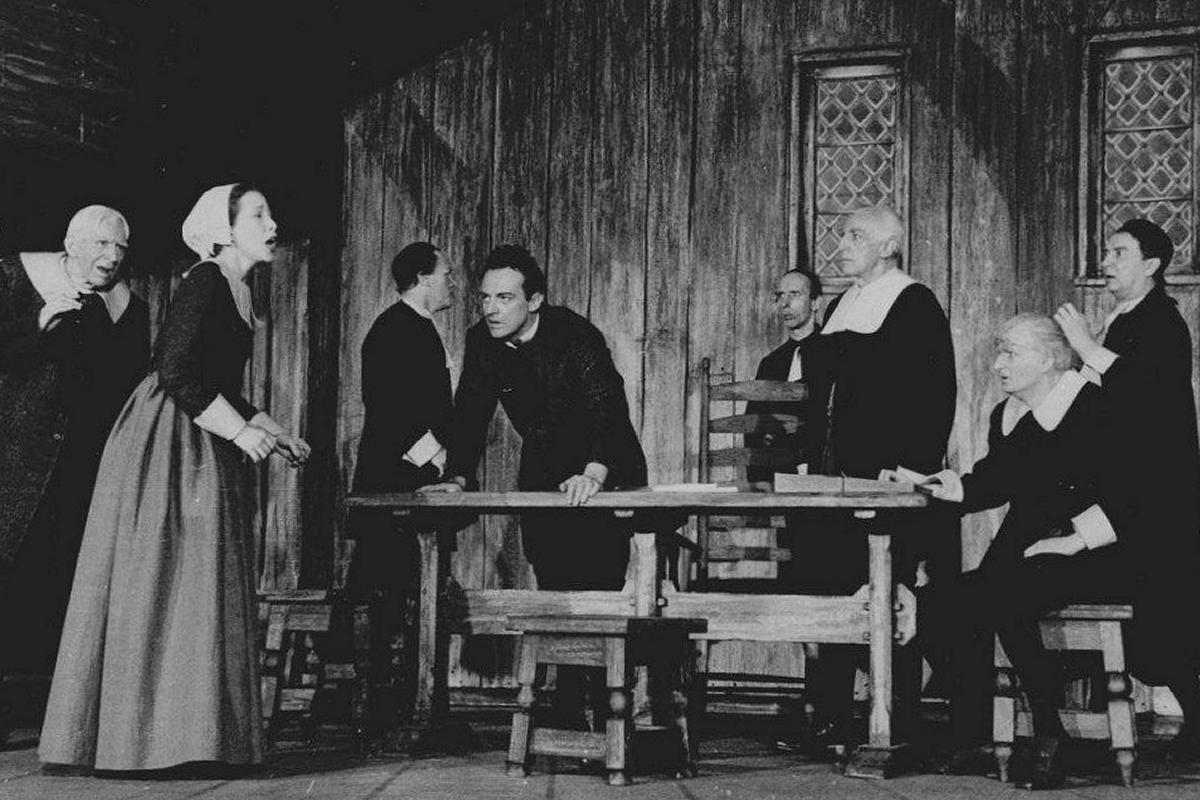
Understanding The Crucible
Arthur Miller's The Crucible is a powerful four-act drama that examines the infamous Salem witch trials of 1692 in Massachusetts. However, Miller crafted this historical tale as an allegory - a story with a deeper symbolic meaning - to comment on the "witch hunts" of McCarthyism during the 1950s. The play explores universal themes of hysteria, power, guilt, and integrity, showing how fear can destroy communities when people abandon reason and justice.
Note
Miller wrote The Crucible during the height of McCarthyism in 1953, when many Americans were being accused of communist sympathies. The parallels between the Salem witch trials and the Communist witch hunts of the 1950s made the play highly controversial and relevant to its contemporary audience.
The drama demonstrates how quickly suspicion and accusations can spread through a community, creating a dangerous chain reaction that ultimately consumes innocent lives. Miller uses these historical events to warn against the dangers of mass hysteria and the importance of maintaining personal integrity even in the face of death.
Act I: The unseen evil
The story opens in the strict Puritan community of Salem, Massachusetts, where Reverend Parris makes a disturbing discovery. His daughter Betty and his niece Abigail Williams have been caught dancing in the forest with other local girls - behaviour considered deeply sinful in Puritan society. Following this incident, Betty falls into a mysterious, unresponsive state that the townspeople interpret as supernatural affliction.
The community quickly becomes consumed with fear and suspicion as rumours of witchcraft begin to circulate. Parris, worried about potential scandal and its impact on his reputation, immediately recognises the dangerous implications of these events. The situation becomes increasingly tense as various townspeople gather, each bringing their own personal grievances and suspicions.
Note
Ann Putnam's tragic loss of seven infants reflects the harsh realities of colonial life, where infant mortality was extremely high. Her grief makes her particularly susceptible to supernatural explanations for her misfortunes, demonstrating how personal trauma can fuel mass hysteria.
Ann Putnam, a woman who has tragically lost seven infants shortly after birth, eagerly embraces the witchcraft explanation for her misfortunes. Her readiness to believe in supernatural causes reflects how personal trauma can make people vulnerable to hysteria. Meanwhile, the town's existing conflicts and resentments find a new outlet through these witchcraft accusations.
When Reverend Hale, an expert on witchcraft matters, arrives to investigate the situation, the pressure intensifies on those involved. Under this mounting pressure, Tituba, Parris's slave, becomes the first to confess to witchcraft. Crucially, she names other townspeople as witches to save herself from punishment. This confession triggers a devastating chain reaction of accusations, as Abigail and the other girls quickly follow suit, pointing fingers at various community members to deflect blame from their own actions.
Act II: The trials begin
Eight days after the initial incident, Salem has transformed into a town gripped by fear and legal proceedings. The witch trials are now in full swing, led by Deputy Governor Danforth and Judge Hathorne. The community has become deeply divided, with neighbour turning against neighbour in an atmosphere of suspicion and terror.
John Proctor, a local farmer and the play's central character, finds himself in an increasingly difficult position. He possesses crucial knowledge that could expose the truth: Abigail Williams had previously revealed to him in private that the accusations are entirely false. However, Proctor hesitates to come forwards because doing so would require him to admit publicly to his own moral failing - he had engaged in an affair with Abigail when she worked as his servant.
Important
John Proctor's moral dilemma forms the heart of the play: he must choose between protecting his reputation and saving innocent lives. This internal conflict between self-preservation and moral duty drives the entire narrative and represents the broader theme of integrity versus survival.
The tension in the Proctor household is palpable as John's wife Elizabeth struggles with the knowledge of her husband's infidelity. Their relationship remains strained, with Elizabeth finding it difficult to trust John completely despite his apparent remorse. This domestic conflict becomes more complicated when their former servant, Mary Warren, returns home from the court proceedings.
Mary Warren, who is now part of the official court, brings Elizabeth a poppet (a small doll) that she made during the trials. This seemingly innocent gift becomes crucial evidence when Elizabeth is later accused of witchcraft. The accusation stems from the discovery of this poppet, which contains a needle - supposedly evidence of Elizabeth using it to harm Abigail through supernatural means.
Despite John's desperate protests and his knowledge that the accusations are fabricated, Elizabeth is arrested. This arrest forces John to confront his moral dilemma: he must choose between protecting his reputation and saving innocent lives, including that of his wife. The act ends with John vowing to expose Abigail's lies, setting up the central conflict of the play.
Act III: The courtroom
The third act shifts to the Salem courthouse, where the full horror of the witch trials unfolds. John Proctor arrives determined to discredit Abigail Williams and the other girls by exposing their deception. He brings Mary Warren to testify that the accusations are false and that the girls have been pretending all along.
However, the court has become so deeply entrenched in the hysteria that rational evidence seems powerless against the emotional testimony of the accusers. When Proctor makes the desperate decision to confess his affair with Abigail, hoping this will reveal her true motives for targeting Elizabeth, the court calls Elizabeth to verify his claim.
Important
The tragic irony of Act III lies in Elizabeth's well-intentioned lie. Known throughout Salem for her honesty and moral character, Elizabeth chooses this crucial moment to lie in order to protect her husband's reputation, unaware that he has already confessed. This single lie condemns them both and demonstrates how good intentions can lead to devastating consequences.
In a tragic twist of irony, Elizabeth chooses to lie to protect her husband's reputation, unaware that he has already confessed. When asked directly about John's affair, she denies it, believing she is protecting his honour. This lie inadvertently condemns both her and John, as the court interprets her denial as proof that John's confession was false.
The courtroom then descends into complete chaos as Abigail and the other girls turn their accusations towards Mary Warren herself. Faced with the terrifying prospect of being condemned as a witch, Mary Warren breaks under pressure and renounces her testimony. In a moment of panic and betrayal, she accuses Proctor of forcing her to lie and of being in league with the devil.
This betrayal leads to Proctor's arrest, while Reverend Hale, finally recognising the injustice being carried out, denounces the court and quits the proceedings. The act demonstrates how fear and mass hysteria can corrupt justice and turn victims into perpetrators.
Act IV: The final sacrifice
The final act takes place several months later in a Salem jail, where the witch trials have created widespread unrest throughout the community. Many respected members of society, including Rebecca Nurse and John Proctor, await execution. The trials have torn the community apart, leaving it fractured and filled with distrust.
Reverend Hale, now consumed with guilt over his role in the proceedings, returns to try to save the condemned by urging them to confess to witchcraft, even if it means lying. He has come to believe that life is more valuable than principle, arguing that a false confession is preferable to death. This represents a complete reversal of his earlier position and highlights the moral complexity of the situation.
Example
Proctor's Final Choice: Integrity Over Survival
When faced with signing his confession publicly, Proctor undergoes a profound moral transformation:
Step 1: He initially agrees to confess to save his life
Step 2: The court demands he sign his name to make it official
Step 3: He realises his signed confession will be used to justify the court's actions
Step 4: He chooses to tear up the confession, declaring "I cannot surrender my name"
This moment represents Proctor's ultimate redemption - choosing death with honour over life with shame.
John Proctor faces the ultimate test of his character and integrity. Torn between his guilt over his past sins and his desire to protect his family's future, he initially agrees to confess. However, when the court demands that he make his confession public and sign his name to it, Proctor realises that doing so would allow his name to be used to justify the court's corrupt actions.
In the play's climactic moment, Proctor chooses to tear up his confession rather than allow his name to be used to perpetuate injustice. He declares that he cannot surrender his name because it is all he has left. This decision represents Proctor's final redemption - he chooses death over dishonour, integrity over survival.
The play concludes with John Proctor walking to the gallows, finally at peace with himself. Elizabeth, though devastated by the loss, understands that Proctor has regained his "goodness" by choosing truth over survival. The witch trials, fuelled by hysteria and the abuse of power, have ultimately resulted in the loss of innocent lives, leaving Salem shattered and disillusioned.
Miller uses this ending to emphasise how mass hysteria and the abandonment of reason and justice can lead to tragic consequences for individuals and communities alike.
Summary
Key Points to Remember:
- The Crucible serves as both a historical drama about the Salem witch trials and an allegory for McCarthyism in 1950s America
- The play demonstrates how personal grievances and fear can escalate into mass hysteria that destroys communities
- John Proctor's character arc shows the struggle between self-preservation and moral integrity, ultimately choosing honour over life
- The chain reaction of accusations begins with Tituba's confession and spreads as each person tries to save themselves by naming others
- Elizabeth's well-intentioned lie in Act III ironically condemns both herself and John, showing how good intentions can have tragic consequences