Reasons for the Location of Urban Settlements (Grade 12 NSC Matric Geography): Revision Notes
📚Revision Notes
Reasons for the Location of Urban Settlements
What are urban settlements?
Cities and towns are examples of urban settlements - these are places where people mainly work in secondary industries (manufacturing) and tertiary industries (services). As more people move to urban areas, these settlements continue to grow larger and become more complex over time.
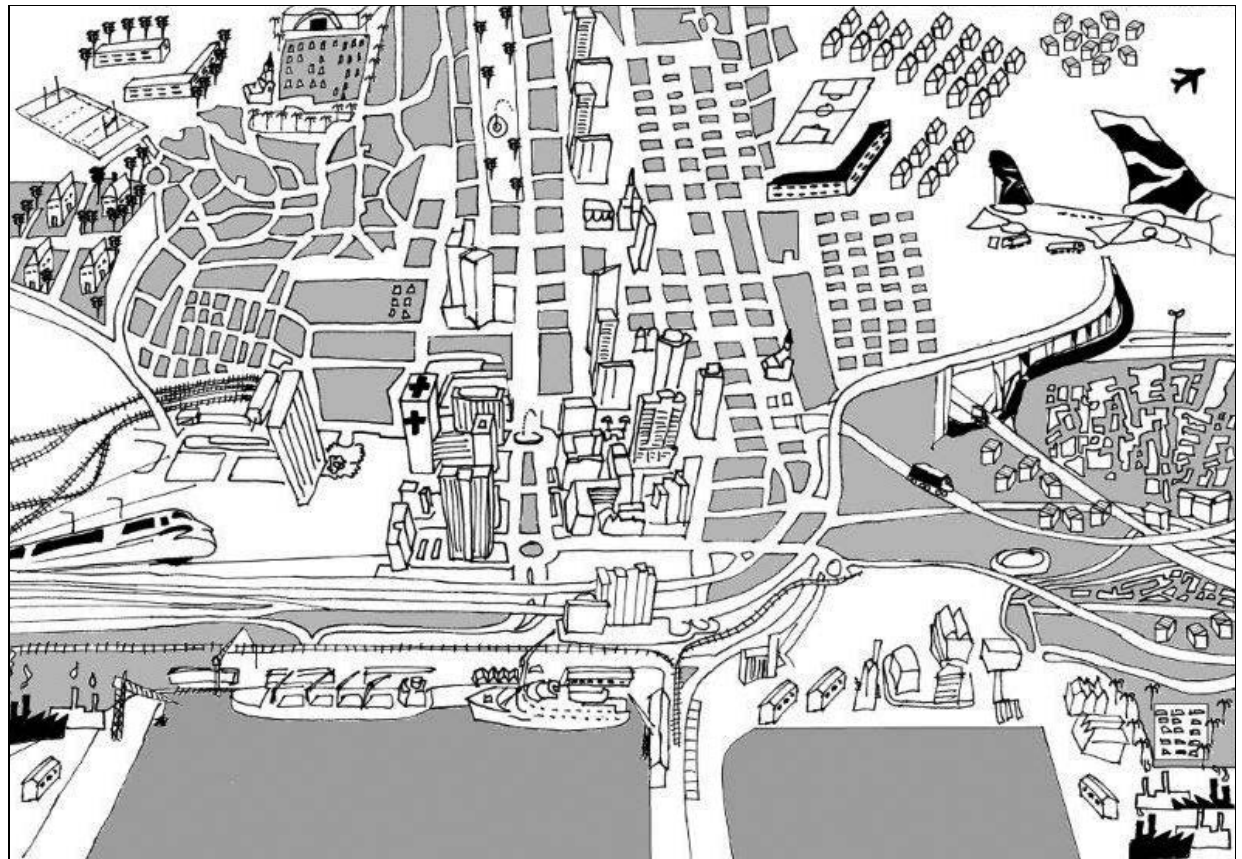
Note
The illustration above shows a typical urban settlement with its various components including residential areas, commercial districts, transport networks, and different types of infrastructure that make up a modern city. These elements work together to create the complex systems that support urban life.
Understanding location vs site
When we study urban settlements, it's important to understand that location refers to where a settlement is found or occurs. The choice of location isn't random - there are specific reasons why settlements develop in certain places rather than others.
Note
Understanding the difference between location and site is crucial for analysing urban development patterns. Location considers the broader geographical context, while site focuses on the specific physical characteristics of the land itself.
Site factors that influence urban settlement location
When planners and early settlers chose sites for urban settlements, they considered several important factors. These factors help explain why cities developed where they did and continue to influence urban growth today.
Water availability
In the past, access to fresh water was absolutely crucial for any settlement. However, in modern times, this factor has become less important because water can now be transported over long distances through pipelines and other infrastructure. Early settlements were often established near rivers, lakes, or springs to ensure a reliable water supply for drinking, cooking, and other daily needs.
Note
While modern technology has reduced the critical importance of local water sources, access to water remains a significant factor in urban planning, especially in arid regions where transportation costs can be substantial.
Soil characteristics
The type of soil in an area significantly affects whether it's suitable for building. People prefer to construct settlements on soil that allows water to drain through it properly. This prevents waterlogging and provides a stable foundation for buildings. Clay soil presents particular challenges because water tends to collect on top of it rather than draining away, making it difficult and expensive to build on such surfaces.
Important
Avoid clay soils for construction - Clay soil is problematic for urban development because it doesn't drain well, leading to waterlogging and unstable foundations. This makes construction more expensive and can cause long-term structural problems.
Rock structure and geology
The underlying rock structure plays a vital role in determining whether a site is safe for development. Areas that are located far from geological hazards like sinkholes, fault lines, and volcanoes are much better choices for urban settlements. These geological features can pose serious risks to buildings and infrastructure, making them unsuitable for large-scale development.
Important
Geological hazards to avoid - Sinkholes, fault lines, and volcanoes pose serious risks to urban settlements. Always consider the geological stability of an area before major development projects.
Relief and topography
The shape and slope of the land, known as relief, affects building costs and practicality. Sites with gentle gradients (slight slopes) are generally preferred because they're easier and cheaper to build on. Steep slopes require more expensive construction techniques and can be prone to erosion and landslides, making them less suitable for urban development.
Transport and trade connections
Many successful urban settlements developed at important transport hubs, particularly at river crossings where people and goods naturally passed through. These locations became centres of trade and commerce, attracting more people and businesses. Good transport connections remain crucial today, with settlements near highways, railways, ports, and airports having significant advantages.
Example
Historical Example: River Crossing Towns
Many major cities developed at strategic river crossing points:
- London developed where the River Thames could be easily crossed
- These locations became natural gathering points for trade
- Over time, they attracted permanent settlements
- The combination of water transport and land routes made them ideal for commerce
Human and cultural factors
Sometimes settlements develop in specific locations because of their historical, cultural, or social significance. These might include places with religious importance, areas with cultural heritage, or sites that hold special meaning for particular communities. These human factors can be just as important as physical factors in determining where people choose to live and work.
Exam tips
Important
Exam Strategy: Analysing Settlement Location
When answering exam questions about urban settlement location, you may be asked to identify factors that influenced the choice of a particular settlement shown in a diagram. Look carefully at any maps or diagrams provided - they often contain clues about relief, water sources, transport routes, and other site factors that can help you answer the question effectively.
What to look for in diagrams:
- Water bodies (rivers, lakes, coasts)
- Topographical features (mountains, valleys, plains)
- Transport networks (roads, railways, ports)
- Natural resources or hazards
Remember!
Summary
Key Points to Remember:
- Urban settlements are towns and cities focused on secondary and tertiary economic activities
- Site selection involves multiple factors working together, not just one single reason
- Physical factors include: water, soil, rock structure, relief, and transport accessibility
- Human factors such as cultural and historical significance also play important roles
- Modern technology has reduced the importance of some factors (like water availability) while others (like transport connections) remain crucial
- Always look for evidence in diagrams and maps when explaining settlement locations in exams