The Challenge of Black Consciousness to the Apartheid State (Grade 12 NSC Matric History): Revision Notes
📚Revision Notes
The Challenge of Black Consciousness to the Apartheid State
The origins of Black Consciousness (BC)
During the late 1960s and 1970s, a new generation of young black students, professionals, and community workers came together around a shared philosophy called Black Consciousness. This movement represented a fresh approach to fighting apartheid - one that focused on building black pride and identity.
Note
The emergence of Black Consciousness marked a significant shift in anti-apartheid resistance strategy. Unlike previous approaches that sought integration with white-dominated organisations, BC emphasised the importance of independent black political and cultural development.
By 1976, Black Consciousness had become much more than a political idea. It was described as "a way of life" that successfully mobilised young people in schools across South Africa. These young leaders would prove crucial in reviving the African National Congress (ANC) in the years that followed.
Nature and aims of Black Consciousness
Formation of SASO
In 1968, a group of black student leaders, including Steve Biko, broke away from the non-racial National Union of South African Students (NUSAS) to form the South African Students Organisation (SASO).
SASO declared itself to be a black organisation with a clear mission: working for the liberation of black people in South Africa on two important levels:
- Freedom from psychological oppression
- Freedom from political oppression and exploitation
Core principles of Black Consciousness
SASO was the first organisation to clearly express what Black Consciousness meant. The movement believed that:
Important
The Three Pillars of Black Consciousness:
-
Psychological liberation comes first - Black people needed to fight for mental freedom before they could liberate their minds. This meant breaking away from all contact with white people and forming their own independent black organisations
-
Building black value systems - Black people had to create their own ways of seeing themselves as valuable and important, rather than letting others define them
-
Unity creates power - Black people could only wield real power when they worked together as a united group
Black Consciousness Movement (BCM)
Expanding the movement
In 1971, SASO organised meetings with black community, church, youth, and cultural organisations to create a united Black Consciousness Movement (BCM).
However, some leaders like Steve Biko felt that black people needed more time to build confidence before directly challenging the apartheid state. Other BC leaders grew impatient, and in 1971 they formed the Black People's Convention (BPC).
Growth of BC literature and media
The movement flourished through writing and journalism. Steve Biko became the editor of the BPC's Black Review, where Black Consciousness ideas were publicly discussed and debated. Some newspapers, like the East London Daily Despatch (edited by Donald Woods), featured special columns often written by Biko himself.
Note
The power of BC writing and media cannot be understated. Through publications like Black Review and newspaper columns, the movement was able to spread its ideas far beyond university campuses and reach ordinary black South Africans who were hungry for a new vision of liberation.
Challenges facing the BCM
The BPC struggled because it lacked the deep community connections that the banned ANC had possessed. It failed to mobilise widespread support in black communities, with most of its members being students and SASO activists.
In contrast, the BCM found much greater success among black high school students, who were attracted to its bold language and defiant attitude towards authority.
Steve Biko's role
Background and early leadership
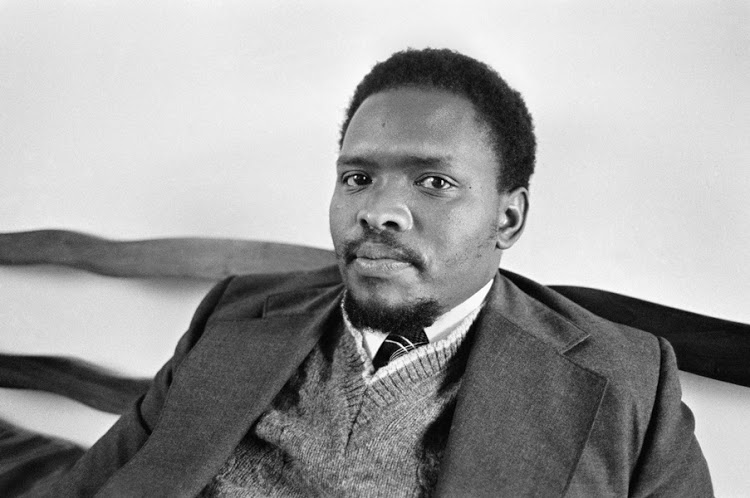
Steve Biko was born in King Williams Town in the Eastern Cape in 1946. After completing his schooling, he went on to study medicine at the University of Natal in 1966. He became SASO's first president when it broke away from NUSAS in 1968, believing that NUSAS was controlled by white liberals who couldn't free themselves from their privileged position in society.
Biko as a writer and thinker
Biko edited the influential journal Black Review until he was banned in 1973, but continued writing anonymously afterwards. His words shaped many of BC's central ideas, and he represented two key qualities:
- The spirit of community that existed among BC activists
- Defiance and fearlessness - refusing to be intimidated by authority regardless of what the state did to him
Important
Steve Biko became the intellectual heart and moral voice of the Black Consciousness Movement. His writings and speeches articulated a philosophy that went beyond mere political resistance - it was a complete reimagining of black identity and self-worth in apartheid South Africa.
Challenging the system
As one of the first BC leaders to be banned by the state in 1973, Biko constantly broke his banning orders and cleverly used the courts as a platform for spreading his messages across the country.
Government perceptions of Black Consciousness
The state's response
The apartheid government viewed Black Consciousness as a serious threat:
Important
The State's Escalating Response:
-
1973: Biko and seven other BC leaders were served with banning orders that forced them to move to isolated locations across the country
-
Terrorism charges: The state argued that expressing BC ideas in public was an act of terrorism. This position was supported by Judge Boshoff in the SASO-BPC trial in 1975
-
Official justification: Judge Boshoff felt that BC ideas, by emphasising group unity and solidarity, encouraged hostile feelings between black and white people, which he considered terrorism
The challenge of Black Consciousness to the state
Mass bannings and arrests
The apartheid state's response became increasingly harsh as BC influence grew:
- October 1977: 18 black consciousness, media, and church organisations were banned, including SASO, BPC, the South African Council of Churches, and the World newspaper under editor Percy Qoboza
- August 1977: Biko was arrested in Walmer, Port Elizabeth, after secretly visiting activists in Cape Town. He was detained under Section 6 of the Terrorism Act
- 12 September 1977: Biko died in Pretoria from injuries sustained during brutal police assaults in prison
Example
The 1974 Frelimo Celebration Incident
In 1974, SASO and the BPC organised a mass public rally to celebrate Frelimo's victory over Portuguese colonialism in Durban, defying a government ban on public meetings.
What happened:
- Over 5,000 people gathered for the celebration
- Police attacked the crowd with brutal force
- Hundreds were beaten and arrested
- Nine SASO and BPC leaders were detained for months without trial
- Eventually, they were charged under the Terrorism Act
This incident demonstrated both the growing confidence of BC activists and the state's determination to crush the movement through violence.
The 1976 Soweto uprising and Black Consciousness
The formation of SASM
In the mid-1970s, the South African Students Movement (SASM) was formed to protest against inferior black education in South Africa. Many SASM leaders were clearly influenced by Black Consciousness thinking and had direct contact with BC leaders.
The uprising unfolds
The connection between BC philosophy and youth resistance became dramatically clear in 1976:
Example
The Soweto Uprising: From Protest to Revolution
The spark:
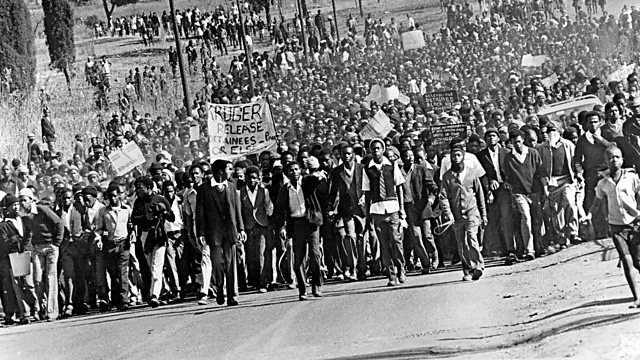
- SASM activists organised peaceful protest marches against instruction in Afrikaans in June 1976 in Soweto
The explosion:
- The harsh state reaction transformed a peaceful protest into a nationwide explosion of youth anger and frustration
- Police shot into crowds of school children, killing hundreds
- Students responded by setting fire to schools and government buildings
The spread:
- As violence continued, workers began organising stay-at-homes to support community demands
- By 1979, different groups - students, communities, and factory workers - were slowly beginning to work together
Broader impact
The uprising showed how BC ideas had successfully mobilised youth resistance across the country, proving that the movement's emphasis on psychological liberation and black pride had taken deep root among young South Africans.
The legacy of Black Consciousness on South African politics
The end of organised BC
The bannings and detentions of 1977 marked the end of Black Consciousness as an open political movement in South Africa. However, the anger, defiance, and symbols of the movement lived on.
After 1977, remaining BC leaders disagreed about future strategies. Many felt that Black Consciousness had achieved its purpose and that the best way forwards was to re-establish connections with ANC structures, both in exile and increasingly operating underground within South Africa.
Influence on later leaders
During the 1980s, many leaders who emerged in non-racial organisations like the United Democratic Front (UDF), ANC, and trade unions were activists who had developed their political understanding through the Black Consciousness Movement. Notable examples include Mosioua Lekota, Nkosasana Dlamini-Zuma, and Cyril Ramaphosa.
Note
The political genealogy of post-apartheid South Africa can be traced directly through the Black Consciousness Movement. Many of the country's most prominent leaders in the democratic era - including future presidents and cabinet ministers - cut their political teeth in BC organisations during the 1970s.
Continued resistance
Not all BC leaders supported the revival of the ANC and non-racial mass democratic movements of the 1980s. In 1978, a group of BC leaders formed the Azanian People's Organisation (AZAPO).
By 1979, state repression had restored the appearance of calm, but had only succeeded in pushing activists underground. Meanwhile, resistance forces were beginning to develop new strategies for continuing the fight against apartheid.
The lasting impact
The true legacy of Black Consciousness lies not in the organisations it created, but in the powerful ideas it generated. These ideas about black pride, psychological liberation, and self-determination continued to influence South African politics long after the movement's formal organisations were banned.
Summary
Key Points to Remember:
- Black Consciousness emerged in the late 1960s as a new approach focusing on psychological liberation and black pride
- Steve Biko and SASO broke away from white-dominated NUSAS in 1968 to create independent black organisations
- The apartheid government saw BC as terrorism and responded with bannings, arrests, and ultimately Biko's death in police custody in 1977
- The 1976 Soweto uprising was heavily influenced by BC thinking through SASM, showing how BC ideas mobilised youth resistance
- BC's lasting legacy lies in its ideas rather than organisations - many 1980s liberation leaders had their political awakening through the Black Consciousness Movement