The Beginning of the End (Grade 12 NSC Matric History): Revision Notes
📚Revision Notes
The Beginning of the End
Introduction
By the late 1980s, several critical factors were combining to bring about the collapse of the apartheid system in South Africa. These pressures from multiple directions created an unstoppable momentum towards change that even the most hardline supporters of apartheid could no longer ignore.
Note
The end of apartheid was not the result of a single event, but rather the convergence of multiple pressures that made the system unsustainable. Understanding these interconnected factors is crucial for grasping how such a deeply entrenched system could finally collapse.
Three key factors that ended apartheid
1. Military defeat at Cuito Cuanavale, Angola
The South African military suffered a devastating blow in Angola during 1988, which shattered their reputation of invincibility:
- The conflict: South African forces were fighting in Angola to support UNITA and weaken SWAPO (South West Africa People's Organisation)
- The defeat: Combined Angolan and Cuban forces, supported by the Cuban Air Force, inflicted a major military defeat at the town of Cuito Cuanavale
- The consequences:
- SA military command was severely shaken and quickly withdrew from Angola
- South Africans realised they were not as militarily superior as they had believed
- The expensive war was costing millions daily with no success
- This strengthened those in government who favoured negotiation over continued military action
Important
The military defeat at Cuito Cuanavale was psychologically devastating for the apartheid government. For the first time, the supposedly invincible South African Defence Force had been clearly beaten, undermining the foundation of their power - military superiority.
Key outcome: Independence negotiations with SWAPO followed rapidly, and SWAPO won Namibia's first democratic election in 1989.
2. South African economy in trouble
By 1989, South Africa was facing a severe economic crisis that made the cost of maintaining apartheid unsustainable:
Economic problems included:
- Disinvestment: International companies were pulling money out of South Africa
- Rising inflation: The cost of living was increasing rapidly
- Growing unemployment: More people were without jobs, leading to greater hardship and social unrest
Government financial crisis:
- The state could only fund apartheid and its repressive machinery by borrowing enormous amounts of money
- Reckless government spending: Poor financial management and corruption were draining resources
- Military costs: Expensive military campaigns and maintaining security forces
- Economic disruption: Strikes and other disruptions were damaging the economy further
Example
Economic Impact Example: The Cost of Apartheid
By 1989, the apartheid system was costing the government billions of rands annually:
- Military spending: Millions per day on the Angola war alone
- Security apparatus: Vast police and military forces to enforce apartheid laws
- Homeland system: Expensive and inefficient separate administrations
- International sanctions: Lost trade and investment opportunities worth billions
Meanwhile, strikes and civil unrest were disrupting production, further weakening the economy.
All these factors combined to push South Africa towards economic disaster.
3. Internal mass resistance
Despite severe repression, resistance to apartheid was growing stronger and more widespread:
The Defiance Campaign:
- A nationwide campaign encouraged people everywhere to defy apartheid laws
- People deliberately broke segregation rules for living areas, services, beaches, buses and trains
- This mass civil disobedience showed the government that apartheid was becoming impossible to enforce
Prison protests:
- In 1989, the Mass Democratic Movement (MDM) organised hunger strikes by detainees in prisons across South Africa
- Many prisoners were released as a result of these protests
Open defiance:
- Banned individuals and organisations simply ignored their restrictions and operated openly
- Mass demonstrations moved out of the townships and into white city centres
- This brought the reality of resistance directly to white South Africans
Note
The shift of protests from townships to white city centres was strategically significant. For the first time, white South Africans could no longer ignore the reality of resistance, as it was happening literally on their doorsteps in areas they considered "safe."
Change in government response: When FW de Klerk replaced PW Botha as President in August 1989, the security forces became more tolerant of protest actions, signalling a shift in approach.
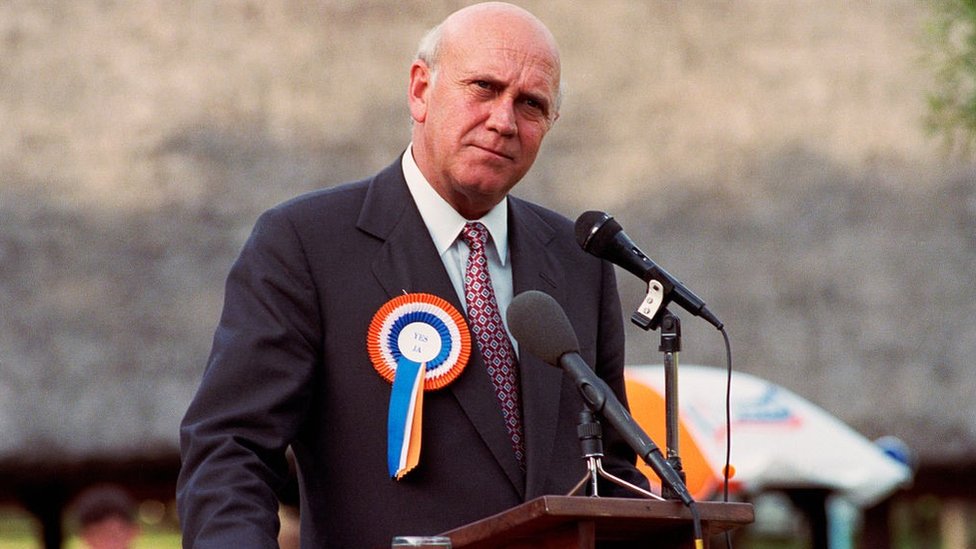
By the end of 1989, there was a clear sense that change was inevitable. De Klerk recognised that the homeland system had failed and accepted that power-sharing with black South Africans was necessary.
The Harare Declaration
Background
In December 1989, The Harare Declaration was adopted by a conference of 4,600 MDM affiliates in Johannesburg, called the Conference for a Democratic Future.
Core principles
The Declaration established that South Africa should become:
"A united, non-racial, democratic state where everyone, regardless of race, colour, sex or creed, enjoys equal citizenship and universally recognised human rights."
This laid the foundation for creating a climate suitable for negotiations.
Requirements for the apartheid government
The Declaration demanded that the apartheid state must:
- Release all political prisoners and stop imposing restrictions on them
- Lift all bans on restricted organisations and individuals
- Remove all troops from the townships
- End the State of Emergency and repeal all legislation designed to restrict political activity
- Stop all political trials and executions
The negotiation process
The Declaration outlined the path forwards:
- Ceasefire discussions between liberation movements and the SA government to stop hostilities on both sides
- Interim government formation to supervise creating and adopting a new Constitution based on Harare Declaration principles
- Formal end to hostilities - all armed conflict would officially terminate
- International sanctions lifted once these conditions were met
Discussions between De Klerk and Mandela
Initial contact
- De Klerk's decision to release certain prisoners from Robben Island encouraged Mandela
- The two leaders eventually met in December 1989 to discuss the way forwards
De Klerk's announcement
On 2 February 1990, De Klerk announced to the South African Parliament that:
- The ANC, PAC and SACP would be unbanned
- Nelson Mandela would be released from prison
Mandela's release
- 11 February 1990: Mandela walked out of prison in Paarl
- He delivered a momentous speech to supporters at Cape Town City Hall
- Mandela and his wife Winnie toured overseas to reconnect with:
- Leaders in exile
- International supporters and benefactors
- To establish structures for the democratic changes ahead
Note
Mandela's release was broadcast live around the world, symbolising not just his personal freedom but the beginning of South Africa's transition to democracy. The image of him walking free, hand-in-hand with Winnie, became one of the most iconic moments of the 20th century.
Significance
The release of Mandela and the collapse of apartheid represented victory for all South Africans who had participated in the struggle for democracy. However, it's crucial to recognise the enormous sacrifice made by countless individuals to achieve this historic transformation.
Important
While celebrating the end of apartheid, we must never forget the immense human cost of the struggle. Thousands died, were imprisoned, tortured, or exiled in the fight for freedom. Their sacrifice made this historic transformation possible.
Summary
Key Points to Remember:
- Three main factors ended apartheid: Military defeat in Angola, economic crisis, and mass internal resistance
- Cuito Cuanavale (1988): Military defeat that shattered SA's sense of invincibility
- Economic crisis by 1989: Disinvestment, inflation, unemployment, and massive government debt made apartheid unsustainable
- Harare Declaration (December 1989): Established principles for a non-racial democracy and conditions for negotiations
- 11 February 1990: Nelson Mandela was released from prison, marking the true beginning of the end of apartheid