Civil Rights Movements (Grade 12 NSC Matric History): Revision Notes
📚Revision Notes
Civil Rights Movements
Civil rights movements during the 1950s to 1970s emerged across the world as people demanded equal treatment, political freedoms, and an end to discrimination. These movements took different forms depending on local conditions, but they shared common goals of achieving greater equality and human rights.
Note
The period from the 1950s to 1970s marked a pivotal era in global history when marginalised communities worldwide began organised resistance against discrimination and oppression, often inspired by each other's successes and failures.
Northern Ireland civil rights movement

Background and causes
The British government controlled Northern Ireland after World War II and introduced welfare reforms that expanded education opportunities for Catholics. This created significant changes in Northern Irish society:
- Educational impact: Young Catholics gained access to better education and were exposed to new ideas about equality and rights
- Growing awareness: Educated Catholics became increasingly unwilling to accept the discrimination they faced from the Protestant-dominated system
- Economic tensions: In 1963, the British government proposed economic reforms that would benefit Northern Ireland overall, but these changes threatened the dominant position held by Protestants
Important
The expansion of Catholic education created an unintended consequence for the Protestant establishment - it produced a generation of educated Catholics who were no longer willing to accept second-class treatment.
The escalation of conflict (1966-1967)
1966 - Violence begins:
- Protestant loyalists, led by Reverend Ian Paisley, strongly opposed the proposed reforms
- A loyalist paramilitary group called the Ulster Volunteer Force (UVF) was formed
- The UVF murdered two Catholics and one Protestant, marking the beginning of violent conflict
- Although the UVF was immediately banned by authorities, the cycle of violence had already begun
1967 - Organised civil rights activism:
- The Northern Ireland Civil Rights Association (NICRA) was established to campaign for an end to anti-Catholic discrimination
- NICRA organised peaceful marches in 1968 to demand equal rights
- These peaceful protests were met with violent responses from police forces, particularly the Royal Ulster Constabulary (RUC)
- The violent police reaction to peaceful marches sparked further unrest and continued protests
Example
Case Study: The Cycle of Violence (1966-1967)
Step 1: Protestant opposition to reforms leads to formation of UVF
Step 2: UVF commits murders, demonstrating willingness to use violence
Step 3: Catholics respond by forming NICRA for peaceful protest
Step 4: Police violently suppress peaceful protests
Step 5: Violence begets more violence, escalating the conflict
Development of paramilitary organisations
The conflict intensified as both communities established armed groups:
Protestant paramilitaries:
- The UVF was later joined by the Ulster Defence Association in 1971
- These groups opposed any reforms that would increase Catholic civil rights
- They responded to civil rights reforms with increased violence and civil unrest
Catholic paramilitaries:
- Catholics established the Irish Republican Army (IRA) to protect their communities
- A more militant faction, the Provisional IRA, split from the main IRA organisation
- The Provisional IRA was more prepared to use violence to achieve their political aims
Long-term consequences
- The period known as "The Troubles" continued for over two decades, lasting until 1998
- The conflict finally ended with the Good Friday Agreement in 1998, which established peace and power-sharing arrangements
- This agreement ended the cycle of violence and murder that had plagued Northern Ireland
Note
The Good Friday Agreement demonstrated that even seemingly intractable conflicts rooted in decades of violence and mistrust can be resolved through negotiation and compromise.
Civil rights movements in Europe
Germany
The German civil rights movement emerged as a reaction against the conservative political climate following the Nazi era:
Causes and characteristics:
- The movement was primarily left-wing and attracted many disillusioned university students
- Protesters opposed the authoritarianism and perceived hypocrisy of the German government
- Key demands included greater socio-economic equality, expanded freedoms, and improved human rights
- Students particularly resented the wealth gap between upper classes and ordinary citizens, as well as heavy-handed police tactics
Methods and outcomes:
- Activists used protest actions to make their demands known to authorities
- Police and government over-reactions to these protests often made the situation worse
- Similar protest movements in other countries encouraged German activists
- Although protests were eventually suppressed, the civil rights movement successfully took root in Germany
Note
German students were particularly motivated by the contradiction between their country's recent Nazi past and the continued authoritarian tendencies they observed in post-war German society.
Czechoslovakia
The Czechoslovak civil rights movement developed within the context of Soviet control:
Background conditions:
- After 1945, Czechoslovakia became a one-party state under Soviet influence
- From the mid-1960s onwards, Czechs and Slovaks began rejecting the Communist regime
- Alexander Dubček became a popular leader who supported democratic reforms in 1968
The Prague Spring (1968):
- Dubček created more space for civil society to operate, leading to a period known as the Prague Spring
- Activist Ludvik Vaculvic published an important manifesto called "Two Thousand Words" in June 1968
- The manifesto called on citizens to demonstrate for better government and demanded greater control over their own lives
- These calls for democracy posed a direct threat to Soviet control over Eastern Europe
Soviet response:
- The USSR could not tolerate challenges to their authority over the Eastern Bloc
- On 20 August 1968, Eastern Bloc armies invaded Czechoslovakia
- This invasion began a 20-year occupation that crushed the civil rights movement
Important
The crushing of the Prague Spring demonstrated the limits of civil rights movements in Soviet-controlled territories and showed how external powers could violently suppress internal democratic movements.
Civil rights movement in Mexico
The Mexican civil rights movement reached its peak in 1968 with tragic consequences:
The 1968 student movement
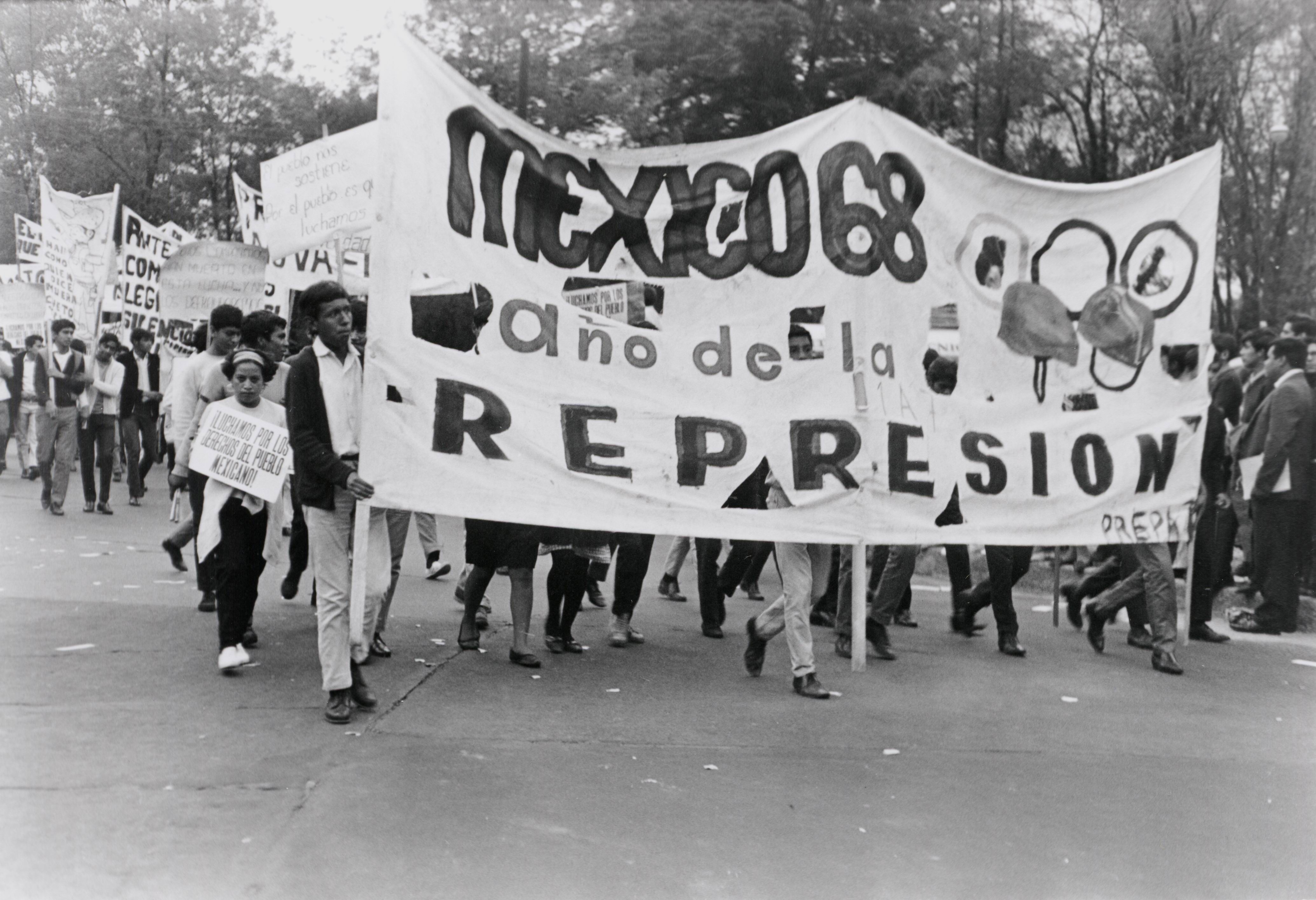
Student activism:
- Students in Mexico City demonstrated throughout 1968 for increased civil rights and democratic reforms
- At the end of September, the Mexican president ordered the army to occupy universities
- Students were beaten and arrested during the military occupation of campuses
Peaceful protests:
- In October, 15,000 students marched peacefully through Mexico City streets
- The march was organised to protest against the army's occupation of university campuses
- Rally organisers tried to cancel the demonstration when they noticed increased military presence in the area
The Tlatelolco massacre
Important
The Tlatelolco massacre stands as one of the most tragic examples of state violence against peaceful civil rights protesters in Latin American history.
The tragic events:
- At sunset, army and police forces surrounded the Plaza and began firing live ammunition into the crowd
- The shooting continued throughout the night, creating a massacre situation
- By morning, hundreds of students and civilians were dead, with many more wounded and arrested
Government response and significance:
- The army claimed they had acted in self-defence, but this was widely disputed
- The Tlatelolco massacre is now remembered as a prime example of extreme state abuse of power
- This event highlighted the dangers faced by civil rights activists when challenging authoritarian governments
Civil rights movement in Africa
The African civil rights movement was closely connected to the process of decolonisation following World War II:
World War II impact
Military service and awareness:
- Many Africans from French and British colonies were recruited to fight for the Allies in Europe
- African soldiers were attracted by the idea that they were fighting to support democracy and freedom
- This military service exposed Africans to ideas about democratic rights and freedoms
Note
World War II served as an unexpected catalyst for African independence movements, as colonial subjects who fought for freedom abroad began demanding the same freedoms at home.
Post-war questioning
Returning soldiers' perspective:
- When African soldiers returned home after the war, they began questioning the colonial system
- They asked why they should have risked their lives to keep Europe and America free when they were not free in their own countries
- This questioning attitude spread beyond former soldiers to civilian populations
Growth of political movements
Formation of political organisations:
- During the late 1940s and early 1950s, many Africans in European colonies formed political parties
- These political organisations demanded political freedom and an end to colonial rule
- Examples include movements in the Gold Coast (Ghana) and Tanganyika (Tanzania)
Rapid decolonisation
Successful independence movements:
- African nationalist movements caught European colonial powers by surprise with their strength and organisation
- The process of decolonisation happened remarkably quickly across the continent
- By 1966, all but 6 African countries had achieved independence and become sovereign nation-states
- This represented one of the most successful civil rights movements in world history
Example
The African Success Story: A Timeline
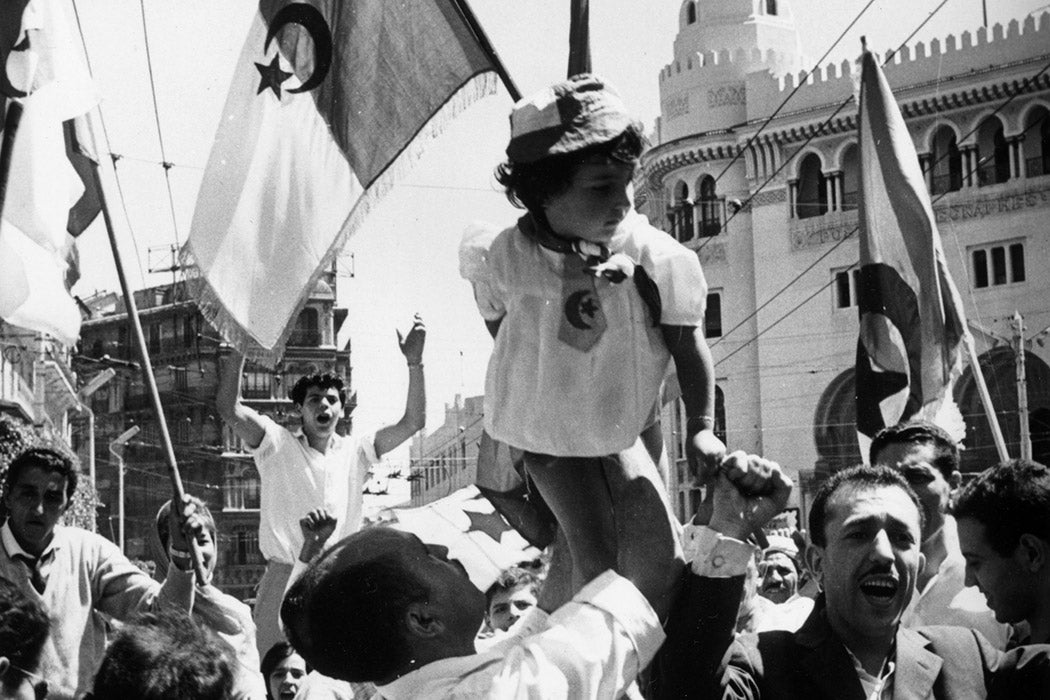 (Image: Algerians celebrating their independence in 1962)
Step 1: WWII exposes African soldiers to democratic ideals (1939-1945)
Step 2: Returning soldiers question colonial rule (1945-1948)
Step 3: Political parties form across colonies (1948-1955)
Step 4: Independence movements gain momentum (1955-1960)
Step 5: Rapid decolonisation across continent (1960-1966)
Result: Continental transformation in just two decades
Remember!
Summary
Key Points to Remember:
-
Civil rights movements were global phenomena - from Northern Ireland to Africa, people demanded equal treatment and political freedoms during the 1950s-1970s
-
Different contexts produced different outcomes - while African movements achieved independence, Northern Ireland's conflict lasted decades, and Czechoslovakia's Prague Spring was crushed by Soviet invasion
-
Violence often escalated conflicts - peaceful protests frequently met with violent responses from authorities, leading to cycles of conflict (Northern Ireland, Mexico)
-
World War II was a catalyst - the war's aftermath created conditions for civil rights movements, particularly in Africa where returning soldiers questioned colonial rule
-
Civil rights movements had lasting impacts - even when immediately suppressed, these movements planted seeds for future democratic changes and established important precedents for human rights activism