Clearing the Obstacles (Grade 12 NSC Matric History): Revision Notes
📚Revision Notes
Clearing the Obstacles
The path to a negotiated settlement in South Africa was filled with significant challenges that had to be overcome before meaningful negotiations could begin. Understanding these obstacles and how they were addressed is crucial for grasping how South Africa moved from apartheid to democracy.
Note
The transition from apartheid to democracy required overcoming multiple interconnected obstacles - legal, political, and social. Each barrier that was removed brought South Africa one step closer to meaningful negotiations and eventual democratic government.
Legal obstacles and early agreements
The South African government faced the immediate task of removing the legal barriers that prevented negotiations from taking place. This involved several important steps that demonstrated their commitment to genuine reform.
The government began by repealing many discriminatory laws and repressive security regulations. This was essential because these laws had been used to suppress opposition and maintain apartheid control. As part of this process, exiled leaders from the African National Congress (ANC) and South African Communist Party (SACP) were allowed to return home. Key figures like Joe Slovo and Chris Hani came back to South Africa, bringing vital leadership to the negotiation process.
The first official meeting took place on 4 May 1990 at President De Klerk's official residence, Groote Schuur. This historic gathering brought together government representatives, a delegation of officials, and ANC leaders who had recently returned from exile, along with leaders from the Mass Democratic Movement (MDM).
During this meeting, both sides committed themselves to establishing the right conditions for peaceful negotiations. Their agreement was formally documented in what became known as the 'Groote Schuur Minute'. This document was significant because it represented the first formal agreement between the apartheid government and the liberation movement, setting the foundation for future negotiations.
Important
The Groote Schuur Minute was groundbreaking - it marked the first time the apartheid government formally recognised the ANC as a legitimate negotiating partner, fundamentally changing the political landscape of South Africa.
The ANC suspends the armed struggle
From the government's viewpoint, one of the most significant obstacles blocking progress was the ANC's continued commitment to armed resistance through its military wing, Umkhonto we Sizwe (MK). The government insisted that negotiations could not proceed whilst the threat of violence remained.
Several factors complicated this issue and created additional obstacles to peaceful negotiation:
Mistrust within liberation ranks: MK members, including leader Ronnie Kasrils, remained deeply suspicious of the De Klerk government's true intentions. They questioned whether the government was genuinely committed to dismantling apartheid or was simply buying time whilst maintaining white minority rule.
Ongoing violence in townships: A major complicating factor was the continuing bloodshed in townships across the Rand. This violence primarily occurred between ANC-aligned urban residents and Inkatha Freedom Party (IFP)-aligned migrant workers living in hostels. The situation reached a crisis point during the week before the crucial Pretoria meeting.
The Sebokeng massacre: On 22 July 1990, just days before important talks were scheduled, an armed group of IFP supporters launched a devastating attack on residents of Sebokeng township. This attack resulted in 30 deaths, with most victims being ANC supporters. The timing of this violence threatened to derail the entire negotiation process.
Example
Critical Breakthrough: The Pretoria Meeting
When negotiations seemed on the verge of collapse due to escalating violence, both sides recognised the need for decisive action:
Step 1: Government representatives and ANC leaders met urgently in Pretoria
Step 2: The government formally accepted the principle of democracy
Step 3: The ANC took the crucial step of unilaterally suspending its armed struggle
Result: This mutual compromise removed the major obstacle blocking negotiation progress
Breaking the deadlock: Both the government and the ANC recognised that quick action was needed to prevent the collapse of negotiations. At their subsequent meeting in Pretoria, significant breakthroughs were achieved. The government formally accepted the principle of democracy, whilst the ANC took the crucial step of unilaterally suspending its armed struggle. This mutual compromise removed the major obstacle that had been blocking progress.
The role of the labour movement in negotiations
Trade unions played a vital and often underestimated role in South Africa's transition to democracy. Their involvement began well before the formal negotiations and continued throughout the process.
Early union development: After trade unions were legalised in South Africa in 1979, two major umbrella organisations emerged by 1980. The Federation of South Africa Trade Unions (FOSATU) and the Council of Unions of South Africa (CUSA) represented different approaches to worker organisation and political involvement.
Trade unions quickly became important voices calling for workers' rights during the turbulent 1980s. Their influence grew significantly as they organised strikes and campaigns that challenged both the apartheid economy and political system.
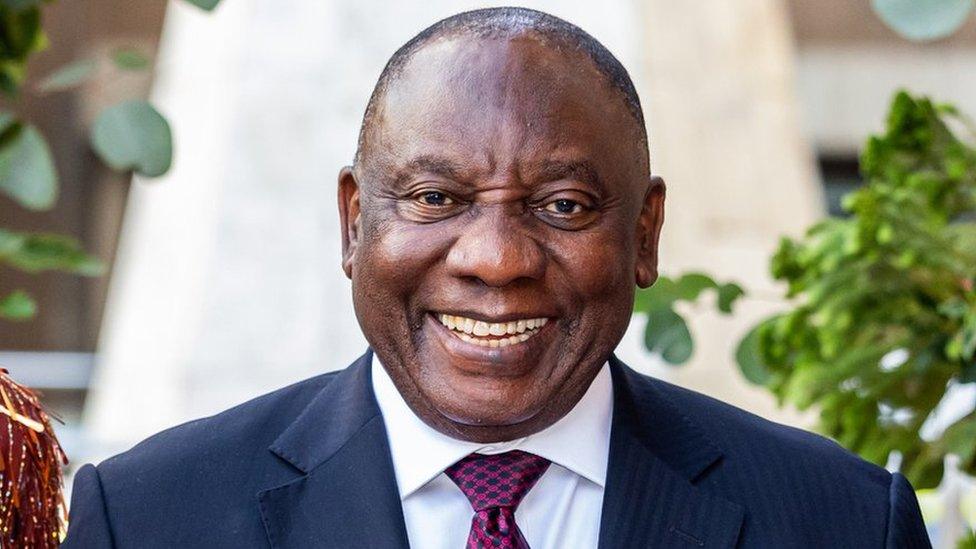
Cyril Ramaphosa's leadership: A key figure who emerged from the labour movement was Cyril Ramaphosa. In 1982, he became one of the founding members of the National Union of Mineworkers (NUM) and served as its first General Secretary until June 1991, when he became General Secretary of the ANC. His experience in labour negotiations would prove invaluable in the political negotiations that followed.
Note
Cyril Ramaphosa's transition from trade union leader to chief ANC negotiator demonstrates how the labour movement provided crucial leadership skills and experience that were essential for the complex political negotiations ahead.
COSATU formation and growth: Smaller trade unions recognised the need for greater coordination in their reform efforts. In 1983, they joined the United Democratic Front (UDF) to work more effectively together. This cooperation led to the formation of COSATU (Congress of South African Trade Unions) in 1985, which grew into a powerful umbrella organisation representing numerous different unions.
COSATU became a significant player in the struggle against apartheid, with its membership expanding rapidly after the unbanning of political organisations in 1990.
The tripartite alliance: Following the unbanning of the SACP, ANC, UDF and PAC in 1990, unions and civil society groups became directly involved in the negotiation process, though they typically aligned themselves with established political parties.
In May 1990, COSATU joined the ANC and SACP in a formal tripartite alliance. This alliance had three key objectives:
- Equality for workers
- Better basic conditions of employment
- Fair labour standards
The alliance membership grew significantly after its formation, giving the labour movement substantial political influence.
Union competition and challenges: COSATU faced competition from rival organisations, particularly NACTU (National Council of Trade Unions), a blacks-only union formed in 1986, and UWUSA (United Workers' Union of South Africa), which was affiliated to the IFP.
Direct involvement in negotiations: Trade unions didn't just support political negotiations from the sidelines - they became active participants. In July 1990, trade unions like COSATU and UDF backed the ANC's call for rolling mass action, resulting in 3 million workers staying away from work in a massive show of solidarity.
Example
Mass Action Campaign: July 1990
The trade union movement demonstrated its power through coordinated action:
The Call: COSATU and UDF backed the ANC's call for rolling mass action
The Response: 3 million workers participated in a stay-away from work
The Impact: This massive show of solidarity demonstrated popular support for change and pressured the government to negotiate seriously
The Result: Government recognised the need to engage more meaningfully with liberation movements
When violence escalated in August 1990, Mac Maharaj issued a statement calling for the release of COSATU leaders who had been arrested and demanding an end to the violence.
In September 1990, leaders from the ANC, UDF and COSATU met directly with FW de Klerk, asking for action to end the violence in South Africa. On 14 September 1991, the trade unions agreed to the National Peace Accord, and union representatives became involved as members of political groupings in the negotiation process.
Supporting the transition: When CODESA II reached deadlock in May 1992, COSATU joined the ANC in calling for a week-long general strike. They also demanded the institution of an interim government, the immediate transfer of power to the people, and free and fair elections to institute a constituent assembly. On 3 August 1992, a week of mass action began, designed to force a transition to majority rule.
Key negotiators: Both Cyril Ramaphosa (from NUM) and Roelf Meyer (representing the National Party) and their respective teams played crucial roles in the negotiations process. They were instrumental in both achieving a settlement when talks broke down and in establishing the Multiparty Negotiation Forum on 1 April 1993.
Role of trade unions in the new South Africa after 1994
The transition to democracy brought new challenges and opportunities for the labour movement. The role of trade unions evolved significantly as South Africa established its new political order.
Integration into government: Many trade union leaders were absorbed into positions within the new administration and political framework. Cyril Ramaphosa became a Member of Parliament, representing the successful transition of labour leaders into formal political roles.
Challenges to the alliance: The tripartite alliance faced new pressures as the Government of National Unity moved away from a socialist state towards one with a mixed economy. This shift created tensions between the unions' traditional socialist orientation and the pragmatic economic policies needed to stabilise the country.
Important
The transition from liberation movement to governing party created new dynamics within the tripartite alliance. Trade unions had to balance their traditional role as workers' advocates with their political partnership in the governing coalition.
Ongoing workers' struggles: Despite the political victory, COSATU continued to advocate for workers' rights and interests. This advocacy sometimes brought the union into conflict with the ANC government, demonstrating that the alliance relationship remained complex even after achieving political freedom.
Remember!
Summary
Key Points to Remember:
-
Legal obstacles were the first hurdle: The government had to repeal discriminatory laws and allow exiled leaders to return before negotiations could begin.
-
The Grootte Schuur Minute (4 May 1990) marked the first formal agreement between the government and liberation movement, establishing conditions for peaceful negotiations.
-
Suspending the armed struggle was crucial: The ANC's decision to unilaterally end armed resistance at the Pretoria meeting removed a major obstacle to negotiations.
-
Trade unions were vital partners: COSATU's formation in 1985 and the tripartite alliance in May 1990 gave workers a powerful voice in the transition process.
-
Mass action campaigns were effective: Trade union-backed strikes and protests, particularly the 3 million worker stay-away in July 1990, demonstrated popular support for change and pressured the government to negotiate seriously.