CODESA 1 (Grade 12 NSC Matric History): Revision Notes
📚Revision Notes
CODESA 1
What was CODESA 1?
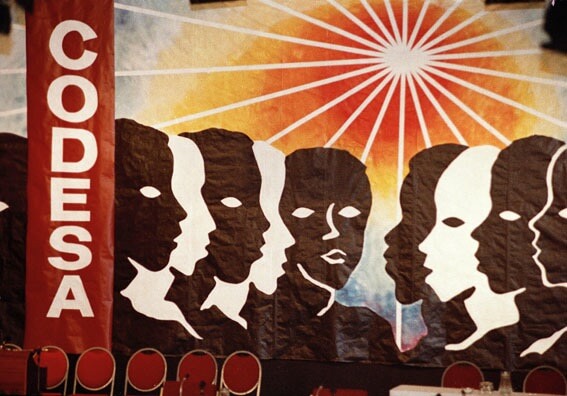
The Conference for a Democratic South Africa (CODESA 1) was a crucial negotiation forum that brought together South Africa's main political parties in December 1991. This landmark conference represented the first formal attempt to negotiate a peaceful transition from apartheid to democracy.
Over 400 representatives from 17 different political parties gathered to discuss South Africa's democratic future. This was a historic moment as it marked the beginning of official negotiations between the apartheid government and liberation movements.
Note
CODESA 1 was groundbreaking because it brought together former enemies at the same negotiating table for the first time, including both the apartheid government and previously banned liberation movements like the ANC.
The conference gets off to a rocky start
Unfortunately, CODESA 1 did not begin smoothly. The tensions between the major parties became immediately apparent during the opening proceedings.
President F.W. de Klerk's controversial opening address set a hostile tone for the negotiations. Instead of promoting unity and cooperation, De Klerk launched what many described as a bitter attack on the African National Congress (ANC). This unexpected aggressive approach shocked many delegates and threatened to derail the negotiations before they had properly begun.
De Klerk made a particularly provocative demand during his speech. He insisted that the ANC could not be trusted to negotiate in good faith until it completely disbanded its military wing, Umkhonto We Sizwe (MK). This demand was seen as deeply unfair by the ANC, especially since the apartheid government had not been asked to disband its own security forces.
Important
De Klerk's demand that the ANC disband MK while the apartheid government kept its security forces intact was seen as a major tactical mistake that nearly derailed the negotiations from the start.
Mandela's powerful response
Nelson Mandela was outraged by De Klerk's opening attack and responded with characteristic firmness and dignity. Mandela declared that De Klerk represented only a minority regime and accused him of having little understanding of what true democracy actually meant.
This exchange highlighted the fundamental mistrust that still existed between the two sides, despite their agreement to participate in negotiations. It also demonstrated the enormous challenges that lay ahead in bridging the gap between such different political visions.
Note
The heated exchange between Mandela and De Klerk revealed that despite both leaders' commitment to peaceful negotiations, deep-seated mistrust and conflicting visions of South Africa's future remained major obstacles to overcome.
Working groups established
Despite the rocky start, the conference participants recognised that substantial work needed to be done to overcome their differences. The delegates established five working groups that were given six months to draught detailed proposals for consideration.
These working groups were tasked with addressing the complex technical and political issues that would need to be resolved for a successful transition to democracy. A second CODESA meeting was planned for May 1992 to review and endorse the working groups' proposals.
Deadlock emerges by May 1992
However, by May 1992, it became clear that the ANC and the apartheid government remained fundamentally divided on key constitutional principles. The working groups had been unable to bridge these critical differences.
The ANC's position
The ANC and its allies maintained a clear position on South Africa's democratic future. They demanded a constitution based on majority rule in a united nation state. This meant:
- One person, one vote
- The majority party would govern
- A unified South Africa without ethnic or racial divisions
- Democratic principles where the will of the majority would prevail
The National Party's position
The National Party was not yet ready to accept the ANC's vision of majority rule. Instead, they insisted on 'power-sharing' arrangements that would protect minority interests for many years to come. Their position included:
- Guaranteed representation for minority groups
- Veto powers for minorities on key decisions
- Constitutional mechanisms to prevent majority domination
- Long-term protection for existing civil servants and security forces
Note
The fundamental divide between majority rule (ANC's position) and power-sharing (National Party's position) represented two completely different visions of how South Africa's democracy should function. This disagreement would prove to be the main stumbling block in negotiations.
The outcome: deadlock
The fundamental disagreement between these two positions meant that CODESA reached a deadlock. The formal negotiations could not progress while such basic constitutional principles remained unresolved.
As a result, the parties were forced to leave the formal CODESA process and continue informal discussions to see if the disagreements could be overcome through other means. This marked the end of CODESA 1, though it would not be the end of the negotiation process entirely.
Important
The deadlock at CODESA 1 demonstrated that the gap between majority rule and power-sharing was too wide to bridge through formal negotiations alone. This forced the parties to seek alternative approaches to continue the peace process.
Historical significance
CODESA 1 was significant because it represented the first serious attempt at formal negotiations between all major South African political parties. While it ended in deadlock, it established important principles for future negotiations and demonstrated both the possibilities and challenges of peaceful transition.
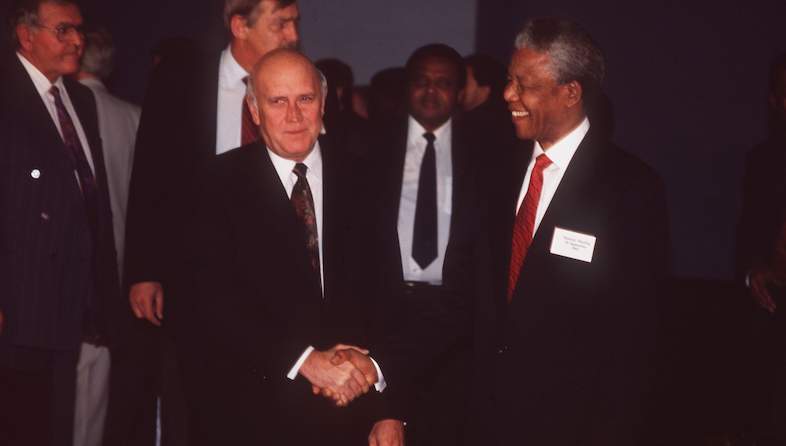
The conference also revealed the deep-seated mistrust that still existed between former enemies and highlighted the enormous complexity of negotiating a democratic transition that would satisfy all parties.
Summary
Key Points to Remember:
- CODESA 1 took place in December 1991 with 400 representatives from 17 political parties
- The conference started badly when De Klerk attacked the ANC in his opening address and demanded they disband Umkhonto We Sizwe (MK)
- Nelson Mandela responded angrily, calling De Klerk's government a minority regime with no understanding of democracy
- Five working groups were established to draught proposals over six months
- By May 1992, negotiations reached deadlock over fundamental disagreements about majority rule vs power-sharing
- The parties had to abandon formal negotiations and continue informal discussions to try to break the impasse