Background and Domestic Events (Grade 12 NSC Matric History): Revision Notes
📚Revision Notes
Background and Domestic Events
Historical background leading to Communist China (1842-1949)
Understanding China's path to communism requires examining the gradual collapse of imperial rule and the rise of competing political forces. The Chinese Empire began weakening significantly after Britain gained control of Hong Kong following their victory over Chinese imperial forces in 1842. This marked the beginning of what Chinese historians call the "Century of Humiliation."
Note
The "Century of Humiliation" refers to the period from 1842 to 1949 when China faced foreign domination, internal conflict, and loss of sovereignty. This historical context is crucial for understanding why Communist ideology appealed to many Chinese people seeking national strength and independence.
The emperor was forced to grant increased trading privileges to Western powers through five treaty ports, which opened China to foreign economic influence. As imperial authority declined, powerful regional leaders called feudal warlords began asserting independence, plunging the country into decades of internal conflict.
The rise of nationalism and republicanism
European powers and Japan took advantage of China's instability to expand their own territories. France established control over Vietnam, Russia occupied northern territories, and Japan colonised Korea while later annexing Taiwan. These foreign interventions sparked a growing sense of Chinese nationalism among educated elites.
Between 1910 and 1912, Chinese nationalists organised uprisings that ultimately led to the declaration of independence from imperial rule. Sun Yat Sen established a provisional republican government in 1912, marking the end of over 2,000 years of imperial rule. However, this new government proved unstable and short-lived.
Civil war and the Communist-Nationalist struggle
China soon descended into civil war, which Russian Communists saw as an opportunity to spread their revolutionary ideology. Initially, the Chinese Communist Party (CCP) formed an alliance with the Nationalist Party (Kuomintang) under Sun Yat Sen's leadership. However, this partnership collapsed dramatically in 1927 when Chiang Kai-Shek replaced Sun Yat Sen and began systematically targeting Communist forces.
Important
The breakdown of the Communist-Nationalist alliance in 1927 was a turning point in Chinese history. Chiang Kai-Shek's decision to target Communist forces forced them to develop new strategies, ultimately leading them to focus on rural peasant support rather than urban workers - a strategy that proved crucial to their eventual victory.
Facing persecution, the Communists made a strategic withdrawal to rural areas, where they focused on winning support from peasants rather than industrial workers. This rural strategy proved crucial to their eventual success. In 1934, Communist forces undertook the famous Long March, during which Mao Zedong emerged as the undisputed leader of the CCP.
The situation became more complex when Japan invaded Manchuria in 1936, attacking Chiang Kai-Shek's armies. After Japan's defeat in 1945, the civil war between Nationalists and Communists intensified. With Soviet support and strong backing from rural populations, Communist forces proved victorious. The Nationalists fled to Taiwan, where they established a democratic, capitalist state, while mainland China became the People's Republic of China in 1949 under Mao Zedong's leadership.

Early Communist policies and the Cultural Revolution
Once in power, the Communist Party implemented sweeping changes across three key areas of Chinese society:
Government transformation
The new regime established an authoritarian system that eliminated political opposition. The Communist Party executed approximately one million warlords and other perceived enemies to consolidate power and eliminate threats to their authority.
Land redistribution
The Communist government allowed most wealthy peasants to retain their land holdings, while redistributing land taken from warlords among landless rural families. This policy helped maintain agricultural productivity while building support among the rural population.
Industrial restructuring
The CCP nationalised heavy industry and foreign-owned firms, bringing them under state control. However, light industry remained privately owned, creating a mixed economic system that encouraged rapid industrial growth in the early years of Communist rule.
Note
The early Communist policies were relatively moderate compared to later campaigns. By allowing wealthy peasants to keep their land and maintaining private ownership of light industry, the CCP initially focused on political consolidation rather than complete economic transformation.
The Great Leap Forwards (1958-1962)
Mao's ambitious vision
Mao Zedong launched the Great Leap Forwards as an ambitious campaign to rapidly transform Chinese society and economy. His goal was to overtake capitalist countries and establish China as one of the world's wealthiest and most powerful nations through massive industrialisation and agricultural modernisation.
Implementation and methods
The Communist Party forced individual farmers into Agricultural Cooperatives or rural communes where land became communally owned. Workers received payment based on their labour contribution rather than land ownership. The plan called for approximately 5,000 households to collaborate in large-scale farming operations while also establishing backyard factories for industrial production.
Initial enthusiasm and propaganda
Local party officials became increasingly corrupt and authoritarian during implementation. However, Chinese people initially supported the Great Leap Forwards with genuine enthusiasm. Government propaganda presented fabricated data showing remarkable success, convincing many that the programme was achieving its ambitious targets.
Important
The role of propaganda and falsified data was crucial in masking the Great Leap Forwards's failures. Local officials, fearing punishment for poor results, reported inflated production figures that created a false impression of success at higher levels of government, preventing corrective action.
Catastrophic consequences and famine
The Great Leap Forwards became a spectacular failure due to multiple interconnected problems:
- Poor planning and inadequate support systems for farmers
- Corruption among local officials who prioritised political survival over honest reporting
- Heavy taxation on agricultural production that reduced incentives for farmers
- Backyard factories that consumed vast quantities of raw materials while producing inferior, unusable goods
- Severe weather conditions and failed harvests in 1961 that compounded existing problems
Important
The Chinese Famine of 1959-1961
These failures resulted in the Chinese Famine of 1959-1961, during which an estimated 20-30 million people died. This represents one of the deadliest famines in human history and demonstrated the devastating consequences of poorly planned economic transformation.
Following this disaster, Mao allowed moderate Communist Party members to return to earlier, more pragmatic economic policies to begin rebuilding the shattered economy.
The Great Proletarian Cultural Revolution (1966-1976)
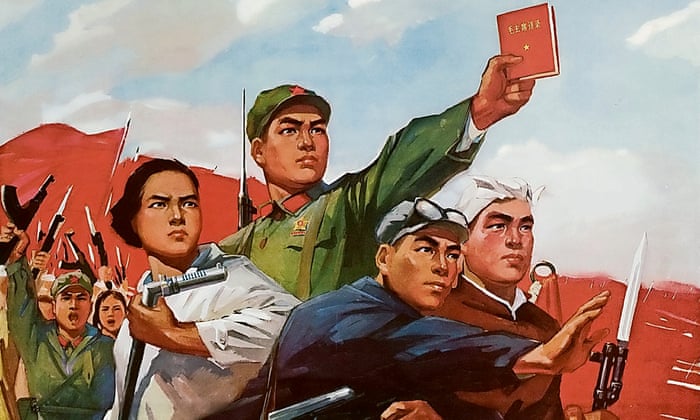
Economic recovery and political tensions
By the mid-1960s, China's economy had begun recovering from the Great Leap Forwards disaster, but class divisions started reappearing in society. Mao became concerned about losing his political authority to more moderate party members who favoured pragmatic economic policies over revolutionary ideology.
Launching the Cultural Revolution
In May 1966, Mao launched a massive cultural renewal movement designed to reassert his authority and eliminate perceived threats to revolutionary purity. He mobilised youth and students to form the Red Guards, paramilitary groups tasked with attacking teachers, intellectuals, and anyone associated with traditional Chinese culture.
Note
The Red Guards were primarily composed of teenagers and young adults who were given unprecedented power to challenge authority figures. This represented a complete inversion of traditional Chinese social hierarchies, where age and education were typically respected.
Methods and targets
The Cultural Revolution employed campaign slogans that attacked "old ideas, traditional culture, customs and habits." Red Guards invaded schools, colleges, factories, and farming communes in violent campaigns designed to eliminate "counter-revolutionary" influences. Mao used these young militants to purge rivals within the Communist Party, resulting in thousands being tortured and killed.
Reign of terror and eventual control
Mao initially used the Red Guards to establish a reign of terror throughout Chinese society. However, by the late 1960s, the culture of violence had spiralled beyond Mao's control, threatening the stability of the entire country. By 1970, Mao was forced to use the regular army to bring the Red Guards back under government authority, effectively ending the most violent phase of the Cultural Revolution.
Important
The Cultural Revolution demonstrates how revolutionary movements can spiral beyond their creators' control. What began as Mao's tool for political purification became a threat to the stability of the entire Chinese state, requiring military intervention to restore order.
Summary
Key Points to Remember:
-
Imperial collapse: China's weakness after 1842 led to foreign intervention and internal conflict, creating conditions for revolutionary change
-
Communist victory factors: Rural focus, peasant support, Soviet backing, and Japanese invasion all contributed to Communist success in 1949
-
Early policies: The new regime combined authoritarian politics with pragmatic economic policies including land redistribution and selective nationalisation
-
Great Leap Forwards disaster: Poor planning and corruption led to massive famine killing 20-30 million people between 1959-1961
-
Cultural Revolution cycle: Mao's attempt to reassert authority through youth mobilisation created uncontrollable violence that ultimately required military intervention to restore order