The Origins of the Cold War (Grade 12 NSC Matric History): Revision Notes
📚Revision Notes
The Origins of the Cold War
What was the Cold War?
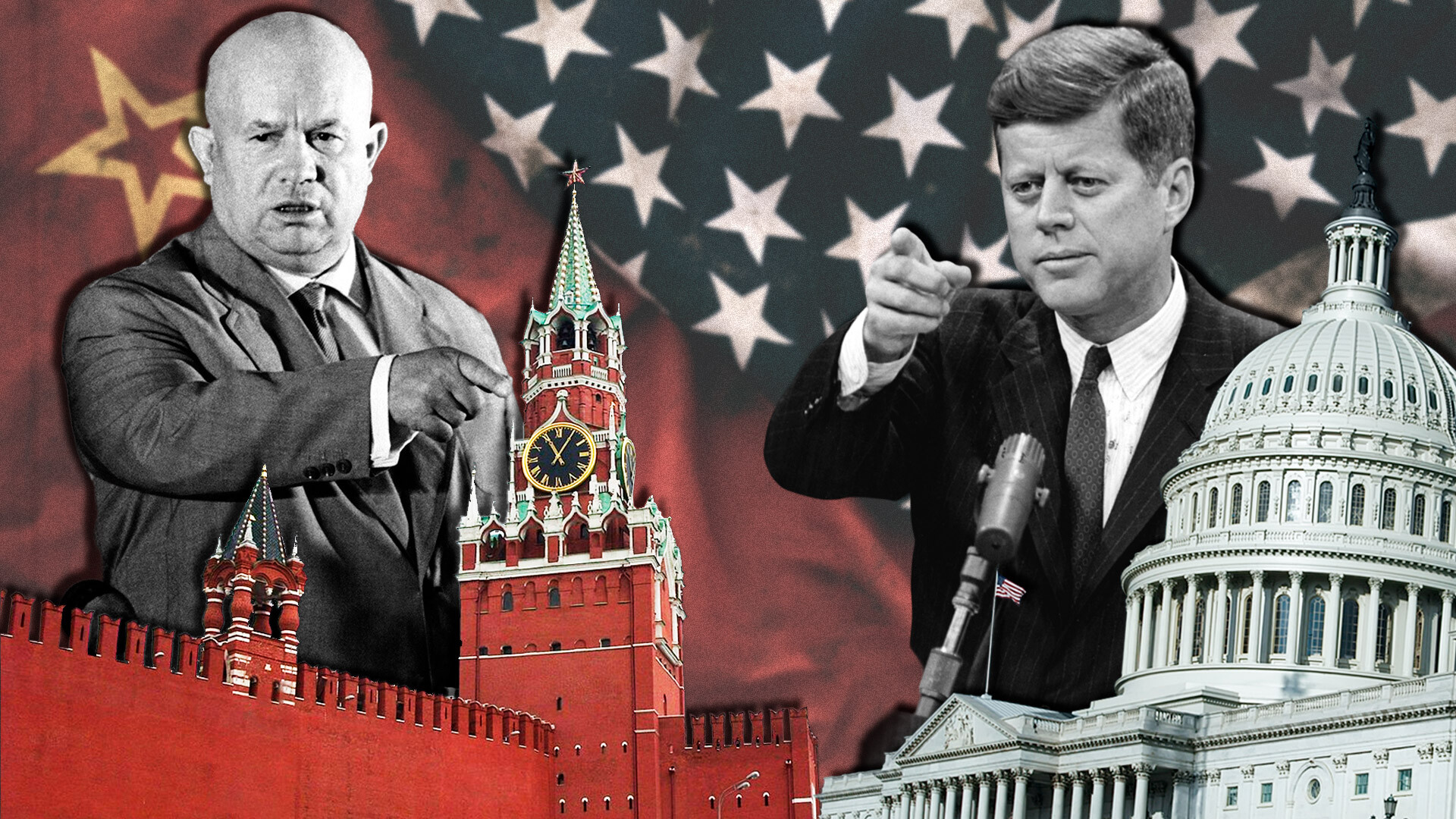
The Cold War was a prolonged period of intense political tension and military rivalry between two superpowers - the United States and the Soviet Union - along with their respective allies. This conflict dominated international relations from 1945 to 1989, though some historians argue it began as early as 1917 with the Russian Revolution.
Note
The term "Cold War" was coined because, unlike traditional "hot" wars, this conflict never escalated to direct military confrontation between the superpowers. Instead, it was characterised by indirect competition and proxy conflicts around the world.
Key characteristics of the Cold War
The Cold War was unique because it was not fought through direct military confrontation between the superpowers. Instead, it was characterised by:
- Ideological conflict: Capitalism versus Communism
- Nuclear arms race: Development of increasingly powerful weapons
- Proxy wars: Supporting opposing sides in conflicts around the world
- Espionage and propaganda: Intelligence gathering and information warfare
- Spheres of influence: Competing for control over different regions globally
The conflict began in Europe but eventually spread to other continents, including Asia, Africa, and Latin America.
Causes of the Cold War
The Cold War emerged from a combination of long-term and immediate causes following World War II:
Immediate post-war tensions
World War II aftermath created significant friction between former allies. As the war ended, Stalin's Red Army occupied much of Eastern Europe, reaching Berlin before Western forces. This military advantage allowed the Soviet Union to establish satellite states - Communist governments under Soviet influence in occupied territories.
The division of Germany proved particularly contentious. The Allies could not reach consensus on Germany's future, resulting in the country being split into four occupation zones. Poland also fell under Soviet control, violating earlier agreements.
Important
The Soviet occupation of Eastern Europe directly contradicted wartime agreements made at Yalta and Potsdam, where Stalin had promised to allow free elections in liberated territories. This broken promise became a major source of Western mistrust.
Ideological rivalry
The fundamental clash between Communism and Capitalism created deep mistrust. The Soviet system promoted state control of the economy and single-party rule, whilst Western democracies championed free markets and democratic governance. This ideological divide made compromise increasingly difficult.
Nuclear weapons and security concerns
The development of nuclear weapons dramatically increased tensions. The arms race that followed led to a situation where both superpowers possessed enough destructive power to devastate each other - and the world. This created a climate of fear and suspicion.
Note
The United States initially held a nuclear monopoly from 1945-1949, but the Soviet Union's successful atomic bomb test in 1949 fundamentally changed the balance of power and intensified the arms race.
Leadership personalities
Personal animosity between leaders worsened relations. Harry Truman took a much harder line against Communism than his predecessor, Roosevelt. Truman viewed Stalin as untrustworthy and was determined not to allow further Communist expansion.
Truman's policy of containment
By 1946, President Truman developed a comprehensive strategy called containment to prevent the spread of Communism. This policy consisted of two main components that would reshape international relations.
The Truman Doctrine (1947)
The crisis in Greece in 1946 provided the first test of this new approach. When Communist forces threatened the Greek government, Truman announced in March 1947 that America would provide military and financial assistance to countries resisting Communist takeover. This marked a significant shift in US foreign policy - from isolationism to active global engagement.
Example
Historical Example: The Truman Doctrine in Action
When Britain announced it could no longer support the Greek government against Communist rebels, Truman stepped in with $400 million in aid. He declared: "I believe that it must be the policy of the United States to support free peoples who are resisting attempted subjugation by armed minorities or by outside pressures."
The Truman Doctrine established the principle that America would support free peoples against totalitarian regimes worldwide.
The Marshall Plan (1947)
In June 1947, Secretary of State George Marshall announced the European Recovery Plan, offering economic aid to help European nations rebuild after the war. The plan served multiple purposes:
- Economic reconstruction: Providing funds for industrial and infrastructure development
- Political stability: Reducing poverty and economic distress that might lead to Communist support
- Strategic containment: Creating prosperous, stable democracies as barriers to Communist expansion
The Soviet Union responded by preventing its satellite states from accepting Marshall Aid and establishing the Communist Information Bureau (COMINFORM) to coordinate Communist parties across Europe.
Note
The Marshall Plan provided over $12 billion in aid (equivalent to about $130 billion today) to 16 Western European countries between 1948 and 1952, proving highly successful in rebuilding European economies and preventing Communist expansion.
The Berlin Crises (1948-1961)
Berlin became the first major flashpoint of the Cold War, leading to a series of confrontations that would define East-West relations for decades.
The Berlin Blockade and Airlift (1948-1949)
The crisis began when the three Western zones of Berlin were united to form West Berlin in 1946. The introduction of currency reform in 1948 to strengthen West Germany's economy particularly angered Stalin, who demanded that the West withdraw from West Berlin and hand over their zones to Soviet control.
When negotiations failed, Stalin blockaded all access routes to West Berlin in June 1948, hoping to force Western withdrawal. The West faced a difficult choice: risk war or abandon West Berlin.
Example
Historical Example: The Berlin Airlift Operation
The Berlin Airlift became one of the most remarkable logistical achievements in history. For eleven months, Western aircraft made over 270,000 flights, delivering 2.3 million tonnes of supplies including food, coal, and medicine to West Berlin's 2.5 million residents.
At its peak, planes landed every 90 seconds around the clock, earning the operation the nickname "Operation Vittles."
The solution came through the Berlin Airlift. For eleven months, Western aircraft continuously supplied West Berlin with essential food, medicine, and fuel. This massive logistical operation demonstrated Western resolve without direct military confrontation.
Stalin finally lifted the blockade in August 1949, but the crisis had lasting consequences. Germany was permanently divided into the German Federal Republic (West Germany) and the German Democratic Republic (East Germany).
The Berlin Wall (1961)
Tensions over Berlin continued into the 1960s. The higher standard of living in West Germany led to mass migration from East Germany, particularly through Berlin. This exodus embarrassed the Communist government and drained valuable human resources.
In August 1961, Walter Ulbricht, leader of East Germany, closed the border between East and West Berlin. East German soldiers erected a wall, complete with guard towers and armed guards, to prevent further defections. The Berlin Wall became the most visible symbol of Cold War division.
Important
The construction of the Berlin Wall happened virtually overnight. On August 13, 1961, East German authorities began erecting barbed wire barriers that would eventually become a concrete wall stretching 96 miles around West Berlin, complete with watchtowers, anti-vehicle trenches, and a "death strip" between the two walls.
Military alliances: NATO and the Warsaw Pact
The Berlin Crisis led to the formation of two competing military blocs that effectively divided Europe into armed camps.
NATO (1949)
The North Atlantic Treaty Organisation was formed in 1949 by twelve countries, including the United States, Britain, France, and Canada. This alliance committed member nations to collective defence - an attack on one would be considered an attack on all.
NATO's purpose was to deter Soviet aggression and provide security guarantees to Western European nations still recovering from the war.
Warsaw Pact (1955)
When West Germany joined NATO in 1955, the Soviet Union responded by forming the Warsaw Pact with its Eastern European satellite states. This military alliance mirrored NATO's structure but served primarily to formalise Soviet control over Eastern Europe.
The creation of these opposing military blocs marked the entrenchment of Europe into two defence systems and intensified the arms race between the superpowers.
Note
The formation of NATO and the Warsaw Pact created a military standoff that would define European security for the next four decades. The two alliances faced each other across the "Iron Curtain" with thousands of nuclear weapons and millions of troops on high alert.
Containment beyond Europe: the Cuban Crisis
The Cold War extended beyond Europe as both superpowers sought to expand their influence in the developing world. Cuba became a major test case for containment in the Western Hemisphere.
Background to the Cuban Crisis
Until 1959, Cuba was closely tied to the United States through economic relationships, particularly sugar imports. American businesses and farmers had significant investments on the island, whilst the US government largely ignored the brutal dictatorship of Fulgencio Batista.
This relationship changed dramatically when Fidel Castro led a revolution that overthrew Batista's regime in 1959. Castro initially sought American support, announcing plans to nationalise land and requesting loans from the USA.
However, when the United States refused to provide financial assistance and threatened to cut sugar imports, Cuba turned to the Soviet Union. A trade agreement with Russia and the nationalisation of American-owned companies led the US to view Cuba as a potential Soviet satellite state.
The Bay of Pigs invasion (1961)
The Central Intelligence Agency (CIA) attempted to overthrow Castro by supporting a group of Cuban exiles in planning a counter-revolution. This invasion at the Bay of Pigs proved to be a complete disaster and a significant embarrassment for President Kennedy's administration.
The failed invasion pushed Castro firmly into the Soviet camp. He declared himself a Marxist and requested weapons from the USSR to defend against future American attacks.
Important
The Bay of Pigs invasion was a catastrophic failure that strengthened Castro's position and pushed Cuba directly into Soviet arms. The poorly planned operation not only failed to remove Castro but also provided him with justification for requesting Soviet military protection.
The Cuban Missile Crisis (1962)
The crisis reached its climax in October 1962 when an American spy plane detected nuclear missile bases being constructed in Cuba. This discovery triggered what many consider the most dangerous moment of the Cold War.
Example
Historical Example: Thirteen Days That Shook the World
Key events of the crisis:
- 14 October 1962: American reconnaissance aircraft photographed Soviet missile sites
- 22 October: Kennedy announced a naval blockade of Cuba, placing the island under quarantine
- Crisis escalation: The world waited anxiously as the two superpowers seemed to approach nuclear war
- Diplomatic resolution: Letters were exchanged between Kennedy and Soviet Premier Nikita Khrushchev
The crisis demonstrated the concept of brinkmanship - pushing dangerous situations to the edge of disaster to gain advantage. Both leaders used posturing and threats to discredit their opponent whilst privately seeking a peaceful solution.
Resolution and consequences
Khrushchev agreed to dismantle Soviet nuclear missile bases in Cuba in exchange for American assurance not to invade the island and the secret removal of US missiles from Turkey. The crisis was resolved through diplomatic negotiation rather than military action.
Note
The Cuban Missile Crisis brought the world closer to nuclear war than ever before. At one point, a Soviet submarine commander nearly launched a nuclear torpedo, but was stopped by the requirement for unanimous agreement from three officers aboard the submarine.
Long-term consequences included:
- Establishment of a hotline between Moscow and Washington for direct communication during crises
- Nuclear Test Ban Treaty (August 1963) ending atmospheric nuclear testing
- Nuclear Non-Proliferation Treaty (1968) aimed at preventing the spread of nuclear weapons to additional countries
The Cuban Crisis marked a turning point in the Cold War, as both superpowers recognised the devastating potential of nuclear conflict and began seeking ways to manage their rivalry more safely.
Summary
Key Points to Remember:
-
The Cold War (1945-1989) was a state of political tension and military rivalry between the USA and USSR, fought through proxy wars, espionage, and propaganda rather than direct conflict
-
Multiple causes contributed to Cold War origins, including post-WWII disagreements over Eastern Europe, ideological differences between Capitalism and Communism, nuclear weapons development, and personal rivalry between leaders
-
Truman's containment policy consisted of the Truman Doctrine (military/financial aid to resist Communism) and the Marshall Plan (economic reconstruction of Europe) to prevent Communist expansion
-
The Berlin Crisis (1948-1961) led to Germany's permanent division, the Berlin Airlift, construction of the Berlin Wall, and formation of NATO versus the Warsaw Pact military alliances
-
The Cuban Missile Crisis (1962) demonstrated Cold War expansion beyond Europe and the dangerous practice of brinkmanship, ultimately leading to improved crisis management mechanisms and nuclear arms control treaties