The Role of the Media in a Democratic Society (Grade 12 NSC Matric Life Orientation): Revision Notes
📚Revision Notes
Critical Analysis of the Media
Understanding the need for critical media analysis
In today's world, we are constantly exposed to different forms of media - newspapers, television, radio, and internet sources. As informed citizens in a democratic society like South Africa, it's essential that we develop the skills to critically examine and evaluate the media we consume. This means looking beyond the surface of news stories and asking important questions about how information is presented to us.
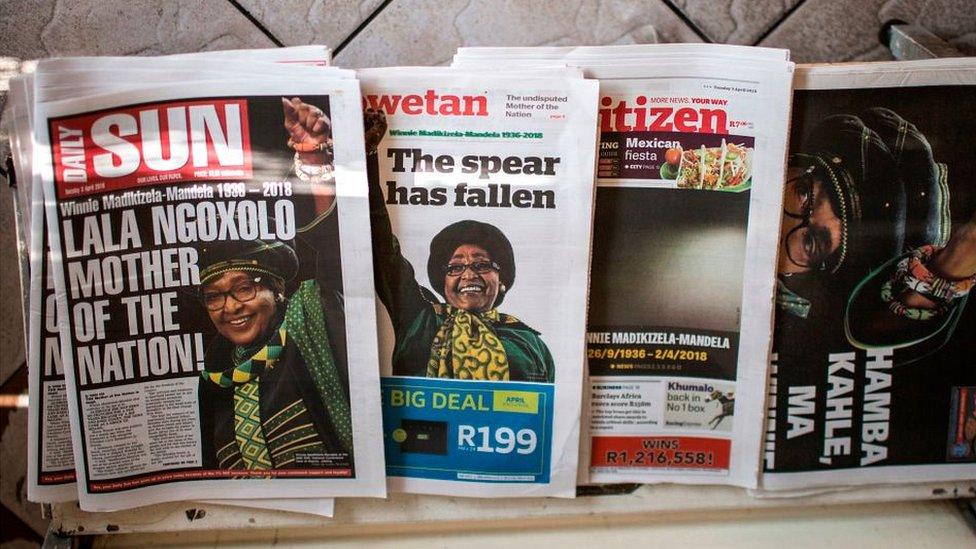
Critical media analysis involves examining whether media sources provide balanced and fair reporting. When we analyse media content, we need to pay attention to several key factors: the selection of content, the sources used, the types of stories covered, the level of commercial content, and whether sensationalism or shocking details are used to create excitement or interest rather than inform.
Note
The ability to critically analyse media is not just an academic skill - it's an essential life skill that helps you make informed decisions as a citizen and protects you from misinformation and manipulation.
The South African Press Code
The South African press operates under a set of ethical guidelines known as the Press Code. This code recognises that the press exists to serve society and enable citizens to make informed judgements on current issues. The Press Code establishes standards that journalists should follow to maintain credibility and public trust.
Important
The South African Press Code: 13 Key Principles
The Press Code includes several important principles that guide ethical journalism in South Africa:
Truthful reporting: News must be reported accurately and fairly, presented in context and in a balanced manner without changing the facts.
Honest news gathering: Information should be obtained legally, honestly and fairly unless the public interest requires otherwise.
Independence from conflicts: Commercial, political, personal or other non-professional considerations should not influence reporting. Conflicts of interest must be avoided.
Protecting privacy: Exceptional care must be taken regarding individuals' private lives, and privacy rights may only be overruled by valid public interest.
Maintaining dignity: Similar exceptional care must be exercised regarding matters involving dignity and reputation, with privacy rights only overridden by valid public interest.
Avoiding discrimination: The press should avoid discriminatory references to people's race, colour, ethnicity, religion, gender, sexual orientation, physical or mental disability, age, or other characteristics unless strictly relevant to the story.
Responsible advocacy: Publications may advocate strongly for their views on controversial topics, but must treat readers fairly by clearly distinguishing between fact and opinion.
Fair comment: The press may comment on or criticise actions or events of public interest, but such comments must be made fairly and honestly.
Protecting children: Children who have been victims of abuse or exploitation, or who have been charged with crimes, should not be identified.
Careful violence reporting: Due care must be taken when presenting brutality, violence and atrocities.
Accurate headlines and images: Headlines and captions should give a reasonable reflexion of content, and pictures should not misrepresent or mislead.
Protecting sources: The press has an obligation to protect confidential sources of information.
Avoiding paid journalism: The press should avoid situations where informants are paid for information.
Questions for critical analysis
To effectively analyse any piece of media content, whether it's a news article, television programme, or online post, developing a systematic approach is crucial. The following framework provides 14 critical questions that will help you evaluate media content comprehensively.
Note
Framework for Critical Media Analysis
When examining any media content, ask yourself these essential questions:
Attention-grabbing methods: What techniques does the media use to attract your attention? Do they use big headlines, catchy phrases, shocking pictures, sensational photos, or bright colours?
Evidence versus opinion: Is there evidence to show that the information presented is factual, or is it opinion? How can you tell if the information is true?
Balanced reporting: Have both sides of the story been told? Have all people involved been given a chance to comment or state their case?
Viewpoint and voice: Is it clear from which viewpoint the news item is given? Who is speaking or writing, and what might their perspective be?
Bias and discrimination: Is there any bias present? Can you see evidence of stereotyping or discrimination?
Purpose clarity: Is the purpose of the message clear? Are you able to identify why this story is being told?
Values and messages: Are there particular values or points of view being promoted by this message?
Hidden agendas: Is there a hidden agenda or hidden message that you can identify?
Alternative interpretations: Could other people interpret this message differently from how you understand it?
Missing information: Was anything left out from the story? What information might not have been included?
Financial interests: Does anyone make money or benefit from this information? If so, who and how?
Comparison with other sources: Do other media sources have anything to say about this issue? What do they say?
Media ownership: Are other media outlets connected to or owned by the same company?
Source verification: If it's a website, who posted the information? When was it posted? Do other sources of information agree?
Understanding media campaigns
Media campaigns are organised movements, drives or crusades that push, fight or advocate for particular issues or causes. These campaigns can serve different purposes and have varying levels of benefit to society.
Some campaigns are incredibly useful and contribute positively to democratic society. For example, the Equal Education campaign advocates for libraries in all schools, helping to improve educational opportunities for learners across South Africa. Another positive example is the Right2Know campaign, which fights for freedom of media and transparency in government.
Example
Campaign Case Study: Mandela Day
The Mandela Day campaign provides an excellent example of a beneficial media campaign. The campaign uses the slogan "Take action. Inspire change. Make every day a Mandela Day" and encourages people to make a difference by working for positive change.
Key Elements:
- The campaign asks people to give just 67 minutes of their time on Mandela Day (18 July) to help others
- The number 67 symbolises the 67 years that former President Nelson Mandela dedicated to fighting for human rights
- Clear, actionable message that connects personal action to broader social change
- Positive focus on community service and social responsibility
However, not all campaigns are helpful to society. Some media campaigns can be harmful, particularly when they are used to humiliate politicians or celebrities for personal reasons rather than addressing legitimate public concerns.
The Right2Know Campaign serves as an important case study in media advocacy. This campaign aims to ensure that everyone living in South Africa is free to access and share information. The campaign recognises that this vision requires a strong, critical, well-funded media sector that operates independently from government and corporate control.
Despite cost-cutting in newsrooms that has reduced the number of journalists, critical investigative journalism continues to be important in South Africa. The Right2Know campaign has mobilised against proposed laws such as the Secrecy Bill, which could limit press freedom. In a country facing high levels of poverty, unemployment and inequality, the campaign argues that appropriate actions may be necessary to oppose market forces that reduce media diversity. The goal is to have more media voices and perspectives, not fewer.
Sports coverage and representation
Media coverage of sport, sports personalities and recreational activities varies significantly across different types of sports and different groups of people. Understanding these patterns helps us recognise important biases in how media represents different sports and athletes.
In South Africa, the media tends to focus heavily on what are often called the "big five" sports: men's soccer, rugby, cricket, golf and motor racing. These sports receive extensive coverage and prominent placement in sports sections. However, many other sports that are equally important or popular receive much less attention. Sports such as netball, women's soccer, hockey, canoeing, table tennis, indigenous games and orienteering are often under-reported or given minimal coverage.
Important
Gender Imbalance in Sports Coverage
There is a significant gender imbalance in sports coverage that affects how we perceive different sports and athletes:
- Male athletes and men's sports consistently receive more media attention than female athletes and women's sports
- This pattern holds true even when women's teams perform better than their male counterparts
- Women's matches are often scheduled for late-night television slots when fewer people are watching
- Men's matches are typically shown during prime viewing time (6-9 p.m.)
Example: While Bafana Bafana (men's national soccer team) receives extensive coverage, Banyana Banyana (women's national team) receives much less media attention, despite often performing better in international competitions and reaching major tournaments like the Olympics.
Media representation of athletes
The way media represents male and female athletes often differs significantly. Women athletes are frequently described in terms of their appearance or attractiveness rather than their sporting abilities and achievements. Male athletes, in contrast, are typically described in terms of their performance, skills and sporting accomplishments.
Media coverage also varies based on the fame and celebrity status of athletes. Some sports personalities attract more media attention than others, and when there is gossip or scandal involved, media coverage tends to increase dramatically. For example, when famous athletes like Tiger Woods face personal problems, the media provides extensive coverage that often focuses more on the scandal than on sporting achievements.
The more famous a sports star becomes, the more media exposure they tend to receive, regardless of their current sporting performance. This can create a cycle where certain athletes dominate media coverage while equally talented but less famous athletes receive minimal attention.
Analysing sports coverage
When examining sports coverage in newspapers or television programmes, several patterns become evident. Different publications may report the same sporting event in completely different ways, depending on their editorial position, target audience, and particular perspective.
For instance, when a team loses an important match, some newspapers might focus on the disappointment and criticism of the team's performance, while others might emphasise the positive aspects of the game or the strength of the opposition. These different approaches to reporting the same event demonstrate how media outlets can present information from various angles, even when dealing with the same basic facts.
Headlines play a particularly important role in shaping reader perceptions of sports stories. Sometimes headlines can be misleading or exaggerated, designed more to sell newspapers than to provide accurate information. Learning to evaluate headlines critically is an important skill for media literacy.
Note
When critically analysing sports coverage, consider these key questions:
- Which sports receive the most coverage and why?
- Which athletes are featured most prominently?
- How are different genders and groups represented?
- What messages do these coverage patterns send about the value of different sports and athletes?
Making media coverage more inclusive
Understanding the biases and limitations in current media coverage helps us think about how sports reporting could be improved to be more fair and inclusive. Media outlets could work to provide more balanced coverage between men's and women's sports, give equal attention to a wider variety of sports, and ensure that athletes from all backgrounds receive fair representation.
Coverage could also be improved by focusing more on sporting achievements and less on personal scandals or appearance-based commentary. This would help create a media environment that celebrates athletic excellence and encourages participation in sport across all sectors of society.
Summary
Key Points to Remember:
- Critical analysis is essential - Always question what you read, watch or hear in the media rather than accepting it without examination
- The Press Code provides guidelines - South African journalism operates under 13 ethical principles designed to ensure fair, accurate and responsible reporting
- Ask the right questions - Use the framework of 14 critical questions to evaluate any media content for bias, accuracy, balance and hidden agendas
- Campaigns can be positive or negative - Media campaigns like Right2Know and Mandela Day can promote important social causes, but some campaigns may be harmful or misleading
- Sports coverage shows clear biases - Gender inequality and focus on "big five" sports reveals how media representation can be unfair and incomplete, affecting public perceptions of different sports and athletes