Role of the Media and Freedom of Expression (Grade 12 NSC Matric Life Orientation): Revision Notes
📚Revision Notes
Role of the Media and Freedom of Expression
Introduction
In a democratic society, media plays a crucial role in keeping citizens informed and ensuring transparency. Understanding the relationship between media and freedom of expression is essential for active citizenship in South Africa's democracy.
Types of media
Electronic media
Electronic media refers to any media that requires electricity or batteries to function. This includes:
- Internet and email platforms
- Websites and blogs
- Social media platforms (Facebook, Twitter)
- Radio and television
- Films and DVDs
Print media
Print media consists of traditional written and printed materials such as:
- Books and newspapers
- Magazines and pamphlets
- Brochures and posters
- Billboards

Note
The digital age has transformed how information spreads globally, connecting people across continents instantly. While electronic media offers immediate global reach, print media continues to serve important functions in many communities, especially where internet access is limited.
Role of media in a democratic society
Media serves several vital functions in maintaining a healthy democracy. The primary purpose is to communicate, inform and educate citizens about important matters affecting their lives.
Key roles of media include:
- Exposing violations of human rights - bringing attention to injustices and abuse
- Reporting on unlawful activities - covering court cases and legal proceedings
- Exposing corruption and mismanagement - holding leaders accountable
- Communicating, informing and educating the public on various issues
- Entertaining audiences through various programmes
- Providing political information to help voters make informed decisions
- Identifying problems in communities and the country
- Promoting debate and discussion on important topics
- Promoting nation-building by sharing diverse viewpoints and covering sports
- Giving publicity to inspiring people and success stories
- Shaping public opinion through coverage and analysis
Important
These roles make media a cornerstone of democratic society. When media fulfils these functions effectively, it strengthens democracy by creating informed citizens who can participate meaningfully in democratic processes.
Media responsibilities and standards
For media to serve democracy effectively, they must uphold certain professional standards and responsibilities.
Media should:
- Explain events clearly - providing sufficient information and context
- Report issues responsibly - avoiding sensationalism or shock tactics
- Avoid focusing solely on scandals - not using false headlines just to increase sales or viewership
- Promote fair elections - giving equal coverage to political parties
- Distinguish between facts and opinions - clearly separating news reporting from analysis
- Lead important debates - addressing challenges facing democracy and society
- Train reporters properly - ensuring journalists verify sources before publishing
- Publish corrections promptly - acknowledging and fixing mistakes in the same prominent way as the original error
Example
Example: Responsible Election Coverage
During elections, responsible media should:
- Give equal time and space to all major political parties
- Fact-check campaign promises and statements
- Focus on policies rather than personal scandals
- Provide voter education about the electoral process
- Report results accurately without premature predictions
When media fails their role
Unfortunately, media doesn't always fulfil its democratic responsibilities. Several factors can compromise media's effectiveness.
Examples of media failures:
- Commercial interests over public interest - prioritising advertisers' needs rather than serving the public
- Entertainment over information - focusing on gossip, scandals and sensational stories rather than facts
- Political bias - concentrating on politicians' personal lives instead of their work and policies
- Privacy invasion - harassing celebrities and public figures like paparazzi
- Exaggerating dangers - creating unnecessary fear without proper context
- Biassed reporting - presenting incomplete or incorrect interpretations of events
- Selective information - deciding what information to share and what to withhold, which may be as important as what is reported
Important
Common Pitfalls to Avoid:
When media fails in their democratic role, it can lead to:
- Misinformed citizens making poor voting decisions
- Corruption going undetected and unreported
- Social divisions being deepened rather than healed
- Public trust in democratic institutions being undermined
Freedom of expression
Freedom of expression means having the right to express your ideas and opinions freely through speech, writing, and other forms of communication. This fundamental right applies to everyone in a democratic society, including individuals and media organisations.
Historical context
South Africa's experience with media freedom provides important perspective. During apartheid, there was severe censorship and no media freedom. The media were banned from reporting on certain issues and events, particularly regarding the government's oppressive actions. Many media workers who tried to speak out were gaoled, tortured or banished from the country.
Note
Comparing this to undemocratic countries today, like North Korea, helps us appreciate the freedom we now enjoy. In such countries, media are heavily censored, internet access is limited, and citizens remain uninformed about both domestic and international events.
Constitutional freedom of expression
South Africa's Constitution guarantees freedom of expression as a fundamental right. Section 16 of the Constitution (Act 108 of 1996) states that everyone has the right to freedom of expression, which includes:
- Freedom of the press and other media
- Freedom to receive or share information or ideas
- Freedom of artistic creativity
- Academic freedom and freedom of scientific research
Constitutional limitations on freedom of expression
While freedom of expression is protected, it has necessary boundaries to protect others' rights and maintain social harmony.
Section 16 limitations
The Constitution specifies that freedom of expression does not include:
- Propaganda for war - promoting military conflict
- Incitement of imminent violence - encouraging immediate violent actions
- Advocacy of hatred based on race, ethnicity, gender or religion
- Incitement to cause harm - encouraging actions that would hurt others
Practical implications
These limitations mean you have freedom of speech, but cannot use hate speech. You cannot use racist language, discriminate against anyone, or encourage people to participate in violent acts or harm others. Media organisations must also follow these rules and cannot publish content that falls into these prohibited categories.
Important
Critical Balance:
These limitations exist to protect the rights and dignity of others. They ensure that one person's freedom of expression doesn't become another person's oppression. This balance is essential for maintaining a peaceful, diverse democracy.
Protection of State Information Bill
This controversial legislation, also known as the "Secrecy Bill," proposes long jail sentences for journalists or whistleblowers who make state secrets public. The exact definition of "state secrets" remains unclear, creating concerns about potential abuse.
Purpose of state secrets
State secrets typically include information that the public and other countries don't need to know, used to protect national security. For example, South Africa's military agreements with Mozambique regarding anti-piracy operations, or details about army size and weapons, are legitimate state secrets.
Concerns about the bill
Critics worry this legislation could be misused to protect corrupt officials rather than genuine national security interests. The main concern is that it may harm investigative journalists by preventing them from exposing corruption and holding government accountable, potentially silencing important public interest reporting.
Note
The debate around this bill highlights the ongoing tension between national security needs and the public's right to know. Finding the right balance requires careful consideration of both transparency and legitimate security concerns.
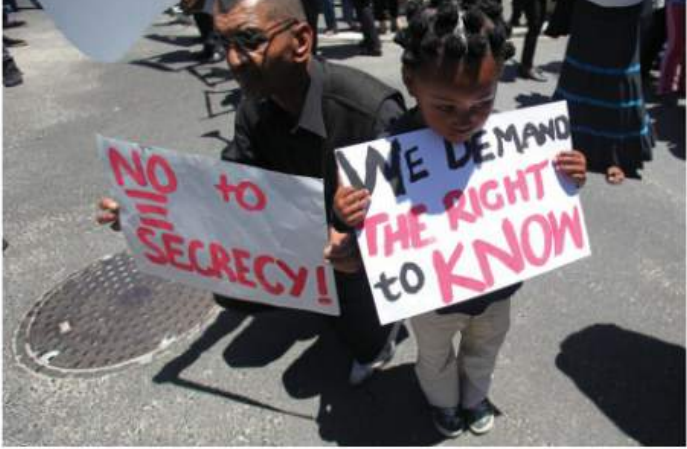
Citizens have protested against this bill, demanding transparency and the right to access information that affects their lives.
Example
Example: Legitimate vs Problematic Secrecy
Legitimate state secrets:
- Military operation details that could endanger soldiers
- Intelligence sources and methods
- Diplomatic negotiations in progress
Problematic secrecy (what critics fear):
- Covering up government corruption
- Hiding wasteful spending of public money
- Concealing human rights violations
Summary
Key Points to Remember:
- Media serves democracy by informing, educating, and holding leaders accountable
- Electronic and print media have different characteristics but share similar democratic responsibilities
- Freedom of expression is a constitutional right that comes with important limitations to protect others
- Media can fail when commercial interests override public interest or when bias affects reporting
- Constitutional protections guarantee media freedom while preventing hate speech and incitement to violence
- The balance between transparency and security remains an ongoing challenge in democratic societies