Exponents (Grade 12 NSC Matric Mathematics): Revision Notes
📚Revision Notes
Exponents
Definition of exponents
Exponents are a mathematical way to show repeated multiplication. When we write an exponential expression, we use specific terminology to describe each part.
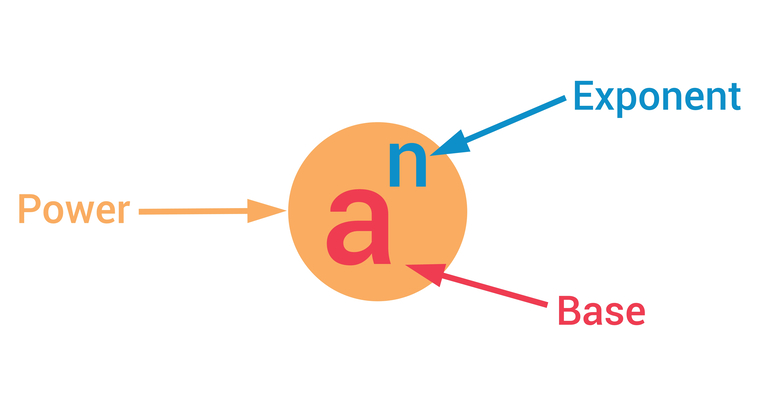
In exponential notation:
- The base is the number that gets multiplied repeatedly
- The exponent (or power) is the small raised number that tells us how many times to multiply the base by itself
- The power refers to the entire expression
The general form of an exponential expression is:
Example
Worked Example: Basic Exponent Calculation
This means we multiply 3 by itself 4 times to get 81.
Laws of exponents
Understanding the laws of exponents helps us work with exponential expressions efficiently. These rules apply when we combine, divide, or raise powers to other powers.
Note
All exponent laws require the same base to work properly. When bases are different, these rules don't apply directly.
Multiplication law
When multiplying powers that have the same base, we add the exponents together.
Formula:
Example
Worked Example: Multiplication Law
This works because we're essentially counting the total number of times the base is multiplied by itself.
Division law
When dividing powers with the same base, we subtract the exponents.
Formula: , where
Example
Worked Example: Division Law
Remember that the base cannot equal zero since division by zero is undefined.
Power of a power law
When raising a power to another power, we multiply the exponents together.
Formula:
Example
Worked Example: Power of a Power
This rule shows us that repeated application of powers requires multiplication of the exponents.
Power of a product law
When raising a product to a power, we apply the exponent to each factor separately.
Formula:
Example
Worked Example: Power of a Product
This rule allows us to distribute exponents across multiplication within brackets.
Special exponent rules
Zero exponent rule
Any base (except zero) raised to the power of zero equals one.
Formula: , where
Note
This rule may seem surprising, but it follows logically from the division law of exponents. For example:
Negative exponents
A negative exponent indicates the reciprocal of the base raised to the positive version of that exponent.
Formula: , where
Example
Worked Example: Negative Exponents
Negative exponents don't make the result negative - they create a fraction instead.
Fractional exponents
Fractional exponents represent roots of the base number.
Formula:
Example
Worked Example: Fractional Exponents
Fractional exponents provide an alternative way to express roots using exponential notation.
Working with exponents in algebraic expressions
Simplifying expressions
When simplifying exponential expressions, apply the laws of exponents systematically.
Example
Worked Example: Simplifying Complex Expressions
Work through each step carefully, applying one law at a time.
Prime factorisation and exponents
Prime factorisation can help simplify complex exponential expressions by breaking numbers into their prime factors.
Example
Worked Example: Prime Factorisation
This representation makes it easier to work with exponential expressions involving 72.
Converting between forms
You can convert between exponential and radical notation to choose the most convenient form for calculation.
Example
Worked Example: Converting Forms
Sometimes converting to radical form makes the calculation clearer.
Common mistakes to avoid
Important
Critical Mistakes to Avoid:
Mistake:
Correction: , unless . You cannot distribute exponents over addition.
Mistake:
Correction: Only multiplication allows adding exponents. Addition of like terms with exponents requires factoring.
Mistake:
Correction: . Negative exponents create reciprocals, not negative values.
Exam tips
Summary
Key Strategies for Exam Success:
- Apply exponent rules systematically during simplification problems
- Convert negative exponents to positive form early in your working to avoid calculation errors
- Check your work by substituting simple values to verify your answers
- Avoid common mistakes such as incorrectly distributing exponents over addition
- Practice regularly with exponential expressions to build speed and accuracy for exam conditions
Remember that exponent rules are tools that make complex calculations manageable. Master these fundamentals and you'll handle exponential expressions with confidence.
Summary
Key Points to Remember:
- Exponent notation consists of a base (the repeated number) and an exponent (showing how many times to multiply)
- Same base multiplication and division involve adding or subtracting exponents respectively
- Zero exponents always equal 1 (except when the base is zero)
- Negative exponents represent reciprocals, not negative numbers
- Fractional exponents are another way to write roots and can often simplify calculations