The Scientific Method (Grade 12 NSC Matric Physical Sciences): Revision Notes
📚Revision Notes
The Scientific Method
What is the scientific method?
The scientific method is a systematic approach used by scientists to investigate questions about the natural world. It provides a structured framework that helps researchers gather reliable evidence and draw valid conclusions from their observations.
Physical sciences like physics and chemistry rely heavily on experimentation and testing to build our understanding of the world around us. The scientific method ensures that this understanding is based on solid evidence rather than guesswork or opinion.
Note
The key strength of the scientific method lies in its requirement for constant re-examination of ideas. When new evidence emerges from better equipment or different experiments, scientists must be willing to update or even completely change their theories to fit the new information.

Development of scientific theories
A scientific theory represents a well-established explanation that has been repeatedly tested and supported by experimental evidence. This differs significantly from the everyday use of the word "theory" - in science, theories are not mere guesses but robust explanations backed by extensive data.
Important
Scientific Theory vs. Everyday "Theory"
In everyday language, we might say "I have a theory about why the traffic is bad." But in science, a theory is much more than a guess - it's a comprehensive explanation that has been repeatedly tested and supported by evidence from many different experiments and observations.
Scientific theories evolve over time through continuous testing and refinement. When new information emerges that conflicts with existing theories, scientists must adapt their understanding. The data should never be forced to fit a theory; instead, theories must be modified to accommodate new evidence.
For example, our understanding of gravity developed over centuries. Early observations led to hypotheses, which were then tested through experiments. As more precise measurements became possible, theories were refined to better explain the observed phenomena.
Steps in the scientific method
The scientific method follows a logical sequence of steps that guides researchers from initial curiosity to final conclusions:
- Ask a question about the world around you
- Conduct background research on your topic through literature review
- Make a hypothesis - a testable prediction about what you expect to find
- Design an experiment using repeatable methods and logical approaches
- Collect data accurately and interpret results objectively
- Analyse and present data using appropriate formats like tables, graphs, and written explanations
- Draw conclusions from your experimental results
- Verify results by repeating experiments or having others replicate your work
- Revise understanding by conducting additional research if needed
Note
The process includes feedback loops - if your data doesn't support your hypothesis, you don't simply reject everything. Instead, you gain new insights that can lead to revised hypotheses and further investigation. This is what makes science self-correcting and reliable.
Types of variables
When designing experiments, scientists must identify and control three types of variables:
Independent variable - This is the factor that you deliberately change or manipulate during your experiment. It represents what you're testing to see its effect.
Dependent variable - This is what you measure or observe in response to changes in the independent variable. It "depends" on the independent variable.
Controlled variables - These are all the factors that must be kept constant throughout your experiment to ensure fair testing.
Example
Worked Example: Identifying Variables
Research Question: "How does the amount of sunlight affect plant growth?"
- Independent variable: Amount of sunlight (what we change - some plants get full sun, others partial shade, others no direct sunlight)
- Dependent variable: Plant growth (what we measure - height, number of leaves, etc.)
- Controlled variables: Type of plant, amount of water, soil type, temperature, pot size (what we keep the same)
Understanding these variables is crucial for designing valid experiments that produce reliable results.
Hypothesis formation
A hypothesis must be specific and directly related to the question you're investigating. It should make a clear, testable prediction about the relationship between variables.
For example, if investigating why rainbows form, a good hypothesis might be: "Rainbows form because of light shining through water droplets." This is specific, testable, and directly addresses the question.
Important
Common Hypothesis Mistakes to Avoid
- Making vague predictions like "Something will happen"
- Creating hypotheses that can't be tested experimentally
- Writing hypotheses that don't relate to your research question
- Confusing a hypothesis with a question or objective
After formulating a hypothesis, it must be tested through experimentation. Remember that an incorrect prediction doesn't mean failure - it provides new information that advances scientific understanding.
Scientific measurements and instruments
Accurate measurement forms the foundation of good experimental data. Scientists use various instruments to measure different quantities:
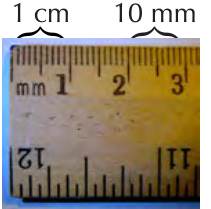
Length measurement: Rulers and measuring tapes provide precise length measurements. Most rulers have two sets of markings - use the metric system markings for scientific work.
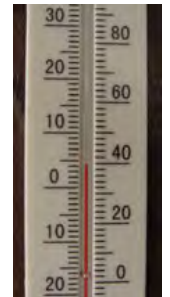
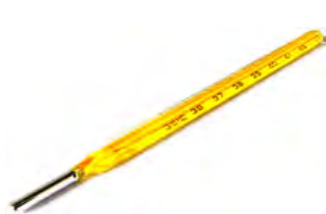
Temperature measurement: Thermometers can display readings in different scales. For scientific work, use the Celsius scale and read at eye level to avoid parallax errors.
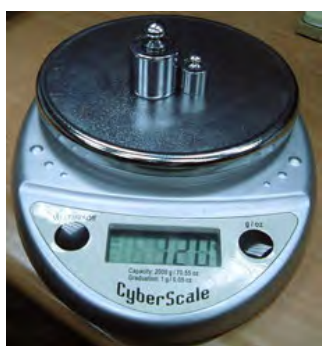
Mass measurement: Digital scales provide accurate mass measurements. Always zero the balance before use and check that you're using appropriate units for your required precision.
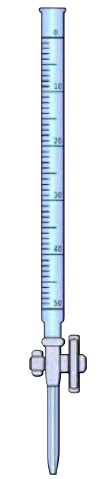
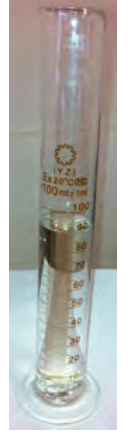
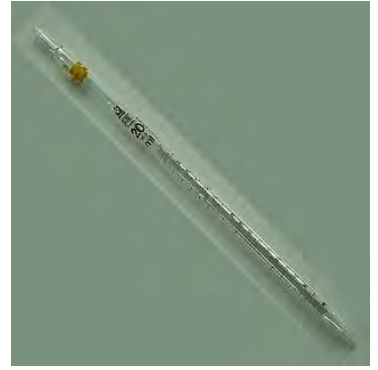
Volume measurement: Several instruments measure liquid volumes with different levels of precision.
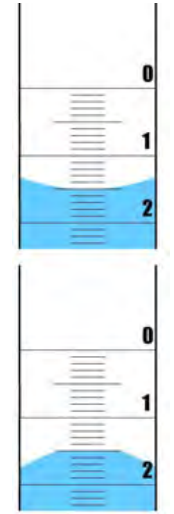
Reading measuring instruments
Proper technique when reading instruments ensures accurate data collection:
For graduated cylinders and burettes: Read the measurement at the bottom of the meniscus (the curved surface of the liquid). The meniscus forms due to surface tension between the liquid and container walls.
For pipettes: Use the markings to measure precise volumes. Volumetric pipettes have a single mark for one specific volume, while graduated pipettes have multiple markings.

Note
Different liquids may behave differently due to varying intermolecular forces, which affects their boiling points and evaporation rates. This is why it's important to use the same type of liquid when comparing measurements.
Summary
Key Points to Remember:
- The scientific method provides a systematic framework for investigating questions and building reliable knowledge about the natural world
- Scientific theories are well-tested explanations supported by extensive evidence, not mere guesses or opinions
- Experiments must carefully control variables - identify what you're changing (independent), what you're measuring (dependent), and what stays constant (controlled)
- A good hypothesis makes a specific, testable prediction that directly relates to your research question
- Accurate measurements using proper instrument-reading techniques are essential for collecting reliable experimental data