Behavioural Adaptations (HSC SSCE Biology): Revision Notes
📚Revision Notes
Behavioural Adaptations
What are behavioural adaptations?
Behavioural adaptations are actions that organisms perform in response to a stimulus that help them survive in their environment. These adaptations are different from structural or physiological changes - they involve the way organisms act or behave.
For example:
- Puffer fish pump air into their stomachs and inflate to twice their normal size to scare away predators
- Antarctic penguins huddle together during winter to survive freezing winds, constantly rotating positions so each penguin spends less time exposed to the cold
Behavioural adaptations in plants
Whilst plants do not move around like animals, they do exhibit behaviours. These behaviours are more subtle but serve important survival functions.
Turgor pressure and plant movement
Plant movements often rely on changes in turgor pressure. This is the pressure inside plant cells that keeps vacuoles full and pushes against the cell wall, maintaining the plant's structure.
Some plants can rapidly change their turgor pressure in response to stimuli, causing dramatic movements.
Mimosa pudica (touch-me-not or shy plant)
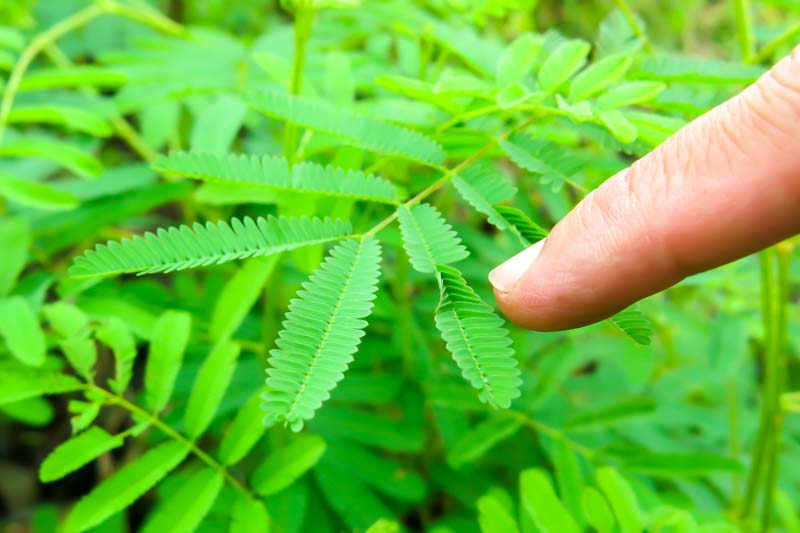
Mimosa pudica is a houseplant originally from tropical America that responds to touch. When a leaf is touched - for example by a predator or insect - it quickly folds inwards. This defensive behaviour protects the plant from potential harm.
Note
How it works: When touched, water rapidly flows out of the vacuoles in the leaf cells. This causes a loss of turgor pressure and the cells collapse, making the leaves fold inward. This is actually a physiological change that leads to a behavioural response.
Venus flytrap
The Venus flytrap lives in nitrogen-poor soils and has adapted to supplement its diet by catching insects. When a small insect lands on the trap and touches delicate sensory hairs, part of the plant snaps shut rapidly. The trapped insect is then digested by enzymes secreted by the plant, and nutrients (especially nitrogen from proteins) are absorbed.
Note
Like Mimosa pudica, this behaviour results from rapid changes in turgor pressure within the plant cells.
Behavioural adaptations in animals
Animals display a much wider range of behavioural adaptations than plants. These behaviours can be shown by individual animals or by groups working together. In all cases, these behaviours increase the chances of survival.
Temperature regulation behaviours
Animals use different behaviours to maintain their body temperature within a suitable range.
Ectothermic animals (cold-blooded animals)
Ectotherms are animals whose body temperature is influenced by the surrounding (ambient) temperature. In laboratory conditions, their body temperature fluctuates widely. However, in nature, these animals use behaviours to regulate their temperature more effectively.
Eastern brown snake (Pseudonaja textilis)
The eastern brown snake lives in hot, dry areas along Australia's eastern seaboard. It uses several temperature regulation behaviours:
Note
When too hot: If daytime temperatures rise beyond its tolerance level, the snake seeks shelter in shade during the day and becomes active in the cooler late afternoon or evening. It may even become nocturnal (active at night) instead of its usual diurnal (daytime active) pattern.
Note
When too cold: If temperatures drop below optimum levels, the snake basks in sunlight to absorb heat. In very cool weather, it slows down its metabolism and uses fat reserves. During prolonged cold periods (like winter), the snake undergoes brumation - a state where it becomes much less active.
Central netted dragon (Ctenophorus nuchalis)
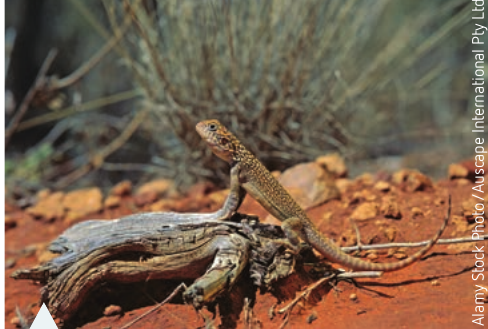
This desert-adapted lizard inhabits central Australia's plains and open scrub. It can withstand body temperatures ranging from to .
Temperature regulation behaviours include:
- In cold conditions: The dragon lies in sunlight and alters its body position to expose more surface area to the sun's rays, increasing its core body temperature. It shelters from cold winds and emerges on warmer days.
- In hot conditions: When ambient temperature rises above its tolerance level, the dragon retreats into shade (under rocks or vegetation) or into a burrow, reducing its activity to avoid overheating. It emerges at night to hunt when temperatures are cooler.
Endothermic animals (warm-blooded animals)
Endotherms maintain a relatively constant body temperature but still use behavioural adaptations to cope with extreme conditions.
Heat avoidance behaviours:
- Bilby: Hides in burrows during the day to stay cool and reduce water loss through evaporation
- Red kangaroo (Macropus rufus): The largest kangaroo species rests throughout the day, gathers in large family groups at dusk where food is abundant, and feeds on grasses and herbs during cooler times
- Wallabies: Some species lick their wrists where blood vessels form a dense network close to the skin surface. Although this causes water loss, the evaporation of saliva from the skin has a cooling effect
Social behaviour
Some species display social behaviours that increase the survival chances of the group rather than just individuals.
Sugar gliders (Petaurus breviceps)
Sugar gliders produce a pungent aroma from scent glands located on their head, chest, or near the genital opening. The dominant male's scent permeates all group members, allowing them to locate each other successfully in fading light conditions.
Meerkats
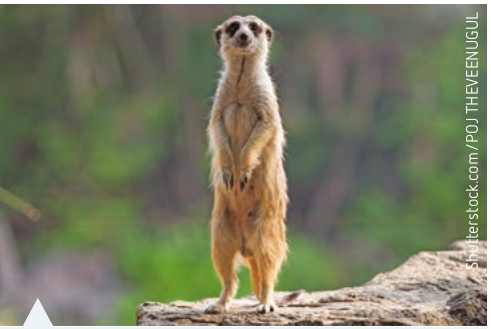
Meerkats live in large social communities. They are burrowing carnivores that spend much of each day with their heads underground searching for food. This makes them vulnerable to predator attacks.
Important
To overcome this vulnerability, one meerkat acts as a sentry - standing guard whilst others feed. When a threat is detected, the sentry produces a series of distinctive warning calls. All meerkats respond by standing on their hind legs and scanning the area for predators.
This cooperative behaviour significantly increases the survival chances of the entire group.
Summary
Key Points to Remember:
- Behavioural adaptations are actions performed by organisms in response to stimuli that improve their chances of survival
- Plant behaviours often involve rapid changes in turgor pressure (e.g., Mimosa pudica folding leaves, Venus flytrap closing)
- Ectothermic animals (like snakes and lizards) use behaviours such as basking, seeking shade, and changing activity patterns to regulate body temperature
- Endothermic animals (like bilbies and kangaroos) use behaviours such as burrowing, resting during hot periods, and nocturnal activity to maintain body temperature
- Social behaviours (like meerkat sentinel behaviour) increase survival chances for the entire group, not just individuals