Ecosystems (HSC SSCE Biology): Revision Notes
📚Revision Notes
Ecosystems
Introduction to Australian ecosystems
Australia contains a remarkable diversity of ecosystems, each shaped by different environmental conditions. These varied environments support different combinations of plant and animal species.
Looking at New South Wales alone, we can see how environmental factors create distinct ecosystems:
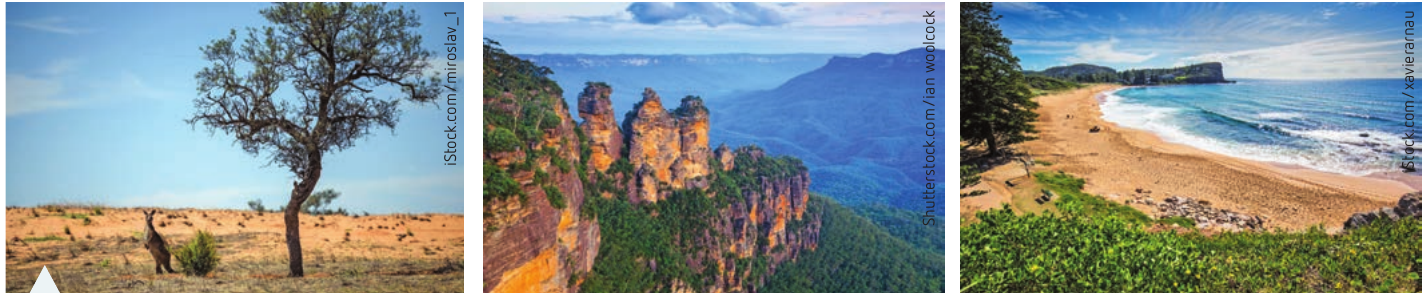
The Blue Mountains region features sandstone tablelands carved by deep canyons and gorges. The biodiverse forests contain over 90 plant species and provide habitat for large numbers of animals, including 186 vertebrate species, 105 bird species, 14 bat species, 28 reptile species, and 10 frog species.
The Hunter Valley, north-east of the Blue Mountains, has soils with high clay content. This region supports four dominant eucalypt species and woodlands containing native shrubs, grasses, daisies, lilies and orchids. Animals such as the brush-tail rock wallaby, spotted-tail quoll and speckled warbler live here.
Coastal areas near Sydney have increasingly sandy soil with drier and windier conditions. This environment favours plants such as banksia scrub, acacia, spinifex, Leptospermum and Xanthorrhoea (grass tree) species.
Note
Each species has characteristics that suit them to their particular environment. The diversity we observe has developed over time through the survival and reproduction of organisms with favourable characteristics that help them thrive in their specific conditions.
What is an ecosystem?
An ecosystem is a system that includes all the living organisms (biotic factors) in a community, along with all the non-living features (abiotic factors) with which they interact. Let's break down these key terms:
- Biotic factors: All the living components in an ecosystem (plants, animals, fungi, bacteria)
- Abiotic factors: All the non-living physical and chemical components (temperature, water, light, soil, minerals)
- Community: A group of different populations living together in an area
- Population: All individuals of the same species living in a particular area
- Habitat: The specific place where an organism lives
- Environment: Made up of all the non-living (abiotic) factors in an ecosystem
Important
There is a delicate balance between biotic and abiotic factors in every ecosystem. Both types of factors influence each other and determine which species can survive in that particular environment.
Australia has many diverse ecosystems. The distribution of these different ecosystems across the continent results from variation in both biotic and abiotic factors in each particular area.
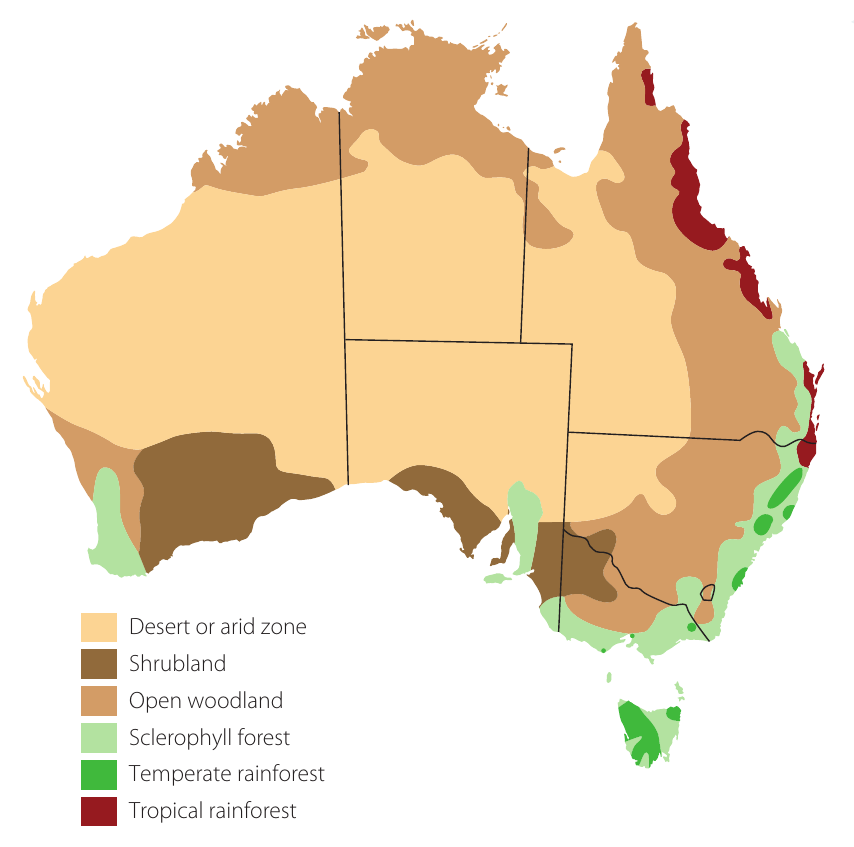
The Australian arid zone
The arid zone (shown in light tan on the map) is distinguished by several key features:
- Ancient and infertile soils with low levels of phosphorus and nitrogen
- Unpredictable rainfall patterns
- Plants adapted to harsh conditions, such as Sturt desert pea, saltbush and spinifex
- Fire as an important ecological process, with patch burning creating spaces for ephemeral plants (plants with short life cycles)
- Invertebrate animals dominating, including grasshoppers, crickets, beetles and termites
- Loss of native medium-sized mammals (desert bandicoot, lesser bilby, long-tailed hopping mouse) to extinction in the last 200 years, partly due to competition from introduced species like rabbits and camels
Types of ecosystems
Ecosystems can be broadly classified into two main categories based on whether they are land-based or water-based.
Terrestrial ecosystems
Terrestrial ecosystems are land-based environments. The abiotic factors within terrestrial ecosystems significantly influence which organisms can survive there. These factors include temperature, rainfall, soil type, and light availability. Examples include deserts, grasslands, woodlands, and rainforests.
Aquatic ecosystems
Aquatic ecosystems are water-based environments. Key abiotic factors affecting aquatic ecosystems include:
- Salt concentration (salinity)
- Light availability
- Water pressure
- Temperature
- Dissolved oxygen levels
- pH
Note
There are two main types of aquatic environments:
- Marine (saltwater) environments: Include oceans and coral reefs
- Freshwater environments: Include rivers, lakes, and ponds
Some aquatic environments experience both fresh water and salt water conditions. Estuarine environments, for example, are affected by tidal changes that bring in salt water from the ocean and fresh water from rivers. The salinity level of the water is a key factor determining which types of organisms can survive in each aquatic environment.
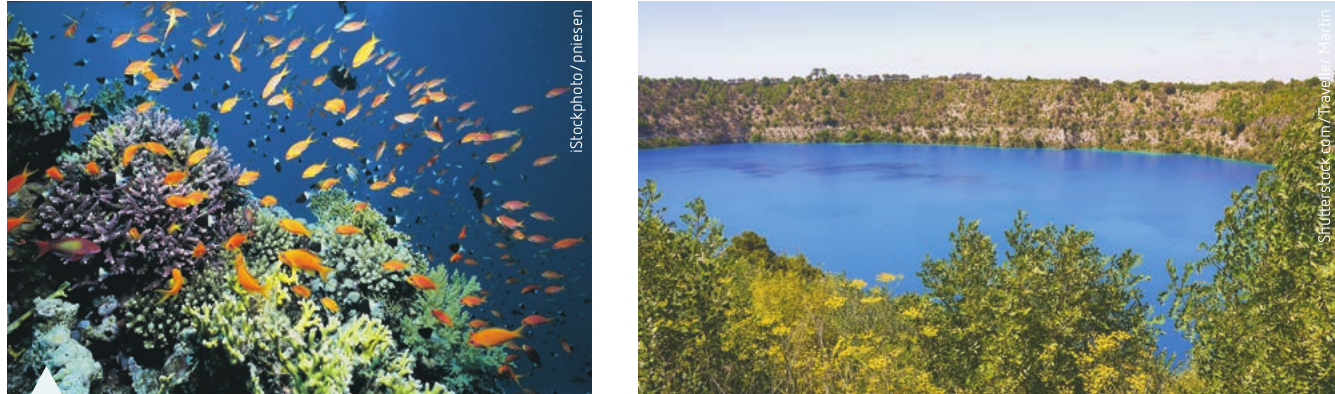
Examples of aquatic ecosystems found in Australia include:
- Wetlands and mangrove swamps
- Rock platforms
- Estuaries, rivers and lakes
- Oceans and coral reefs
Australian terrestrial ecosystems
Australia has six main types of terrestrial ecosystems, distinguished primarily by their rainfall levels. These range from the driest deserts to the wettest tropical rainforests. Understanding the characteristics of each ecosystem type helps us understand which organisms can survive in each environment.
| Terrestrial ecosystem | Annual rainfall | Temperature | Canopy cover | Typical organisms |
|---|---|---|---|---|
| Desert | Less than 250 mm | High during day (approx. 40°C), low at night (approx. 0°C) | Minimal | Sparse grasses, saltbushes, spinifex hopping mouse, insects, lizards, snakes |
| Grassland | 250-750 mm | High or mild | Low | Grasses (e.g. spinifex), kangaroos, rabbits, snakes |
| Shrubland | 200-400 mm | High | Low to moderate | Mallee trees, mulga, kangaroos, rabbits, snakes |
| Woodland | 400-750 mm | Mild, sometimes high | 10-30% | Grasses, shrubs, eucalypt trees, mice, birds, insects, spiders, wallabies |
| Temperate forest | More than 750 mm | Mild | 30-70% | Various types of eucalypt trees |
| Tropical rainforest | More than 1500 mm | High or mild, humid air | Dense 70-100% with distinct layers (canopy, understorey, forest floor) | Bird's nest ferns, palms, lianas, bracken ferns, diverse leaf litter organisms |
Important
Key pattern: As annual rainfall increases, vegetation becomes denser and more diverse. Desert has the lowest rainfall and sparsest vegetation, while tropical rainforest has the highest rainfall and densest vegetation cover.
Soil characteristics: Often sandy soil in deserts, sometimes rocky. Soil type varies across other ecosystems and influences which plants can grow.
Canopy cover: Refers to the percentage of ground covered by the overhead plant canopy. This increases from minimal coverage in deserts to almost complete coverage (70-100%) in tropical rainforests. Dense canopy creates distinct vertical layers or strata in rainforests.
Biotic and abiotic interactions
Biotic and abiotic factors differ significantly between different ecosystems. This variation is crucial for understanding biodiversity and species distribution.
How abiotic factors influence ecosystems:
Abiotic factors create selection pressures that favour certain types of organisms over others. This means the underlying abiotic factors of an ecosystem must be studied to understand which organisms can survive there.
Example
Example: Rainfall as a Selection Pressure
- Low rainfall (abiotic factor) creates conditions where only drought-resistant plants like saltbushes can survive
- High rainfall (abiotic factor) allows moisture-loving plants like ferns to thrive
- Temperature extremes favour organisms with special adaptations to cope with heat or cold
An organism's ecosystem provides it with:
- Nutrients
- Water
- Shelter
- Opportunities to mate
However, other living things compete for these same resources. This competition means some organisms successfully survive and reproduce, while others cannot compete effectively. Successful species develop a range of favourable characteristics (adaptations) that are uniquely suited to the specific environmental factors in their habitat. We say the population is adapted to this habitat.
Note
Unless the environment changes, these adapted species will continue to survive, reproduce, and pass on their favourable characteristics to their offspring. This is how populations maintain their suitability for their environment over many generations.
Remember!
Summary
Key Points to Remember:
- An ecosystem includes all living organisms (biotic factors) and non-living features (abiotic factors) that interact within an environment
- Biotic features of ecosystems vary widely in response to abiotic features of the environment
- Terrestrial ecosystems in Australia range from desert (lowest rainfall) to tropical rainforest (highest rainfall), with distinct characteristics for each type