Population Changes Over Time (HSC SSCE Biology): Revision Notes
📚Revision Notes
Population Changes Over Time
Understanding population variation and adaptation
Populations are groups of individuals from the same species living in the same area. Within any population, individuals display a range of different characteristics, called traits. These traits can vary slightly (like flower colour in pea plants being white or purple) or significantly (like the enormous variety in human hair colour, texture, amount and distribution).
The individuals that survive and reproduce successfully are those whose traits make them well-suited to their environment. These successful individuals pass their helpful traits to their offspring. Over time, if environmental conditions remain stable, the population becomes increasingly well-adapted to its habitat. This happens because the best-suited traits become more common in each generation.
Note
Key Concept: Those members in a population that survive and reproduce in their habitat carry the traits most suitable for the conditions. This is the fundamental principle of natural selection.
However, when environmental conditions change, the traits that help organisms survive also change. Individuals with traits suited to the new conditions will thrive, while those with traits suited to the old conditions may struggle to survive and reproduce. Gradually, the population changes as individuals with advantageous adaptations become more numerous. This represents a change in species diversity.
Important
If selection pressures in an environment change, some individuals with traits best suited to the changed selection pressures (adaptations) will survive and reproduce. This leads to population characteristics changing over time.
The peppered moth: A classic example
One of the most thoroughly studied examples of population change due to environmental pressure involves the peppered moth, Biston betularia. This moth typically rests on lichen-covered trees in shaded locations, where its speckled white colour provides excellent camouflage. A darker variety of the moth also exists naturally, but it was historically much rarer.
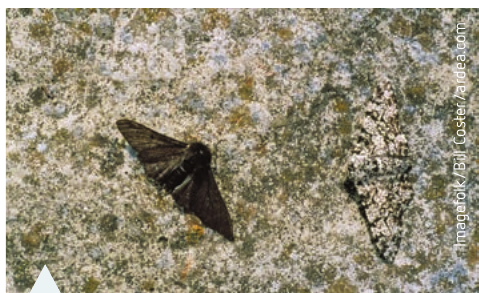
How industrial pollution changed moth populations
In 1848, during England's Industrial Revolution, the first dark moths were reported in an industrial region. After this, dark moth numbers increased rapidly across Britain. By the 1950s, researchers conducted extensive surveys comparing the abundance of light and dark moths in different areas. They discovered that dark moths were significantly more common in regions where industrial smoke and soot had blackened tree bark.
This pattern can be explained by understanding the moth's predators. Birds hunt peppered moths by spotting them on tree branches and pecking them off. In polluted areas with darkened trees:
- Dark moths are nearly invisible against blackened bark
- Light moths stand out clearly and are easily caught
In unpolluted areas, the opposite is true:
- Light moths blend in with clean, lichen-covered branches
- Dark moths are conspicuous and vulnerable
Note
Selection pressure in action: The frequency of dark moths increases in polluted areas because light moths are more easily seen and eaten by birds. As industrial pollution decreases in modern times, the frequency of dark moths also decreases, demonstrating how population characteristics track environmental changes.
Natural disturbances and population changes
Severe environmental disturbances can dramatically affect species diversity. Events like volcanic eruptions, massive floods, hurricanes and fires alter environmental conditions and create new selection pressures.
Case study: Kati Thanda-Lake Eyre
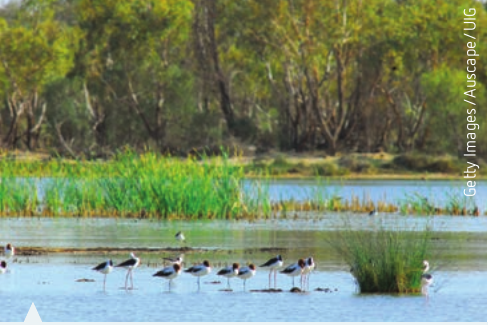
Kati Thanda-Lake Eyre in South Australia is a salt lake with edges crusted with white salt crystals. This region receives only about mm of annual rainfall and is usually dry or has very low water levels.
In 2014 and 2015, significant rainfall and flooding brought water from Queensland into the lake. This influx of water drastically changed the environmental selection pressures and led to a remarkable increase in species diversity. The changing conditions resulted in:
- Increased populations of birds, fish and mammals
- Thriving populations of snails, beetles and mosquitoes
- Tens of thousands of waterbirds, including pelicans, attracted by abundant food
Note
This example demonstrates how environmental changes create new opportunities for different species, dramatically altering the ecosystem's diversity. A single environmental event can transform an entire ecosystem within a short timeframe.
Cane toads in Australia: An invasive species story
The cane toad (Bufo marinus) is native to South and Central America. In 1935, authorities deliberately introduced it to Australia to control the greyback cane beetle, a pest in sugar cane plantations.
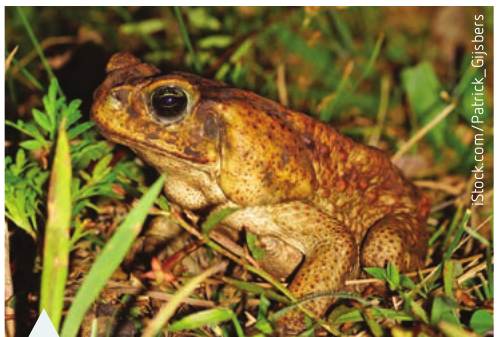
Rapid population explosion
The toads quickly spread from their initial release sites in northern Queensland. Their range now includes the Northern Territory and northern New South Wales, with the expansion front moving up to km per year. From just toads originally released, the population has exploded to an estimated million individuals.
Features enabling success
Cane toads possess a unique combination of traits that allowed them to thrive in Australian environments:
- Nocturnal behaviour - Active at night when fewer predators are around
- Ground-dwelling lifestyle - Well-suited to Australian habitats
- Opportunistic diet - Eat insects, snails, pet food, frogs, birds, small mammals and reptiles – essentially anything that fits in their mouth
- Water absorption - Absorb water directly through their skin
- No natural predators - Australian predators had no evolutionary experience with this species
- Year-round breeding - Can reproduce continuously, not just seasonally
- High reproductive rate - Females lay up to eggs at a time, which can hatch in just - days
The bufotoxin threat
Cane toads contain toxins that are lethal to many native animals. Glands on the toad's shoulders produce bufotoxin, which affects the heart and central nervous system. Effects include rapid heartbeat, excessive salivation, convulsions and paralysis. The toxin can be absorbed through membranes around the eyes, mouth and nose.
However, the toxin doesn't affect all individuals equally. There is natural variation in native animal populations – some individuals are more tolerant of the poison than others, and some are more reluctant to eat toads.
Important
Cane toads as a selection pressure: The toads act as a selection pressure on native predators. Predators that are vulnerable to bufotoxin and prefer to eat toads are removed from the population (selected against). Predators with increased resistance to the toxin and those reluctant to eat toads are the ones that survive and reproduce (selected for).
Impact on native species
Red-bellied black snakes
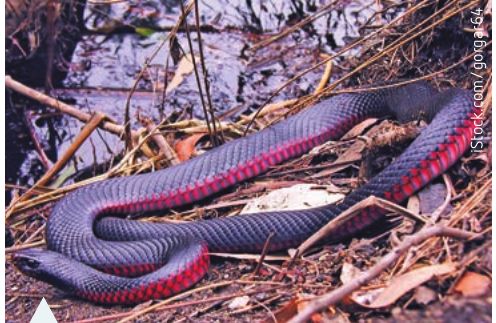
The red-bellied black snake (Pseudechis porphyriacus) provides a clear example of how cane toads have changed native populations. In areas with cane toads, these snakes are developing smaller head sizes.
Research comparing museum specimens from before and after cane toad introduction revealed that poison-sensitive snakes became longer by about - per cent, but their heads became proportionally smaller. Other snake species unaffected by cane toads showed no such changes.
Note
Why this happened: Larger cane toads produce more poison. Snakes with larger heads could open their jaws wide enough to eat large toads, receiving lethal doses of toxin and dying. Smaller-headed snakes physically couldn't eat the larger, more toxic toads. Therefore, the cane toad acts as a selection pressure favouring smaller head sizes.
Northern quolls
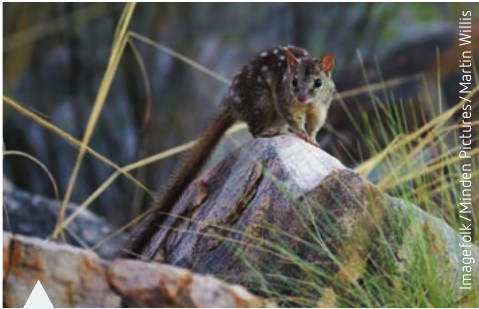
Northern quolls (Dasyurus hallucatus) are small native Australian mammals that experienced drastic population reductions when cane toads arrived in their habitat.
Interestingly, quoll populations in Queensland have stopped eating cane toads. Scientists suspect this involves genetic and/or behavioural factors. There may be a gene that makes quolls 'toad averse' – quolls carrying this gene avoid eating toads and therefore have a reproductive advantage. The toad toxin has acted as a selection pressure on Queensland quolls, and genetic diversity within the population has enabled survival and adaptation.
Northern Territory quolls show no such adaptation and continue to eat and be poisoned by cane toads. Conservation efforts include 'taste aversion' training programs, with trained quolls being released in hopes they'll learn to avoid toads.
Evolution of cane toads themselves
Cane toad populations aren't just affecting other species – they're evolving too. Evidence suggests toads are undergoing a process called spatial sorting.
As toads expand their territory, those individuals with the fastest hopping style (straight hoppers) are concentrated at the invasion front. These fast-hopping toads have offspring that are also fast, concentrating the genes for rapid hopping at the expanding edge. This has accelerated the invasion speed from - km per year to km per year.
Note
However, this rapid movement comes at a cost. The faster hopping style increases pressure on the toads' spines, leading to about per cent developing spinal arthritis. Recent research suggests these faster toads may also have compromised immune systems due to bodily stress, which could provide targets for future control programs using parasites like lungworms.
Prickly pear: Biological control success
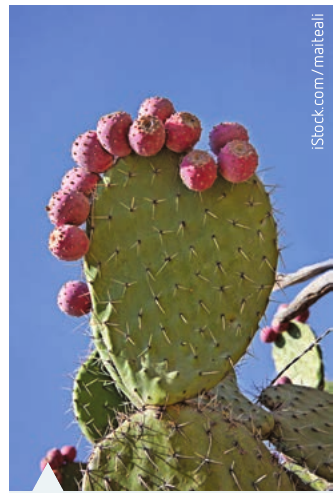
The prickly pear (Opuntia monacantha) was initially introduced to Australia from the Americas in the 1800s to start a cochineal dye industry. It was also promoted as a hedge plant and livestock fodder.
Characteristics and rapid spread
The plant is a succulent characterised by spine-covered fleshy growths. Its leaves are actually tiny scales. Prickly pear can establish from seeds or through vegetative reproduction – branches or 'pads' easily detach from the parent plant and grow wherever they contact soil.
These growing conditions enabled explosive spread:
- By 1900: million hectares covered
- By 1920: million hectares infested
Early control attempts using burning, crushing and herbicides proved largely ineffective.
The biological control solution
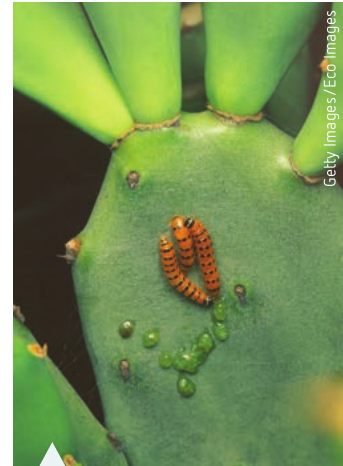
In 1912, the Prickly Pear Travelling Commission was established. Members travelled to countries where prickly pear was native, seeking natural control agents absent from Australia. Two insect species were identified: the cochineal beetle and the cactoblastis moth.
The cactoblastis moth (Cactoblastis cactorum) proved most successful. By 1932, the moth larvae had consumed their way through three million previously infested hectares.
Important
The use of a natural predator to control pest organism numbers is known as biological control. This program was so successful it has been implemented in other countries as a model for managing invasive species.
Why it worked: The importance of diversity
Due to a lack of selection pressures, prickly pear plants had spread rapidly with little genetic diversity among the population. Introducing the cactoblastis moth provided a strong selection pressure. Because the prickly pear population lacked diversity (and therefore resistance), the moth larvae quickly reduced plant numbers and distribution.
Note
This case study demonstrates how genetic diversity within a population can determine its ability to survive new selection pressures. A genetically diverse population has a better chance of containing individuals with resistance to new threats.
Summary
Summary
Key Points to Remember:
-
Populations contain individuals with varying traits. Those with traits suited to their environment survive and reproduce, passing advantageous traits to offspring.
-
When selection pressures change, population characteristics change over time as individuals with beneficial adaptations become more common.
-
The peppered moth demonstrates how industrial pollution acted as a selection pressure, changing the frequency of light and dark forms in different regions based on camouflage effectiveness.
-
Natural disturbances like floods can dramatically increase species diversity by creating new environmental conditions and opportunities for different species.
-
Cane toads have acted as a powerful selection pressure on Australian native species, leading to rapid adaptations such as smaller head sizes in red-bellied black snakes and toad aversion in some northern quoll populations.
-
The successful biological control of prickly pear using cactoblastis moth larvae demonstrates how introducing a natural predator can act as a selection pressure, particularly effective when the pest population lacks genetic diversity.
-
Genetic diversity is crucial for a population's ability to adapt to new selection pressures and survive environmental changes.