Evidence for Evolution (HSC SSCE Biology): Revision Notes
📚Revision Notes
Evidence for Evolution
Evolution is one of the fundamental concepts in biology, explaining how species change over time. In the mid-19th century, Charles Darwin and Alfred Russel Wallace independently proposed the Theory of Evolution by Natural Selection. This theory suggests that species change over time in response to selection pressures in their environment. While the concept of evolution had been discussed for over two thousand years, Darwin and Wallace were the first to propose a detailed mechanism explaining how this change occurs.
A scientific theory is an explanation of a natural phenomenon that must be strongly supported by many different lines of evidence. The Theory of Evolution by Natural Selection has withstood rigorous testing over more than 150 years. Its strength lies in its ability to explain both the evidence available in Darwin and Wallace's time and modern evidence they could never have imagined, such as DNA sequencing and advanced fossil dating techniques.
Note
This note examines the major types of evidence supporting evolution, including biochemical evidence, comparative anatomy, comparative embryology, biogeography, and fossil evidence.
Biochemical evidence
Darwin and Wallace argued that all living things shared a common ancestor. Modern biochemical studies have confirmed this prediction by showing that all living organisms share the same fundamental macromolecules (such as proteins and DNA) and biochemical processes (such as cellular respiration).
Biochemistry is the study of chemicals found in cells. It forms an integral part of molecular biology and genetics. Recent evidence involves comparing the sequence of basic units that make up proteins and DNA in different species to determine their evolutionary relationships.
Note
Scientists predicted that closely related organisms would have more similar proteins and DNA sequences than distantly related organisms. Advanced technology has made it possible to sequence these macromolecules and objectively measure similarities and differences. The quantitative results obtained allow scientists to reconstruct the evolutionary history of organisms, both living and extinct.
Amino acid sequencing
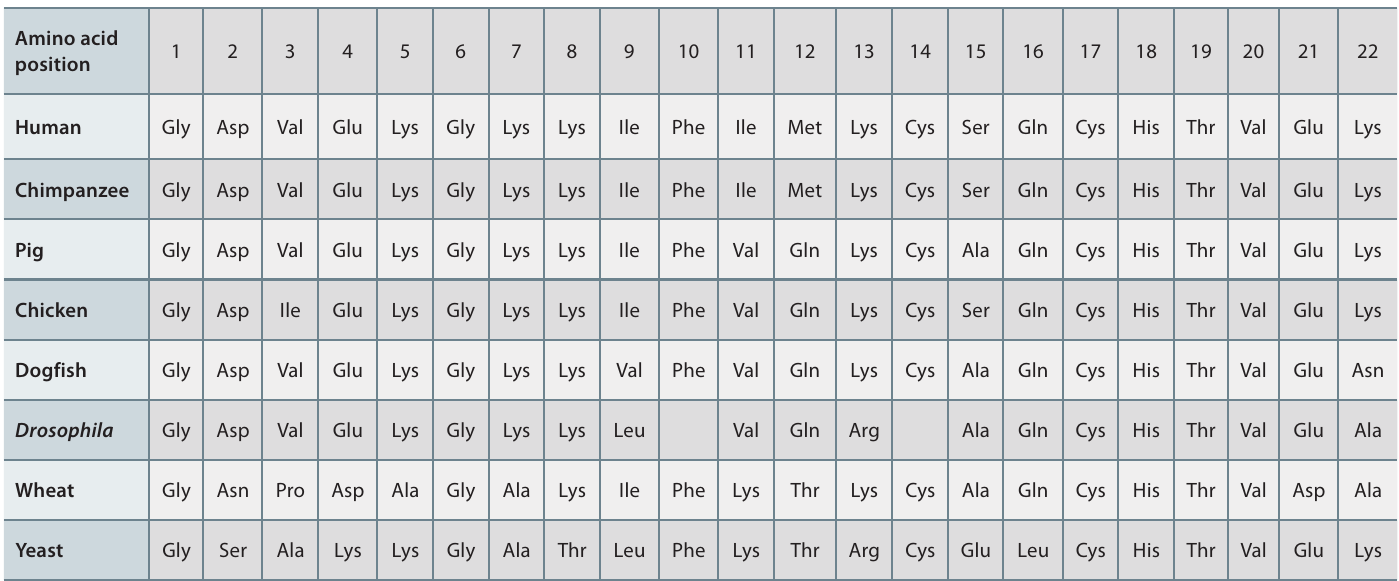
Proteins are found in every living cell, forming part of cell membranes and acting as enzymes in the cytoplasm. Proteins are made up of sub-units called amino acids. Living organisms contain a combination of about 20 different genetically determined amino acids. The number, type, and sequence of these amino acids determine the type and function of the protein.
To study evolutionary relationships, scientists analyze proteins that are found in a wide range of organisms. Common examples include:
- Cytochrome c: A protein found in plants and animals that is involved in cellular respiration
- Haemoglobin: A blood protein found in animals only
The process works as follows:
- Scientists determine the sequence of amino acids in a specific protein from different organisms
- They identify similarities and differences between organisms
- Similarities suggest the organisms may have shared a common ancestor, as the basic chemistry inherited from that common ancestor has not changed
- Differences indicate that the organisms have evolved (changed over time)
- The number of differences is proportional to the time since the organisms separated from their common ancestor
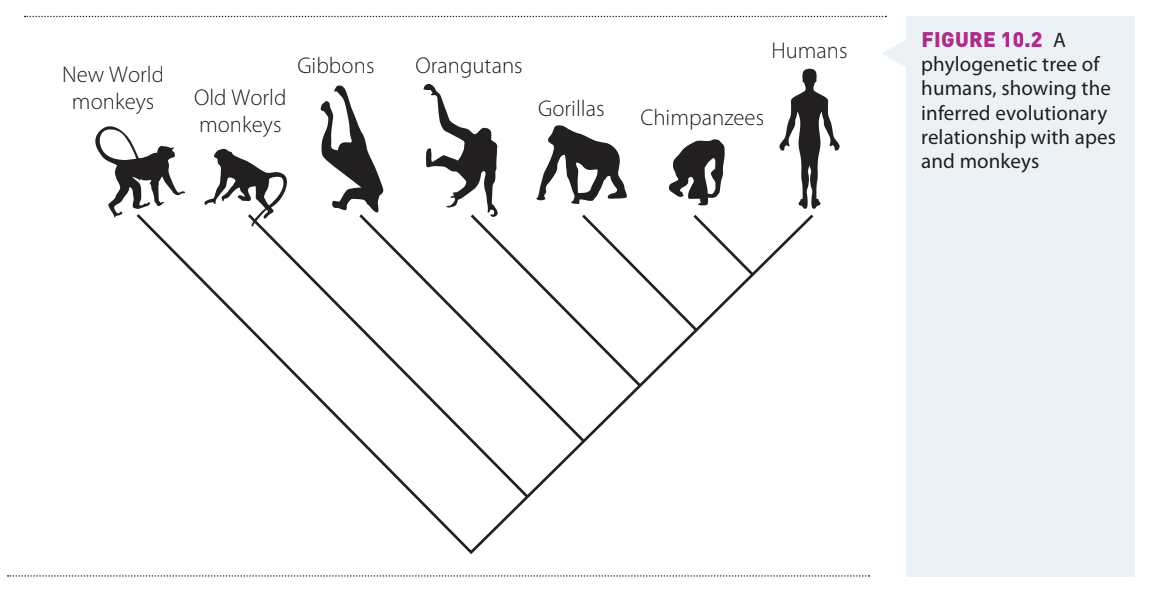
This information is used to construct phylogenetic trees (also called evolutionary trees), which are branching diagrams showing inferred evolutionary relationships between organisms.
Example
Example: Haemoglobin Comparison
Humans and chimpanzees have an identical sequence of amino acids in their haemoglobin, indicating they are very closely related. In contrast, humans and gibbons have three differences in their haemoglobin amino acid sequence, suggesting they are more distantly related.
DNA–DNA hybridisation
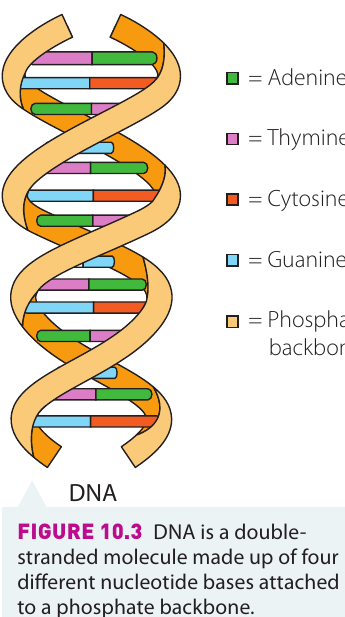
DNA is the genetic material found in cells that we inherit from our parents. DNA is made up of sub-units called nucleotide bases. The four nucleotide bases in DNA are:
- Adenine (A)
- Guanine (G)
- Cytosine (C)
- Thymine (T)
The number, type, and order of these bases determine our genes. DNA is a double-stranded molecule in which adenine always pairs with thymine, and cytosine always pairs with guanine. This is called complementary base pairing.
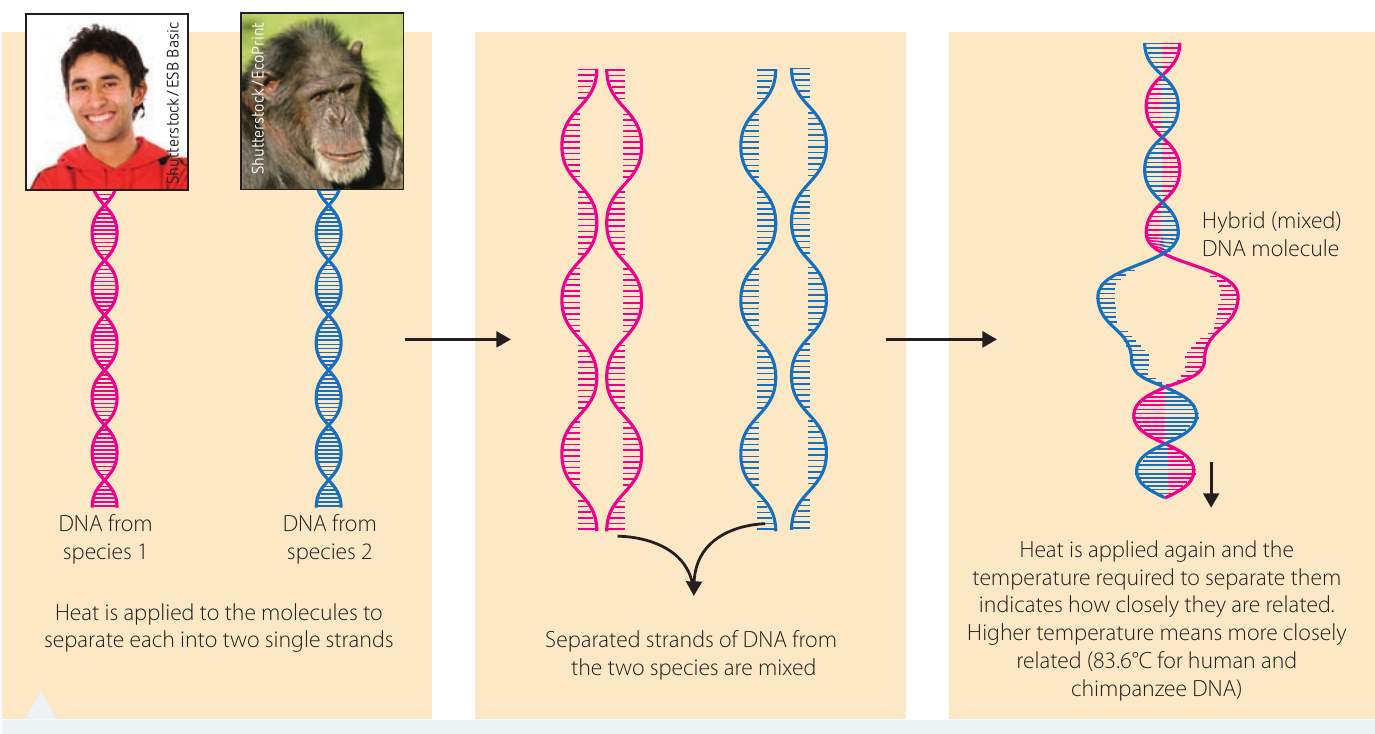
DNA–DNA hybridisation is based on the assumption that DNA molecules of closely related species have a similar nucleotide base order. The technique involves several steps:
- Heat (usually 90–94°C) is applied to double-stranded DNA molecules to cause the complementary strands to separate (dissociation)
- Separated DNA strands from two different species are mixed together
- The strands from different species combine (reassociation) to form a 'hybrid' (mixed) DNA molecule
- The more closely matched the base pairs are, the stronger the binding between the strands
- Heat is applied again to determine how strongly the bases have combined
- Higher temperatures are required to separate hybrid strands that are more strongly combined
- Closely related species have very similar nucleotide base orders, so their DNA strands combine more strongly than those of distantly related species
Example
Example: Human and Chimpanzee DNA Hybridisation
The DNA of a human and a mushroom would combine weakly and separate at lower temperatures than the DNA of a human and a chimpanzee. Human and chimpanzee DNA requires a temperature of 83.6°C to separate, indicating they are very closely related.
DNA sequencing
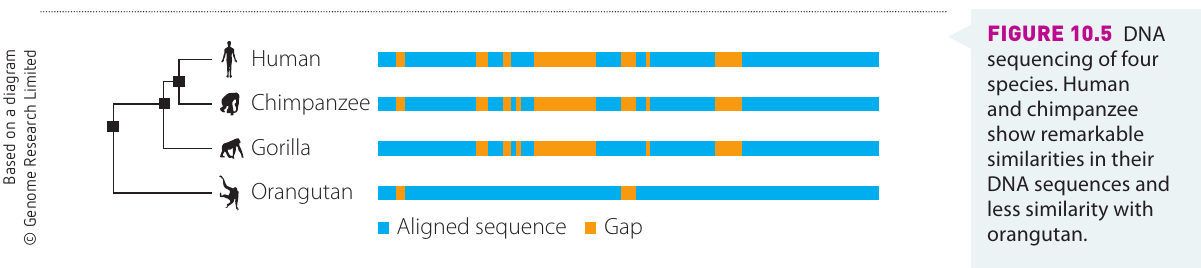
DNA sequencing is the most advanced and detailed biochemical technique. In this procedure, the exact order (sequence) of nucleotide bases in the DNA of one species is compared with the sequence in a similar DNA fragment of another species. The more closely related the species, the more similar the order of nucleotide bases in their DNA.
The DNA sequencing process involves:
- A piece of DNA (a gene) is isolated from each organism to be compared
- Multiple copies of each gene are made using fluorescent dyes to distinguish between the four DNA bases
- Computer-linked equipment called a DNA sequencer graphs and prints out the entire sequences of bases
- The sequences are then compared
DNA sequencing reveals that organisms sharing a common ancestor have fewer differences in their DNA base sequences. This technique provides more detailed information than other biochemical methods.
Important
Limitations of biochemical evidence:
- Some changes in DNA or amino acid sequences may not be identified if a change that occurred in the past has reverted to its original form in a more recent organism
- The techniques are complex and expensive
- They rely on highly specialized computer technology
- They can only be performed in high-technology laboratories
Despite these limitations, biochemical evidence provides powerful, objective support for evolutionary relationships between organisms.
Comparative anatomy
Comparative anatomy is the study of similarities and differences in the structure (anatomy) of living organisms. The underlying principle is straightforward: more similarities in structure suggest that organisms separated from a common ancestor more recently. For example, humans and chimpanzees have more structural similarities than humans and cats, suggesting that humans and chimpanzees separated from a common ancestor more recently than humans and cats did.
Comparative anatomy was one of the first forms of evidence that led to the idea that all living things arose from one common ancestor. It remains an important line of evidence today.
Homologous structures – evidence of divergent evolution
When comparing organisms, similarities in structure suggest descent from a common ancestor, whereas differences in structure represent modifications that have evolved as organisms adapted to different environments. This pattern is typical of divergent evolution, where related organisms become increasingly different over time as they adapt to different environments or ways of life.
Note
Organs that have the same basic structural plan but show modifications because they are used in different ways are termed homologous – they have the same evolutionary origins. These similarities are best explained by common descent (sharing a common ancestor).
A classic example is the pentadactyl (five-digit) limb found in all vertebrates. Despite being used for different purposes, these limbs share the same basic bone structure:
- Humerus: upper arm/leg bone
- Radius and ulna: forearm bones
- Carpals: wrist/ankle bones
- Metacarpals: hand/foot bones
- Phalanges: finger/toe bones
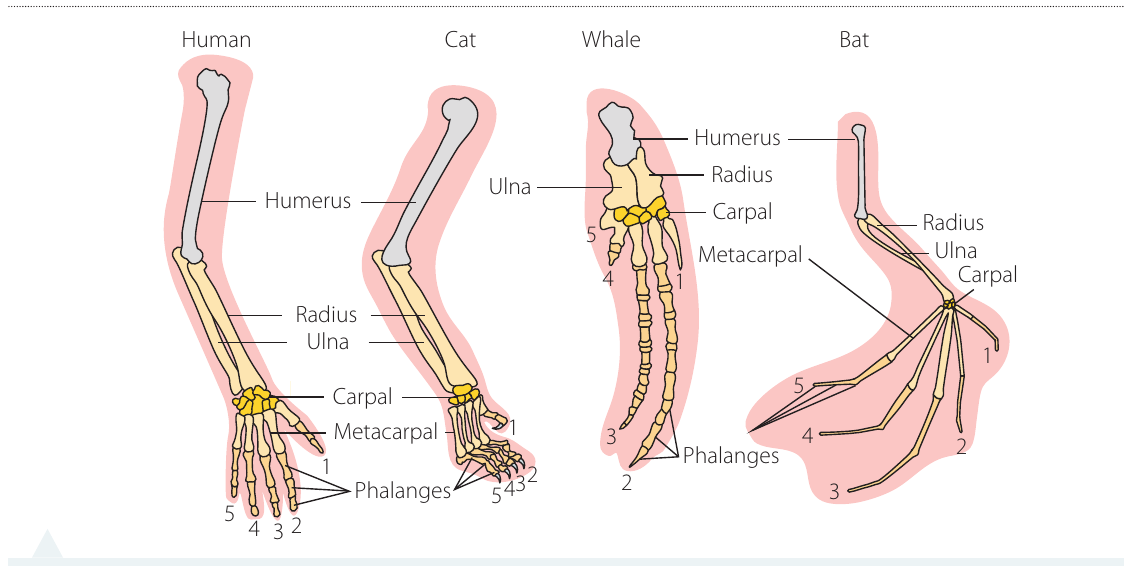
All vertebrate forelimbs contain these same basic bone types, arranged in the same general pattern. However, they have been modified for different functions:
- The wing of a bird – adapted for flight
- The forearm of a lizard – adapted for walking
- The flipper of a whale – adapted for swimming
- The arm of a human – adapted for manipulation
- The wing of a bat – adapted for flight
Important
Despite their different functions and appearances, all these structures are homologous because they share a common basic bone structure, suggesting they evolved from a common ancestor with a pentadactyl limb.
Comparative anatomists study such homologies and compare many body parts of organisms to determine the degree of similarity. This helps them establish the degree of evolutionary relatedness (or phylogeny) between organisms.
Analogous structures as evidence of convergent evolution
An interesting pattern of evolution creates some confusion in comparative anatomy studies. Some body parts of organisms appear similar at first glance, but detailed anatomical studies reveal they are vastly different in their basic structure. For example:
- Bird wings (containing muscles and bones) vs grasshopper wings (made of thin exoskeleton membrane)
- Eyes in vertebrates, insects, and octopuses
Since these organs differ greatly in their basic structural plan, they are said to be analogous – they are thought to have started off very different and then evolved independently to become similar. This occurs because they were selected for a similar purpose (such as flight or vision) in response to similar environmental pressures.
Note
This is convergent evolution, where unrelated organisms independently evolve similar structures as adaptations that favour their survival because they face similar selection pressures. Analogous structures arise as a result of convergent evolution, not common ancestry.
Example
Example: Convergent Evolution in Protective Spines
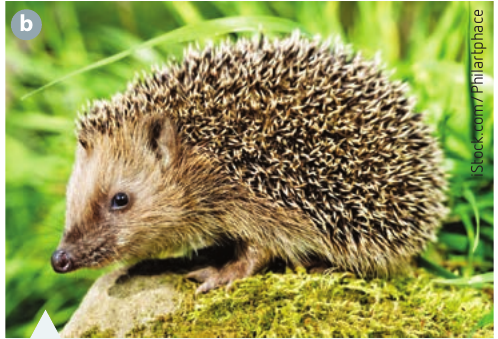
The Australian echidna and European hedgehog both have protective spines to discourage predators, but they are otherwise very different animals with different reproductive strategies.

Important
The presence of analogous features does not provide evidence for evolutionary relatedness. Instead, it provides evidence for the independent evolution of structures to serve a common purpose in a common environment. Organisms with analogous structures are distantly related and do not share a recent common ancestor.
Vestigial structures
Vestigial structures are thought to be evolutionary remnants of body parts that no longer serve a useful function in an organism. The presence of vestigial structures provides evidence of common ancestry because they are difficult to explain unless they are structures that have become reduced because they no longer carry out a useful function in that organism's current lifestyle.
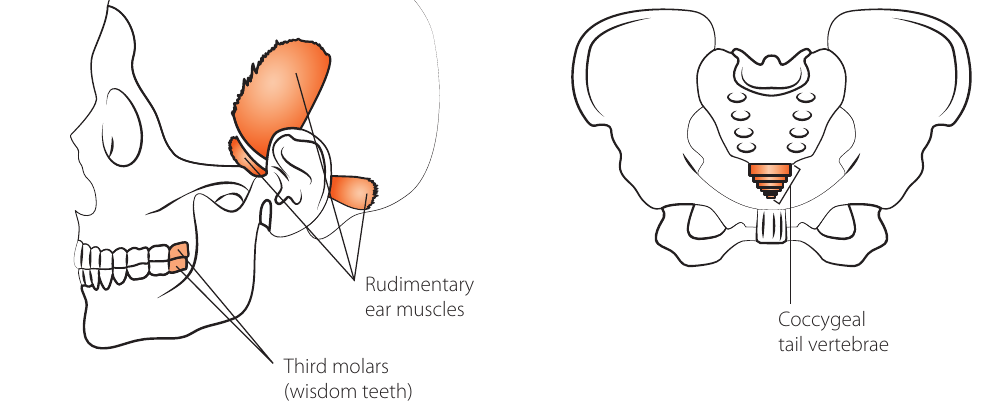
Examples of vestigial structures include:
- The reduced tail (coccyx) in humans
- Pelvic bones in snakes and whales (remnants of ancestors that had legs)
- Rudimentary ear muscles in humans (our ancestors could move their ears more effectively)
- Third molars (wisdom teeth) in humans (our ancestors had larger jaws)
Note
These structures only make sense in the context of evolution – they are "left over" from ancestors in which they served an important function.
Important
Important considerations when studying comparative anatomy:
- The fossil record is often incomplete, creating bias in the animals represented
- It can be difficult or impossible to compare the anatomy of numerous structures in living organisms with extinct forms
- Some superficial structural similarities may be analogous (resulting from convergent evolution) and could cause confusion when looking for common ancestry
- The greater the number of similarities in structure between organisms being compared, the more closely related the organisms appear to be
- Numerous features need to be examined to arrive at reliable conclusions
Comparative anatomy is therefore used to reinforce inferences about common descent derived from the fossil record, and it shares similar limitations.
Comparative embryology
Comparative embryology is the comparison of the developmental stages of different species. Similarities in embryonic development can be used to infer evolutionary relationships between organisms.
The prediction based on evolutionary theory is that related species should show similarities in their embryonic development. Studies of vertebrate embryos confirm this prediction, revealing remarkable similarities in early developmental stages.
For example, fish, amphibians, birds, and mammals all show the presence of the following features during embryonic development:
- Pharyngeal slits (often incorrectly called gill slits)
- Tails
- Distinct muscle blocks
Note
These similarities are best explained by common ancestry – all these groups are descendants of a common ancestral form. The presence of pharyngeal slits suggests that the common ancestor lived in an aquatic environment.
These embryonic structures develop into different structures in adult organisms:
- In fish: internal gills
- In amphibians: external gills
- In mammals: Eustachian tubes (the tubes that connect the middle ear with the throat)
This demonstrates how the same embryonic structure can be modified during development to serve different functions in different groups of organisms, supporting the concept of evolution from a common ancestor.
Important
Important note: The original drawings of embryo development were created by Ernst Haeckel in 1868. His drawings are now considered inaccurate and were not an accurate representation of actual embryos but were interpretive. This emphasizes the importance of creating biologically accurate diagrams. Today, advanced technology can track the migration of cells in embryos, providing far more accurate evidence than relying on drawings.
Biogeography
Biogeography is the study of the geographical distribution of organisms, both living and extinct. The Darwin-Wallace theory of evolution proposes that for a new species to arise, a group of individuals must become isolated (geographically separated) from the rest of the population. A new species is defined as one where individuals cannot produce fertile offspring if they mate with individuals of a pre-existing species.
Predictions based on biogeography provide evidence to support the role of isolation in evolution. If isolation is necessary for new species to arise from an original species, the new species should:
- Resemble species with which they shared a habitat more closely than species found far away (even if that distant species lives in similar environmental conditions)
- Be more similar to species that lived in a common area before it split up (for example, organisms that originated from the ancient supercontinent Gondwana)
Evidence from islands
During his travels, Darwin studied and compared numerous animals (including his famous finches) on islands such as the Galápagos. He was the first to point out that although animals and plants living on islands are often somewhat different from those on the mainland, they still more closely resemble organisms on the nearest mainland than organisms on more distant lands. Darwin questioned how this pattern could make sense if all organisms were "equally and independently created."
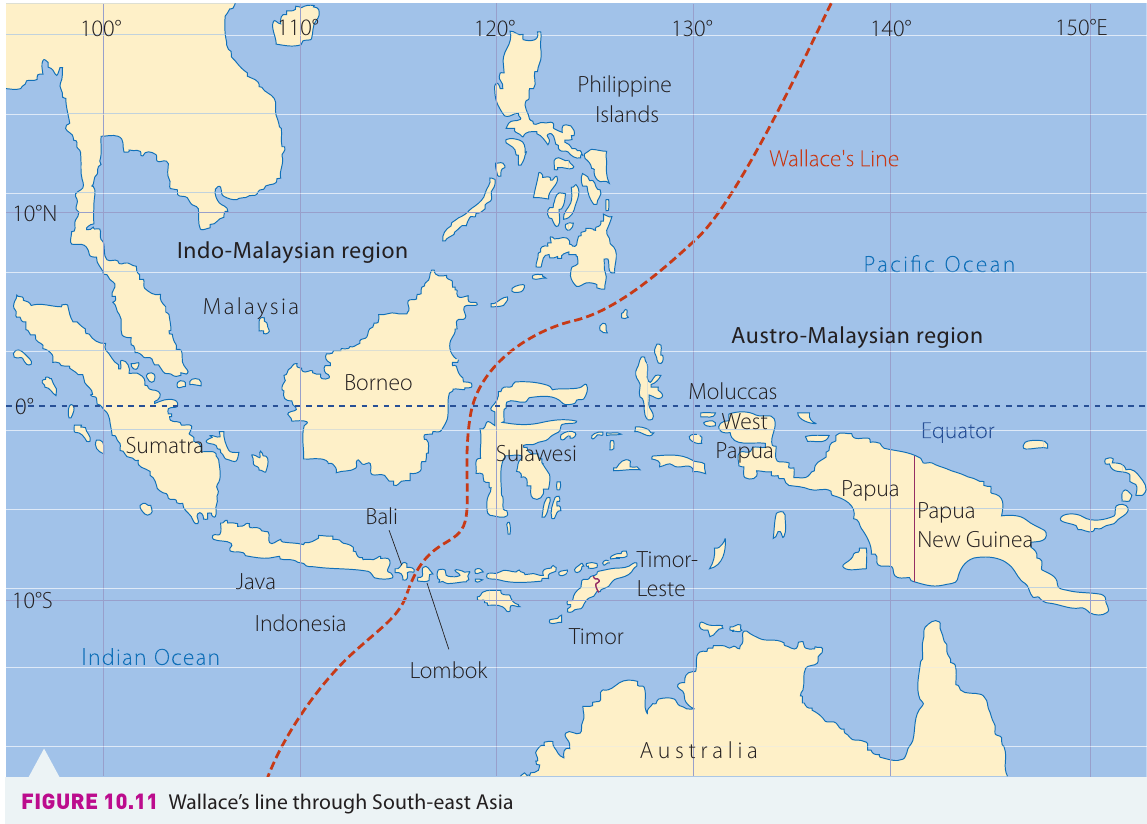
Wallace's Line
Alfred Wallace noted an interesting pattern in the Indonesian islands:
- Northwestern islands (including Bali) had bird species most similar to those of the nearby Asian mainland
- Southeastern islands (including Lombok) had birds most similar to those in nearby Australia
Note
The closeness of Bali and Lombok (neighboring islands with different bird fauna) led Wallace to conclude that the island forms may have evolved from mainland forms that became isolated. In 1859, he proposed Wallace's Line to separate these two biogeographical regions.
Continental drift and flightless birds
A typical example of how biogeographical evidence supports large-scale evolution (macroevolution) is the distribution of flightless birds (ratites). The present-day distribution of these birds suggests they originated from a common ancestor on the ancient supercontinent Gondwana. As the southern continents drifted apart, different populations of flightless birds evolved in isolation, resulting in:
- Emus in Australia
- Ostriches in South Africa
- Kiwis in New Zealand
- Rheas in South America
Note
All these birds share structural similarities suggesting a common ancestor. Further supporting evidence is that there are no similar large flightless birds on the northern continents (which were part of the ancient supercontinent Laurasia and became isolated from Gondwana before the flightless birds arose).
Adaptive radiation
Biogeographical patterns provide support for the concept of adaptive radiation, which is the diversification (development of a variety of different forms) of organisms that evolved from an ancestral species because of migrations into new environments. Adaptive radiation involves organisms migrating into new environments because they have traits that allow them to exploit resources in the new environment and survive in new ecological niches.
Example
Example: Australian Biodiversity
Australia's unique mammals and flowering plants are believed to have arisen because of the isolation of the continent. Australian organisms show similarities to fossils found on other southern continents, providing evidence that they may have had a common origin and later evolved independently.
Important
Limitations of biogeographical evidence:
- Requires knowledge of historical geography and continental movements
- Patterns can be complicated by more recent human-mediated dispersal
- Some similarities in distribution may be due to convergent evolution rather than common ancestry
Despite these limitations, biogeography provides compelling evidence for evolution, particularly when combined with other lines of evidence.
Fossil evidence
Palaeontology is the study of fossils. Fossils provide direct evidence of the existence of organisms in the past. A fossil may be mineralized remains in rock or the actual remains of an organism preserved in rock, ice, amber, tar, peat, or volcanic ash.
Even before Darwin's theory, scholars recognized that the sequence of fossils in undisturbed rock formations suggested change in organisms over time. They observed that the oldest fossils are found in the bottom-most layers of rock, while more modern fossils are found in rock layers closer to the top. This observation is called the law of superposition.
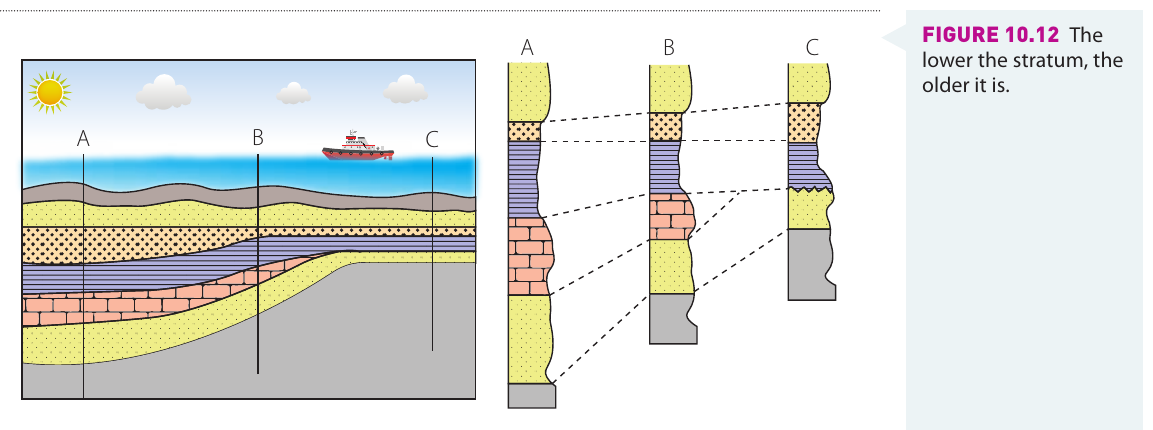
Based on the law of superposition, predictions could be made and tested to validate the Theory of Evolution by Natural Selection. Modern dating techniques have greatly enhanced our ability to determine the age of fossils and understand evolutionary timescales.
Relative dating
Relative dating relies on the assumption that fossils found higher in rock strata are younger than fossils found in lower strata. While this method cannot determine the actual age of fossils, it is useful for determining their chronological sequence – which fossil is younger or older relative to another.
Different techniques can be used to relatively date fossils:
1. Chemical analysis
- Measures the amount of chemicals (such as uranium and iodine) in bones
- As bones are buried, they exchange minerals with the surrounding ground
- The longer bones are buried, the more chemicals they exchange
- Higher uranium and iodine levels indicate more recent bones
- The amount of nitrogen in a sample decreases with age
- This technique is useful for determining the relative age of objects found at the same site
2. Stratigraphy
- Relies on sedimentary rocks being formed in layers
- The oldest rocks are at the bottom, youngest on top
- Fossils contained in these rocks follow the same pattern
- The lower the fossil in the rock strata, the older it is
3. Biostratigraphy
- Involves comparing fossils in different rock strata
- Fossils can be placed in chronological sequence
- Index fossils are particularly useful for determining the age of rock strata
- The occurrence of the same fossil species in two different rock locations indicates the rocks were deposited at about the same time
- Useful for establishing the relative age of specific fossils
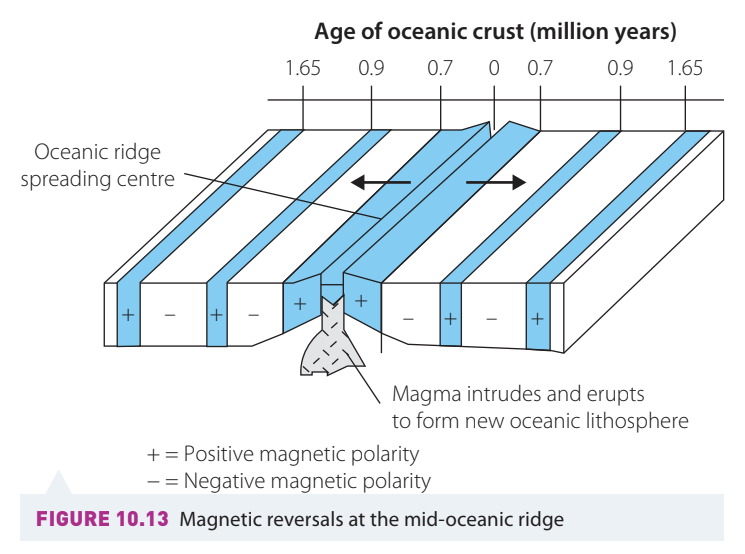
4. Palaeomagnetism
- Studies the record of Earth's changing magnetic field in rocks
- Some magnetic minerals in rocks lock in a record of the direction and intensity of Earth's magnetic field when the rock formed
- Scientists look for traces of iron oxide in rocks
- Iron oxide is magnetic and minerals orientate in the direction of the magnetic field when the rock forms
- Approximate dates can be determined from previous magnetic reversals
Absolute dating
Absolute dating (also called radiometric dating) enables the actual age of a specimen to be determined using radioactive elements present in the specimen. Different techniques are available depending on the age of the fossil being dated.
1. Fission-track dating
- Used to establish the age of a mineral sample from its uranium content
- A microscope counts the tracks left by uranium fission fragments
- Uranium concentration is determined by bombarding the sample with neutrons
- Useful to date volcanic minerals and teeth from 5,000 to 100 million years old
- When volcanic rocks form, they contain no fission tracks
- Over time, as uranium-238 decays into stable lead isotopes, more fission tracks form
- Age is determined by measuring the amount of uranium remaining and the density of fission tracks
2. Potassium-argon dating
- Determines the age of rock by measuring the ratio of radioactive argon to radioactive potassium
- Based on the decay of potassium-40 to radioactive argon-40
- Useful to date volcanic rocks and minerals from 200,000 to four billion years old
- Age of volcanic ash is determined by measuring the amount of argon-40 and radioactive potassium
- If fossils are buried between layers of volcanic ash, the age of the ash indirectly indicates the age of the fossil
Transitional forms
Darwin predicted that the fossil record should yield intermediate forms (also called transitional forms) – organisms showing transitions from one group to another. These would represent "missing links" between groups. For example, if amphibians evolved from fish, we would expect to find fossils of organisms showing features of both fish ancestors and the amphibian forms to which they gave rise.
Note
Darwin's prediction is now supported by thousands of known fossils that have features common to two known groups, suggesting that a transition occurred in the past from one group to another. These transitional forms represent successive change in organisms over long periods.
Example
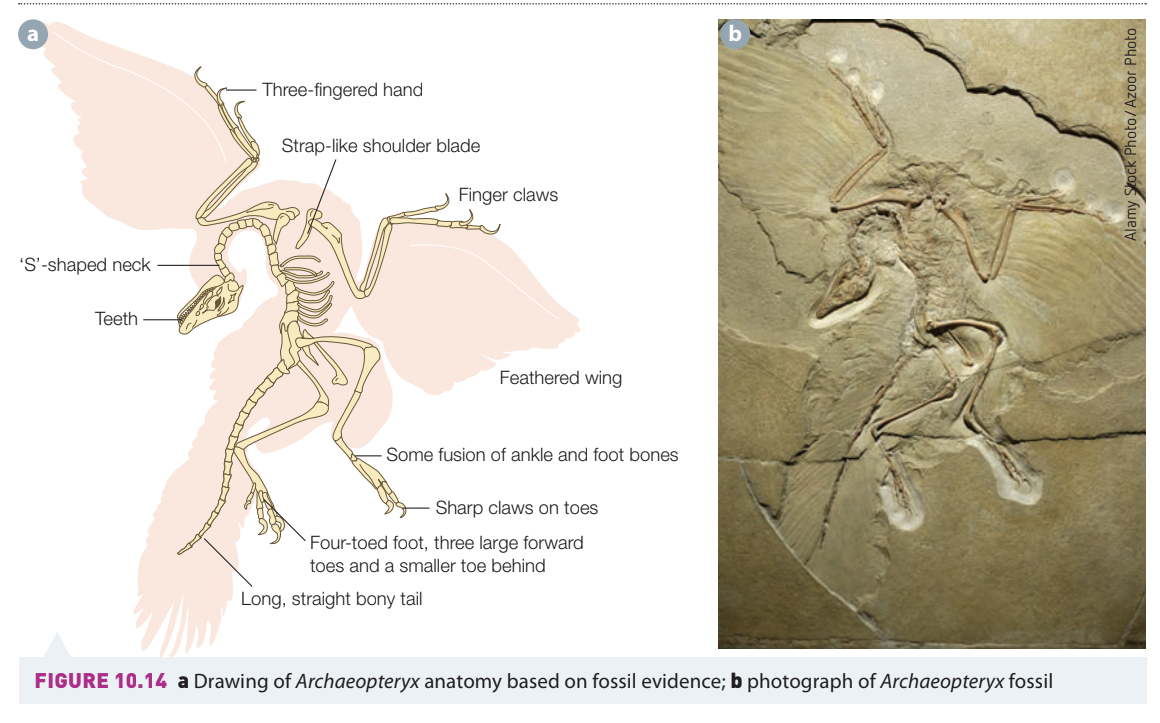
Example: Archaeopteryx – A Transitional Form
A famous example is Archaeopteryx, a transitional form between feathered dinosaurs and modern birds. Archaeopteryx fossils show a mixture of reptilian and avian (bird) features:
Reptilian features:
- Teeth
- Long, straight bony tail
- Three-fingered hand with claws
- 'S'-shaped neck
Avian features:
- Feathered wings
- Four-toed foot with three large forward toes and a smaller toe behind
- Some fusion of ankle and foot bones
Limitations of palaeontology as evidence
While fossil evidence is extremely valuable, it has several important limitations:
Important
Limitations of the Fossil Record:
- Incomplete fossil record: The fossil record is not a random sample of past life. There is a bias toward organisms whose body parts or environments make them better suited to fossilization
- Preservation bias: Organisms with hard body parts (bones, shells) and those living in aquatic environments are more likely to fossilize than soft-bodied organisms
- Missing early organisms: There is a lack of fossils representing the majority of early or soft-bodied organisms
- Unequal representation: There is unequal representation of transitional organisms in the fossil record
- Dating limitations: There is some doubt about the correct age sequence of some fossils. Radiocarbon dating, the most common method, can only date fossils up to 50,000 years old (not very old in evolutionary terms)
Because of these limitations, it is necessary to examine additional lines of evidence to further validate the theory of evolution. The strength of evolutionary theory lies in the fact that multiple independent lines of evidence all support the same conclusions.
Summary
Key Points to Remember:
-
Multiple lines of evidence support the Theory of Evolution by Natural Selection, including biochemical evidence, comparative anatomy, comparative embryology, biogeography, and fossil evidence
-
Biochemical evidence shows that closely related organisms have more similar proteins and DNA sequences, allowing scientists to reconstruct evolutionary relationships objectively
-
Comparative anatomy reveals that homologous structures (same basic plan, different functions) indicate common ancestry, while analogous structures (different basic plans, similar functions) result from convergent evolution
-
Comparative embryology demonstrates that related species show similarities in their embryonic development, supporting the concept of common ancestry
-
Biogeography demonstrates that geographical isolation leads to the evolution of new species, explaining patterns like Wallace's Line and the distribution of organisms on Gondwana-derived continents
-
Fossil evidence provides direct proof of organisms from the past, with dating techniques allowing us to establish when organisms lived and transitional forms showing evolution in action
-
The convergence of all these independent lines of evidence provides powerful support for the Theory of Evolution by Natural Selection