Past Ecosystems (HSC SSCE Biology): Revision Notes
📚Revision Notes
Palaeontological and Geological Evidence
Introduction: Evidence from the past
When scientists investigate past ecosystems, they use a principle similar to forensic science. Locard's principle of exchange states that every contact leaves a trace - a 'silent witness'. Similarly, every change in an ecosystem's abiotic and biotic factors leaves evidence behind.

Note
Just as forensic scientists piece together evidence from a crime scene, palaeontologists and geologists examine traces left in rocks, fossils, and ice to reconstruct Earth's past. Every environmental change creates a 'fingerprint' that can be detected and analysed thousands or millions of years later.
Scientists compare changes in the fossil record with environmental changes to understand selection pressures - factors that drove evolutionary change. This understanding helps predict how current environmental changes might affect living things.
As technology improves, scientists can gather and analyse evidence more accurately, building a more complete picture of Earth's history. This allows them to reconstruct a timeline of life and develop hypotheses about why species appeared or disappeared.
The development of palaeontology
Origins of the field
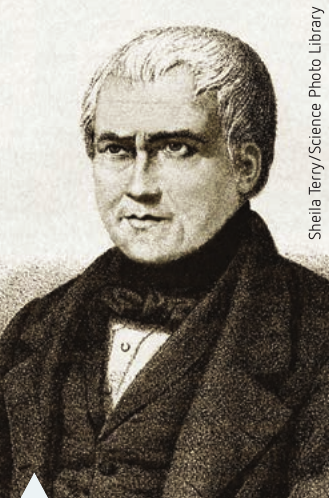
The word 'palaeontology' was first used in 1822 by French scientist Henri Marie Ducrotay de Blainville. During the early 19th century, interest in collecting and studying fossils grew rapidly.
Early interpretations of fossils
Human interest in fossils is ancient, though the exact timeline is uncertain. Evidence suggests:
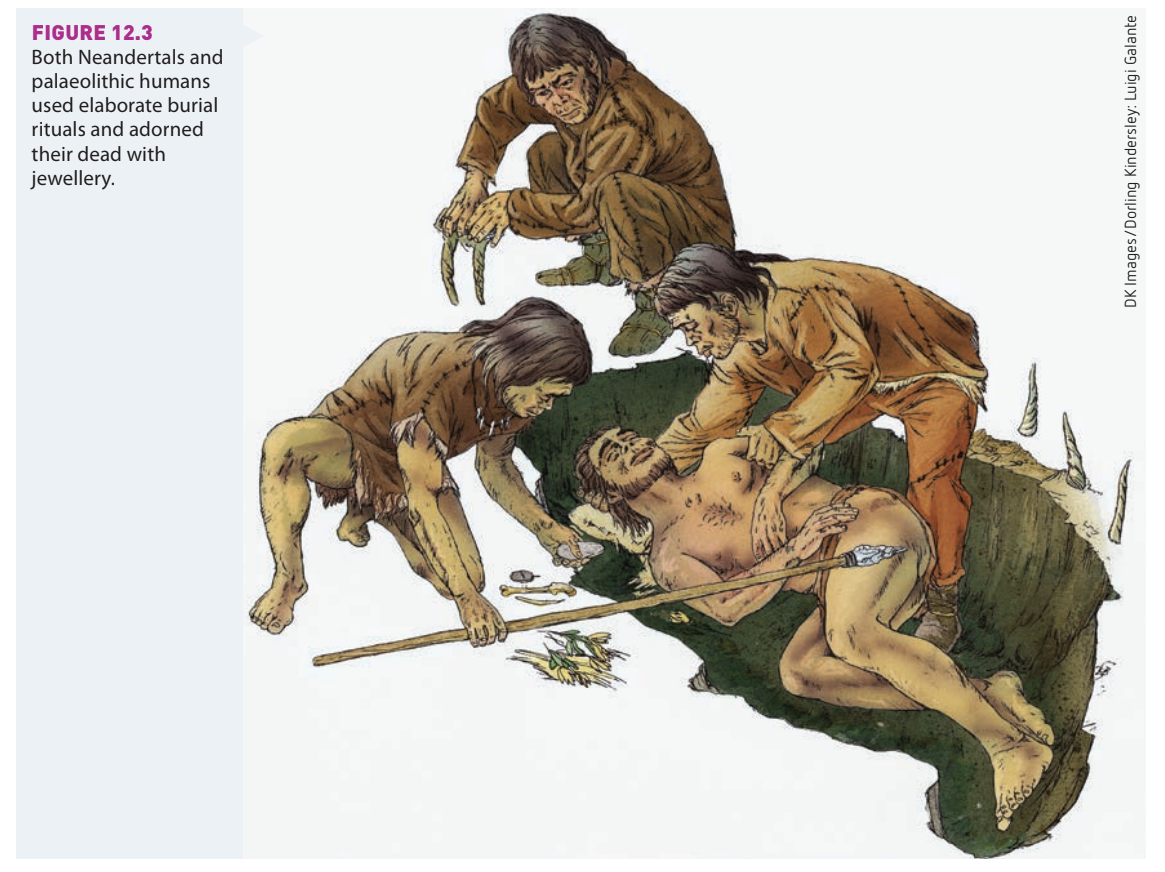
- Neandertals used jewellery to adorn their dead, and burial sites may have been raided for treasures
- Ancient Egyptian tombs contained treasures that were later raided
- Early Greek and Roman philosophers recognised fossils as possible evidence of previous life forms
Important
Aristotle (384-322 BCE) incorrectly suggested fossils were 'failed' attempts at life trying to spontaneously generate from soil. This misconception persisted for centuries and demonstrates how even brilliant thinkers can misinterpret natural phenomena without the scientific method.
During the Middle Ages, many people attributed spiritual significance to fossils, often believing they were remains from the great flood described in ancient texts.
Scientific breakthroughs
Leonardo da Vinci (1452-1519 CE) made early scientific observations. He examined Cainozoic mollusc fossils in northern Italy and concluded, ahead of his time, that these shells were buried in marine sediment thrown upward by some unknown process.
Steno's principles of stratigraphy
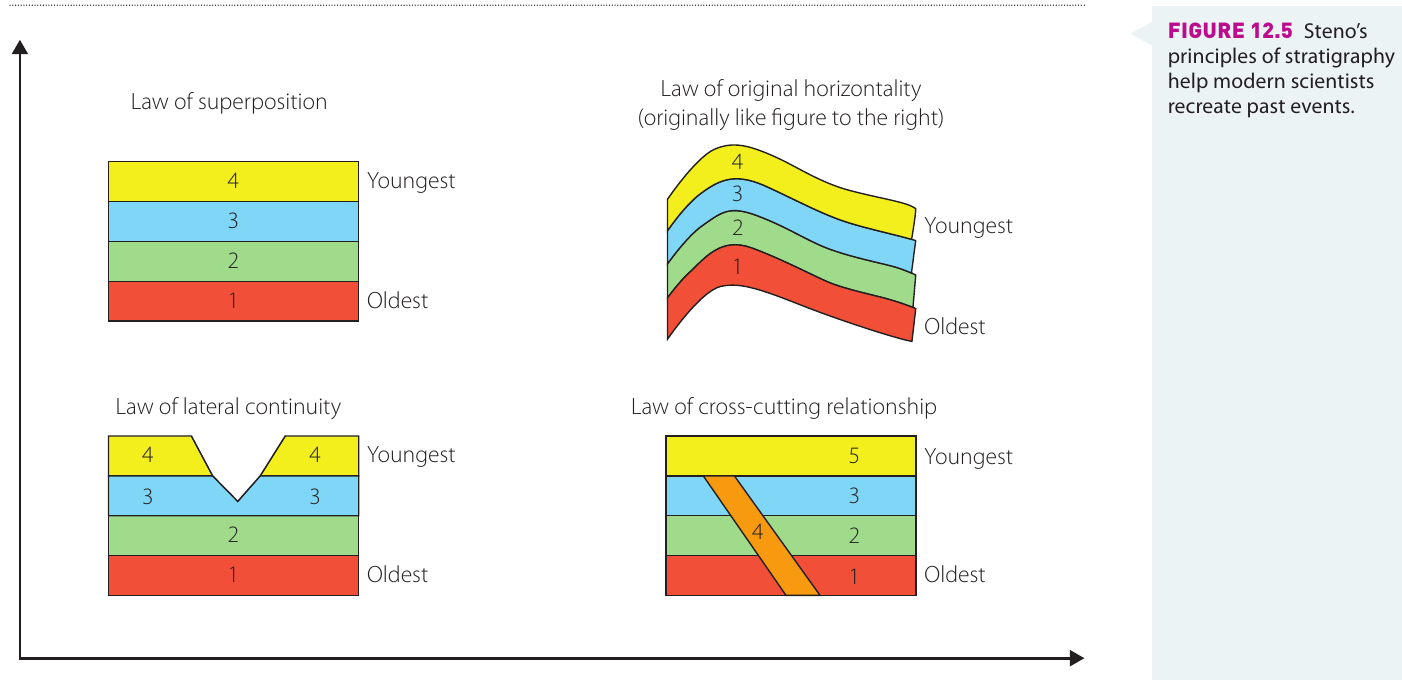
A major breakthrough came when Nicolas Steno (1638-86 CE) published his work on stratigraphy in 1669. His four laws established rules for relative dating that are still used today:
The four laws
Important
Steno's Four Laws of Stratigraphy
These fundamental principles allow scientists to determine the relative ages of rock layers and the fossils they contain:
-
Law of superposition: In undisturbed rock sequences, the oldest layers are at the bottom and youngest at the top
-
Law of original horizontality: All sedimentary strata are deposited horizontally initially and only tilt or bend due to subsequent tectonic forces
-
Law of lateral continuity: A rock stratum continues until something disturbs it (such as erosion or igneous intrusion)
-
Law of cross-cutting relationships: In any rock sequence, the layer that crosses or intrudes another is the younger layer
Development of geological theories
At this time, Earth's great age was not yet understood - many thought it was only thousands of years old. Two competing theories emerged:
Catastrophism: Changes on Earth happened as sudden, catastrophic events like earthquakes and floods, requiring no long time periods
Gradualism: Changes in Earth's crust occurred through slow, progressive processes (erosion, sediment deposition) over long periods
Scientists like James Hutton (1726-97) and Charles Lyell (1797-1875) gathered evidence supporting gradualism. Lyell's Principles of Geology and Hutton's Theory of the Earth greatly influenced Charles Darwin, providing the timescale needed for evolution by natural selection. The first geological timescale was constructed in 1841.
Note
The debate between catastrophism and gradualism wasn't just about geological processes - it had profound implications for understanding the age of Earth and the time available for evolutionary processes. Darwin needed the vast timescales proposed by gradualism for his theory of natural selection to work.
The discovery of radioactivity in 1896 by Henri Becquerel (1852-1908) enabled absolute dating methods, vastly increasing timescale accuracy. Earth's age was eventually estimated at 4.5 billion years.
Key definitions
- Palaeontology: The scientific study of fossils and all aspects of extinct life
- Geology: The scientific study of Earth's origin, history and structure as recorded in rocks
- Proxy data: Evidence that represents or stands in place of the actual organism
Aboriginal and Torres Strait Islander evidence
Aboriginal art probably represents the longest unbroken art tradition in the world, potentially predating European cave art (40,000 years old). Ancient Aboriginal artworks are invaluable sources of evidence about past Australian ecosystems.
West Kimberley rock paintings
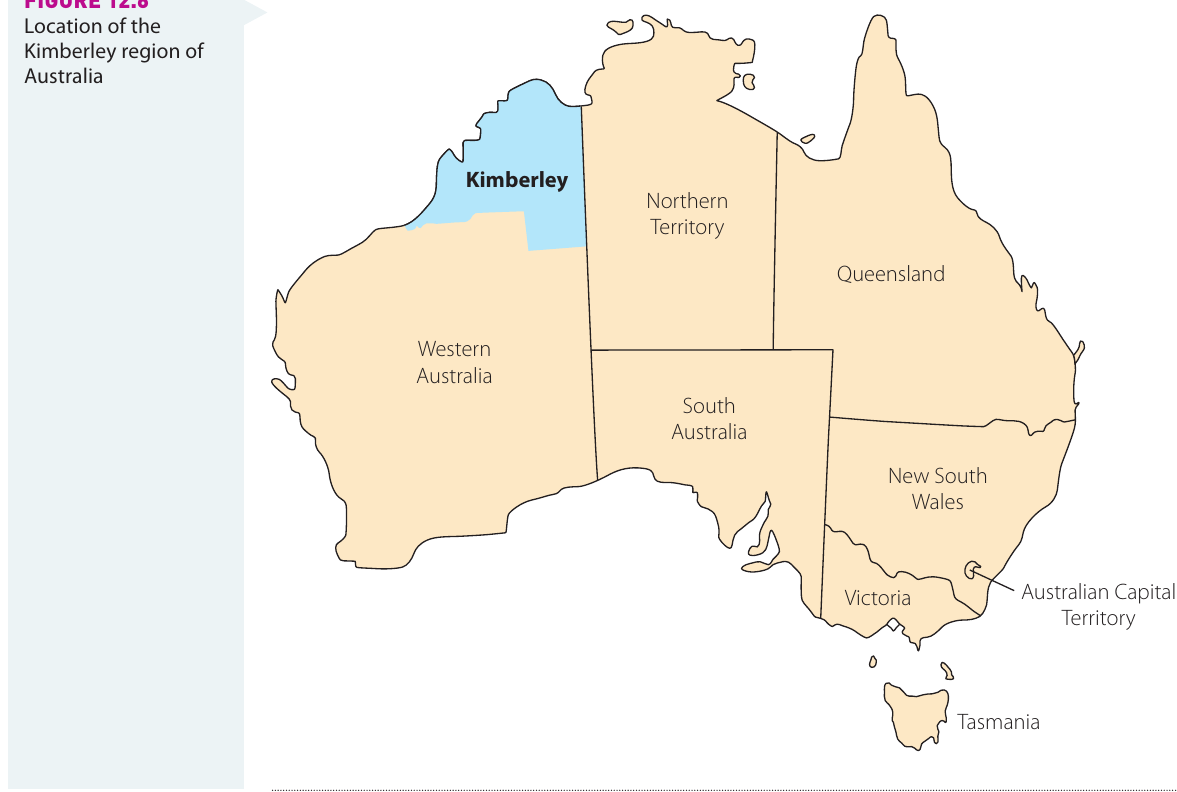
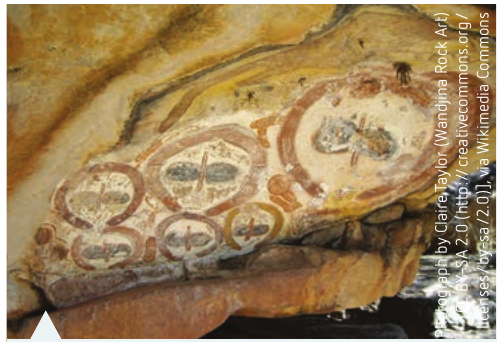
The West Kimberley rock paintings are located in remote northern Western Australia. This region contains thousands of individual painting sites.
Wandjina paintings have been conservatively dated at 50,000-60,000 years old. These paintings provide clues about:
- When and how people arrived in the area
- Environmental conditions at the time
- How people lived and adapted to climate changes
- Effects of climate change on local flora and fauna
Note
Scientists at the Australian National Nuclear Research and Development Organisation use radiometric dating methods like uranium/thorium dating on underlying calcite formations to determine accurate dates. This technique analyses the radioactive decay of uranium isotopes trapped in the calcite that formed over the paintings.
Bradshaw paintings are distinct from Wandjina paintings. They typically show human silhouettes with accessories, and also appear to depict extinct megafauna like Thylacoleo carnifex and the thylacine (Thylacinus cynocephalus). These are believed to be up to 40,000 years old.
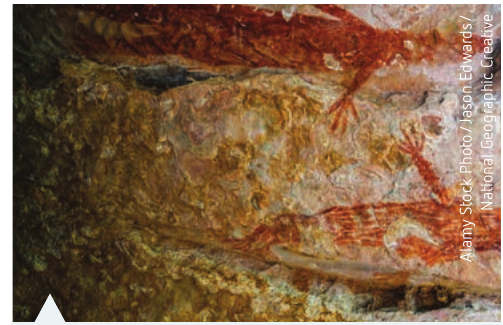
Scientists use DNA sequencing of symbiotic fungi and bacteria that have colonised the pigments to help determine the time sequence of artworks, as many are superimposed.
Climate changes recorded in art
Example
Evidence of Climate Change from Aboriginal Art
The types and numbers of animals depicted changed over time, suggesting significant climate shifts:
~40,000 years ago:
- Lush, open tropical forests dominated
- Diverse large fauna depicted in paintings
~10,000 years ago:
- Decreased rainfall and cooling (coinciding with the most recent glacial period)
- Main ecosystems transitioned to scrub and open grasslands
- Change in animal species depicted
Post-ice age:
- Australian summer monsoon pattern emerged
- Modern ecosystems began to establish
Keep River rock art site contains over 18,000 individual paintings at 117 sites, showing at least four distinct changes in animal types. Recent artworks show higher percentages of reptile depictions, suggesting ecological changes like increased wetlands.
Key concepts from Aboriginal art
Note
Aboriginal Art as Scientific Evidence:
- Aboriginal rock art records human observations dating back at least 40,000 years
- The art depicts past flora and fauna and changes in their abundance
- Scientists place these observations in context with scientific data for a comprehensive picture of past ecosystems
This represents an invaluable combination of indigenous knowledge and modern scientific techniques.
Geological evidence
The geological timescale
The geological timescale is a scientific model representing the course of changes in geological and fossil deposits, linking these to evolutionary changes in ecosystems.
Example
Interpreting Geological Evidence: Volcanic Eruption Impact
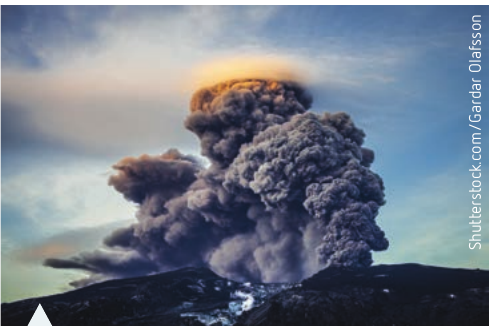
A massive volcanic ash deposit in a rock layer immediately preceding a rapid decline in fossil evidence suggests a volcanic eruption changed the environment unfavourably for certain species.
Possible explanations include:
- Reduced light intensity due to atmospheric ash blocking sunlight, disrupting photosynthesis
- Widespread cooling due to volcanic aerosols like sulfur dioxide reflecting heat away from Earth
- Sulfur dioxide particles reflecting sunlight back to space, creating a "volcanic winter"
This type of evidence helps scientists understand how sudden environmental catastrophes can drive mass extinctions.
Banded iron formations
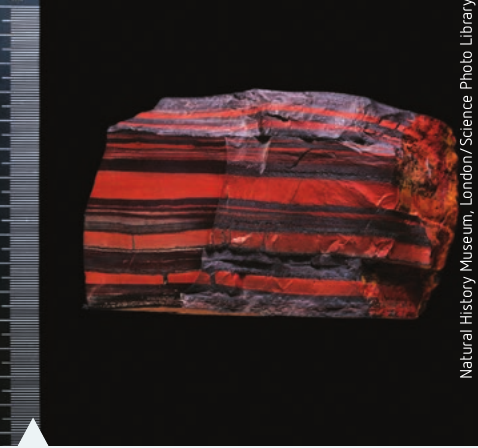
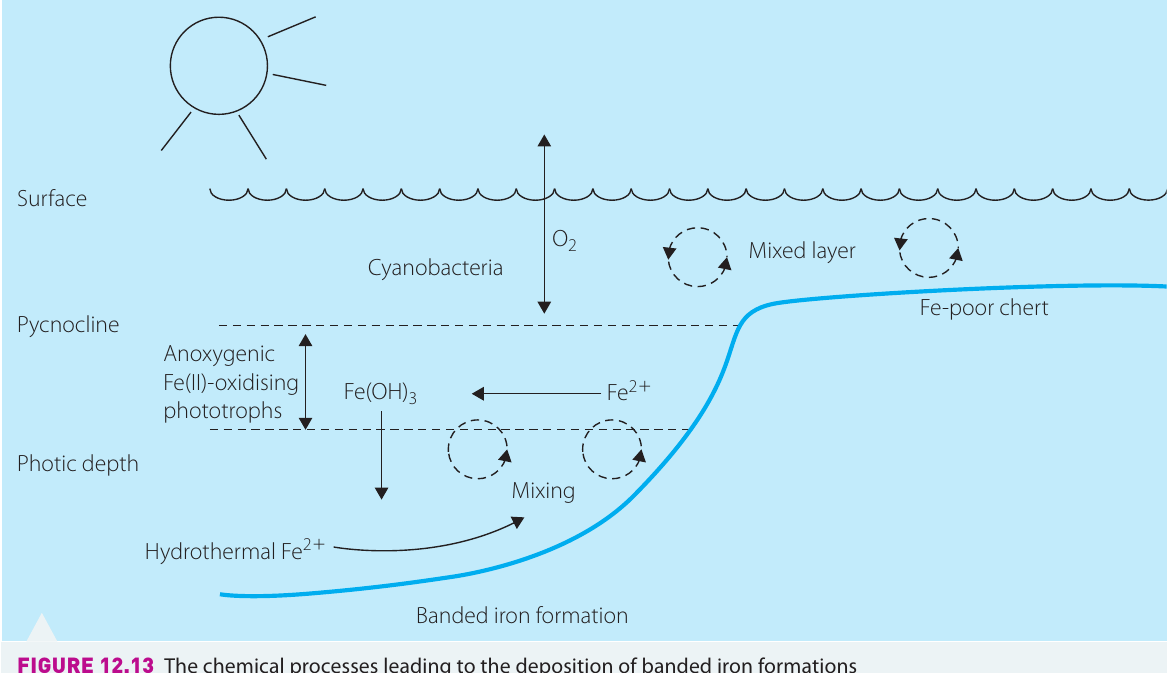
Banded iron formations are geological formations consisting of alternating bands of iron-rich and iron-poor sediments found in Australia and other continents.
Formation process
When oceans first formed, they contained vast amounts of soluble iron in its reduced state. The appearance of photosynthetic prokaryotes (cyanobacteria) led to:
- Increased oxygen concentration in the ocean
- Precipitation of insoluble iron oxide
- Accumulation of iron-rich sediment layers at the ocean bottom
- Build-up of oxygen causing large-scale cyanobacteria death
- Deposition of iron-poor sediments
- Cycle repeating as cyanobacteria populations rebuilt
- Periodic deposits lithifying (turning to stone)
- Uplift and erosion exposing these formations
Note
Banded iron formations provide striking visual evidence of early photosynthesis. The alternating bands literally show the 'breathing' of ancient cyanobacteria colonies - oxygen production, mass die-off, recovery, and repeat. These formations are some of the most important evidence for understanding how life transformed Earth's chemistry.
The Great Oxygenation Event
This transformation of Earth's atmosphere from anaerobic (oxygen-poor) to aerobic (oxygen-containing) occurred around 1.8-2.5 billion years ago and took almost two billion years.
Consequences for life
Important
The Great Oxygenation Event: A Double-Edged Sword
The increase in atmospheric oxygen created a selection pressure affecting organisms in two ways:
1. Toxic effects: Some oxygen metabolites (hydrogen peroxide, hydroxide radicals) are toxic to many organisms. Only organisms with specific metabolic pathways could overcome these harmful effects while benefiting from oxygen.
2. Energy production: The development of aerobic respiration allowed larger and more complex multicellular organisms to evolve by providing much more efficient energy production.
3. UV protection: Rising oxygen led to increased ozone () in the stratosphere. This ozone layer screened out harmful UV radiation, allowing life to move onto land without DNA damage.
This event represents one of the most dramatic environmental changes in Earth's history - what was deadly poison to some organisms became the key to success for others.
Palaeontological evidence - fossils
Definition and occurrence
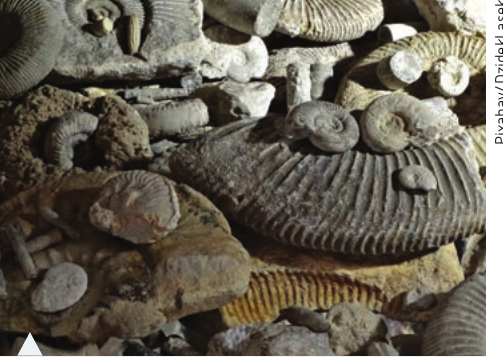
The word 'fossil' comes from Latin fossus, meaning 'to be mined, dug up, buried or quarried'. Fossils are remains of living things or evidence of their past existence.
Fossils are generally found in sedimentary rocks because the processes creating these rocks can preserve evidence. In contrast:
- Igneous rocks form from lava or magma, and their heat destroys biological material
- Metamorphic rocks undergo extremes of heat and pressure rarely compatible with preserving biological material
Types of fossils
Note
Four Main Categories of Fossils:
-
Mineralised remains: Moulds and casts, petrified wood, opalised remains
-
Organic remains: Preservation of soft and hard tissues in ice, amber, bogs, dry caves; carbonised remains
-
Impressions: The external organism's shape recorded in sediment
-
Trace fossils (geochemical remains): Remnants of organic molecules or signature atoms associated only with life, requiring advanced technology to detect
Each type provides different information about past life and environmental conditions.
Microfossils and stromatolites
Precambrian microfossils
The discovery of 3,400-3,500 million year old Precambrian fossils from Marble Bar, Western Australia, in silica-rich apex chert provided early evidence of past ecosystems. These microfossils of single-celled, filamentous anaerobic prokaryotes closely resembled modern examples living around deep-sea hydrothermal vents and volcanic hot springs.
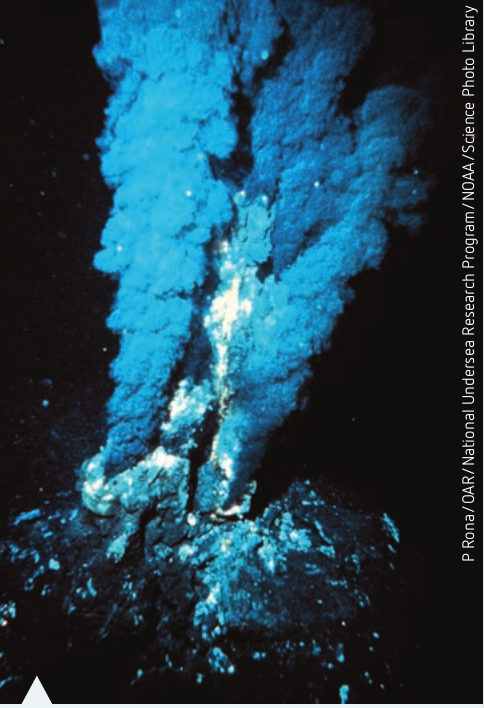
This suggests these organisms lived in a hydrothermal environment. These anaerobic, sulfur-metabolising organisms use chemosynthesis - a process using inorganic compounds (like sulfur) to manufacture organic molecules without requiring sunlight.
Stromatolites
Stromatolites are unusually shaped fossils found in Archaean chert at Bitter Springs, Northern Territory, dated to around 3.5 billion years old. These fossilised remains provide information about early organism structure and their environment.
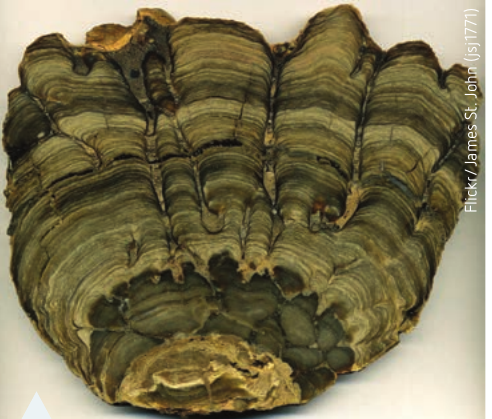
Modern stromatolites exist at Hamelin Pool, Shark Bay, Western Australia, where colonies of photosynthetic cyanobacteria trap calcium carbonate layers and 'grow' upward in columns towards the sun at about 1 mm per year. Individual domes can reach 200 cm diameter and 50 cm height.
Example
Living Stromatolites: A Window to the Past
At Hamelin Pool, Shark Bay, we can observe stromatolites forming today through the same processes that occurred billions of years ago:
Growth process:
- Cyanobacteria form mat-like colonies
- Calcium carbonate precipitates and becomes trapped in the bacterial mat
- The colony grows upward toward the light (~1 mm/year)
- Layer upon layer builds up over centuries
This rare example of living fossils allows scientists to understand how ancient stromatolites formed and what environmental conditions they required.
Selection pressures on stromatolites
Modern stromatolites are found in sheltered bays with unique abiotic conditions:
- Shallow water providing increased light intensity for photosynthesis
- Warm, still water allowing growth without disturbance from grazing organisms
- Mineral-rich and hypersaline water
Similar conditions must have existed where fossil stromatolites are found.
Impact on Earth's atmosphere
Important
As stromatolites became more common around 2.5 billion years ago, their photosynthetic cyanobacteria produced oxygen as a by-product, eventually leading to an oxygenated atmosphere (oxic atmosphere). This allowed gradual development of larger, more complex aerobic life forms.
Without stromatolites and their oxygen-producing cyanobacteria, complex life as we know it would never have evolved.
Palaeosols
Palaeosols are 'fossilised soils'. Soils with unusually large carbon compound concentrations usually indicate life's presence. Some have been found in South Africa.
Palaeosols can indicate environmental conditions no longer present where the fossil soils are found. For example, they may indicate tropical soil formation in what is now an arid region.
Note
Soil chemical profiles are affected by interactions with atmospheric gases and gases produced by living things, making palaeosols useful for reconstructing the timeline of the oxic atmosphere's development. By analysing ancient soil chemistry, scientists can determine when Earth's atmosphere contained sufficient oxygen to support certain types of organisms.
Molecular biomarkers
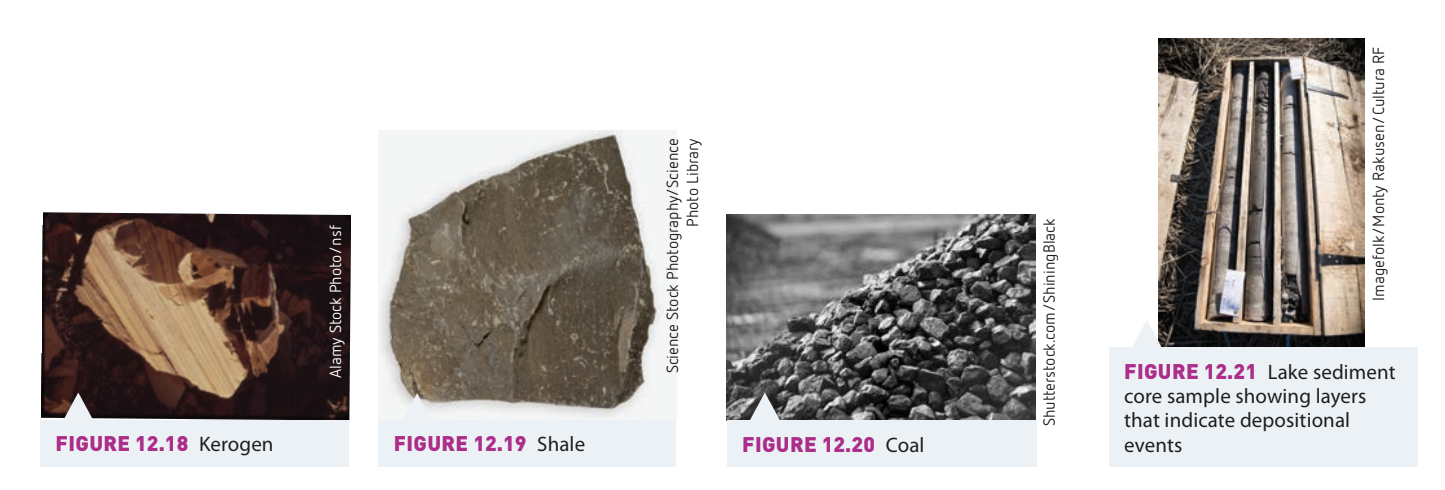
Molecular biomarkers or fossil molecules are trace evidence of living things found in rocks and soils, produced only through biological activity. The oldest are generally pigments in sedimentary rocks, but may include evidence of nucleic acids, carbohydrates, lipids and amino acids.
Where biomarkers are found
Biomarkers are most likely found in:
- Kerogens (precursors of petroleum)
- Shells and bones
- Rocks such as shale
- Coal samples
The technology to analyse biomarkers is relatively recent, making this an emerging field. Evolutionary relationships between organisms may be inferred from these biomarkers, helping build a more accurate geological timescale.
Ancient biomarkers
Isotopes such as carbon-13 are biomarkers found in apatite mineral grains in Western Australia's oldest rocks (around 3,800 million years old). No known process causes this accumulation other than progressive chemical alteration of organic remains.
Note
As scientists improve these delicate chemical techniques, exopalaeontologists (those searching for ancient life on other planets) will be better equipped to identify chemical signatures of ancient life in soils like those on Mars. The same techniques used to find Earth's earliest life could help us discover evidence of life elsewhere in the universe.
Ice core evidence
Climate and climate change
Climate refers to sustained patterns in temperature and rainfall over extended periods in a region. Climate change is a statistically detectable change in atmosphere and ocean properties over sustained periods (usually decades).
Evidence indicates Australia's climate has warmed by approximately 1°C since 1910. Global carbon dioxide levels are steadily increasing and have been linked to climate change. While climate change has natural causes, scientists are concerned about current anthropogenic climate change (human-caused) due to burning fossil fuels for energy production.
Claude Lorius and ice core development
French glaciologist Claude Lorius (born 1932) was primarily responsible for discovering and developing palaeo-atmospherics - the interpretation of past environments from gases and materials trapped in ice.

Example
The Whisky That Changed Climate Science
As a young research student, Claude noticed bubbles escaping from melting ice cubes in his drink. His observation and curiosity led him to realise these bubbles held important information about air composition when the ice formed.
This simple moment of scientific curiosity allowed scientists to imagine that drilling through ice and extracting gases could reconstruct the climate record, with temperature and chemical profiles of the atmosphere dating back hundreds of thousands of years.
This demonstrates how careful observation of everyday phenomena can lead to revolutionary scientific insights.
How ice cores work
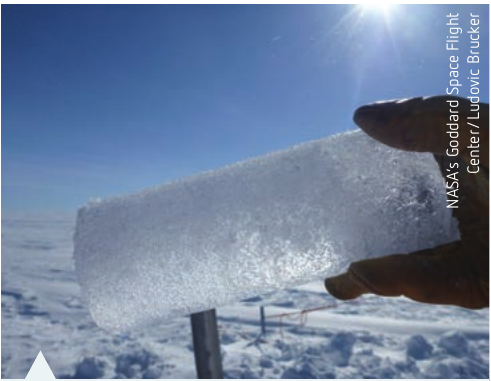
Antarctic snow forms in layers like sedimentary rocks, with deeper layers representing ancient deposition events. The ice found in places like Antarctica accumulates information about abiotic and biotic factors present when the ice formed.
As snow falls year after year, gases and particles from the atmosphere are trapped within it, including:
- Wind-blown dust and pollen
- Volcanic ash
- Radioactive particles
- Bubbles of atmospheric gas
Requirements for good ice cores
Important
Critical Temperature Requirements
The best sampling locations must have temperatures that never rise above 0°C, such as:
- Greenland
- Antarctica
- High mountain ranges
If temperatures rise above freezing, meltwater would trickle through the ice profile, mixing layers and making samples useless for comparison. The ice must remain frozen continuously to preserve the historical record intact.
Current and future ice cores
Scientists have developed special equipment to retrieve cylinder-shaped ice cores. A core sample reveals annual changes in snow properties, like reading tree rings. Radiometric dating of certain isotopes allows absolute dating of layers.
The oldest ice cores retrieved so far are approximately 800,000 years old. Scientists are currently excited about the possibility of retrieving million-year-old ice deep below Antarctica's surface (at least 3 km down), which would provide a far more complete picture of past climates.
Radiometric dating
Radiometric dating (or geochronology) is the process whereby scientists determine the age in years of a fossil, rock or mineral based on radioactive isotope content. Igneous and metamorphic rocks can be dated this way.
How it works
Note
The Radioactive Decay Process
Many elements have unstable forms (isotopes) that change over time to create more stable forms. The parent isotope undergoes radioactive decay, releasing energy and/or particles to become a more stable daughter atom.
The decay rate is calculated using the age equation, which compares:
- The abundance of the naturally occurring isotope in the rock
- The abundance of the decay product
The decay product accumulates at a known rate as the isotope decays, allowing scientists to determine the material's age with remarkable precision.
The geological timescale
Scientists have gathered information about past life through various fossil evidence types and constructed a geological timescale. The timescale is divided into eons, eras, periods and epochs (in decreasing duration).
Lines across the scale represent major events in Earth's history leading to species appearance or extinction. For example, the division between the Cretaceous and Tertiary periods represents the Cretaceous-Tertiary (KT) extinction approximately 65 million years ago, which resulted in the disappearance of around 65% of organisms in the fossil record.
Major stages in evolution of life
| Stage | Time (million years ago) | Environment | Key Changes | Evidence |
|---|---|---|---|---|
| Organic molecules | 4,500 | Anoxic | Organic molecules (amino acids) formed from inorganic molecules. Atmosphere: N₂, NH₃, H₂O, CO₂, CO, CH₄. High UV radiation, lightning, volcanic activity | None |
| Membranes | 4,000-3,500 | Anoxic | Membranes enclosed chemicals within microstructures. Proteins or nucleic acids could replicate | None |
| Prokaryotic heterotrophic cells | 3,500-2,500 | Anoxic | Cells obtained energy from organic molecules in environment. No membrane-bound organelles | Microfossils, bacteria |
| Prokaryotic autotrophic cells | 2,500-2,000 | Anoxic to oxic | Ozone layer forms. Cells developed photosynthesis pathways | Stromatolites (cyanobacteria) |
| Eukaryotic cells | 2,000-1,500 | Oxic | First eukaryotic cells appeared with nucleus. Prokaryotes engulfed other cells which became organelles. Membrane-bound organelles like mitochondria developed | Protozoans, algae, banded iron formations |
| Colonial organisms | 1,500-1,000 | Oxic | Many cells worked in cooperative groups | Volvox, slime moulds, sponges, corals |
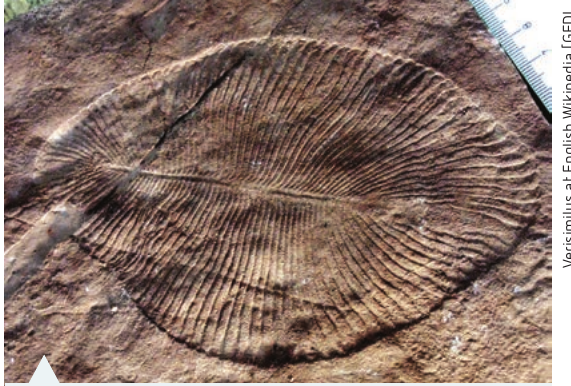
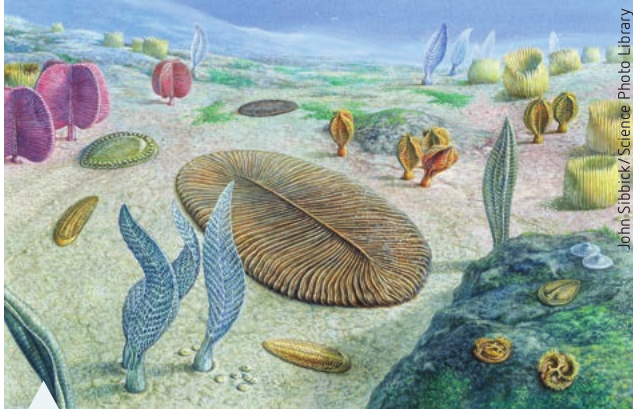
| Multicellular organisms | 1,000-500 | Oxic | Cells became specialised and organised into tissues and organs | Ediacaran fauna (640-680 mya), simple organisms (sponges, jellyfish, coral), complex organisms (worms, echinoderms, algae) |
Key patterns in the fossil record
Note
Reading the Rock Layers
Palaeontologists examining fossil evidence from different rock layers have found:
- More primitive cells and marine organisms in lower rock layers
- More complex, land-dwelling organisms in upper rock layers
This pattern supports the theory of evolution and provides evidence for the gradual increase in complexity of life over billions of years.
Scientists can make inferences about extinct organisms by studying their closest modern living relatives. By examining modern ecosystems, they can infer selection pressures faced by ancient organisms and understand how their structures enabled successful competition for resources.
Summary
Key Points to Remember:
-
Geological and palaeontological evidence provides clues to past ecosystems through traces left by all living things
-
Evidence types include macroscopic clues (impression fossils, moulds, casts, mineralised remains) and geochemical remains (organic molecules, isotopic ratios)
-
Atmospheric changes leave traces in the rock record, such as banded iron formations indicating the Great Oxygenation Event
-
The geological timescale is a scientific model representing past natural events in order, allowing scientists to infer cause and effect
-
Aboriginal rock art represents invaluable primary evidence for understanding ecosystem changes in Australia over at least 40,000 years
-
Ice cores from Antarctica and Greenland trap atmospheric gases and particles, providing a record of past climates dating back hundreds of thousands of years
-
Radiometric dating uses radioactive isotope decay rates to determine absolute ages of rocks and fossils
Understanding Earth's past helps us predict and respond to current environmental changes affecting our planet.