Gibbs Free Energy (HSC SSCE Chemistry): Revision Notes
📚Revision Notes
Gibbs Free Energy
What is Gibbs free energy?
When studying chemical reactions, we need to consider two important factors: energy changes (enthalpy, ) and disorder changes (entropy, ). Gibbs free energy brings these two factors together into a single value that tells us whether a reaction will actually occur under specific conditions.
The standard Gibbs free energy change () represents the combined effect of the energy drive and entropy drive for a chemical reaction. It provides a definitive answer to the question: "Will this reaction happen?"
Note
Gibbs free energy is one of the most powerful tools in chemistry because it combines both enthalpy and entropy into one value that directly predicts reaction spontaneity. Understanding this concept is essential for predicting and controlling chemical processes.
The Gibbs free energy equation
The relationship between Gibbs free energy, enthalpy, and entropy is expressed by this fundamental equation:
where:
- is the standard Gibbs free energy change (in )
- is the standard enthalpy change (in )
- is the absolute temperature (in , Kelvin)
- is the standard entropy change (in )
Important
Critical note about units: The temperature term () is included to ensure both parts of the equation have the same energy units. You must convert entropy values from joules to kilojoules by multiplying by when enthalpy is given in kilojoules. This is a common source of errors in calculations!
Understanding standard conditions
The degree symbol (°) in indicates that all species must be in their standard states:
- Gases: at a pressure of kPa
- Solutions: at a concentration of mol L
- Pure substances: in their most stable form at the specified temperature
These standard conditions allow us to compare different reactions fairly.
Predicting reaction direction
The sign of tells us which direction a reaction will proceed:
When ΔG° is negative
- Both the energy drive ( negative) and entropy drive ( positive) favour the forward reaction, OR
- One favourable drive outweighs an unfavourable one
- The reaction proceeds in the forward direction as written
When ΔG° is positive
- Both drives oppose the forward reaction ( positive and negative), OR
- One unfavourable drive outweighs a favourable one
- The reaction proceeds in the reverse direction
Important
Key principle: At any given temperature, if is negative under standard conditions, the reaction will proceed forward; if is positive, the reaction will proceed in reverse.
This is one of the most important principles in thermodynamics - Gibbs free energy change determines whether a reaction will occur.
Real-world applications
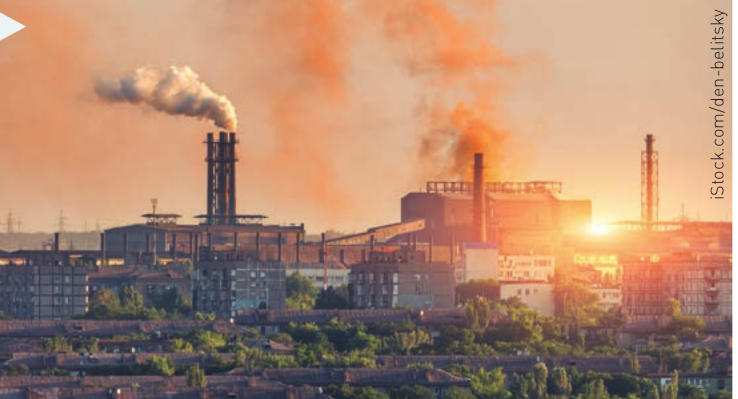
Understanding Gibbs free energy and entropy is essential in many industrial processes. For example, iron and steel manufacturers use these concepts to explain why approximately 20% of the carbon monoxide used to reduce iron ore is not consumed. This "wastage" is not due to factory inefficiency but is a consequence of the fundamental chemistry and thermodynamics of the process.
Note
Thermodynamics - the study of heat, energy, and motion - is a crucial scientific discipline in both physics and chemistry. It helps us understand and optimise countless chemical processes in industries worldwide.
Calculating Gibbs free energy changes
Let's work through a complete example to see how these calculations are performed.
Example
Worked Example: Predicting Calcium Hydroxide Decomposition
Calculate , , and for the decomposition of calcium hydroxide at 298 K, then predict whether the reaction will occur under standard conditions:
Step-by-step solution
| Calculation | Method and notes |
|---|---|
| Step 1: Calculate ΔH° | |
| Use the enthalpy of formation equation | |
| Substitute values from data tables | |
| Be careful with negative signs | |
| Step 2: Calculate ΔS° | |
| Use the entropy equation | |
| Substitute values from entropy tables | |
| Check units carefully | |
| Step 3: Calculate ΔG° | |
| Use the Gibbs free energy equation | |
| Convert entropy to kJ by multiplying by | |
| Positive value obtained | |
| Step 4: Interpret the result | |
| Because is positive, the reaction does not proceed as written under standard conditions at 298 K | Use the prediction principle |
Exam tip: Always check that your units are consistent. When is in kJ mol, you must convert from J K mol to kJ K mol by multiplying by .
Spontaneity revisited: four types of reactions
Previously, we defined a spontaneous reaction as one that occurs as written. However, the situation is more nuanced when we consider temperature effects. We can identify four distinct types of reactions:
Type 1: Spontaneous at room temperature
These reactions occur immediately when reactants are mixed, with no external energy input needed.
Note
Examples of Type 1 reactions:
- Copper reacting with silver nitrate solution
- Magnesium reacting with hydrochloric acid:
Type 2: Require initial activation
These reactions need a "starting prod" such as a spark, match, or brief heating to begin. Once started, they continue without further external energy input because they are exothermic - the heat released maintains the elevated temperature.
Note
Examples of Type 2 reactions:
- Burning magnesium
- Combustion of petrol (octane) or natural gas (methane):
Type 3: Require continuous heating
These reactions only occur while we maintain an elevated temperature throughout the process.
Note
Example of Type 3 reaction:
- Decomposition of calcium carbonate (limestone) at 1500 K:
Type 4: Non-spontaneous even at high temperatures
These reactions do not occur even when heated to very high temperatures.
Note
Example of Type 4 reaction:
- Decomposition of water at 2000 K:
Classification summary:
- Type 1 reactions are clearly spontaneous
- Type 4 reactions are non-spontaneous
- Type 2 reactions are considered spontaneous (just very slow at room temperature)
- Type 3 reactions have intermediate behaviour
Remember!
Summary
Key Points to Remember:
-
Gibbs free energy () combines enthalpy and entropy to predict whether a reaction will occur:
-
A negative means the reaction proceeds forward under standard conditions; a positive means it proceeds in reverse
-
Always check your units when calculating - convert entropy from J to kJ by multiplying by when enthalpy is in kJ
-
Standard conditions mean gases at 100.0 kPa and solutions at 1.00 mol L - the ° symbol reminds you of this
-
Spontaneity has different levels - some reactions occur immediately at room temperature, others need activation or continuous heating, and some won't occur at all even when heated