Customary Laws (Aboriginal and Torres Strait Islander Peoples) (HSC SSCE Legal Studies): Revision Notes
📚Revision Notes
Customary Laws (Aboriginal and Torres Strait Islander Peoples)
Introduction to Aboriginal and Torres Strait Islander peoples
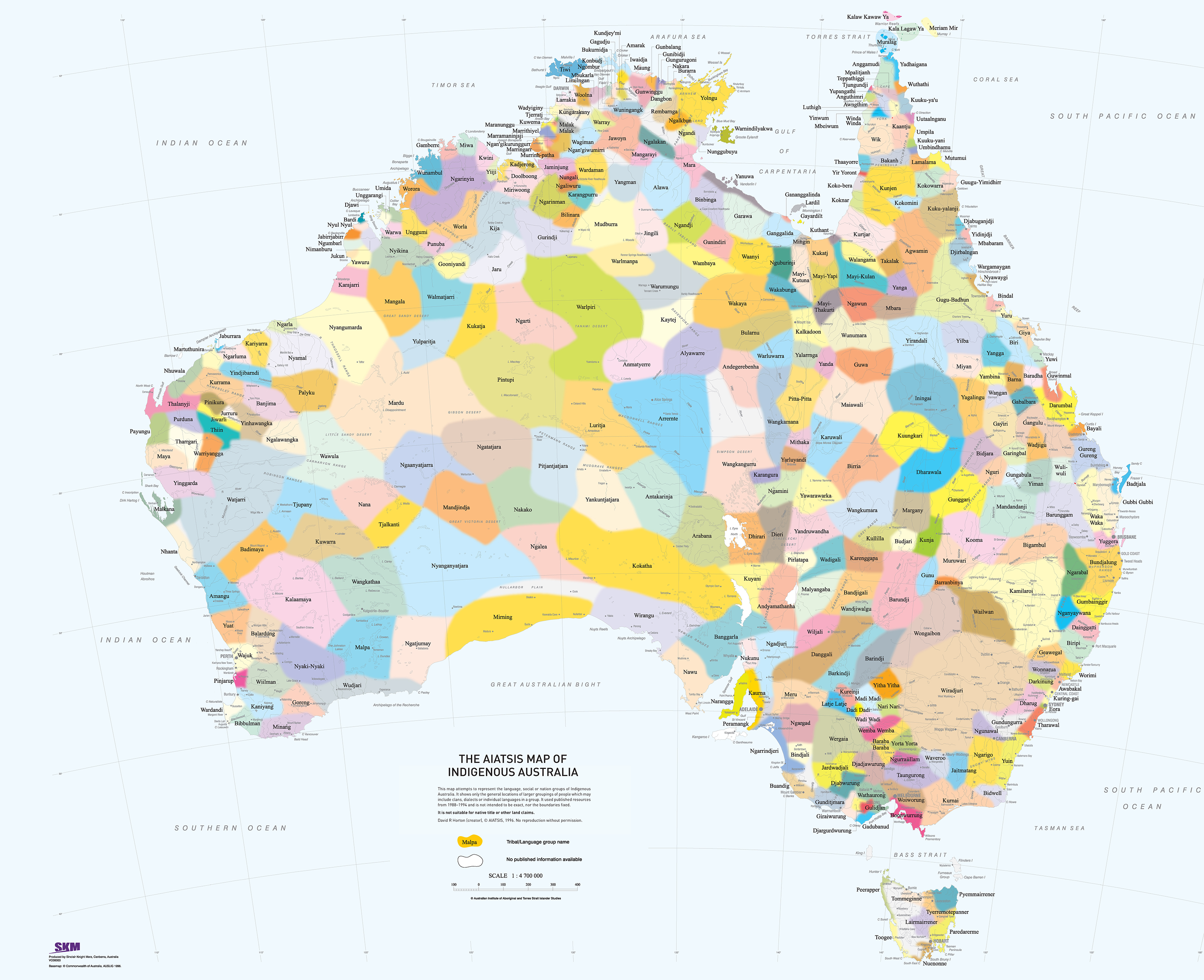
Aboriginal and Torres Strait Islander peoples possess the oldest living cultures in the world. For tens of thousands of years, these First Australians (the original inhabitants of Australia) have occupied the continent as many different societies, each with their own cultural relationships to specific lands.
When European colonisation began, more than distinct languages and countless dialects were in use across Australia. Today, while some communities continue to speak their traditional languages, many others are working to record and revive threatened ones. Regardless of where they now live, Aboriginal and Torres Strait Islander peoples maintain strong connections to their traditional lands.
Note
Language preservation is an ongoing effort in many Indigenous communities. While European colonisation dramatically reduced the number of spoken Indigenous languages, dedicated community members and linguists are working together to document, teach, and revive these languages for future generations.
Traditional lifestyle
Aboriginal and Torres Strait Islander peoples traditionally lived a hunter-gatherer lifestyle, with gender playing an important role in daily activities:
- Women collected berries, fruits and other plants, and hunted smaller animals
- Men hunted larger animals such as kangaroos, emus and turtles
- Coastal communities relied on fishing and collecting various types of shellfish
Contrary to common assumptions, not all Indigenous peoples were nomadic. Many groups would remain in an area for certain periods, depending on seasonal variations and food availability.
What is customary law?
Customary law refers to principles and procedures that have developed through general usage according to the customs of a people or nation, and are treated as obligatory.
There is no single system of Aboriginal and Torres Strait Islander law. Different Indigenous nations developed their own distinct legal systems. However, important common aspects exist among these diverse groups. All Aboriginal and Torres Strait Islander laws share several fundamental characteristics:
- They are spiritually based and closely linked to the land
- They are founded on tradition, ritual and socially acceptable conduct
- They govern relationships between people and with the natural environment
Differences from British legal traditions
A fundamental difference between Aboriginal and Torres Strait Islander customary law and British legal tradition relates to land ownership:
- British/European law: The right to possess property is a key principle
- Aboriginal and Torres Strait Islander law: Land is sacred and cannot be owned
Important
To Aboriginal and Torres Strait Islander peoples, people are custodians of the land, responsible for looking after it for future generations. This collective guardianship is a key feature of customary law that stands in stark contrast to Western concepts of individual property ownership.
This lack of tangible ownership (such as fences and signs) led British colonisers to believe Australia was uninhabited. They applied the concept of terra nullius (Latin: 'land belonging to no one'), claiming the land was owned by no one and thus open to settlement. This concept has since been judged legally invalid.
Despite federal and state legislation and common law governing Australia today, many Indigenous people still follow their own customary law alongside Australian law.
Diversity of Indigenous societies
Aboriginal and Torres Strait Islander law is tribal, meaning different groups have their own variations of customary law. Australia's vast land mass resulted in the development of different languages and modes of conduct across regions. However, the similarities in customary law outweigh the differences.
Common features across Indigenous groups
Under traditional law, most Indigenous communities share certain characteristics:
Community-based dispute resolution: Disputes are not restricted to individuals. The resolution process, involving negotiation, mediation and conciliation, involves everyone in the community.
Unique offences: Certain acts are punishable under traditional law but not recognised by non-customary law. Examples include:
- Insulting an elder (older men and women of recognised wisdom and authority who are keepers of traditional knowledge)
- Singing sacred songs in public
These offences are recognised in most Indigenous societies across Australia, regardless of location.
Note
The concept of community-based dispute resolution reflects a fundamentally different approach to justice than Western legal systems. Rather than focusing on punishing the individual, the emphasis is on restoring harmony within the entire community and maintaining relationships that are essential to the group's functioning and survival.
The spiritual nature of Indigenous customary law
The Dreaming
The Dreaming is the source of Indigenous Australian customary law and forms the basis of much Aboriginal and Torres Strait Islander law. The Dreaming represents the history of Aboriginal and Torres Strait Islander peoples, containing their creation and teaching stories.
The Dreaming:
- Explains how the land, animals, plants and sky were created
- Contains a very strong religious element
- Forms the foundation for many traditional laws
- Differs from community to community
Challenges in documenting customary law
Several factors make it difficult to fully describe customary law and its links to The Dreaming:
Important
Challenges in Understanding Customary Law:
- Secrecy: Many traditional laws are sacred and secret
- Oral tradition: Cultural reliance on oral history rather than written documentation
- Diversity: Laws differ from community to community
Despite these challenges, it is clear that law and religion are very closely related within Indigenous cultures. Many laws have evolved from The Dreaming and concern the treatment of the land and those who live on it.
Living under two legal systems
Since , many Indigenous people have lived under two legal systems simultaneously:
- The common law system derived from Britain
- Indigenous customary law
More than two-thirds of Aboriginal and Torres Strait Islanders live in remote areas, making them more likely to use customary law to settle disputes.
The significance of land and bodies of water to Indigenous societies
Collective land ownership
The idea of individual land ownership is alien to Aboriginal and Torres Strait Islander thought. Instead, land ownership operates on a collective basis:
- Being a member of a group means a person can live on and use the resources of certain lands
- The land belongs to the group, not individuals
- Loss of land means losing the group's culture and history
This same principle extends to all bodies of water, including:
- The sea
- Lakes
- Rivers
- All other water bodies
These are not owned by individuals but are cared for by the group under customary law.
Responsibilities and traditional laws
Each group has distinct responsibilities governing how they look after their land and bodies of water. These responsibilities are:
- Tied into traditional laws
- Connected to stories and rituals that pass on laws and responsibilities
- Considered essential to maintaining respect for the land and traditional values
Note
Failure to follow traditional laws regarding land care is viewed as a failure to show respect for both the land and traditional values. This connection between legal obligation and spiritual responsibility demonstrates how deeply intertwined law, religion, and daily life are in Indigenous cultures.
Ritual and oral traditions within Indigenous societies
Aboriginal and Torres Strait Islander law is an integral part of everyday life, woven into the values, customs and ethics of Indigenous peoples. Developed over many thousands of years, most laws relate to:
- Marriage
- Child-rearing
- Religion
- Family and kinship (family relationships, including all extended family relationships)
Transmission of laws
Customary laws have been passed from generation to generation through:
Word of mouth: Oral transmission ensures laws are remembered and understood within their cultural context.
Ritual: Stories, songs and dances help people remember the laws of their group. These methods serve as both educational tools and cultural practices.
Gendered knowledge
Different people in the group possess knowledge of different laws. For example, women have knowledge of specific laws that they pass on to girls at a certain age. This ensures appropriate transmission of gender-specific knowledge and responsibilities.
Ceremonial meetings
During ceremonial meetings at communal gathering places:
- Laws are passed on by, and to, the appropriate people
- Dance and storytelling reinforce laws
- Many ceremonies are sacred, and outsiders are not permitted to participate or, in some instances, watch
Note
These stories, handed down for thousands of years, explain:
- The creation of all things
- Why events happen
- Tribal boundaries
- Family relationships
- Cultural practices
- Forbidden acts
This oral tradition creates a living body of law that is continuously reinforced through regular ceremonial practice, ensuring it remains relevant and remembered across generations.
Dispute resolution within Indigenous societies
When customary laws are broken or disputes arise within traditional Indigenous groups, the approach differs significantly from formal Western legal processes.
Community-based approach
Family and community involvement: Rather than formal judicial processes, the family and the entire community are involved in resolving disputes.
Discussions and meetings: These would be held during ceremonial times, when the community gathers together.
Role of elders: Elders and influential members of the community meet with those in conflict, using discussion and dialogue to attempt settlement of the dispute.
Importance of relationships
Relationships and their maintenance are very important in Aboriginal and Torres Strait Islander communities. Through these relationships, people are able to pass on and follow traditional laws. As a result, mediation (a form of alternative dispute resolution where a neutral third party helps two or more parties reach an agreement) plays an important role in dispute resolution.
Enforcement and sanction within Indigenous societies
Maintaining order
Everyone in the community is expected to follow and reinforce traditional laws. In traditional societies, order is maintained through:
- Self-regulation: Community members regulate their own behaviour according to traditional laws
- Consensus among family heads: Decisions are made collectively
- Elder guidance: Elders play an important role in guiding decisions related to enforcing the law and intervene as necessary
Types of offences
Offences under traditional law may include:
- Breaches of sacred law
- Offences against property
- Offences against persons
There is not always a clear line between these categories. Where sacred law has been broken, elders are often directly involved in applying sanctions.
Sanctions and punishments
Sanction (a penalty imposed on those who break the law) varies from place to place. The relatives of the wronged party, ceremonial leaders, or both may be involved in the punishment.
The form of punishment may be determined through:
- Negotiations
- Kinship relationships
For the most serious offences, elders ensure that:
- The punishment is appropriately carried out
- Restraint is exercised
Range of punishments
Punishments range in severity:
- Minor: Ridicule and shaming
- Moderate: Exile from the community
- Severe: Spearing or death
Important
Punishment by death is much less frequent today than in the past, possibly due to conflict with Australian law. Physical punishments such as spearing or beatings are sometimes justified as necessary to 'restore balance' for the parties and their families—reflecting the restorative justice approach inherent in customary law.
The relevance of customary law today
Legal recognition
In the past years, there has been greater legal recognition of Aboriginal and Torres Strait Islanders' rights as the traditional landholders of Australia. Many aspects of customary law are now embodied in Australian law.
Influence on contemporary Australian law
Environmental law: The practice of sustainable development, a key principle of customary law, forms the basis for current environmental laws.
Dispute resolution: Conciliation and mediation, traditional methods of resolving disputes, are increasingly used in:
- Criminal law
- Consumer law
- Employment law
Customary law in criminal proceedings
Customary laws are sometimes taken into account when an Aboriginal or Torres Strait Islander person is charged with a crime:
Note
Ways Customary Law Influences Criminal Proceedings:
Mitigation of offence: Where an act has been done because Aboriginal customary law requires it, but the act amounts to an offence under Australian law, this may be raised in mitigation (making the severity of an offence or sentence milder or less severe).
Provocation: Evidence that a criminal offence was provoked by the victim's breaking of customary law may be a mitigating factor.
Traditional punishment: Evidence that an offender is to receive traditional punishment may be submitted when modifying a sentence.
Consultation with elders
In some places where large numbers of people live a traditional lifestyle, elders are consulted by those involved in maintaining and enforcing the law. This recognises the authority and wisdom of traditional legal processes.
Ongoing challenges
Despite progress, there is much debate about the role of customary law in:
- Prosecuting offenders
- Defending offenders
- Punishing offenders
Important
Those in the legal system are wary of being accused of unfairness if everyone is not treated equally by the law. As a result, legislatures have been reluctant to formally incorporate customary laws into Australian law. This tension between respecting cultural differences and maintaining equal treatment under the law remains a significant challenge in contemporary Australian legal discourse.
Exam guidance
When answering questions about customary law:
- Analyse: Compare and contrast customary law with Australian common law, focusing on key differences (e.g., land ownership, dispute resolution, spiritual basis)
- Evaluate: Consider both strengths and limitations of customary law's incorporation into the Australian legal system
- Assess: Make judgements about the effectiveness of current legal recognition of customary law, supporting your answer with specific examples
Summary
Key Points to Remember:
- Aboriginal and Torres Strait Islander peoples have the oldest living cultures in the world, with over distinct languages at the time of European colonisation
- Customary law is spiritually based, closely linked to the land, and founded on tradition, ritual and socially acceptable conduct
- There is no single system of Aboriginal and Torres Strait Islander law—different nations developed their own laws, though common aspects exist
- The Dreaming is the source of Indigenous Australian customary law, containing creation and teaching stories
- Land is viewed as sacred and collectively owned—people are custodians caring for land for future generations, not individual owners
- Oral traditions (stories, songs, dances) and rituals are used to pass laws from generation to generation
- Dispute resolution involves the entire community, with elders playing a key role in mediation and decision-making
- Sanctions range from ridicule and shaming to exile or death, though physical punishments are less common today
- Customary law increasingly influences Australian law in areas like environmental protection, mediation and sentencing considerations
Key terms: customary law, The Dreaming, terra nullius, elders, kinship, mediation, sanction, mitigation, First Australians