Investments (HSC SSCE Mathematics Standard): Revision Notes
📚Revision Notes
Appreciation and Inflation
What is appreciation?
When certain assets increase in value over time—such as artwork, gold, or property—we call this appreciation. This growth in value is typically expressed as a rate of appreciation.

Understanding appreciation is important because it works similarly to compound interest. The value doesn't just grow by the same amount each year—instead, the growth compounds. For instance, consider a painting valued at $100,000 with an annual appreciation rate of 10%. After the first year, the painting's value increases by $10,000 to $110,000. In the second year, however, the increase is $11,000 (10% of the new value), bringing the total to $121,000. Notice how the amount of appreciation itself has increased.
Note
The compounding effect means that assets don't just increase by a fixed amount each year. Instead, each year's growth is calculated on the new, higher value. This is why appreciation can lead to significant value increases over longer time periods.
Calculating appreciation
To calculate the future value of an appreciating asset, we use the following formula:
or alternatively:
Where:
- = Future value of the item
- = Present value of the item
- = Rate of appreciation per compounding time period (expressed as a decimal)
- = Number of compounding time periods
Example
Worked Example: Finding the Appreciated Value
Question: Joel bought a unit for $690,000. If the unit appreciates at 9% per annum, what is its value after 7 years? Answer to the nearest dollar.

Solution:
Step 1: Write the formula for appreciation
Step 2: Identify and substitute the known values
- (9% expressed as a decimal)
Step 3: Calculate the future value
Step 4: Round to the nearest dollar
Final answer: The unit is valued at $1,261,347 after 7 years.
Important
Common Mistake to Avoid: Always remember to convert percentages to decimals before substituting into the formula. For example, 9% becomes 0.09, not 9. A common error is forgetting this conversion, which will give you an incorrect answer that's 100 times too large!
What is inflation?
Inflation occurs when the cost of goods and services rises over time. In Australia, inflation is measured using the Consumer Price Index (CPI), which tracks the changing prices of a standard basket of goods and services.
When inflation rises, your spending power decreases. This means that the same amount of money buys less than it did before. The inflation rate represents the annual percentage change in the CPI.
Note
The Reserve Bank's Role
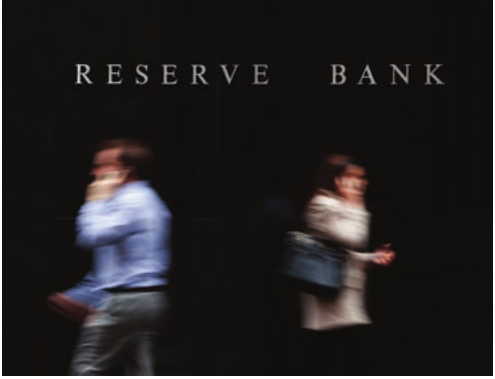
The Reserve Bank of Australia actively works to maintain the inflation rate within a 2% to 3% band. This target range helps ensure economic stability whilst allowing for moderate growth. When inflation moves outside this band, the Reserve Bank may adjust interest rates to bring it back within the target range.
Calculating inflation
Calculating the future price of goods following inflation uses the same formula as appreciation:
In this context:
- = Future price of the item
- = Present price of the item
- = Inflation rate per annum (expressed as a decimal)
- = Number of years
Example
Worked Example: Finding the Price of Goods Following Inflation
Question a: What is the price of a $650 clothes dryer after one year following inflation? (Inflation rate is 2.6% p.a.)
Solution:
Step 1: Write the formula
Step 2: Substitute the values
Step 3: Calculate
Answer: The clothes dryer will cost $666.90.
Question b: What is the price of a $400 clothes dryer after three years following inflation? (Inflation rate is 3.2% p.a.)
Solution:
Step 1: Write the formula
Step 2: Substitute the values
Step 3: Calculate
Answer: The clothes dryer will cost $439.64.
Important
Exam Tips
When solving appreciation and inflation problems, keep these essential points in mind:
- Always convert percentages to decimals before substituting into the formula (e.g., 9% becomes 0.09)
- Remember that appreciation and inflation use the same mathematical formula—only the context differs
- Round your final answer appropriately (usually to the nearest dollar or cent)
- Check whether the question asks for the future value or the amount of increase—these are different things!
- Show all working steps clearly in your solutions to ensure you receive full marks even if your final answer is incorrect
Summary
Key Points to Remember:
- Appreciation is the increase in value of assets like art, gold, or property over time, calculated using the formula
- Inflation is the rise in prices of goods and services, measured by the Consumer Price Index (CPI), and calculated using the same formula as appreciation
- The Reserve Bank of Australia aims to keep inflation between 2% and 3% to maintain economic stability
- Both appreciation and inflation involve compound growth, meaning the rate is applied to the increasing value each period, not just the original amount
- When inflation rises, spending power decreases—the same amount of money purchases less than before